As an audio specialist with years of experience, I understand the importance of choosing the right audio format. Whether you’re a music enthusiast, a sound engineer, or a content creator, the choice between MP3 and AIFF can significantly impact the quality and usability of your audio files. Let’s delve into the differences between these two popular formats and explore their respective strengths and weaknesses.
Understanding Audio Formats
MP3 (MPEG Audio Layer III)
MP3 is a widely used audio compression format that reduces the file size of audio recordings without significantly compromising sound quality. It achieves this by discarding frequencies that are less perceptible to the human ear, resulting in smaller file sizes ideal for online streaming and portable devices.
Lossy Compression
Wide Compatibility
Small File Sizes
AIFF (Audio Interchange File Format)
AIFF, developed by Apple, is an uncompressed audio format known for its high fidelity and lossless quality. Unlike MP3, AIFF files retain all original audio data, making them ideal for professional audio production, mastering, and archival purposes.
Uncompressed Audio
High Fidelity
Large File Sizes
Comparing Performance and Usability
Performance
In terms of performance, MP3 files are lightweight and easy to stream or download, making them perfect for online distribution and playback on portable devices with limited storage capacity. However, the compression process removes some audio data, resulting in a slight loss of quality compared to AIFF.
Usability
For everyday listening and casual use, MP3 is the go-to choice due to its small file sizes and wide compatibility with various devices and platforms. On the other hand, AIFF is preferred in professional audio production environments where preserving the highest possible audio quality is paramount, even at the expense of larger file sizes.
Latest words on MP3 vs AIFF
In conclusion, the choice between MP3 and AIFF depends on your specific needs and priorities. If you prioritize convenience and compatibility, MP3 is the practical option for everyday listening and online distribution. However, if you’re a professional musician, sound engineer, or audiophile seeking the best possible audio quality, AIFF offers unparalleled fidelity and accuracy for your recordings and projects.
Comments:
Wow, I never realized there were so many factors to consider when choosing an audio format. This article really helped me understand the differences between MP3 and AIFF!
As a musician, I’ve always struggled with balancing file size and audio quality. This article provided some great insights into the pros and cons of MP3 and AIFF. Thanks!
This was a fascinating read! I’ve been using MP3 for years without realizing I might be sacrificing audio quality. I’ll definitely consider switching to AIFF for my next project.
Great article! I’ve always been curious about the differences between MP3 and AIFF, and this article explained everything in a clear and concise manner. Well done!
I appreciate how this article broke down the technical aspects of audio formats into easy-to-understand concepts. Now I feel more confident in choosing the right format for my audio projects.
As a podcaster, audio quality is crucial for my content. This article helped me understand why AIFF might be a better choice for recording and editing my episodes. Thanks for the valuable information!
Interesting article! I never knew the difference between MP3 and AIFF until now. It’s amazing how much impact the choice of audio format can have on the overall listening experience.
When it comes to audio file formats and encoding techniques, understanding WMA (Windows Media Audio) Variable Bit Rate (VBR) encoding can significantly enhance your audio experience. As a specialist with years of experience in audio engineering, I’ve delved deep into the intricacies of WMA VBR encoding and its implications for audio quality and file size optimization.
What is WMA VBR Encoding?
At its core, WMA VBR encoding is a method used to compress audio files while maintaining a variable level of quality throughout the encoding process. Unlike constant bit rate (CBR) encoding, which encodes audio at a fixed bit rate, VBR encoding adjusts the bit rate dynamically based on the complexity of the audio being encoded. This means that simpler audio passages are encoded at a lower bit rate, while more complex passages are encoded at a higher bit rate, resulting in superior audio quality with smaller file sizes.
The Benefits of WMA VBR Encoding
One of the key advantages of WMA VBR encoding is its ability to preserve audio quality while minimizing file size. By dynamically adjusting the bit rate, WMA VBR encoding ensures that audio files maintain a consistent level of quality, even during passages of varying complexity. This makes it ideal for streaming audio over the internet or storing music on portable devices with limited storage capacity.
Moreover, WMA VBR encoding offers greater flexibility compared to CBR encoding. With CBR encoding, audio files are encoded at a fixed bit rate, which can result in wasted space for simpler passages and reduced audio quality for complex passages. In contrast, WMA VBR encoding adapts to the specific characteristics of the audio being encoded, maximizing efficiency and preserving quality.
How WMA VBR Encoding Works
To understand how WMA VBR encoding works, it’s essential to grasp the concept of psychoacoustic modeling. Psychoacoustic modeling is a technique used in audio encoding to take advantage of the limitations of human hearing. By analyzing the frequency and amplitude of audio signals, psychoacoustic models identify sounds that are less likely to be perceived by the human ear and allocate fewer bits to encode them.
During the WMA VBR encoding process, audio is divided into small segments, and a psychoacoustic model analyzes each segment to determine the appropriate bit rate for encoding. Simple segments with fewer audible details are encoded at a lower bit rate, while complex segments with more audible details are encoded at a higher bit rate. This adaptive approach ensures that audio quality is maintained while minimizing file size.
Comparing WMA VBR Encoding to Other Methods
While WMA VBR encoding offers many benefits, it’s essential to compare it to other encoding methods to understand its place in the audio landscape. One common alternative to WMA VBR encoding is constant bit rate (CBR) encoding, which encodes audio at a fixed bit rate regardless of its complexity. While CBR encoding is simple and predictable, it may result in larger file sizes and reduced audio quality compared to WMA VBR encoding.
Another alternative is variable bit rate (VBR) encoding using other codecs, such as MP3 or AAC. While these codecs also offer VBR encoding capabilities, WMA VBR encoding is specifically optimized for the Windows Media Audio format, offering seamless integration with Windows-based devices and software.
Optimizing Audio Quality with WMA VBR Encoding
As an audio engineer, I’ve found that mastering the art of WMA VBR encoding can significantly enhance the quality and efficiency of audio production workflows. By leveraging the adaptive nature of VBR encoding and the power of psychoacoustic modeling, audio professionals can achieve superior results with minimal effort.
When using WMA VBR encoding, it’s essential to consider factors such as target audience, playback environment, and distribution platform. By tailoring encoding settings to specific requirements, you can ensure that your audio files meet the highest standards of quality and compatibility.
In conclusion, WMA VBR encoding represents a powerful tool for audio professionals and enthusiasts alike. Its ability to preserve audio quality while minimizing file size makes it ideal for a wide range of applications, from streaming audio over the internet to storing music on portable devices. By mastering the principles of WMA VBR encoding, you can take your audio projects to the next level and deliver an exceptional listening experience to your audience.
Preserves audio quality
Minimizes file size
Adapts to audio complexity
Optimizes efficiency
Seamless integration with Windows devices
Latest words on WMA Variable Bit Rate Encoding
When it comes to audio encoding, WMA VBR encoding stands out as a versatile and efficient solution. Its adaptive nature and integration with Windows-based devices make it a popular choice for audio professionals and enthusiasts alike. By mastering the principles of WMA VBR encoding, you can unlock new possibilities for audio production and distribution.
Comments:
Wow, I never knew there was so much to learn about audio encoding! This article really opened my eyes to the world of WMA VBR encoding. Thanks for the insightful information!
I’ve been struggling to optimize the audio quality of my music files, but this article provided some valuable insights into WMA VBR encoding. I can’t wait to try it out and see the results!
This article did a great job of breaking down the complexities of WMA VBR encoding in a way that’s easy to understand. I feel much more confident in my ability to use this technique effectively now.
As someone who’s passionate about audio production, I found this article to be incredibly informative and well-written. It’s clear that the author has a deep understanding of the subject matter.
I’ve been looking for ways to optimize the audio quality of my podcast recordings, and this article provided some valuable tips on using WMA VBR encoding. I can’t wait to implement these strategies in my workflow!
This article was a game-changer for me! I never realized how much of a difference WMA VBR encoding could make in terms of audio quality and file size. Thanks for sharing this valuable information!
As an aspiring audio engineer, I found this article to be incredibly helpful in understanding the principles of WMA VBR encoding. It’s clear that the author has a wealth of knowledge on the subject.
This article provided some fascinating insights into the world of audio encoding. I never knew there were so many factors to consider when optimizing audio quality!
Thanks for this informative article! I’ve been searching for ways to improve the audio quality of my video projects, and WMA VBR encoding seems like the perfect solution.
This article was a bit too technical for my taste, but I appreciate the effort to explain the concepts of WMA VBR encoding in layman’s terms. It’s definitely a topic worth exploring further!
How do you use an equalizer to fix audio problems?
How do you use an equalizer to fix audio problems?How do you use an equalizer to fix audio problems?
Understanding Equalizer Settings
When it comes to using an equalizer to fix audio problems, the first step is to understand the different settings. Equalizers typically have a series of sliders or knobs that allow you to adjust the levels of different frequency bands. The most common types of equalizers are graphic equalizers and parametric equalizers. Graphic equalizers are simpler to use, as they display the frequency response of the audio signal in a graphical interface. Parametric equalizers are more complex, but offer more control over the sound. Understanding how to use these settings is key to fixing audio problems.
Identifying Audio Problems
Before you can use an equalizer to fix audio problems, you need to identify what those problems are. Common audio problems include muddiness, harshness, sibilance, and boomy bass. These issues can be caused by a variety of factors, such as poor microphone placement, room acoustics, or low-quality equipment. Once you’ve identified the problem, you can use the equalizer to target the specific frequency bands that are causing the issue. For example, if you’re dealing with boomy bass, you can cut the low frequencies using the equalizer.
Using the Equalizer to Fix Audio Problems
Once you’ve identified the problem and understand the equalizer settings, it’s time to start fixing the audio. The key is to be patient and make subtle adjustments. It’s important to remember that equalization is not a magic fix for all audio problems. In some cases, you may need to address the underlying issue before using the equalizer. As the music producer Rick Rubin once said, “Equalization is a tool, not a crutch.” With that in mind, use the equalizer to make small adjustments to the sound, and listen carefully to the results. Over time, you’ll develop a better understanding of how to use the equalizer to fix audio problems.
Final Words:
In conclusion, using an equalizer to fix audio problems can be a powerful tool for improving the sound of your music or audio content. By understanding the different equalizer settings, identifying the audio problems, and making subtle adjustments, you can achieve a more balanced and natural sound. And if you’re looking for a reliable and effective equalizer software, I highly recommend checking out mp4gain. It’s a great solution for normalizing and converting audio and video files, with an integrated equalizer that can help you achieve the perfect sound.
I’ve always been a fan of graphic equalizers. They allow you to adjust the levels of different frequency bands, giving you more control over the sound. As the name suggests, graphic equalizers use a graphical interface to display the frequency response of the audio signal. This makes it easy to see which frequencies need to be boosted or cut. In the words of the legendary music producer Quincy Jones, “Equalization is the magic key to good sound.”
Parametric Equalizers
Parametric equalizers are a bit more complex than graphic equalizers, but they offer even more control over the sound. With a parametric equalizer, you can adjust the center frequency, bandwidth, and gain of each individual band. This allows you to target specific problem areas in the frequency spectrum. I’ve found that parametric equalizers are particularly useful for fixing issues with vocals, which can often sound harsh or nasal.
Mastering Equalizers
Mastering equalizers are a special type of equalizer that are used in the final stages of music production. They are designed to make subtle adjustments to the overall sound of a mix, rather than targeting specific problem areas. Mastering equalizers are often used to add warmth, depth, and clarity to a mix. As the mastering engineer Bob Katz once said, “Equalization is the final touch that can make or break a mix.”
Equalizer Presets
Equalizer presets are pre-configured settings that are designed to work well with specific types of music or audio content. For example, you might have a preset for rock music, which boosts the bass and treble frequencies. Or you might have a preset for podcasts, which emphasizes the midrange frequencies. I’ve found that presets can be a great starting point for adjusting the sound, especially if you’re not sure where to begin.
Equalizer Settings
When it comes to equalizer settings, there’s no one-size-fits-all solution. The best settings will depend on the specific audio content you’re working with, as well as your personal preferences. That being said, there are some general guidelines that can help. For example, it’s usually a good idea to cut frequencies that are causing problems, rather than boosting them. And it’s important to be subtle with your adjustments, as too much equalization can lead to a distorted or unnatural sound.
Final Words:
In conclusion, audio equalizers are a powerful tool for shaping the sound of your music or audio content. Whether you’re using a graphic equalizer, a parametric equalizer, or a mastering equalizer, the key is to be patient and experiment with different settings. And if you’re looking for a reliable and effective equalizer software, I highly recommend checking out mp4gain. It’s a great solution for normalizing and converting audio and video files, with an integrated equalizer that can help you achieve the perfect sound.
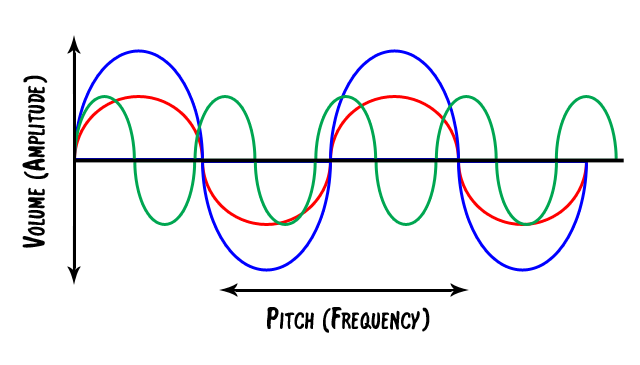
As someone who has been working in the audio industry for several years, I can tell you that compression is one of the most important tools in any audio engineer’s arsenal. Compression is the process of reducing the dynamic range of an audio signal, which means that the difference between the loudest and quietest parts of the signal is reduced. This can help to make an audio recording sound more consistent and polished.
There are several different types of compression that can be used in audio production, including analog compression, digital compression, and multiband compression. Each of these techniques has its own advantages and disadvantages, and the choice of which one to use will depend on the specific needs of the project.
Compression and sound quality
One of the most common questions that I get asked about compression is how it affects the overall sound quality of an audio recording. While compression can help to make a recording sound more polished, it can also have a negative impact on the sound quality if it is not used correctly.
One of the biggest problems with compression is that it can cause a loss of detail in the audio signal. This is because compression works by reducing the dynamic range of the signal, which means that some of the quieter parts of the signal can be lost in the process. This loss of detail can make an audio recording sound muffled or unclear.
However, when compression is used correctly, it can actually improve the overall sound quality of an audio recording. By reducing the dynamic range of the signal, compression can help to make the quieter parts of the recording more audible, which can help to bring out more detail and clarity in the sound.
Compression techniques
There are several different compression techniques that can be used in audio production, each of which has its own unique benefits and drawbacks. One of the most common compression techniques is peak compression, which is used to reduce the volume of the loudest parts of an audio signal.
Another popular compression technique is RMS compression, which is used to reduce the overall dynamic range of an audio signal. This can help to make an audio recording sound more consistent and polished, and can also help to bring out more detail in the quieter parts of the signal.
Conclusion
In conclusion, compression is an incredibly powerful tool in the world of audio production. When used correctly, compression can help to make an audio recording sound more polished and professional, and can also help to bring out more detail and clarity in the sound. However, it is important to use compression judiciously and to understand its limitations in order to avoid any negative impact on the sound quality of an audio recording.
If you are looking for a reliable and effective audio normalization and conversion software, I highly recommend MP4Gain. MP4Gain is a powerful software that can normalize and convert audio files in a variety of formats, and also includes a built-in equalizer for fine-tuning the sound of your recordings. Give it a try today and see the difference that it can make!






Comments:
Wow, I never realized there were so many factors to consider when choosing an audio format. This article really helped me understand the differences between MP3 and AIFF!
As a musician, I’ve always struggled with balancing file size and audio quality. This article provided some great insights into the pros and cons of MP3 and AIFF. Thanks!
This was a fascinating read! I’ve been using MP3 for years without realizing I might be sacrificing audio quality. I’ll definitely consider switching to AIFF for my next project.
Great article! I’ve always been curious about the differences between MP3 and AIFF, and this article explained everything in a clear and concise manner. Well done!
I appreciate how this article broke down the technical aspects of audio formats into easy-to-understand concepts. Now I feel more confident in choosing the right format for my audio projects.
As a podcaster, audio quality is crucial for my content. This article helped me understand why AIFF might be a better choice for recording and editing my episodes. Thanks for the valuable information!
Interesting article! I never knew the difference between MP3 and AIFF until now. It’s amazing how much impact the choice of audio format can have on the overall listening experience.