How do you choose which frequencies to boost or cut on an equalizer?


Free Download Mp4Gain
picture

How do you choose which frequencies to boost or cut on an equalizer?

How do you choose which frequencies to boost or cut on an equalizer?

Understanding Frequency Bands

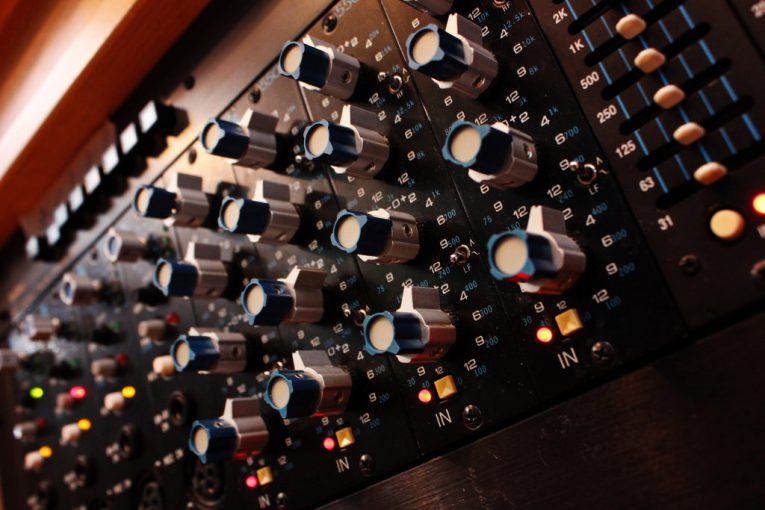
When it comes to choosing which frequencies to boost or cut on an equalizer, the first step is to understand the different frequency bands. Equalizers typically have a series of sliders or knobs that allow you to adjust the levels of different frequency bands. The most common frequency bands are bass, midrange, and treble. Bass frequencies are typically between 20Hz and 250Hz, midrange frequencies are between 250Hz and 4kHz, and treble frequencies are between 4kHz and 20kHz. Understanding how these frequency bands affect the sound is key to choosing which frequencies to boost or cut.

Identifying Problem Frequencies

Once you understand the frequency bands, the next step is to identify which frequencies are causing problems in the sound. This can be done by listening carefully to the audio and paying attention to which frequencies are too loud or too quiet. For example, if the bass is too boomy, you may need to cut the low frequencies using the equalizer. If the vocals are too harsh, you may need to cut the midrange frequencies. Identifying the problem frequencies is key to choosing which frequencies to boost or cut.

Making Subtle Adjustments

Once you’ve identified the problem frequencies, it’s time to start making adjustments using the equalizer. The key is to be patient and make subtle adjustments. It’s important to remember that equalization is not a magic fix for all audio problems. In some cases, you may need to address the underlying issue before using the equalizer. As the music producer Quincy Jones once said, “Equalization is like a microscope. You can see everything, but you can also ruin everything.” With that in mind, use the equalizer to make small adjustments to the sound, and listen carefully to the results. Over time, you’ll develop a better understanding of how to choose which frequencies to boost or cut.
Final Words:
In conclusion, choosing which frequencies to boost or cut on an equalizer can be a powerful tool for improving the sound of your music or audio content. By understanding the different frequency bands, identifying the problem frequencies, and making subtle adjustments, you can achieve a more balanced and natural sound. And if you’re looking for a reliable and effective equalizer software, I highly recommend checking out mp4gain. It’s a great solution for normalizing and converting audio and video files, with an integrated equalizer that can help you achieve the perfect sound.


equalizer, frequencies, boost, cut, selection, adjustment, control, manipulation, management, modification, optimization, bass, midrange, treble, sound, problem, loud, quiet, vocals, harsh, subtle, adjustments, microscope, ruin, Quincy Jones, balanced, natural, reliable, effective, software, mp4gain, normalize, convert, files, integrated, solution, perfect, sound.


Free Download Mp4Gain
picture


Mp4Gain Main Window
picture


Mp4Gain Features
picture


Free Download Mp4Gain
picture

How do you use an equalizer to fix audio problems?

How do you use an equalizer to fix audio problems?

How do you use an equalizer to fix audio problems?

Understanding Equalizer Settings

When it comes to using an equalizer to fix audio problems, the first step is to understand the different settings. Equalizers typically have a series of sliders or knobs that allow you to adjust the levels of different frequency bands. The most common types of equalizers are graphic equalizers and parametric equalizers. Graphic equalizers are simpler to use, as they display the frequency response of the audio signal in a graphical interface. Parametric equalizers are more complex, but offer more control over the sound. Understanding how to use these settings is key to fixing audio problems.

Identifying Audio Problems

Before you can use an equalizer to fix audio problems, you need to identify what those problems are. Common audio problems include muddiness, harshness, sibilance, and boomy bass. These issues can be caused by a variety of factors, such as poor microphone placement, room acoustics, or low-quality equipment. Once you’ve identified the problem, you can use the equalizer to target the specific frequency bands that are causing the issue. For example, if you’re dealing with boomy bass, you can cut the low frequencies using the equalizer.

Using the Equalizer to Fix Audio Problems

Once you’ve identified the problem and understand the equalizer settings, it’s time to start fixing the audio. The key is to be patient and make subtle adjustments. It’s important to remember that equalization is not a magic fix for all audio problems. In some cases, you may need to address the underlying issue before using the equalizer. As the music producer Rick Rubin once said, “Equalization is a tool, not a crutch.” With that in mind, use the equalizer to make small adjustments to the sound, and listen carefully to the results. Over time, you’ll develop a better understanding of how to use the equalizer to fix audio problems.
Final Words:
In conclusion, using an equalizer to fix audio problems can be a powerful tool for improving the sound of your music or audio content. By understanding the different equalizer settings, identifying the audio problems, and making subtle adjustments, you can achieve a more balanced and natural sound. And if you’re looking for a reliable and effective equalizer software, I highly recommend checking out mp4gain. It’s a great solution for normalizing and converting audio and video files, with an integrated equalizer that can help you achieve the perfect sound.

equalizer, audio, problems, settings, troubleshooting, sound, enhancement, correction, improvement, sliders, knobs, frequency, bands, graphic, parametric, muddiness, harshness, sibilance, boomy bass, microphone, placement, acoustics, equipment, patient, subtle, adjustments, tool, crutch, music, producer, Rick Rubin, balanced, natural, reliable, effective, software, mp4gain, normalize, convert, files, integrated, solution, perfect, sound.

Loudness equalizer – Boost Audio

Loudness equalizer – Boost Audio

loudness equalizer
loudness equalizer

In this era where the main consumption is multimedia, it is really a basic need to be able to achieve that all our multimedia files have a similar loudness, without ups and downs, that does not force us to manually control the volume knob.

Loudness equalizer
Loudness equalizer

Mp4Gain is obviously the most advanced normalizer, the most powerful and the one that gives the best results.

Practically it could be said that with Mp4Gain we can achieve the same results as with very expensive equipment used in broadcasting. In fact, many television channels and radio stations F.M. are using Mp4Gain.

Mp4Gain can, if you want, use the well-known Replay Gain or it can use its own very efficient algorithms that obtain very good results in volume gain and loudness control.

Mp4Gain is the most recognized and prestigious program in everything related to managing the loudness equalizer.

It can improve the loudness of audio and video files, in their main formats and can also extract the audio from the video, convert for example an mp4 into an mp3 with the highest quality.

Volume equalizer, mp3 louder.

Volume equalizer, mp3 louder.

Volume equalizer

Anyone who has some mp3 or video files or music files of other formats will soon discover that some have a problem with the volume…they don’t sound at the same volume level as the other files.

Volume equalizer

And this forces him to start looking for a solution.

It is obvious that this solution is Mp4Gain, not only because it has the most modern algorithm to normalize the volume of an mp3, video, etc. But because it can also be a converter, that is, we normalize an mp4 but we want to obtain an mp3, for example.

And it also has certain advanced settings, which should only be used by someone who has very specific knowledge and needs, to get exactly what he is needing. For example, add Replay Gain.

For the rest of the users, Mp4Gain is so simple to use that it is enough to load one or several files (in batch mode) and press the button to normalize, just that and the program does everything without further need to modify or move settings.

Mp4Gain is powerful for those who need it and easy and simple to use for the rest, and offers the best results.

Volume equalizer – mp3 louder

Volume equalizer – mp3 louder

Volume equalizer

Equalize the volume of mp3, mp4 or any other audio or video file, in the main formats.

Volume equalizer

That is something that Mp4Gain offers and that it achieves with the best quality, because it is without a doubt the best audio normalizer in the world.

Anyone who has a fair amount of sound or video files has noticed that there is an unevenness in the volume level. Which is annoying to play them one after the other. Well, the difference between some of them is too noticeable, perhaps it sounds lower in volume or perhaps it sounds very loud.

The reasons why this happens and why we find these differences are many. Perhaps the most obvious is because they have been encoded (converted) by some amateur user, who chose the settings (bit rate, sample rate, etc) without knowing what he was doing… and it also turns out that we have a mixture of different bit rates, for example, in all our mp3.

Mp4Gain can not only standardize the bit rate, for example, but it analyzes the audio frame by frame (more than 40 thousand times per second) and finds the precise levels so that they have the same decibel level, which you can choose or let Mp4Gain does it automatically.

Volume equalizer, how does it work?

Volume equalizer, how does it work?

Volume Equalizer

Many people ask us how an mp3, mp4, etc. They save so much space.

volume equalizer

First of all there is obviously the zip type compression. That is, those algorithms that reduce the space basically seeking to eliminate the redundancy of symbols. That is, if in a row you find: 11111110000000 what you do is put 7-1,7-0 implying that there are 7 times a one and 7 times a zero. You save space by describing what you write when you have repetitive characters.

This is just a very simplified example.

But there is also another compression that is based on knowing how the human ear works. We already know that there are low and high frequencies that the human ear does not perceive, so everything that is outside the hearing range of the human ear can be ruled out.

There is also masking, which implies that if two similar frequencies sound almost simultaneously, one of them at a higher volume, it will mask the second, that is, we will not hear the second, so it can be discarded.

It is obvious that all these processes cause information to be discarded and that can damage the quality, but in general, if it is done correctly, the human ear, even the trained one, cannot perceive the difference.

Thousands of tests have been done making people, including musicians, listen to high bitrate mp3s and listen to a WAV and it has been verified that they cannot tell the difference.