Sound under pressure


Free Download Mp4Gain
picture

Sound under pressure
Audio File Formats

Computer sound has long since emerged from that embryonic state, when it was only present for the show, unable to compete with specialized equipment. Today, many sound cards, even middle class, are far above their rivals in the face of not so mediocre hi-fi. Recently, there are also fewer and fewer problems with acoustics; At such a rate, in a few years, the entire breeding road will finally turn into a true hi-hi. But in addition to the path, there is also a file format, in the choice of which, due to ignorance, users are often really limited. The purpose of this article is to get rid of these limitations.
Audio File Formats

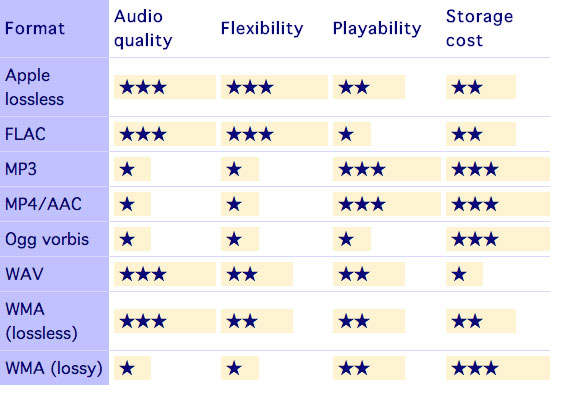
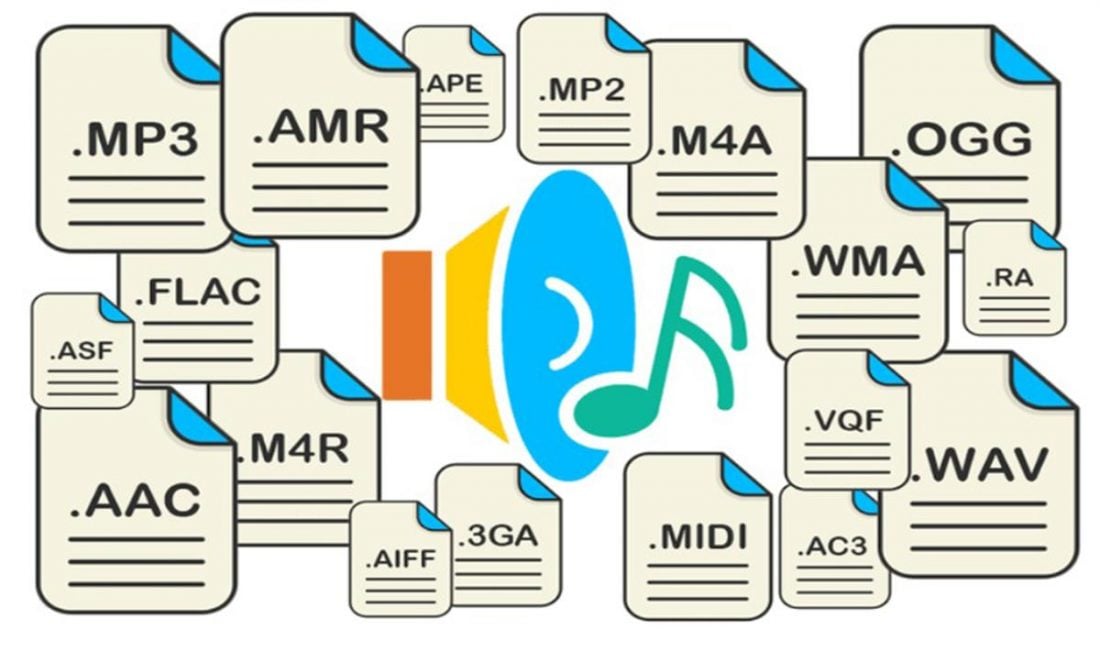
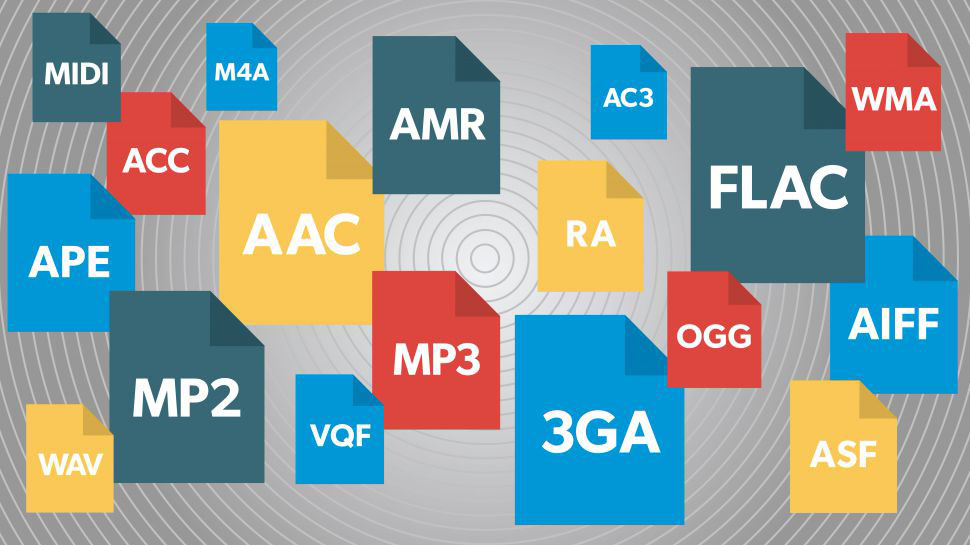
Gone are the days when it was impossible to distinguish a violin from a cello in computer acoustics, but the saying “CD Quality – MP3 128 kbps” has remained, and for some it is not so archaic. Meanwhile, the most common formats are Wav (also known as CDA) or MP3. However, uncompressed PCM (Wav and CDA) has too large a file size and MP3 is compressed with loss of quality. But there are alternatives and more than one. Let’s take a look at the most popular and high-quality formats / codecs.

First, let’s divide all codecs into two groups based on compression: lossless and lossy. The former operate on the principle of filing cabinets, for example RAR: a file compressed in this way loses weight by up to 50%, and the entire original is reproduced during playback, before compression. Lossy compression algorithms exclude “unnecessary” information from the original signal and then compress it, which is why the original signal cannot be fully restored; JPEG compression is an example. Now in more detail.

At a loss

MP3

Perhaps, as with the most popular ones, let’s start with MP3, also known as MPEG-1 layer 3. We compress test snippets with lame, the highest quality of all MP3 codecs. In the snippet with the classics, we see that there is no upper cutoff frequency as such, that’s great! However, in the most “powerful” (noisy) places, the upper part (from 18 kHz) is consumed. Such dynamics processing is quite strange for hearing and auditory logic, but for a computer it is easy to explain: just as the overall signal density increases, it grows almost throughout the entire range and therefore one more channel is required. wide to pass all the flow. But since the channel is fixed (we compress in CBR, with a constant bit rate, 320 kbps), for normal encoding of the mids and bass, you need to reduce the treble. A snippet with modern music is practically indistinguishable from the original, just a small cut in the frequencies for which real high fidelity is needed, in which you will definitely not remember the MP3, in addition to the frequency response, there are still many characteristics spoiled by compression. Compressed file size: classic – 6.11 MB, modern music – 6.11 MB.

WMA 9

The format promoted by Bill Gates is not yet popular: firstly, it supports DRM (copy protection), and secondly, of all the lossy codecs considered here, it provides the weakest sound quality. With almost the same dimensions as with other formats, making a hard cut at the top above 20 kHz, as well as cutting the top based on the overall level (similar in effect to Dolby noise suppressors) is not very good in our opinion. Compressed at 320 kbps, WMA 9 (non-professional). Compressed file size: classic – 6.14 MB, modern music – 6.12 MB.

OGG Vorbis

Open source codec with good sound quality and safely taking second place. It has a floating cutoff frequency (but within reasonable limits) of the order of 20 kHz. It is true that in this case we set the bit rate at 350 kbps … It has one more drawback: longer encoding time. Compressed file size: classic – 6.70 MB, modern music – 6.65 MB.

The winner of this nomination is the one with the closest sonogram to the wav file sonogram. Therefore, MP3 is still the winner. However, it should be noted that the codec is different, and even those that work according to the same algorithm. For example, the same MP3 is lame, there is Fraunhofer and Xing, the latter being the fastest, but also with the most terrible sound quality (the cutoff is 16 kHz).

No loss of quality, no loss

FLAC (Lossless Audio Compressor)

One of the most popular formats for lossless audio compression is the FLAC codec. The main advantages of this audio codec are its constant updating and, of course, multiplatform: FLAC is ported to many platforms.


Free Download Mp4Gain
picture


Mp4Gain Main Window
picture


Mp4Gain Features
picture


Free Download Mp4Gain
picture

What are the digital audio formats?

What are the digital audio formats?

PCM, Wav, Aiff. Compression. Mp3, Ogg, Wma.

Working with digital audio is almost a chore for puzzle specialists. Since audio is saved on the computer and all computer files have extensions, we have to interpret each acronym and abbreviation.

The extension is the end of the file after the name and period. It is used to know what type of file it is, whether it is a text, a video or an audio. There are many extensions and they are all sure to sound familiar to you: WAV, RM, MP3, WMA, OGG … Let’s play, then, to decipher puzzles and see what each of these acronyms means.


 UNCOMPRESSED DIGITAL AUDIO FILES

.PCM

It is not a file type or format, but a technique of transforming analog to digital audio without any compression. (1) Therefore, we do not see audios with the pcm extension. We work with PCM when digitizing, but we always keep files with one of these extensions:

.WAV: (Wave, wave in English)

It is the most widely used uncompressed digital audio format. It belongs to Microsoft / IBM.

.AIFF: (Audio Interchange File Format)

It is similar to WAV but for Apple Macintosh or MAC computers.

.CDA

: These are the audio tracks recorded on Compact Disc that also use the PCM system.

All uncompressed files are large. Approximately 10 megabytes for every minute of audio. These are the formats used to store audio at a professional level since the quality is very good. But when we don’t need that much quality and we’re short on space, it’s time to use file compression.

 AUDIO COMPRESSION

Compressing is reducing and whenever we reduce we lose something. The same is true for digital audio. The latest advances have allowed compression to be done with the least possible loss of quality, but there always are. Against that, much has been gained in reducing the size of the files.

While a 4-minute audio in WAV format takes approximately 40 megabytes, that same audio, compressed to MP3, can reduce its weight to 4 megabytes, 10 times less. And apparently, they sound the same. (2)

SAVE WITHOUT COMPRESSING

When working in production, it is always recorded in WAV, without compression. In that same way it is edited and mixed. If the final result of the edition is an audio to be uploaded on the Web or saved on the hard drive of a computer, we can compress it to mp3 but with a quality of no less than 160 kbps.

If, on the contrary, the production has as its final destination to be recorded on a CD, never compress, always leave the audio in WAV and burn it that way on the CD.

1. How does compression work?

It is not about wrinkling or crushing the audio. Most audio compression systems take advantage of a “defect” in our ears to reduce file size. It is called masking.

Masking is a property of the human ear that prevents it from distinguishing two frequencies close together within the same range, one masking the other. For example, if a sound with a frequency of 12 Khz and another of 12.2 Khz sounds at the same time in a song, we could remove one of the two without being noticed when listening to it.

In this way, the compressor “subtracts” the masked frequencies, which reduces the number of bytes. And fewer bytes in computing translates into smaller files, but not shorter. The song, when compressed, lasts as long as it is uncompressed.

2. Quality of compressed files

We saw in the previous question that digital audio has two parameters: the sampling frequency (the optimum is 44.1 Khz.) And the resolution or size of each sample (8 or 16 bits). By compressing, we add a third parameter to these two, the bitrate. It is the amount of kilobytes per second (kbps) and refers to the quality of the compression.

• A lower number of Kbps, more compression, smaller file size, but lower quality.

• A higher number of Kbps, less compression, larger file size and more quality.

A compressed audio at 128 Kbps has a higher compression level than a 256 Kbps one. That means that 128 is a smaller file and less quality than 256. Although you must have a cat’s ear to distinguish between both!

VARIABLE OR CONSTANT BIT

Some files have a constant bit rate per second (CBR Constant Bit Rate) and others have a variable one (VBR Variable Bit Rate). The constant is always the same for all audio, for example 128 kilobytes per second. In the variable method, what the compressor does is use more bits when there are parts of the audio where there are more frequencies and it cannot mask all of them.


COMPRESSED FILE FORMATS

Mp3 (MPEG-1 Audio Layer 3)

It achieves high compressions without much loss, although it all depends on the quality of the compression we use. 128 Kbps and below is not recommended.

Although mp3 is the most widely used compression standard, especially for audio on Web pages, the great drawback is its patent. So any player or editing software that wants to use it has to pay for it.

.OGG (Vorbis)

As a result of this patent, the Xiph.org Foundation developed in 2002 a completely free codec (5) for audio compression. Similar in characteristics to mp3, it is beginning to be used a lot on the Web and in some players since manufacturers do not have to pay the costs of the patent. At this point, it is difficult to completely replace the mp3 but it is eating up a lot of ground.

.AAC (Advanced Audio Coding)

The compression level is higher than mp3 (MPEG-1) without major loss of quality. AAC is one of the codecs used in the new MPEG-4 compression standard. This audio format is used in players like the iPod and in some of the new digital radio systems. AAC is shaping up to be the successor to the mp3.

.RAM (also RM or RA)

They are the files of the Real Network company for audio. The problem is that its reproduction and edition is very limited to software from the same company and few others.

.WMA (Windows Media Audio)

It is Windows’ bet on compressed formats. It is like a WAV, but smaller and less quality. While mp3 and ogg files are played by almost all players and editors, the same is not the case with wma files, so it is rarely used.

. AA3 (ATRAC – Adaptive Transform Acoustic Coding)

Format invented by Sony. It is the one used by minidisc recorder-players.

Most important audio formats

Most important audio formats

MP3

MPEG Audio Layer III
-Compressed digital format with loss.
-Its compression size: 11 to 1
-Compresses the audio using a lossy algorithm to obtain a smaller size, decoding the signal, allowing less bits to be consumed, which translates into less weight and less quality.
-Extension: .MP3
-Good compatibility. Can be played on almost all audio players
-Easily distributable online
-Better quality-space ratio
-Loss of the original sound, implies a decrease in quality throughout the format
-Supports two channels
-Distortion in frequency bands where the brightness and sparkle (5000hz-20000hz) are located.
-Increase in the bass and subwoofer frequencies (250hz – 40hz) due to the dynamic compression of the sound that causes a different equalization from the original recording.
-present patterns between tracks

AAC

Advanced Audio Coding
– Lossy compressed digital format
-It is an audio compression system developed by the Fraunhoffer Institute, AT&T, Sony and Dolby Laboratories.
– It is an audio broadband coding algorithm with higher performance than MP3.
-Extension: .m4a, .m4b, .m4p, .m4v, .m4r, .3gp, .mp4, .aac
-Play files from the hard disk of a computer with a quality that can be similar to the CD using significantly less space than an mp3.
-This system increases the quality of the mp3.
-Loss of original sound
-Subject to patent

WAV

Waveform audio format
-Uncompressed digital format.
– Windows own format
– Used to store sounds on PC, supports mono and stereo files at various resolutions and sampling rates
– Extension is .wav
-High sound quality
-Provides faithful listening to the audio
-It works in Windows applications and in common equipment with a CD player.

– Includes support for almost all current audio codecs
– Compatible to convert into various formats by means of the appropriate software.Example switching from Wav to Mp3
-It takes up a lot of disk space
-Poor quality-space ratio
-Difficult to distribute online due to the weight of the file
-Allows to capture in the same file up to 6 hours

FLAC

Free Lossless Audio Codec
– Lossless compressed format

-Extension: .flac
-Higher quality in high fidelity equipment
-Information is continuous between separate tracks
-It does not delete information from the original content
-It is an open source format.
-Code and decode quickly
-It takes up a lot of disk space
-It is not supported by all portable players

AIFF

Audio Interchange File Format
-Uncompressed format without loss.
– Format typical of native applications of Mac OS X for example iTunes
-Extension: .aiff or .aif.
-High sound quality
-Requires large storage space

OGG VORBIS

-Compressed format loss
– Stream-oriented container, which means that
can be written and read in one step, making it suitable
for streaming on the internet.
– Free software version to MP3 and AAC.
– Intended to allow maximum encoder flexibility
Extension: .ogg
-It is free, open and not patented
-Similar to MP3
-Good value for space
-Improved same-size MP3 quality.
-It is not supported by all players
-Loss of original sound

WMA

Windows Media Audio
– Lossy audio compression format, although there is a more recent lossless development
-Windows version to compress audio
-Extension: .wma
-Ideal for real-time streaming
-Reduce size of large files
– Inclusion of support in Windows Media Player
-Lower quality
-It takes space
Real Audio
-Media player with various functions and Internet connection tools
Example: listening to music and watching videos hosted on the Internet (streaming), and creating and playing extensive playlists.

– Ideal for live streaming over the network due to its streming ability
– the coding allows adapting it to the user’s reception capacity depending on their internet connection speed.
-Can be used in different operating systems (Windows, Linux, Mac OS)
– Ability to transfer files to other multimedia devices
-Reduction in file sizes

-Incompatibility with some browsers
-High RAM consumption

APE

– Lossless compressed format
-Extension: .ape
-Save space
-High quality
-Better file compression rate
-It is not compatible with most players.
-Slow to compress and decompress files

Understanding digital audio formats

Understanding digital audio formats

When it comes to digitally distributing our music it is important that we understand what they are
the different formats, which are the most used and which are the best in terms of the
Relationship between size and quality.

PCM digital audio

WAVE

The name comes from the acronym waveform audio file format and is a used file
usually on computers with the Windows operating system.
WAV or WAVE files contain audio in LPCM format (Linear Pulse Code
Modulation) This is a way to encode an analog audio signal to the domain
digital by using equidistant samples over time of amplitude values
of the analog signal.
The quantity of samples is given by the sampling rate or sampling rate,
while the amount of possible amplitude values ​​is determined by the
Bit depth or bit rate.
The sampling frequency of the CDAUDIO for example is 44.1 kHz and 16 bits. exist
higher sampling rates such as 48 kHz, 88.2 kHz, 96 kHz up to 192 kHz at
this system.
On the other hand, WAV files are uncompressed audio and are generally used in
stages of recording, editing, mixing and mastering for being of high quality.
The higher the sample rate and the greater the number of bits, the file size will be
our hard drive
In general for professional uses at least a frequency of
44.1 kHz sampling and a depth of 24 bits preferably.
The standard extension for this type of file is: .wav

AIFF

The name comes from Audio Interchange File Format or audio file format
interchangeable, this format was developed by Apple computers and is used to save
and manipulate audio on computers.
It is like WAV a file type without compression or lossles therefore allows
Processing for professional applications such as recording, editing, mixing and
mastering as well as for professional video uses.
Another similarity with WAV files is that it is PCM audio (press code
modulation) that for practical purposes it is the same as the LPCM.
The standard extension for this type of files is .aiff

MP3

Also known as MPEG1 or MPEG2 audio layer, it is a form of coding
of digital audio in which psychoacoustic models discard information from
Audio that is presumed is not audible to most users.
As an example a file created with a resolution of 128 kbits / s is equivalent to 1/11
the size of a file on an audio CD.
The main purpose of using this type of coding is to reduce the size of the
files and be able to send / download faster, especially through
from Internet.
Being a file type reduced in quality IS NOT RECOMMENDED for
recordings, editing, mixing or mastering of professional audio.
For this reason we recommend NOT to use it to send us your clues to
mix / master