MP3 vs FLAC: Which audio format is better for you?

MP3 vs FLAC: Which audio format is better for you?

FLAC vs MP3
FLAC vs MP3

If you like listening to music, you’ve probably heard of the MP3 and FLAC formats. Both are popular, but which one is best for you?

FLAC vs. MP3
FLAC vs. MP3

What is the MP3 format?

MP3 is a very popular audio format used to compress music files. This means you can have more songs on your phone or computer without taking up a lot of storage space. Plus, it’s easy to play on most devices, including phones, computers, and MP3 players.

What is the FLAC format?

FLAC is a lossless audio format, which means that no audio quality is lost during compression. This means that you will hear the music exactly as it was recorded by the artists. FLAC is ideal for those who value audio quality and want to hear their music with maximum clarity and detail.

What is the difference between MP3 and FLAC?

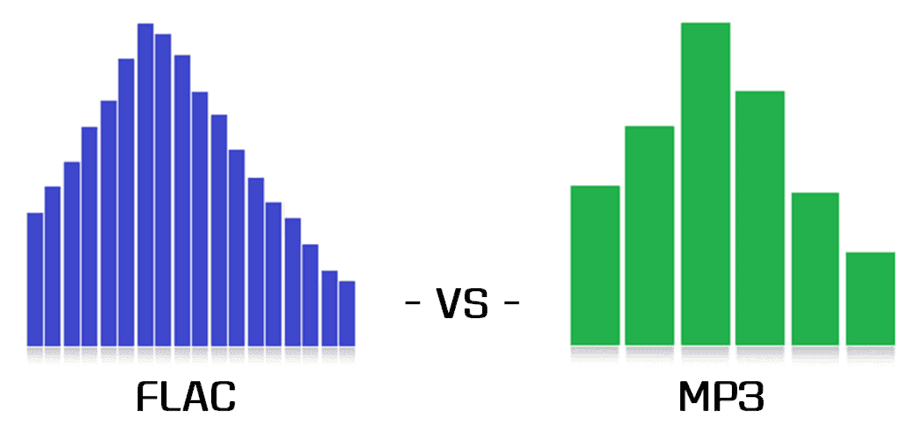
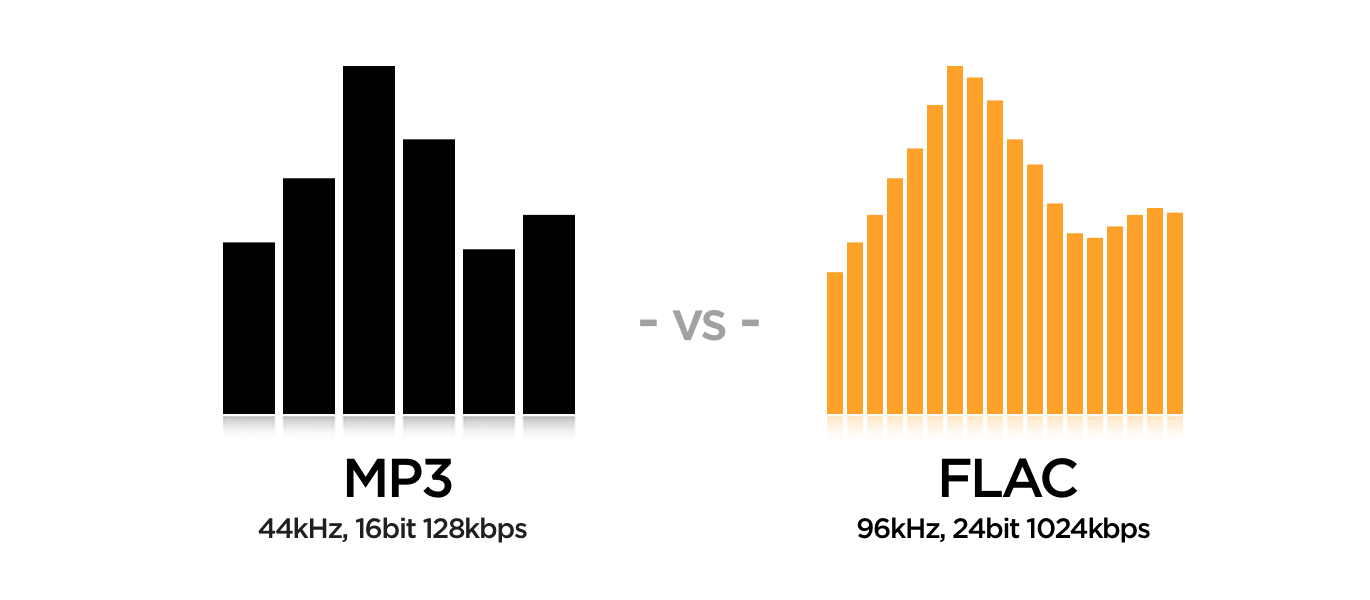
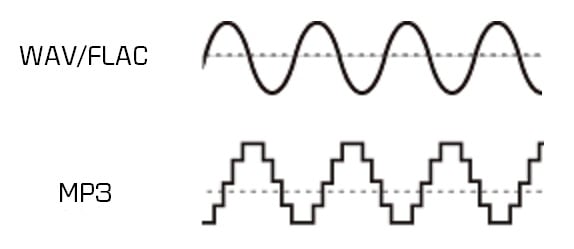
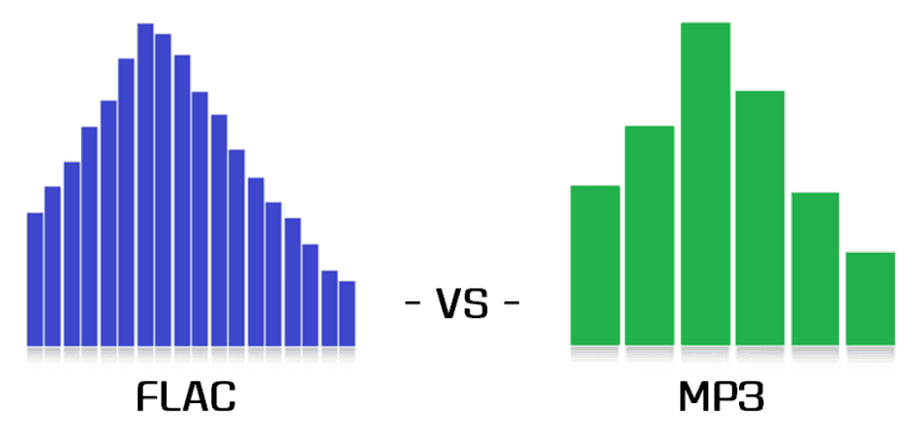
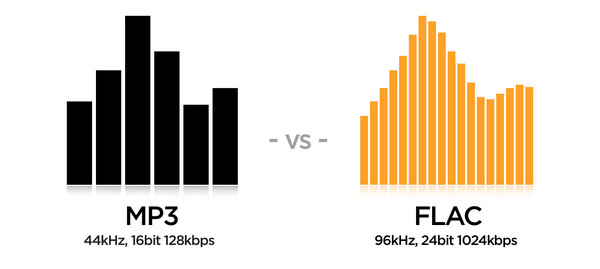
The main difference between MP3 and FLAC is the audio quality. MP3 is a compressed format that may lose some audio quality during the process, while FLAC is a lossless format that maintains all of the original quality of the recording. Also, FLAC files are larger than MP3 files, which means you need more storage space to save them.

Which is best for you?

It depends on your personal needs and preferences. If you want more music on your device and don’t mind a slight drop in audio quality, then MP3 may be the best option for you. If you are a music enthusiast and want to hear your music with maximum clarity and detail, then FLAC is the perfect choice for you.

Mp4Gain is the ideal program to normalize and convert both formats because it is the software developed exactly for that purpose for most audio and video formats.

What is the difference between MP3 and FLAC

What is the difference between MP3 and FLAC

Flac vs Mp3
Flac vs Mp3

Know what the different types of audio files offer

Flac vs Mp3
Flac vs Mp3

The recent launch of Pono’s music player and service aims to provide high-quality audio for music lovers who, more than looking for portability and practicality, are interested in enjoying compositions as the artist intended them to be heard. In order to deliver the highest level of digital audio, PonoPlayer will rely on FLAC type files.


But what is the problem with the popular MP3 or why is FLAC of better quality? Actually, in addition to these 2 formats, there are others with different specifications that differentiate them from each other.

In this article we will talk about the most important formats and their characteristics, so you can choose the one that suits you best.

What is bitrate?
The difference in file size is noticeable
You’ve probably heard this term before, but in case you don’t remember it or don’t know what it refers to, I’ll explain it. The bitrate is translated as the speed of transmission of bits, that is, the number of bits or data that are processed in a unit of time. When referring to audio, we usually use the measure of kilobits per second (Kbps). For example, the music available on iTunes is usually 256 Kbps, which means that there are 256 kilobits of information stored in each second of the song.

The higher the bitrate of a file, the more space it takes up on your hard drive. A music CD usually uses a large amount of memory space, so back in the early 1990s, researcher Karlheinz Brandenburg developed the audio compression standard we now know as MP3. When an audio file is compressed, the space allocated for it is less, however, this means that it loses some of its sound quality. For that reason the different available audio formats are divided into 2 categories: lossy and lossless.

What is the difference between flac and mp3

What is the difference between flac and mp3

FLAC vs MP3
FLAC vs MP3

First, the sound quality is different.

FLAC vs MP3
FLAC vs MP3

1. flac: It will not destroy any original audio information, so you can restore the sound quality of music CD.

2, mp3: is designed to greatly reduce the amount of audio data. Using MPEG Audio Layer 3 technology, music can be compressed into a smaller capacity file with a compression ratio of 1:10 or even 1:12.

Second, the audio is different.

1. flac: After compressing the audio with FLAC encoding, no information will be lost. After restoring the FLAC file to a WAV file, the content of the WAV file before compression is the same.

2. mp3: The human ear is not sensitive to high-frequency sound signals. The time domain waveform signal is converted to a frequency domain signal and divided into multiple frequency bands. Different compression ratios are used for different frequency bands, and the high-frequency compression ratio increases (even ignoring the signal) uses a small compression ratio for low-frequency signals to ensure that the signal is not distorted.

Is FLAC better than Mp3? Expert opinion.

Is FLAC better than Mp3? Expert opinion.

FLAC vs. MP3
FLAC vs. MP3

Many wonder if FLAC is really better than mp3.

FLAC vs. MP3
FLAC vs. MP3


This is a question that we receive frequently and not only regarding FLAC, but also ogg, m4a, etc.

The answer is simple, but it retains its complexity.

Simple because in strictly mathematical, acoustic, digital terms, if FLAC is superior.

But the complexity is: can an ordinary person using a normal (not quite professional) hi-fi or ordinary equipment tell the difference?

The answer is: in 99% of cases, not even a music professional will tell the difference if more than 190 kbs and at least 44,100 samplerates are used in the mp3.

With that quality in the mp3, which is not unusual or very high quality, it is already enough that most people, including people with audio training, cannot tell the difference.

So, it is a purist claim to say as an absolute answer, that FLAC is superior to Mp3.

For the common user there will be no major difference and on the other hand they will have certain points against them, such as the fact that there are not so many teams that accept or handle FLAC well or that if they are going to listen to it, for example, in the car, it does not make much sense to put time, money and effort to use a format that will sound the same, the only advantage is to tell his friends that he uses a better format.

MP3 and FLAC: who wins?

MP3 and FLAC: who wins?

Mp3 & FLAC

Music lovers from all countries have been arguing for many years: is it possible to distinguish a high-quality MP3 from a lossless one in a blind test (FLAC, APE, etc.)? How much does compression loss affect the perception of music? Should you give up MP3? Let’s try to answer these questions.

FLAC vs MP3

A little history
In the early 1990s, experts understood that the future of music was digital. However, hard drives were expensive then and fans preferred to store their music collections on cassettes and CDs. The researchers faced a problem: they needed a suitable format to store records on computers. At the same time, every hundred kilobytes were counted – you can slightly sacrifice quality compared to CDs, but save precious hard drive space.

In the late 1980s, the first functional prototypes of a new lossy compressed audio storage format, MP3, were created. The first publicly available MP3 encoder appeared in 1994, and the first playback software soon followed. The first encoding algorithms made it possible to obtain files with slightly “chopped” high frequencies. The sound quality was not comparable to that of a CD, but the output file sizes were quite acceptable.

In the early 2000s, volumes on hard drives were growing rapidly and other audio formats that provide lossless compression began to appear. Relatively speaking, an audio track of this format can be restored to the original WAV from a lossless CD. Perhaps the most popular lossless compression format was FLAC, introduced in 2001. It is suitable for both storing home audio collections and playing music on professional computers. However, a FLAC file can be 6-10 times heavier than a good quality MP3 (256 or 320 kbps). But does file size and losslessness mean consistently high sound quality?

find 10 differences
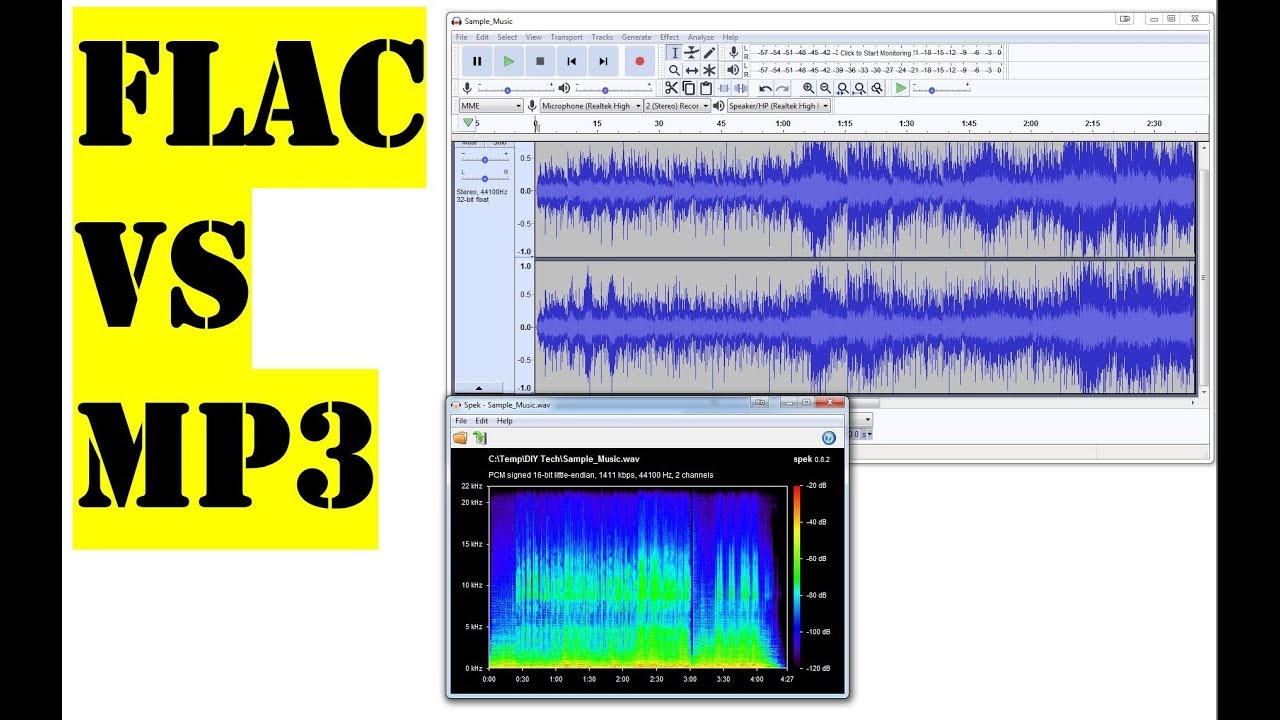
Compare, for example, two spectrograms of the same song (DAT ADAM – Hydra 3D): it is easy to see that MP3 “cuts” high frequencies compared to lossless compression (left – MP3 320 kbps, right – FLAC spectrogram, obtained by digitizing CD). But the question is different: will you hear the difference?

A bit of anatomy: The human ear is theoretically capable of hearing sounds from 16 Hz to 20 kHz. However, much depends on the age and individual characteristics of the listener. The author of this article can hear sound with a frequency of 16 kHz, but not 17 kHz and above, but there are adults (25 years and older) who can still perceive 18 kHz. All of these frequencies are quite successfully supported by the MP3 format. If you are exceptionally clear, you will be able to hear some difference in the high frequencies, but the difference is almost subtle for most people.

Flac vs mp3

Flac vs mp3

FLAC vs MP3

Recently, FLAC-compatible players, which are highly appreciated by most audiophiles, have developed rapidly. What is the secret of the format? Why is the popular mp3 format not suitable for music lovers?
Mp3 vs Flac

The birth of mp3

In the early days of digital audio, the first music format was Wave, which was widely used on CD-Audio discs. There were no large hard drives at the time and the 700MB album seemed very large. With the advent of high-performance microcircuits, the mp3 format was invented, allowing music to take up 10 times less disk space (~ 70MB vs. 700MB). This made it possible to significantly increase the number of musical compositions stored by listeners at home on a computer and early Flash players. Due to its high weight, the original format was replaced by the mp3 boom.

Many people remember the incredibly popular iriver players that support mp3 and ogg, but the time for those players has passed and iriver has released Astel & Kern players that support FLAC in high resolution.

Compression of information in mp3 and quality How does mp3 take up less space? It is based on two technologies: archiving and psychoacoustic compression. The conventional file is not very efficient and is only used in lossless formats like flac, ape, and wavepack. Psychoacoustic compression is added to mp3 and this format belongs to the Lossy group (lossy compression).

Psychoacoustic compression dilutes data according to a simple principle: anything that the listener potentially does not hear (for example, quiet sounds against the background of loud sounds) is mercilessly discarded. There are many parallels with the video and the photos. For example, in the jpg format, pixels with similar colors are grouped into large squares of the same color and when forming an image, we usually do not notice that various hues have disappeared. But if we want to take a closer look, we will definitely see it!

The quality of the same mp3 bit rate is different

There are a large number of mp3 encoders, and each has its own priority level in the algorithm, what is least important in music and what to remove first with low compression and last with high. The higher the compression, the more meaningful information is removed and the easier it is to listen to on simple audio equipment.

Unfortunately, the sound quality of mp3 depends not only on the degree of compression expressed in bitrate, but also on the codec with which it was compressed and with what settings. Very often, a high bit rate on the order of 320 kB / s is used, but with the fast and less resource consuming encoding mode. The file encodes very quickly, but as a result, it subjectively sounds worse than encoded at 128 kB / s in long, resource-intensive mode.

Almost all “mp3 producers” in the form of websites and CD compilations use fast algorithms. They believe that most will not hear the difference on their phones anyway, and will be guided by the purchase only by the bitrate. Why spend the extra effort if they buy well?

The differences between the 320 kB / s mp3 encoded in high quality and resource intensive mode and the original Wave are actually very small and sometimes difficult to distinguish even with good audio equipment, but these mp3s are usually very few and far between. they just make them enthusiastic. Most of the mp3 leaves a depressing impression.

Much also depends on the decoder, which determines the quality of the final sound. There are still battles on the forums, which software or hardware player sounds better with which decoder.

At the height of mp3 development, the quality of players and sound cards left much to be desired, especially considering that the main mp3 users were those who could not afford to listen to music on a good hi-fi system. . Quality issues were hardly noticed, similar to JPG compression issues when viewed through a cell phone screen. But on a good audio route, it was obvious. Recently, technology has advanced and the quality of most fonts has increased and consequently the disadvantages of mp3 have become more obvious. What are the main disadvantages of mp3 sound?

The absence or unnaturalness of the high frequencies (due to the strong decimation of the high frequencies, which most supposedly cannot hear)
Wheezing and distortion in vocals, unnatural timbres of instruments
Violation of the location of sources in space.
But most importantly, you never know how high quality an mp3 will sound, how much information is actually lost on it.

Can you notice the difference between MP3 and FLAC?

Can you notice the difference between MP3 and FLAC?

FLAC vs MP3

“Here, of course, the question is not about the difference between MP3 and FLAC, it is broader: that lossy compression formats (MP3, AAC, WMA, Ogg Vorbis and others; that is, lossy) differ from the “lossless” (FLAC, ALAC, APE, WavPack and others; that is, lossless).

FLAC vs. MP3

Actually, with such wording, it becomes clear that in the first group of formats, the original data is not completely saved, and the second can be restored to its original format (for example, Wav or Aiff extracted from CD) without loss. What exactly is lost and in what proportions depends on the specific type of lossy files and their bit rate, that is, the degree of compression. But to say that all MP3s sound bad and the “flacks” are perfect is the height of arrogance and incompetence. Lossy audio formats have been developing for more than twenty years, and serious research laboratories (Fraunhofer Institute, for example, in addition to working on MP3, is also famous for the invention of the most efficient solar battery) and a group of enthusiasts. The math of encoding is constantly improving, and nowadays it is not so easy to distinguish files produced by different codecs by ear.

I would immediately make a reservation that not only the files themselves are important, but also the equipment they are to be tested on, the listening environment, and the examiner’s listening experience. In MP3 of any low bitrate Ariel Pink will sing with the voice of Ariel Pink, of that there is no doubt. It is quite possible that a person listening to music as a melody through white headphones in a subway car is sufficient for the eyes, and the difference in codecs will come down to a comparison of file sizes. A disc jockey who is embarrassed to buy or search lossless will also think that everything is in order with his MP3, while preparing a set in the “Tractor” on the built-in speakers of the laptop. True, during a party on a big, loud, clean-sounding audio system from the club (sometimes they meet, believe me), it suddenly turns out that the guy who speaks right after for some reason, the music got big, clear and cool. Lossy formats are developed for the convenience of transferring files over the Internet, for storing them on portable audio players, and finally for personal playback. Okay, it’s silly to watch a gigabyte AVI movie on a big screen. Even in a home theater, this is not entirely decent. The same goes for MP3. On your iPod: listen to your health (although AAC from iTunes definitely sounds better), but if you go to the disco, please don’t miss out, even if you start Skrillex. And when you listen to Christmas jazz with your girlfriend’s parents on their big lacquered speakers, buy FLAC or ALAC too. With MP3, you run the risk of getting into an awkward situation. In theory, after 256 kbps bit rate, it will be quite difficult for your future audiophile father-in-law to know if you are leaking or not.

Usually when you view an MP3 file, you don’t care about anything other than the bit rate. If you already consider yourself a person with a taste for music and sound, you should look in the file properties for the codec data that was used during the conversion. Suppose you see “Lame 3.99” there, this means the latest MP3 codec was used and you’re in luck. But next to it is “Joint Stereo”, which is not great anymore. This means that to save a couple of percent of the file size, the codec was allowed to add something to mono, although the recording is stereophonic and the sound image has slightly lost depth and clarity. There are also fully botanical CBR or VBR, ABR and UBR, but if you’re ready to dig that seriously, do it yourself. Well, you found out the properties of the file, everything is simple there. The difficulty is this: You hardly ever know what your 320 CBR Stereo is made of. Scammed out of Internet radio? Made from an unremastered original Japanese CD? Recoded from 192? There is a lot of music on torrents or Soulseek, but there are few guarantees. Another complication is that lossy formats slightly increase the peak values ​​of the audio signal. The so-called overshoot: thousands of micro-overloads throughout the entire file. Again, you won’t notice this on a train with an iPod. And the future father-in-law can hear. “The so-called overshoot: thousands of micro-surges throughout the entire file. Again, you won’t notice this on a train with an iPod. And the future father-in-law can hear.” The so-called overshoot: thousands of micro-overloads throughout the entire file. Again, you won’t notice this on a train with an iPod. And the future father-in-law can hear. “