When it comes to preserving the quality of your audio files, the term “FLAC Silent Blocks” often arises. As a specialist in audio compression, I’m here to shed light on this topic and provide you with a deeper understanding of how it can improve your audio experience.
The Basics of FLAC Silent Blocks
Let’s start by discussing the fundamental concept of FLAC Silent Blocks. These blocks are a crucial component of the FLAC (Free Lossless Audio Codec) file format. They serve a unique purpose in audio compression, ensuring that audio data is efficiently stored while maintaining high quality.
How Do Silent Blocks Work?
FLAC Silent Blocks
Silent Blocks in FLAC act as placeholders for silence in audio recordings. When you record audio, there are moments of silence between words or music notes. Instead of wasting storage space on these moments, FLAC employs Silent Blocks to represent them. These blocks play a vital role in reducing file size while keeping the audio lossless.
Imagine a book where some pages are entirely blank. You don’t need to fill those pages with empty words; you can simply label them as “blank pages.” This analogy is similar to how Silent Blocks function in FLAC files.
The Advantages of FLAC Silent Blocks
Now that you understand the basics, let’s explore the advantages of using FLAC Silent Blocks:
Reduced File Size
FLAC Silent Blocks significantly reduce the file size of audio recordings. By efficiently managing moments of silence, these blocks help save valuable storage space without compromising on audio quality.
Lossless Compression
One of the primary goals of FLAC is to provide lossless compression. Silent Blocks ensure that the audio remains identical to the original, even after compression. It’s like having a high-quality copy of your audio in a more compact format.
Streamlined Streaming
In the age of digital music and streaming services, smaller file sizes are advantageous. Silent Blocks make it easier to stream audio over the internet without buffering issues. Your favorite tunes reach your ears faster and with pristine quality.
Why FLAC Silent Blocks Matter
FLAC Silent Blocks matter because they exemplify the commitment to preserving audio quality. In a world where digital music is prevalent, having a format that maintains the integrity of your audio files is invaluable. With these blocks, you can enjoy your music as the artist intended.
The Future of Audio
As technology continues to evolve, audio formats like FLAC with Silent Blocks are at the forefront of delivering top-notch audio quality. They ensure that your music collection remains timeless and future-proof.
In summary, FLAC Silent Blocks are a hidden hero in the world of audio compression. They reduce file sizes, maintain lossless audio quality, and enhance your overall listening experience. With these blocks, your audio files become more manageable, efficient, and ready for the future of digital music.
Now it’s your turn. What are your thoughts on FLAC Silent Blocks? How have they influenced your audio experience? Share your experiences and opinions in the comments below.
Comments:
I never realized how important Silent Blocks were for audio compression. This article enlightened me!
As a music enthusiast, I appreciate the effort to maintain audio quality. FLAC Silent Blocks are a game-changer.
The debate between FLAC and MP3 often revolves around audio quality. FLAC, being a lossless format, preserves all the original audio data, ensuring a higher fidelity listening experience compared to MP3, which employs lossy compression, sacrificing some quality for smaller file sizes. While MP3 is more common due to its compact size, FLAC’s superiority shines through when audio quality is paramount. In terms of audio fidelity, author Alan Parsons eloquently states, “Art is anything you can get away with… destroy it all.” – Alan Parsons
How do I convert to FLAC format?
Converting audio to FLAC format is straightforward. Numerous tools are available, allowing you to transcode your existing audio files into the FLAC format without compromising quality. These tools vary from dedicated audio converters to multimedia software packages. Some popular options include freeware like Audacity or dedicated conversion tools like dBpoweramp. Regardless of the tool you choose, the conversion process typically involves importing your audio file, selecting the FLAC format, and initiating the conversion process.
What is lossless audio?
Lossless audio, exemplified by the FLAC format, preserves the original quality of an audio recording during compression and decompression. This means that when you play a FLAC file, you hear the exact same sound as the original recording. The key difference between lossless and lossy formats, such as MP3, lies in the data discarded during compression. Lossy formats remove certain audio data to reduce file size, whereas lossless formats retain all the audio information. Lossless audio ensures that every note, every whisper, and every instrument is faithfully reproduced, offering a listening experience akin to being in the recording studio.
Does FLAC work on all devices?
FLAC’s versatility is a significant advantage. While not all devices natively support FLAC, the format is widely compatible across various platforms. Many media players, such as VLC and Foobar2000, readily handle FLAC files. Moreover, some high-end portable audio players and smartphones cater to audiophiles and support FLAC playback. However, in cases where FLAC isn’t directly supported, users can easily convert their FLAC files to formats like ALAC (Apple Lossless) for seamless playback on Apple devices.
How to play FLAC files?
Playing FLAC files is a straightforward process. As mentioned earlier, numerous media players support FLAC playback. If you’re using a computer, you can use popular media players like VLC, which handles a variety of audio and video formats, including FLAC. Additionally, there are specialized audio players that cater to audiophiles, offering enhanced audio quality and support for high-resolution FLAC files. Whether you’re on a desktop, laptop, or smartphone, enjoying FLAC files is just a few clicks away.
Are FLAC files larger?
Yes, FLAC files are larger compared to their lossy counterparts like MP3. This is because FLAC retains all the original audio data, resulting in higher audio quality. While the larger file size might be a concern for those with limited storage space, the trade-off is unparalleled audio fidelity. As the saying goes, “The sweetest melodies are those that are broken.” – Jack Kerouac For audiophiles and those who prioritize audio quality, the larger file size is a small price to pay for an immersive listening experience.
What is FLAC used for?
FLAC finds its use in various scenarios. It is a preferred format for archiving audio collections, ensuring that the original quality is maintained over time. Moreover, FLAC is commonly employed in music production and recording, where audio fidelity is crucial. Musicians, producers, and audio engineers often choose FLAC to ensure that their work is preserved with the utmost accuracy. Additionally, the format is embraced by audiophiles who demand the highest standard of audio quality in their listening experience.
How to create FLAC files?
Creating FLAC files is a straightforward process, especially with the abundance of available tools. If you’re producing music or working with audio recordings, digital audio workstations (DAWs) like Ableton Live, Logic Pro, or FL Studio often provide the option to export or render audio in the FLAC format. Additionally, dedicated audio conversion software allows you to transcode your existing audio files into FLAC without losing quality. The process usually involves selecting the desired files, choosing FLAC as the output format, and initiating the conversion.
Is FLAC the best audio format?
Determining the “best” audio format depends on your priorities. If audio quality is your top concern, then FLAC stands out as an exceptional choice due to its lossless compression. FLAC ensures that you experience music as the artist intended, with every detail meticulously preserved. However, factors like compatibility and storage space also play a role. If you value convenience and smaller file sizes, lossy formats like MP3 might be more suitable. The “best” audio format ultimately varies based on individual preferences and needs.
FLAC vs. WAV: Which is better?
FLAC and WAV are both lossless audio formats that prioritize audio quality. The main difference lies in how they handle metadata and file size. FLAC supports metadata embedding, making it an excellent choice for organized music libraries. WAV, on the other hand, lacks built-in metadata support but maintains compatibility with a wide range of devices. When choosing between the two, consider your usage scenario. If you’re archiving music and want metadata, FLAC is ideal. If you need maximum compatibility and aren’t concerned about metadata, WAV might be more suitable.
Final Words
In the realm of digital audio, the FLAC format reigns supreme for those who demand the highest level of audio fidelity. Its ability to faithfully preserve the intricate details of a musical composition ensures an unparalleled listening experience. As technology advances, the FLAC format continues to be a symbol of the unwavering pursuit of sonic excellence. Whether you’re an audiophile, a music producer, or a casual listener, exploring the world of FLAC can elevate your appreciation for the art of sound.
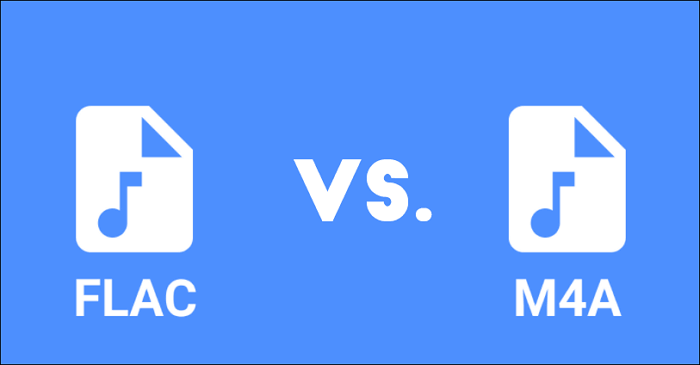
The Future of Digital Audio: FLAC and M4AThe Future of Digital Audio: FLAC and M4A
Digital audio is a rapidly evolving field, and the two most popular formats, FLAC and M4A, are constantly being improved. In this article, we will take a look at the future of digital audio and how FLAC and M4A are positioned to play a role.
FLAC
FLAC stands for Free Lossless Audio Codec. It is a lossless format, which means that it does not lose any data when it is compressed. This makes FLAC the best choice for audiophiles who want the highest possible sound quality.
FLAC files are typically much larger than lossy formats, such as MP3 or AAC. However, the increased file size is worth it for the improved sound quality.
FLAC is supported by a wide range of devices and software. It is also open source, which means that it is free to use and modify.
M4A
M4A stands for MPEG-4 Audio. It is a lossy format, which means that some data is lost when it is compressed. However, M4A files are much smaller than FLAC files, making them ideal for streaming or storing music on portable devices.
M4A files are supported by a wide range of devices and software. They are also the native format for Apple devices, such as the iPhone and iPad.
The Future of Digital Audio
It is likely that FLAC and M4A will continue to be the two most popular digital audio formats for the foreseeable future. FLAC will remain the best choice for audiophiles who want the highest possible sound quality, while M4A will be the preferred format for streaming and storing music on portable devices.
However, there are a number of new digital audio formats that are beginning to gain popularity. These include:
WAV: WAV is a lossless format that is similar to FLAC. It is supported by a wide range of devices and software, but it is not open source.
APE: APE is another lossless format that is similar to FLAC. It is not as widely supported as FLAC, but it offers slightly better sound quality.
AAC: AAC is a lossy format that is similar to M4A. It is supported by a wider range of devices and software than M4A, but it offers slightly worse sound quality.
It is possible that one of these new formats will eventually replace FLAC and M4A as the most popular digital audio formats. However, it is also possible that FLAC and M4A will continue to be the dominant formats for many years to come.
Conclusion
The future of digital audio is uncertain, but FLAC and M4A are likely to remain the two most popular formats for the foreseeable future. These formats offer a good balance of sound quality and file size, and they are supported by a wide range of devices and software.
If you are looking for the best possible sound quality, FLAC is the best choice. If you are looking for a format that is smaller in file size and more widely supported, M4A is a good option.
Here are some additional tips for choosing a digital audio format:
Consider your needs: If you are an audiophile who wants the highest possible sound quality, FLAC is the best choice. If you are looking for a format that is smaller in file size and more widely supported, M4A is a good option.
Consider your devices: Make sure that the format you choose is supported by your devices. For example, if you have an iPhone, you will need to choose a format that is supported by Apple devices.
Consider your budget: FLAC files are typically larger than M4A files, so you may need to pay more for FLAC files if you are planning to store a lot of music.
By following these tips, you can choose the best digital audio format for your needs.
As an audiophile, I’ve always been interested in finding ways to compress audio files without sacrificing quality. That’s where FLAC compression comes in. FLAC stands for Free Lossless Audio Codec, which means that it compresses audio files without losing any of the original data. This is different from other compression methods, like MP3, which use lossy compression and discard some of the audio data to achieve a smaller file size.
According to the book “The Art of Digital Audio Recording,” FLAC compression works by “using a prediction algorithm to estimate the value of each audio sample based on the values of previous samples.” This prediction algorithm is then used to encode the audio data in a more efficient way, resulting in a smaller file size without any loss of quality.
Audio Compression Software
As a music producer, I’ve used FLAC compression software to reduce the size of my audio files without sacrificing quality. There are many different software options available for FLAC compression, including both free and paid options. One of the most popular options is the FLAC command-line tool, which is available for Windows, Mac, and Linux.
Another popular option is dBpoweramp, which is a paid audio conversion software that includes FLAC compression as one of its features. According to the dBpoweramp website, their FLAC compression “is the fastest and most reliable compression method available.”
Audio Compression Format
FLAC compression is also a popular audio compression format, used by many music streaming services and online music stores. According to the website of the music streaming service Tidal, “FLAC is a lossless compression format that provides bit-perfect copies of CD-quality music.”
In my experience, using FLAC compression has allowed me to store more music on my hard drive without sacrificing any of the quality. It’s a great option for anyone who wants to reduce the size of their audio files without sacrificing any of the original data.
Final Words:
Overall, FLAC compression is a great option for anyone who wants to compress their audio files without sacrificing quality. Whether you’re a music producer, audiophile, or just someone who wants to store more music on their hard drive, FLAC compression is definitely worth considering.
Keywords: FLAC compression, lossless audio compression, audio file compression, digital audio compression, audio codec, audio compression algorithm, audio compression software, audio compression format, music streaming, music production, Tidal.
FLAC, compression, lossless, audio, file, digital, codec, algorithm, software, format, music, streaming, production, Tidal, quality, data, prediction, estimate, command-line, tool, Windows, Mac, Linux, dBpoweramp, fastest, reliable, bit-perfect, CD-quality, hard drive, audiophile, music producer, online music store, file size, reduce, store, option, sacrifice, original, great, considering, worth.
As technology continues to advance, so too does the way in which we consume media. For music lovers, this means access to high-quality audio formats that deliver a listening experience unlike any other. In recent years, FLAC has emerged as the go-to format for audiophiles who demand the best possible sound quality. In this article, we’ll explore the history and characteristics of the lossless audio format FLAC, and explain why it’s the best choice for audiophiles.
What is FLAC?
FLAC stands for Free Lossless Audio Codec, and as the name suggests, it’s a type of audio compression that doesn’t lose any data during the encoding process. This is in contrast to lossy audio formats like MP3, which use compression algorithms that discard some of the audio data in order to reduce the file size. FLAC files are typically about half the size of the original uncompressed audio file, but retain all of the audio data.
History of FLAC
FLAC was first introduced in 2000 by Josh Coalson, who was looking for a way to compress audio without losing any of the data. It quickly gained popularity among audiophiles who were tired of the limitations of lossy audio formats like MP3. Today, FLAC is widely used by music enthusiasts and professionals alike, and is supported by a wide range of software and hardware.
How FLAC Works
FLAC uses a process called linear prediction to compress audio data without losing any of the information. Essentially, this means that FLAC predicts what the next sample in the audio stream will be based on the previous samples, and then encodes the difference between the prediction and the actual sample. This allows FLAC to achieve a compression ratio of around 50%, while retaining all of the original audio data.
FLAC vs. Other Audio Formats
One of the key advantages of FLAC over other lossless audio formats is its wide compatibility. FLAC is supported by a wide range of software and hardware, including media players, smartphones, and streaming services. This makes it a convenient choice for audiophiles who want to listen to high-quality music on the go.
Another advantage of FLAC is its ability to support high-resolution audio. FLAC files can be encoded with a higher frequency of sampling, higher bit depth, and higher channel count than other lossless audio formats. This means that FLAC can reproduce the full range of sounds that were present in the original recording, even at very high volumes.
Technical Aspects of FLAC
FLAC supports a range of technical specifications that affect the quality of the audio. These include:
Sampling Frequency
Sampling frequency refers to the number of samples of audio taken per second, and is measured in Hertz (Hz). The higher the sampling frequency, the more accurate the audio reproduction. FLAC supports sampling frequencies up to 655,350 Hz, which is more than enough to capture even the most subtle nuances of the music.
Bit Depth
Bit depth refers to the number of bits used to represent each sample in the audio stream. The higher the bit depth, the more accurate the representation of the audio waveform. FLAC supports bit depths up to 32 bits, which allows for a high level of detail in the audio reproduction.
Channel Count
Channel count refers to the number of independent audio channels in the audio stream. FLAC supports up to 8 channels, which allows for a rich and immersive listening experience.
Audio Processing in FLAC
In addition to the technical aspects of FLAC, there are also a number of audio processing features that can affect the quality of the audio. These include:
Equalization
Equalization refers to the
conitnua donde te quedaste que fue en Equalization Equalization refers to the
adjustment of frequency response of an audio signal. In other words, it is the process of changing the balance between frequency components within an audio signal. Equalization can be used to enhance the overall sound quality of an audio file, making it more pleasing to the listener’s ear.
When it comes to FLAC, equalization can be used to enhance the sound quality of an audio file without compromising its lossless quality. This is because FLAC is capable of storing metadata about the file’s equalization, which can be used by software and hardware players to reproduce the file with the intended frequency balance.
Additionally, FLAC supports a wide range of equalization options, including graphic equalization, parametric equalization, and shelving filters. Each of these options allows users to fine-tune the frequency balance of the audio signal to their liking.
It is important to note, however, that equalization can also have a negative impact on the quality of an audio file if not used correctly. Overuse of equalization can result in distortion or a loss of detail in the audio signal. As such, it is important to use equalization in moderation and with a trained ear.
ReplayGain
ReplayGain is a technique used to normalize the volume of audio files. It is particularly useful when listening to a collection of audio files with varying loudness levels, as it ensures that each file is played at a consistent volume.
There are two types of ReplayGain: track gain and album gain. Track gain normalizes the volume of an individual audio file, while album gain normalizes the volume of an entire album. ReplayGain works by analyzing the volume of an audio file and applying gain adjustments to achieve a desired playback level.
FLAC supports ReplayGain metadata, which can be used by software and hardware players to automatically adjust the volume of audio files during playback. This means that users can listen to their FLAC collection without having to constantly adjust the volume between tracks.
Recommended Hardware
It is worth noting, however, that not all hardware and software players are created equal when it comes to FLAC playback. Some players may not support certain FLAC features, such as ReplayGain or equalization metadata, which can result in a loss of quality or functionality. As such, it is important to research and choose a player that supports all the features you require for optimal FLAC playback.
Obtaining FLAC Files
One of the main challenges with FLAC is obtaining audio files in this format. While FLAC is becoming more popular, it is still not as widely used as other formats such as MP3 or AAC.
There are a variety of sources for obtaining FLAC files, including music streaming services, online music stores, and community-driven FLAC repositories. When obtaining FLAC files, it is important to ensure that the files are encoded properly and are of high quality to ensure optimal playback.
Conclusion
In conclusion, FLAC is the best option for audiophiles who want the highest quality audio possible. Its lossless compression, support for high-resolution audio, and ability to store metadata about equalization and ReplayGain make it the ideal format for those who are serious about audio quality.
When using FLAC, it is important to understand the technical aspects of the format, including compression settings, frequency of sampling, and bit depth, to ensure optimal playback quality. Additionally, proper use of equalization and ReplayGain can further enhance the sound quality of FLAC files.
Finally, choosing the right software and hardware for playing FLAC files can make a big difference in the audio quality. Many media players, both hardware and software, support FLAC, but not all of them are created equal. Some may not have the necessary processing power or DAC to handle high-quality FLAC files, while others may not support all of the features of the format.
When it comes to hardware, audiophiles may want to consider investing in a high-quality DAC (digital-to-analog converter) to achieve the best possible audio quality. Some DACs even come with built-in support for FLAC playback and can be connected to a computer or mobile device to play FLAC files.
In conclusion, FLAC is the best audio format for audiophiles due to its lossless compression, high resolution, and support for advanced audio features like equalization and replay gain. While the files may be larger than other formats like MP3, the improved audio quality is worth it for those who value a pristine listening experience. By using the right software and hardware, listeners can enjoy the full benefits of the FLAC format and immerse themselves in their favorite music like never before.
The name comes from the acronym of its name Windows Media Audio, which as we mentioned is the format of music files owned by the company Microsoft. One of the fundamental characteristics of this format is that those files that have been compressed in WMA format are smaller than MP3s, and therefore their quality decreases, although it retains certain parameters for the care of data integrity and quality .
That is why it is considered that Windows Media Audio is a lossy audio compression format, although it continues to be one of the main competencies of MP3, due to its wide spread, especially on the web.
It is usually a format that is often used on various websites for pre-listening or sampling of music, but it is also usually included in some models of portable digital music players.
On the other hand, for years it is the format par excellence in the tasks related to audio within the Windows operating system, which includes by default the Windows Media Player.
It should be noted that due to its frequent use, in recent years the majority of PC audio players include the necessary codecs to allow WMA playback.
However, the MP3 continues to be the market leader in digital audio formats, since WMA has not been able to capture the attention of users because it has a security infrastructure that protects copyright and Copyright, so it is not usually used for downloads on P2P networks.
On the other hand, it is important to mention that the WMA is closely linked to two other formats, the Windows Media Video, known as WMV, and the Advanced Streaming Format, more popular by its acronym ASF.
Digital audio formats: FLAC
The word FLAC refers to the acronym of the English name Free Lossless Audio Codec, that is to say, codec free of lossless audio compression, which indicates that we are facing one of the audio formats that prioritizes quality before the size of records.
Emerged within the community responsible for the Ogg project, FLAC has recently become one of the strongest competitors in the WAV format, due to its advantages in sound quality.
As it works by preventing loss of audio quality, the FLAC only manages to reduce the size of the original sound files by a third of the original size, because it retains the information contained in the original file, depending on the file that will be Processed by this method.
In this sense, it is important to mention that as with the rest of the formats without loss, in FLAC the final quality of the file depends largely on the musical style, its complexity and the sound variety, which characterize the own sound file
However, it should be noted that the FLAC system has been designed precisely to compress audio, so the resulting files tend to be smaller compared to the original files.
In short, what the FLAC compression system does is eliminate certain data from the source files, which are usually known as waste, without causing loss of quality.
Known for their “.flac” extension, files of this type can be played by a limited group of players that have the necessary codecs for it.









Comments:
I never realized how important Silent Blocks were for audio compression. This article enlightened me!
As a music enthusiast, I appreciate the effort to maintain audio quality. FLAC Silent Blocks are a game-changer.