MP3 vs FLAC: Which audio format is better for you?


Free Download Mp4Gain
picture

MP3 vs FLAC: Which audio format is better for you?
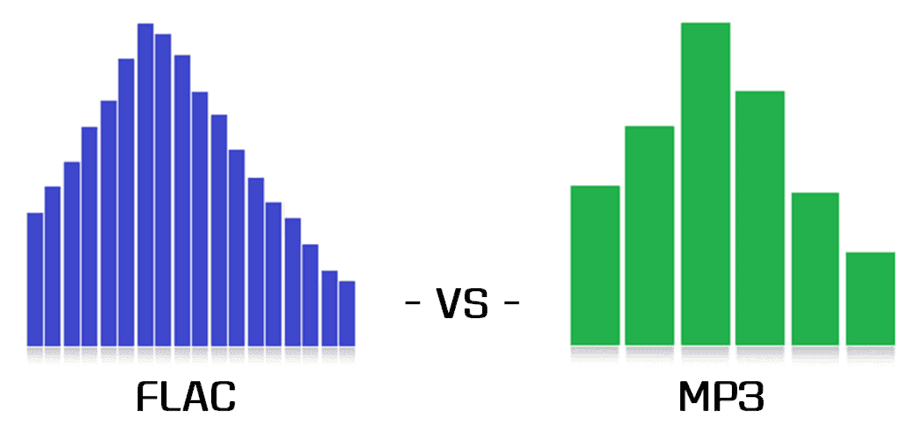
FLAC vs MP3
FLAC vs MP3

If you like listening to music, you’ve probably heard of the MP3 and FLAC formats. Both are popular, but which one is best for you?
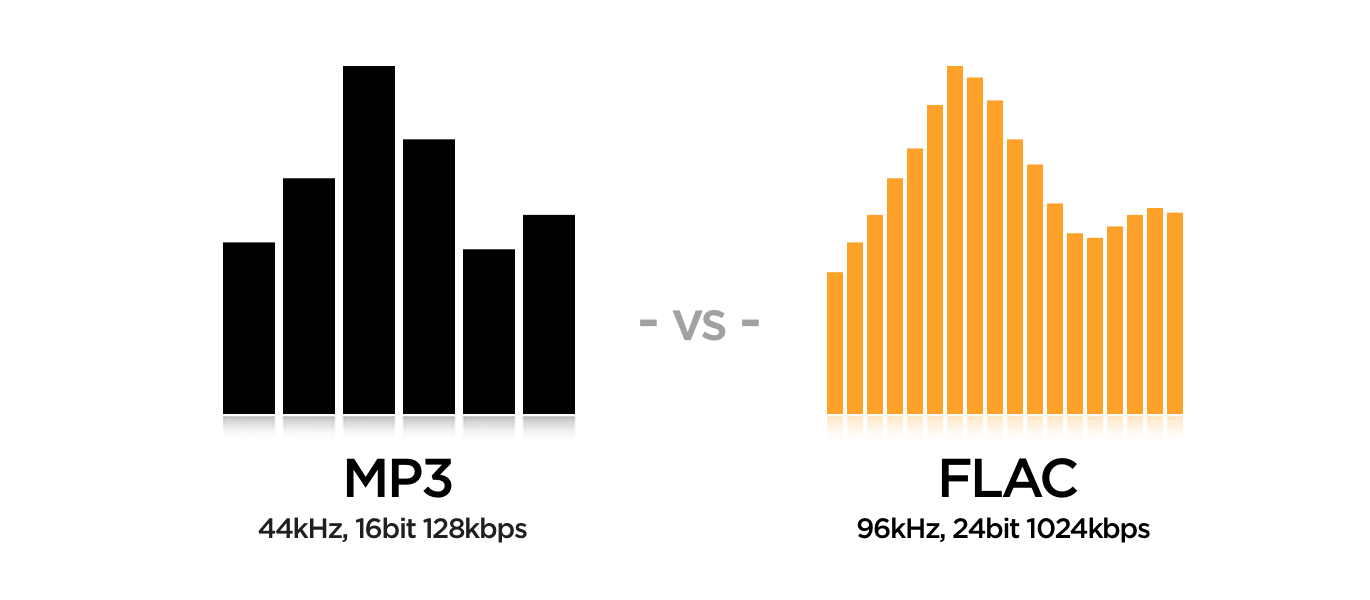
FLAC vs. MP3
FLAC vs. MP3

What is the MP3 format?

MP3 is a very popular audio format used to compress music files. This means you can have more songs on your phone or computer without taking up a lot of storage space. Plus, it’s easy to play on most devices, including phones, computers, and MP3 players.

What is the FLAC format?

FLAC is a lossless audio format, which means that no audio quality is lost during compression. This means that you will hear the music exactly as it was recorded by the artists. FLAC is ideal for those who value audio quality and want to hear their music with maximum clarity and detail.

What is the difference between MP3 and FLAC?

The main difference between MP3 and FLAC is the audio quality. MP3 is a compressed format that may lose some audio quality during the process, while FLAC is a lossless format that maintains all of the original quality of the recording. Also, FLAC files are larger than MP3 files, which means you need more storage space to save them.

Which is best for you?

It depends on your personal needs and preferences. If you want more music on your device and don’t mind a slight drop in audio quality, then MP3 may be the best option for you. If you are a music enthusiast and want to hear your music with maximum clarity and detail, then FLAC is the perfect choice for you.

Mp4Gain is the ideal program to normalize and convert both formats because it is the software developed exactly for that purpose for most audio and video formats.


Free Download Mp4Gain
picture


Mp4Gain Main Window
picture


Mp4Gain Features
picture


Free Download Mp4Gain
picture

Impossible to detect the difference between MP3 and FLAC

Impossible to detect the difference between MP3 and FLAC

New comparative study carried out by experts debunks the myth that the FLAC sound (Free Lossless Audio Codec (FLAC) or Codec free lossless audio compression, is considerably better than that obtained in MP3 or AAC files.

According to Wikipedia, FLAC is a format of the Ogg project to encode audio without loss of quality; that is, the initial file can be completely recomposed, although with the disadvantage that the resulting file takes up much more space than would be obtained by applying lossy compression.

Other formats, such as MP3 or ACC (Advanced Audio Coding), irreversibly lose part of the original information when compressing the file, in exchange for a great saving in file size.

The site Trusted Reviews has published an analysis called “Sounds Good to Me”, the conclusion of which is that there is no considerable difference in sound in FLAC and MP3, at least for the average user’s auditory perception.

In their study, Trusted Reviews made the assumption that there is a difference, and that people with developed hearing abilities could hear the difference between a 192 kbps MP3 file and a FLAC file, both obtained from the same original CD.

Only one user notices the difference between Mp3 and FLAC

The previous assumption was not confirmed in the facts, since among the seven people who participated in the analysis there was only one who detected the difference between FLAC and MP3. In many cases, MP3 at a rate of 192 kpbs had a higher score than FLAC.

This result was further strengthened when comparing 320 kbps MP3 files with FLAC files, since half answered correctly, and half were wrong. The percentage of participants who preferred MP3 was even higher.

The trial used an iBasso D3 Python USB DAC and Beyer Dynamic DT770 Pro headphones.

It should be noted that studies of this type have a certain margin of error. According to experts in comparisons such as the one carried out by Trusted Reviews, there are psychological factors, such as many users quickly forgetting their perception of what they have just heard, so the order in which the test is carried out is highly relevant. Non-expert users are also influenced by their mood and, in fact, by the music they listen to.