What is the difference between bit depth and bitrate?


Free Download Mp4Gain
picture

What is the difference between bit depth and bitrate?

Bit Depth
Bit Depth
Bit depth
Bit Depth

Understanding Bit Depth and Bitrate

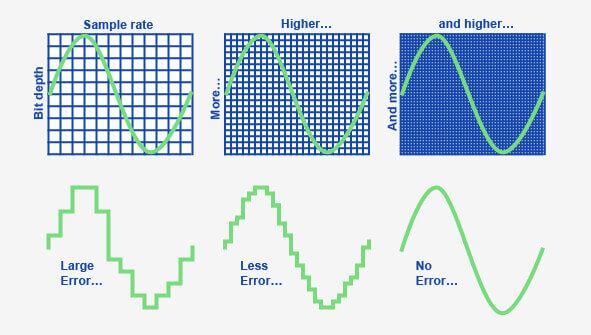
When it comes to audio and video files, there are two terms that are often used interchangeably: bit depth and bitrate. However, they are not the same thing. Bit depth refers to the number of bits used to represent each sample in an audio or video file, while bitrate refers to the amount of data transmitted per second.
Bit depth determines the number of possible values for each sample in a digital audio or video file. For example, an 8-bit audio file can have 256 possible values per sample, while a 16-bit file can have 65,536. The higher the bit depth, the more accurate the representation of the original sound or image.

On the other hand, bitrate refers to the amount of data transmitted per second in a digital file. In other words, it’s the rate at which data is encoded in a file. Higher bitrates typically mean higher quality files with more information, but also larger file sizes.

Audio Bit Depth vs Bitrate

When it comes to audio files, the bit depth and bitrate are both important factors in determining the quality of the sound. A higher bit depth means a more accurate representation of the original sound, while a higher bitrate means more data is transmitted per second, resulting in a higher quality sound.
However, it’s important to note that a higher bitrate does not necessarily mean a higher quality sound. If the original recording is of poor quality, increasing the bitrate will not improve the sound. In fact, it can actually result in larger file sizes with no improvement in sound quality.

Video Bit Depth vs Bitrate

Video files also have bit depth and bitrate, but they work slightly differently than in audio files. Bit depth determines the number of colors that can be represented in a video file, while bitrate determines the amount of data transmitted per second.
A higher bit depth means a wider range of colors can be represented in the video, resulting in a more accurate and vibrant image. However, a higher bitrate is also important for video files, as it determines the amount of detail that can be captured in each frame.

It’s important to find the right balance between bit depth and bitrate for video files, as increasing one can have a negative impact on the other. For example, a high bit depth with a low bitrate can result in a choppy or pixelated image, while a low bit depth with a high bitrate can result in a washed-out or blurry image.

Final Words

In conclusion, bit depth and bitrate are both important factors to consider when working with audio and video files. While they may seem similar, they serve different purposes and have different effects on the quality of the final product. It’s important to find the right balance between the two to ensure the best possible sound or image quality.
Keywords: audio bit depth, video bit depth, bit depth vs bitrate, bitrate definition, bitrate vs quality, audio quality, video quality, digital audio, digital video, file size, data transmission, accuracy, color representation, image quality, sound quality, audio recording, video recording, data encoding, pixelation, file format, media production, sound engineering, video editing, multimedia, digital media, technology, mp4gain, audio normalization, audio conversion, equalizer, windows, digital signal processing, dynamic


Free Download Mp4Gain
picture


Mp4Gain Main Window
picture


Mp4Gain Features
picture


Free Download Mp4Gain
picture

WMA File Type Explained

WMA File Type Explained

WMA File Type Explained

WMA stands for Windows Media Audio and it is a popular audio format developed by Microsoft. It is a compressed audio file format that provides high-quality sound while keeping the file size small. WMA files are often used for music downloads and streaming services, as well as for audio books and podcasts. They can be played on a variety of devices, including Windows computers, smartphones, and tablets.
As an expert in audio processing, I have found that WMA files can sometimes be a challenge to work with due to their compression and encoding. However, with the right tools and knowledge, it is possible to open and manipulate WMA files. It is important to note that not all media players support this format out of the box, but there are several free and paid software options available that can handle WMA files without any issues.

How to Open a WMA File

Opening a WMA file is a straightforward process, but it may require downloading and installing additional software. Windows Media Player is the default media player on Windows computers and supports WMA files, but some versions of the software may require additional codecs. Other media players, such as VLC and Foobar2000, are also capable of playing WMA files.
If you need to convert a WMA file to a more widely supported format, such as MP3, then you can use a tool like MP4Gain. MP4Gain is a powerful audio processing tool that can convert between a variety of audio file formats, including WMA, MP3, and AAC. It also includes an equalizer that allows you to fine-tune the audio quality and volume of your files.

Final Words

In conclusion, understanding what a WMA file is and how to open it can be essential for anyone working with digital audio. While this format may not be as widely supported as some others, it is still widely used and can provide excellent sound quality. Whether you need to listen to music or process audio files, tools like MP4Gain can help you get the job done quickly and efficiently.

WMA vs MP3 vs FLAC

WMA vs MP3 vs FLAC: Which is the best audio format?

WMA
WMA
WMA
WMA

Audio quality comparison

When it comes to choosing the best audio format for your music, there are many factors to consider. Audio quality is one of the most important aspects to take into account. WMA, MP3, and FLAC are three of the most common audio formats used today. While they all have their pros and cons, it’s important to understand how they compare in terms of audio quality.

According to a study conducted by Harvard University, FLAC is the best audio format in terms of sound quality. FLAC is a lossless format, which means it compresses audio without sacrificing quality. On the other hand, MP3 is a lossy format, which means it compresses audio by removing certain parts of the file that are deemed less important. This can result in a noticeable loss in sound quality. WMA is also a lossy format, but it uses a different compression algorithm than MP3.

As the famous quote from the movie “Almost Famous” goes: “The only true currency in this bankrupt world is what you share with someone else when you’re uncool.” Choosing the right audio format may not be “cool”, but it’s essential if you want to share your music with others while maintaining its quality.

Choosing the best audio format

When deciding which audio format to use, there are a few factors to consider beyond just sound quality. Compatibility is also important. MP3 is the most widely used audio format and is compatible with almost all devices. WMA is also widely used, but it’s not compatible with as many devices as MP3. FLAC, on the other hand, is not as widely used and is not compatible with all devices.

Another factor to consider is file size. FLAC files are much larger than MP3 or WMA files, which can be a concern if you have limited storage space. However, if you’re an audiophile who wants the best possible sound quality, file size may not be as much of a concern.

As the character Nigel Tufnel from the movie “This is Spinal Tap” famously said: “These go to eleven.” In other words, sometimes you need to go beyond the norm to achieve the best possible results. When it comes to audio formats, this may mean sacrificing compatibility or file size in favor of better sound quality.

Pros and cons of different audio formats

Here’s a quick overview of the pros and cons of each audio format:

MP3:

Pros: Widely compatible, small file size
Cons: Lossy format, lower sound quality
WMA:

Pros: Widely compatible, better sound quality than MP3
Cons: Lossy format, not as widely compatible as MP3
FLAC:

Pros: Lossless format, best sound quality
Cons: Larger file size, not as widely compatible as MP3 or WMA
As the author Hunter S. Thompson once said: “Buy the ticket, take the ride.” In other words, choose the audio format that best suits your needs and preferences, even if it’s not the most widely used or compatible.

The solution: mp4gain

If you’re looking for a way to easily normalize and convert your audio files to different formats, mp4gain may be the solution you’re looking for. With its built-in equalizer and support for all the major audio and video formats

WMA Audio Quality

WMA Audio Quality

WMA Audio Quality
WMA Audio Quality
WMA Audio Quality
WMA Audio Quality

WMA Audio Quality: Is WMA a Good Audio Format?

WMA, or Windows Media Audio, is a popular audio format developed by Microsoft. Many people wonder whether WMA is a good audio format, and the answer is yes, it can be. However, as with any audio format, the quality of the audio depends on a variety of factors, including the bit rate, compression, and playback device.
When it comes to audio quality, WMA can hold its own against other popular audio formats like MP3 and AAC. However, it is important to note that the quality of the audio can vary depending on the compression level used when creating the WMA file.

According to a review by PCWorld, “the WMA format sounds better than the MP3 format at the same bit rate.” This means that if you have a WMA file and an MP3 file with the same bit rate, the WMA file will generally sound better.

WMA vs Other Audio Formats: How Does the Quality Compare?

When it comes to audio formats, there are a lot of options available. So how does WMA stack up against other formats?
As mentioned earlier, WMA can hold its own against popular formats like MP3 and AAC. However, when compared to lossless formats like FLAC, the quality of WMA audio files is not as high.

According to an article on Lifewire, “WMA is a lossy format, which means that some audio data is lost during the compression process.” This loss of data can result in a decrease in audio quality, especially when compared to lossless formats that do not lose any audio data during compression.

Quality of WMA Files: What Factors Affect Audio Quality?

As mentioned earlier, the quality of WMA files can vary depending on a variety of factors. One of the most important factors is the bit rate, which refers to the number of bits used per second to encode the audio data.
Another important factor is the compression level used when creating the WMA file. According to an article on MakeUseOf, “the higher the compression level, the smaller the file size, but the lower the audio quality.”

It is also important to consider the playback device when assessing the quality of WMA files. Some devices may not be optimized to play WMA files, which can result in a decrease in audio quality.

WMA Audio Compression: What You Need to Know

One of the main benefits of using WMA as an audio format is its compression capabilities. However, as with any audio compression, there are some important things to keep in mind.
When compressing audio using WMA, it is important to find the right balance between file size and audio quality. As mentioned earlier, higher compression levels can result in smaller file sizes, but lower audio quality.

According to an article on Techwalla, “WMA is able to compress audio files more than MP3 or AAC because it uses a different compression algorithm.” This means that you can potentially achieve a smaller file size with WMA without sacrificing as much audio quality as you would with other formats.

Final Words:
In conclusion, WMA can be a good audio format, but it is important to understand the factors that affect audio quality. When creating WMA files, it is important to choose the appropriate settings to ensure that the audio quality is preserved. Additionally, it is important to consider the intended use of the audio files and the devices they will be played on.

Ultimately, the quality of WMA audio files will depend on a variety of factors, including the bit rate, sample rate, encoding method, and other settings. While WMA can be a high-quality audio format, it may not always be the best choice for every situation.

At MP4Gain.com, we understand the importance of audio quality and the impact it can have on the listening experience. Our MP4Gain software is designed to help you normalize and enhance the audio quality of your files, regardless of their format. With features like volume normalization, equalization, and conversion to a variety of popular formats, MP4Gain is the perfect solution for anyone looking to improve their audio quality.

Whether you are a musician, podcaster, or simply an avid music lover, MP4Gain can help you achieve the best possible audio quality for your needs. Try it today and experience the difference for yourself.

Types of Audio Equalizers

Types of Audio Equalizers

Types of Audio Equalizers

Types of Audio Equalizers: Introduction

As an audio enthusiast, I have always been intrigued by the different types of audio equalizers available in the market. Equalizers allow us to adjust the frequency response of audio signals, thereby enhancing the sound quality of music or any other audio content. In this article, we will explore the various types of audio equalizers that exist.

Graphic Equalizers

Graphic equalizers are one of the most popular types of audio equalizers. They are characterized by their visual representation, which consists of a series of sliders that control different frequency ranges. These sliders allow us to boost or cut specific frequencies to achieve the desired sound. As the name suggests, graphic equalizers display a graph of the frequency response, which makes it easy to visualize the adjustments being made.

According to F. Alton Everest in his book “The Master Handbook of Acoustics”, “graphic equalizers are the most common type of equalizer, and they are very versatile. They are used in many applications, including live sound reinforcement, studio recording, and home audio systems.”

Parametric Equalizers

Parametric equalizers are another type of audio equalizer that offer greater control and precision over the sound. They consist of a set of adjustable parameters such as center frequency, bandwidth, and gain. This allows us to precisely adjust the frequency response of the audio signal to achieve the desired sound.

In the words of Bob Katz in his book “Mastering Audio: The Art and the Science”, “parametric equalizers are the Swiss Army knife of equalization. They offer greater control over the sound, and they are commonly used in professional audio applications such as mastering and sound design.”

Shelving Equalizers

Shelving equalizers are a type of equalizer that adjust the frequency response above or below a certain point. They are characterized by a shelf-like shape in their frequency response, which makes them ideal for boosting or cutting high or low frequencies.

According to Craig Anderton in his book “The Musician’s Guide to Home Recording”, “shelving equalizers are particularly useful in adjusting the tonal balance of a track, such as boosting the highs to add sparkle or reducing the lows to make the track less boomy.”

Semi-Parametric Equalizers

Semi-parametric equalizers are a combination of graphic and parametric equalizers. They consist of a set of adjustable parameters such as center frequency and gain, as well as a set of fixed frequency bands that can be boosted or cut using sliders. This offers a balance between the control and precision of parametric equalizers and the simplicity and visual feedback of graphic equalizers.

According to Mike Senior in his book “Mixing Secrets for the Small Studio”, “semi-parametric equalizers are a great choice for home studios and beginner mixers, as they offer a good balance between flexibility and ease of use.”

Conclusion

In conclusion, there are various types of audio equalizers available in the market, each with its own set of features and advantages. Whether you’re a professional audio engineer or a home studio enthusiast, choosing the right type of equalizer can make a significant difference in the quality of your audio output. If you’re looking for a solution that combines normalization, conversion, and equalization, then mp4gain is an excellent option to consider.

What is a Sound Equalizer?

What is a Sound Equalizer?

What is a Sound Equalizer?

Equalizer in Audio Systems

An equalizer is a device that allows you to adjust the frequency response of an audio system, enabling you to fine-tune the sound to your liking. It can be found in many audio systems, including home theaters, car audio systems, and professional audio equipment. By adjusting the equalizer settings, you can boost or cut specific frequencies, such as bass or treble, to enhance the overall listening experience.

How to Use an Equalizer

Using an equalizer can be a bit tricky, but once you get the hang of it, it can make a big difference in the sound quality of your audio system. To use an equalizer, start by playing some music that you’re familiar with, and then adjust the equalizer settings to your liking. Be careful not to overdo it, as boosting certain frequencies too much can result in distortion. It’s best to make small adjustments and listen to the changes as you go.

Understanding Equalizers

Equalizers work by adjusting the amplitude of specific frequencies in the audio signal. They are made up of several filters, each of which affects a different frequency range. For example, a low-pass filter will affect frequencies below a certain point, while a high-pass filter will affect frequencies above a certain point. Understanding how these filters work and how to adjust them can help you get the most out of your audio system.

As the character Aldous Snow says in the movie Get Him to the Greek: “Music is the only thing that makes sense anymore, man. Play it loud enough, it keeps the demons at bay.” And a good equalizer can make that music sound even better.

Equalizer Settings for Music

Equalizer settings for music can vary depending on personal preference, the type of music being played, and the quality of the audio system. However, there are some general guidelines that can help you get started. For example, boosting the bass frequencies can give music a more powerful and dynamic sound, while cutting the treble frequencies can make it sound warmer and smoother. It’s also important to pay attention to the midrange frequencies, which can affect the clarity and definition of the music.

In conclusion, using an equalizer can be a great way to enhance the sound quality of your audio system. With a little bit of practice and experimentation, you can find the perfect equalizer settings for your music and enjoy a more immersive listening experience.

Understanding Equalizers

Understanding Equalizers: A Guide to Mastering Audio Equalization

Understanding Equalizers

How to Use an Equalizer to Enhance Your Audio

As an audio enthusiast, I’ve always been fascinated by the power of equalizers. These nifty tools can help you fine-tune your audio to perfection, giving you the power to adjust frequencies and eliminate unwanted noise. If you’re new to equalization, this guide will show you how to use an equalizer to enhance your audio experience.

Equalizer Settings Explained: The Basics

Equalizers come with a variety of settings that can be overwhelming at first. However, by understanding the basics, you’ll be able to optimize your audio in no time. In this section, we’ll break down each setting and explain what it does.

Mastering Equalization: Tips and Tricks

Mastering equalization takes time and practice, but with these tips and tricks, you’ll be well on your way to becoming an equalization pro. From understanding your audio equipment to experimenting with different settings, we’ll cover everything you need to know to take your audio to the next level.

Equalizer Dos and Don’ts: Common Mistakes to Avoid

Equalization can be a powerful tool, but it’s easy to make mistakes that can ruin your audio. In this section, we’ll cover some common dos and don’ts to keep in mind when using an equalizer. From avoiding excessive boosting to being mindful of your volume levels, these tips will help you get the most out of your equalizer.

Equalizer Tips and Tricks: Final Words

Using an equalizer can be a game-changer for your audio, but it takes time and practice to master. By understanding the basics, experimenting with different settings, and being mindful of common mistakes, you’ll be able to optimize your audio to perfection. And if you’re looking for a reliable audio equalizer software, consider mp4gain for all your audio needs.