Audio Normalization Techniques: Peak vs. Loudness


Free Download Mp4Gain
picture

Audio Normalization Techniques: Peak vs. Loudness
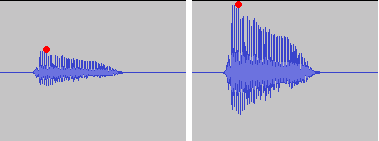
Audio Normalization Techniques

As an audio optimization expert, I’m often asked about the best techniques for normalizing audio levels. In this article, I will explore two popular approaches: peak normalization and loudness normalization. These techniques, peak vs. loudness normalization, have their own unique advantages and considerations. Let’s dive in and uncover the secrets of achieving balanced and consistent audio!

Peak Normalization: Unleashing the Power of Dynamics

When it comes to peak normalization, it’s all about preserving the dynamics of your audio. Imagine a breathtaking symphony where the crescendos and diminuendos transport you to a different realm. With peak normalization, you ensure that the highest peaks of your audio reach their full potential without clipping or distortion. It’s like giving your audio the freedom to express itself with intensity and impact.

Loudness Normalization: The Harmony of Consistency

Now, let’s turn our attention to the world of loudness normalization. Have you ever experienced the frustration of constantly adjusting the volume while switching between songs or TV shows? Loudness normalization comes to the rescue! By analyzing the perceived loudness of your audio, it ensures a consistent listening experience across different tracks. Say goodbye to sudden volume jumps and immerse yourself in a harmonious soundscape.

Dynamic Range: The Dance of Soft and Loud

In the realm of audio normalization, we encounter the concept of dynamic range. Dynamic range represents the difference between the softest and loudest parts of an audio signal. Peak normalization respects the natural dynamic range, allowing the delicate whispers and thunderous roars to coexist in perfect balance. On the other hand, loudness normalization aims to reduce the dynamic range, providing a more even playing field for all elements of your audio.

Audio Clipping: Taming the Wild Peaks

Audio clipping is a notorious villain that can ruin your audio experience. Picture this: a sudden burst of sound that distorts and crackles, disrupting your enjoyment. Peak normalization acts as the hero in this story, taming those wild peaks and ensuring that your audio stays within safe limits. With peak normalization, your audio remains clean and free from the dreaded clipping monster.

LUFS: The Measure of Perceived Loudness

In the realm of loudness normalization, we encounter the term LUFS, which stands for Loudness Units Full Scale. LUFS provides a standardized measure of the perceived loudness of your audio. Loudness normalization algorithms analyze the integrated LUFS value and adjust the overall volume to match a specific target level. It’s like having a universal translator that ensures consistent loudness across different tracks and platforms.

Listening Environment: From Living Rooms to Concert Halls

Let’s talk about the listening environment and its impact on audio normalization. Every space has its unique characteristics, from the cozy intimacy of a living room to the grandeur of a concert hall. Loudness normalization takes into account these variations, delivering a consistent listening experience regardless of the environment. So whether you’re enjoying your favorite tunes at home or attending a live performance, the magic of normalization will make every moment memorable.

Personal Preference: Customizing Your Audio Journey

We all have our individual tastes and preferences when it comes to audio. Some crave the raw power of peak normalization, while others seek the comfort of consistent loudness through loudness normalization. The beauty of audio normalization techniques is that they allow you to customize your audio journey according to your personal taste. It’s like having a tailor-made suit that perfectly fits your unique style.

Metadata and Replay Gain: Enhancing the User Experience

Metadata and Replay Gain are powerful allies in the realm of audio normalization. Metadata provides valuable information about your audio, guiding normalization algorithms to make the right adjustments. Replay Gain takes it a step further by applying metadata tags to your audio files, ensuring consistent playback volume across different tracks. Together, they create a seamless and enhanced user experience, elevating your audio enjoyment to new heights.

Compression: Controlling the Sonic Landscape

Dynamic audio content, such as movies or live performances, often presents challenges for normalization. This is where compression enters the scene. Compression techniques allow you to shape the sonic landscape, reducing the dynamic range while maintaining audio quality. It’s like having a skilled conductor who ensures that every instrument is heard clearly, regardless of its volume.

Audio Editing and Mastering: Polishing the Gems

Lastly, let’s not forget the crucial role of audio editing and mastering in the pursuit of sonic perfection. Audio professionals meticulously fine-tune various parameters during the editing and mastering process. Audio normalization techniques become valuable tools in their arsenal, ensuring that the final product shines with balanced and consistent audio. It’s like adding the final touch of brilliance to your audio gems.

In conclusion, the choice between peak normalization and loudness normalization depends on your desired audio outcome. Whether you embrace the dynamic range or seek consistent loudness, these techniques empower you to create an audio experience that resonates with your vision. So go forth, unleash the power of normalization, and let your audio journey be a harmonious symphony of sound!



Free Download Mp4Gain
picture


Mp4Gain Main Window
picture


Mp4Gain Features
picture


Free Download Mp4Gain
picture

WMA File Type Explained

WMA File Type Explained

WMA File Type Explained

WMA stands for Windows Media Audio and it is a popular audio format developed by Microsoft. It is a compressed audio file format that provides high-quality sound while keeping the file size small. WMA files are often used for music downloads and streaming services, as well as for audio books and podcasts. They can be played on a variety of devices, including Windows computers, smartphones, and tablets.
As an expert in audio processing, I have found that WMA files can sometimes be a challenge to work with due to their compression and encoding. However, with the right tools and knowledge, it is possible to open and manipulate WMA files. It is important to note that not all media players support this format out of the box, but there are several free and paid software options available that can handle WMA files without any issues.

How to Open a WMA File

Opening a WMA file is a straightforward process, but it may require downloading and installing additional software. Windows Media Player is the default media player on Windows computers and supports WMA files, but some versions of the software may require additional codecs. Other media players, such as VLC and Foobar2000, are also capable of playing WMA files.
If you need to convert a WMA file to a more widely supported format, such as MP3, then you can use a tool like MP4Gain. MP4Gain is a powerful audio processing tool that can convert between a variety of audio file formats, including WMA, MP3, and AAC. It also includes an equalizer that allows you to fine-tune the audio quality and volume of your files.

Final Words

In conclusion, understanding what a WMA file is and how to open it can be essential for anyone working with digital audio. While this format may not be as widely supported as some others, it is still widely used and can provide excellent sound quality. Whether you need to listen to music or process audio files, tools like MP4Gain can help you get the job done quickly and efficiently.

What does it mean to normalize audio?

We often hear someone normalize an mp3 file or a flac, ogg, aac, etc.
Even with the Mp4Gain we talk about normalizing the audio of video files such as Mp4, AVI, mpeg, etc.

What does normalizes mean?

We could say that it refers to something similar to standardize, in the sense that it maintains a volume standard, that it does not lower the loudness up or down, that it stays within a standard, within given limits.

Music Loudness War

Audio compression

When the music began to digitize, going from analog to digital, it became absolutely necessary to use compressors, which will work as a limiter, to stop the peaks and as an expander or compressor to enhance the valleys of lower loudness.

At the same time, a principle that has to do with the human ear was detected: at higher volume the ear believes that the music is “better heard” and that is where the so-called volume war began.

Audio Loudness and Normalizer

Each time the audio productions registered an increase in loudness.

All of the above caused anyone who listened to various music files, in an order, to notice differences in the sound of these, which was unpleasant and uncomfortable.

And there arises the need to normalize the volume, to obtain a similar loudness without variations in loudness.

Then we will see that a normalizer is a software or hardware that is responsible for maintaining the loudness of all the audio, because it is not only about music, but we also talk about videos, movies, etc. It maintains that constant sound, without fluctuations.

Even modern normalizers, at least the Mp4Gain, do this by separating the audio by bands, thus achieving an enhancement that the audio had lost when being compressed excessively.

Audio compressors are necessary, but their abuse in the last decades, have managed to reduce the quality of the audio and also that the loudness is not the same between one file and another.

The normalizer has become one of the most important accessories in the audio chain, at least at the user level.

People search everywhere how to equalize volume levels, how to improve volume levels, how to match the volume of their audio files … until they finally find a good normalizer that comes to solve the problem, greatly improving the audio quality and ending the problem of uneven loudness.

What is an audio normalizer.

Normally at the time when one listened to music on CDs or even vinyl, it is a problem the relationship of the levels of volume music tracks since they all came from the same Source. That is, all the music tracks recorded in the same studio and mastered by the same person for which the gain of its similar volume and when one finished listening to the vinyl or CD to listen and then did not notice the difference between One disk and another disk volume gain.
at the moment when the internet begins to exchange musicals, he does not listen to a complete album, but hears an album another album, the differences in very noticeable volume levels. This is why the need arises soon for the sound of the different wales music tracks Although these come from albums that have been mixed in different studios and by different recording engineers.

This is known as normalize level of musical audio gain. Over time, more sophisticated algorithms have gone away that achieve this function more efficiently. Initially understanding the peaks of each song the entire song reach its maximum point without generating any distortion. This was obviously insufficient and the result was not satisfactory, I am still investigating and creating increasingly sophisticated algorithms to achieve a similar loudness in volume peaks.

Nowadays, this application called mp4gain is available, which manages to match the loudness and optimize the best results quite similar to any large FM radio station. q is the algorithm the loudness of each of the frames used to achieve the best possible volume without ever reaching the distortion.
In addition, the program offers other functions such as modifying the pitch without altering the speed and vice versa or being able to equalize the song. Very high quality the most used music program is even used by universities, television channels, radio stations and different music producers. You can download it for free to try it on your computer or buy it directly from this site