Mp4 Increase Volume


Free Download Mp4Gain
picture

Mp4 Increase Volume

Mp4 Increase Volume

Let’s talk about Mp4 Increase Volume

As a long-time audio and video specialist, I’ve often been asked about boosting the sound in MP4 files. Achieving the perfect audio level in your videos is paramount to a great viewing experience. I know what it’s like to struggle with a movie where you can barely hear the dialogue, then get blasted by the music in the next scene! This article will tell you how to bring those quiet MP4s up to par and understand why some videos seem quieter than others. I’ll share my experiences and expert tips so you can have videos with clear and consistent sound.

Understanding Volume and Audio Levels

For effective volume adjustment, the primary concepts to understand are decibels (dB) and normalization. I’ve found that many volume issues stem from a misunderstanding of these concepts.

* Decibels (dB) express sound intensity. A higher decibel level means louder sound.
* Normalization adjusts volume to a consistent target level. It prevents sudden shifts in loudness.

These two ideas form the base of volume modification of mp4.

Common Reasons for Low Volume

Dealing with low volume, as I often do, requires getting to the root of the problem. Typically, several factors contribute to why your MP4 might sound too quiet.

* Poor recording levels: During initial filming, it may occur that the audio equipment isn’t set up properly. This results in a quiet capture.
* Incorrect mixing: When content creators use mixing methods or tools of low quality, the final volume output might not be optimal.
* Codec compression: Using codecs to reduce the size of a video file for storage, could make it quieter..
* Different audio standards: For instance, a video created for theatrical release may have a wider dynamic range. This means soft sounds are very soft, and loud sounds are very loud. This is a common effect.
* Perceived Loudness: Perceived Loudness or psychoacoustics refers to a person’s subjective perception of the sound pressure of a MP4 file. Sometimes this perceived loudness is not reflected in the dB value.
* Bitrate: As with most video and audio compression formats, the amount of bits the file has allocated to encode the information plays a huge role in quality and volume.

Strategies to Effectively Boost Mp4 Volume

As someone deeply entrenched in audio mastering, the process of increasing volume without creating unwanted distortion is essential. There is more involved than simply turning the knob on your system’s player.

* Normalization: Use normalization to bring the audio’s peak to a standard level (e.g., -1dBFS). I find that normalizing a MP4 file provides uniformity across an album.
* Compression: Compressing makes the quite bits louder, as it reduces dynamic range. Be careful using this technique, as it reduces the range and can ruin nuances.
* Limiting: Imposing a limit helps to prevent digital clipping. The limit will protect your audio from distorting the track.

Avoiding Common Pitfalls While Increasing Volume

It’s easy to fall into traps, as I’ve experienced with clients who chase maximum volume at all costs.

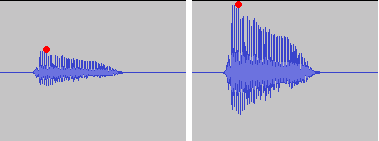
* Clipping: It occurs when the audio signal exceeds the maximum level. The top of the sine wave becomes flattened, introducing unpleasant distortion.
* Distortion: Overdoing compression and limiting is dangerous, leading to the loss of dynamics and clarity. I’ve heard videos where everything seems loud, but nothing is clear.
* Exceeding Safe Levels: I usually recommend keeping peak levels below -1dBFS to avoid inter-sample peaks. Leaving a little headroom protects your sound.
* Over normalization: It can result in high-quality MP4 files. High-quality MP4 files are less prone to data loss and sound better, with high detail and more volume.

Tools and techniques for Audio Enhancement

Over my years in audio and video production, I’ve tried just about every volume enhancing method under the sun.

* Audio editing software: Using dedicated software is the ideal path. With editing software, you can normalize, compress, adjust the EQ, and control the volume.
* Online video editor: These editors may provide a quick fix for videos you intend to share immediately, but these may decrease their quality due to being designed for speed over quality.

Maximizing Audio Fidelity During Volume Increase

Volume boosting requires knowing how the video is being handled to preserve the original quality. We need a good approach to produce excellent audio fidelity while increasing volume.

* Source Quality: Be wary of increasing audio or using editing software to artificially boost audio in low quality video. Using the source file instead of a lower quality MP4 gives you much more audio and quality fidelity.
* Experimenting and testing: There are no quick solutions, nor can numbers be given as rules of thumb for every situation. When increasing your mp4’s volume, experiment with different settings to get what you are looking for.
* Constant bit rate or variable bit rate: CBR vs VBR is also an important factor in audio fidelity. Use constant when precise rates are needed; variable is better when you need a smaller file.
* File conversion: Converting an MP4 to a higher-quality format doesn’t improve existing low volume. If you can, remix from the source track and work your way up.
* Sample Rate: If you start with a good file, make sure to keep a good sample rate to avoid resampling artefacts from your audio work. Keep in mind how much audio loss sample rate changes may entail.

Preserving Dynamic Range

For dynamic range control during volume adjustment, keep the crest factor in mind. I’ve found that many of my projects benefit from subtle control that helps provide impact without over-compression.

* The crest factor is the ratio between a signal’s peak and its average RMS level.
* A crest factor of 6dB or higher often indicates good dynamic range. A lower one, indicates overly compressed audio.
* A high crest factor, in a good recording, means more dynamic range. Aim for the correct level on the quieter sounds in the recording and then work up from there.

Advanced Tips for Specific Audio Issues

As experts know, not all volume issues are the same. Some require specific steps. After working on countless projects, here’s what I recommend:

* Dialogue Clarity: For dialogue issues, use EQ to bring out the frequencies at which human voices operate. To clarify it even more, you can adjust the EQ on the instruments playing to give it a boost.
* Mixing audio from different Sources: The main thing here is consistency. Make sure the different levels are similar. There are handy techniques like compressing the audio file to limit its dynamic range or normalization.
* Dealing with background Noise: For background noise, try noise reduction tools or high-pass filters. I find that it helps to clean up those MP4s without losing what you care about.

Impact of Mp4 Increase Volume on Different Devices

It’s important to understand the variability that volume can have across different playback systems.

* Headphones can produce sound at a different level compared to studio monitors. A video mixed for earphones will sound very different on studio monitors.
* A professional soundcard setup connected to a hifi equipment will sound very different from a built-in audio chip, and will handle the dynamic range very differently.
* High-end audio systems can handle greater dynamic range, which makes the sound more natural while sounding great, while lower end and equipment compress it to be more listenable, which reduces quality.

If you’re struggling to balance volume, consider MP4Gain. It may be what you’re looking for to easily enhance your file.

Latest words on Mp4 Increase Volume

The importance of mastering how to improve loudness in MP4s to create an immersive audiovisual experience cannot be stressed enough, as I’ve often preached. By understanding the importance of normalization and the potential pitfalls, such as clipping and distortion, I’ve helped countless content creators improve their video quality. By experimenting and using the best methods and tools, every MP4 file you produce can offer the greatest possible sound quality, regardless of where it is being watched.

FAQ about Mp4 Increase Volume

Why do some MP4s sound quieter than others, what cause the MP4 volume differences?

The Mp4 volume file differences come from a variety of reasons including recording conditions, different audio mixing, compression artefacts and the difference in audio standards. These issues often lead to fluctuations in the audio’s perceived loudness and overall quality of playback.

What are the key differences between normalization and compression to reach an Mp4 increase volume?

With normalization, the audio is lifted to a certain level and then reduced, evening everything out while compression narrows the dynamic range. However, normalization does not alter dynamics.

Why does over compression degrades audio quality during the Mp4 increase volume?

Over compression distorts the sounds because it reduces the dynamic variety, diminishing quality by making quiet sounds louder and loud sounds softer. With too much compression, the track has less expressive potential and a less natural quality.

Is it better to increase Mp4 volume or convert to other formats?

Increasing volume in the original format allows you to control the changes without losing quality. Conversion should be avoided because it further loss of sound from repeated conversions.

In what cases I should use an EQ setting while improving an Mp4 volume?

You could use an EQ setting if you need some specific elements to be more noticeable, perhaps making bass or voices more sharp. It helps reduce or highlight frequencies. It can greatly improve clarity of sound and can help you improve sound frequencies in order to achieve your goals.

How can the right sample rate improve a Mp4 increase volume?

Making sure you have the right sample rate at the encoding ensures that high frequencies are accurately reproduced and there is no sonic artifacts.

What should I do to prevent data breakpoint errors in high quality Mp4 files?

To properly avoid problems when reaching data break points when creating MP4 files of high quality, you have to make sure that your software and device have the proper codecs. In some situations, to avoid data breaks it may be also useful to verify the Mp4 file and check for consistency problems.

How do you control the amount of compression and side effects for a well balanced Mp4 increase volume file?

Carefully compress, while listening on different devices, being wary of too much compression. To make sure the sound is optimal across the whole frequency range, it may be useful to use multi-band compression.

What happens if you select more decibels (dB) than the track can actually reach to increase Mp4 volume?

In those situations, if the decibels requested are more than the track can achieve, it will distort the sound. If the limit is passed, the sine waves representing your MP4 volume track becomes clipped at the top and bottom, causing an effect that is referred to as clipping, where the loudest parts are reduced and it sounds as if the file has noise artifacts.

How can I best maximize my video’s audio quality and avoid distortion when aiming for a Mp4 increase volume file?

The audio quality is maximized when using the proper EQ and tools for a good audio sound and clarity. By using normalization to reach the file’s optimal level without distortion, you can make sure the sound quality is as best as possible with the given file to achieve the volume level you desire.

Comments:

This article helps to solve some problems I had to improve my video collection thanks to these insights, I don’t have any more movies that sound way too low compared to others.

-Sarah_L

I can’t thanks you enough. I was tired of movies sounding weird when I got to the music part because of the huge change in db! Very valuable information.

-JackReacher

I had a question: What would you recommend for a file who has a perfect setting BUT my audio device is not high-end and has very low volume. If the audio already is good but my soundcard does not play loud enought

-LowEndUser

Very in deep information thank you i try all of that to have a better music for my ears i hope it is enough

-MusicIsLife

Amazing advice! Thank you for all your shared wisdom. This is so valuable!

-Mike052

There is an issue on my side, and I was hoping maybe you can help, as a professional in this field, the mp4 are great with a very good sound, as well as it comes from official releases, but my headset are not enought and sounds come low… Is there any tip you can give for my specific situation? Thank you!

-HelpNeeded


Free Download Mp4Gain
picture


Mp4Gain Main Window
picture


Mp4Gain Features
picture


Free Download Mp4Gain
picture

Audio Normalization Techniques: Peak vs. Loudness

Audio Normalization Techniques: Peak vs. Loudness

Audio Normalization Techniques

As an audio optimization expert, I’m often asked about the best techniques for normalizing audio levels. In this article, I will explore two popular approaches: peak normalization and loudness normalization. These techniques, peak vs. loudness normalization, have their own unique advantages and considerations. Let’s dive in and uncover the secrets of achieving balanced and consistent audio!

Peak Normalization: Unleashing the Power of Dynamics

When it comes to peak normalization, it’s all about preserving the dynamics of your audio. Imagine a breathtaking symphony where the crescendos and diminuendos transport you to a different realm. With peak normalization, you ensure that the highest peaks of your audio reach their full potential without clipping or distortion. It’s like giving your audio the freedom to express itself with intensity and impact.

Loudness Normalization: The Harmony of Consistency

Now, let’s turn our attention to the world of loudness normalization. Have you ever experienced the frustration of constantly adjusting the volume while switching between songs or TV shows? Loudness normalization comes to the rescue! By analyzing the perceived loudness of your audio, it ensures a consistent listening experience across different tracks. Say goodbye to sudden volume jumps and immerse yourself in a harmonious soundscape.

Dynamic Range: The Dance of Soft and Loud

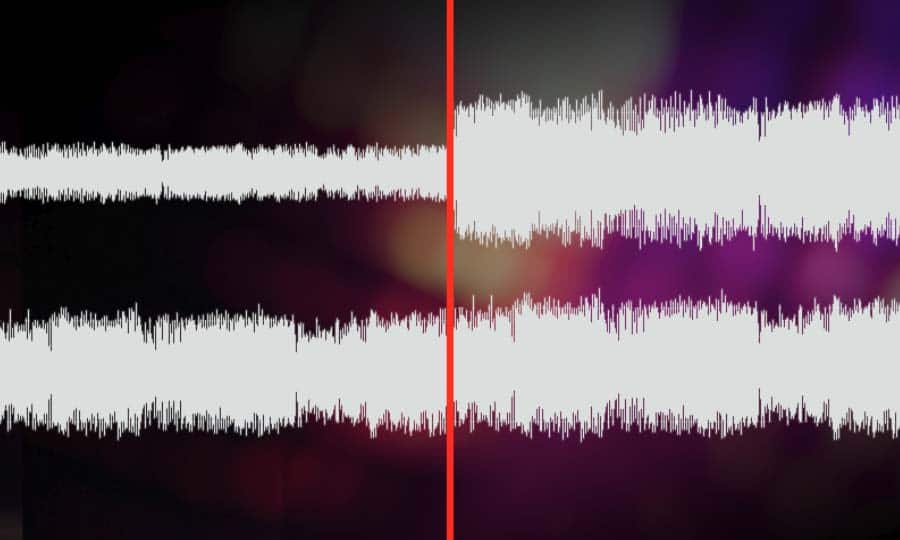
In the realm of audio normalization, we encounter the concept of dynamic range. Dynamic range represents the difference between the softest and loudest parts of an audio signal. Peak normalization respects the natural dynamic range, allowing the delicate whispers and thunderous roars to coexist in perfect balance. On the other hand, loudness normalization aims to reduce the dynamic range, providing a more even playing field for all elements of your audio.

Audio Clipping: Taming the Wild Peaks

Audio clipping is a notorious villain that can ruin your audio experience. Picture this: a sudden burst of sound that distorts and crackles, disrupting your enjoyment. Peak normalization acts as the hero in this story, taming those wild peaks and ensuring that your audio stays within safe limits. With peak normalization, your audio remains clean and free from the dreaded clipping monster.

LUFS: The Measure of Perceived Loudness

In the realm of loudness normalization, we encounter the term LUFS, which stands for Loudness Units Full Scale. LUFS provides a standardized measure of the perceived loudness of your audio. Loudness normalization algorithms analyze the integrated LUFS value and adjust the overall volume to match a specific target level. It’s like having a universal translator that ensures consistent loudness across different tracks and platforms.

Listening Environment: From Living Rooms to Concert Halls

Let’s talk about the listening environment and its impact on audio normalization. Every space has its unique characteristics, from the cozy intimacy of a living room to the grandeur of a concert hall. Loudness normalization takes into account these variations, delivering a consistent listening experience regardless of the environment. So whether you’re enjoying your favorite tunes at home or attending a live performance, the magic of normalization will make every moment memorable.

Personal Preference: Customizing Your Audio Journey

We all have our individual tastes and preferences when it comes to audio. Some crave the raw power of peak normalization, while others seek the comfort of consistent loudness through loudness normalization. The beauty of audio normalization techniques is that they allow you to customize your audio journey according to your personal taste. It’s like having a tailor-made suit that perfectly fits your unique style.

Metadata and Replay Gain: Enhancing the User Experience

Metadata and Replay Gain are powerful allies in the realm of audio normalization. Metadata provides valuable information about your audio, guiding normalization algorithms to make the right adjustments. Replay Gain takes it a step further by applying metadata tags to your audio files, ensuring consistent playback volume across different tracks. Together, they create a seamless and enhanced user experience, elevating your audio enjoyment to new heights.

Compression: Controlling the Sonic Landscape

Dynamic audio content, such as movies or live performances, often presents challenges for normalization. This is where compression enters the scene. Compression techniques allow you to shape the sonic landscape, reducing the dynamic range while maintaining audio quality. It’s like having a skilled conductor who ensures that every instrument is heard clearly, regardless of its volume.

Audio Editing and Mastering: Polishing the Gems

Lastly, let’s not forget the crucial role of audio editing and mastering in the pursuit of sonic perfection. Audio professionals meticulously fine-tune various parameters during the editing and mastering process. Audio normalization techniques become valuable tools in their arsenal, ensuring that the final product shines with balanced and consistent audio. It’s like adding the final touch of brilliance to your audio gems.

In conclusion, the choice between peak normalization and loudness normalization depends on your desired audio outcome. Whether you embrace the dynamic range or seek consistent loudness, these techniques empower you to create an audio experience that resonates with your vision. So go forth, unleash the power of normalization, and let your audio journey be a harmonious symphony of sound!

Understanding Audio Normalization

Understanding Audio Normalization

Audio Normalization
Audio Normalization

Audio normalization is the process of adjusting the loudness of an audio recording to a standard level. The goal is to ensure that all audio files have a consistent volume, making them easier to listen to and preventing ear fatigue. In this article, we will explore the different types of audio normalization and how they work.

Audio Normalization
Audio Normalization

Peak Normalization

Peak normalization is the process of adjusting the peak amplitude of an audio recording to a certain level. The peak amplitude is the highest point in the audio signal, and it is measured in decibels (dB). The goal of peak normalization is to ensure that all audio files have the same peak amplitude, making them easier to listen to and preventing ear fatigue.

Peak normalization is typically used for digital audio files, such as MP3 and WAV files. These files are usually stored in a digital format that allows for easy manipulation of the audio data. However, peak normalization can also be applied to analog audio recordings, such as cassette tapes or vinyl records.

RMS Normalization

RMS normalization is the process of adjusting the root mean square (RMS) level of an audio recording to a certain level. The RMS level is a measure of the average power of an audio signal, and it is measured in decibels (dB). The goal of RMS normalization is to ensure that all audio files have the same RMS level, making them easier to listen to and preventing ear fatigue.

RMS normalization is typically used for digital audio files, such as MP3 and WAV files. However, it can also be applied to analog audio recordings, such as cassette tapes or vinyl records.

RMS normalization is often considered to be a more accurate method of normalizing audio than peak normalization because it takes into account the average power of the audio signal, rather than just the peak amplitude.

Loudness Normalization

Loudness normalization is the process of adjusting the loudness of an audio recording to a certain level. The loudness of an audio recording is measured in loudness units (LU). The goal of loudness normalization is to ensure that all audio files have the same loudness, making them easier to listen to and preventing ear fatigue.

Loudness normalization is typically used for broadcast audio, such as television and radio. Loudness normalization is required by many countries to ensure that the audio levels of all broadcast programs are consistent, making them easier to listen to and preventing ear fatigue.

Loudness normalization is often considered to be a more accurate method of normalizing audio than peak or RMS normalization because it takes into account the perceived loudness of the audio signal, rather than just the peak amplitude or RMS level.

Conclusion

Normalizing audio is an important process for ensuring that all audio files have a consistent volume, making them easier to listen to and preventing ear fatigue. There are several different types of audio normalization, including peak normalization, RMS normalization, and loudness normalization. Each method has its own advantages and disadvantages and is best suited for different types of audio.

When it comes to audio normalization, one solution that stands out is Mp4Gain. It is a software that allows you to normalize your audio files in a quick and efficient way. It can be used to normalize a single audio file or multiple files at once. It also supports a wide range of audio file formats, including MP3, WAV, and more. Furthermore, Mp4Gain is user-friendly and easy to navigate, making it a great option for both professional and casual users.

In conclusion, audio normalization is a crucial process for ensuring that all audio files have a consistent volume, making them easier to listen to and preventing ear fatigue. There are several different types of audio normalization, including peak normalization, RMS normalization, and loudness normalization. Each method has its own advantages and disadvantages and is best suited for different types of audio. Mp4Gain is a powerful and easy-to-use software that can help you normalize your audio files quickly and efficiently.

Volume Boost in audio and video formats with Mp4Gain

Volume Boost in audio and video formats with Mp4Gain

Normalize

The best way to get all the volume levels of your digital music files (flac, oog, m4a, aac, ac3, etc) or video (mp4, flv, 3gp, avi, mpeg, etc) have a level of consistent volume, both for the entire duration of the saw or the song, as compared to other audio or video is Mp4Gain.

The audio normalizers are not new, but if a normalizer can normalizert so many audio formats and can, something nobody else can do, normalizer video files … Mp4Gain only.

Also offers other functions Mp4Gain much needed and sought after as change the pitch without affecting the speed of the song, or vice versa, change the speed of the song without affecting the pitch absoiluto. With these options you can achieve interesting results.

Also can you equalize your files thus improving sound quality and even giving them a bass booster when deemed necessary, it is as simple as handling an equalizer bands in your car or at home. And the results are maginificos.

Mp4Gain is the result of evolution that has emerged in the last five years compared to d audio and video formats and sound quality and volume necessary to fully enjoy them.

Mp4Gain is in this 2013 software ahead of its era, far away from other standards bodies. Download you and corroborelo tiral version.

Mp4Gain is the essential tool for anyone with tens or hundreds of digital files of music or video in almost any format.

Audio Booster – Video Normalizer – Mp3 NORMALIZER

Audio Booster – Video Normalizer – Mp3 NORMALIZER


Until very recently it was only possible to normalize mp3 files. Even the method of normalization used to be very rudimentary: in many cases simply were detected volume peaks of each mp3, were compared against the maximum possible and after that, all the mp3 was amplified by this factor.

That is, if it was observed that the maximum peak of an mp3 bear an increase of 10% before reaching the pñunto of distortion, was amplified throughout the mp3 for that 10 percent.

Very rudimentary? Yes, also gave very poor results.

Gradually it began to use the ingenuity (and mathematics) to try to improve and equalize the volume levels, the problem is that mediate the song as a whole and the factor applied global era: a single factor for the entire song.

Mp4Gain is 44 thousand times per second (each frame) and each of those frames taken every frequency (about 40 different frequencies), applies a different factor, thus resulting with a simply fantastic and very adequate. Perhaps one often has to give it a boost, while another frequency ue must attenuate slightly. Perhaps an instrument need to stand out more and other needs dimmed slightly …. is really a very detailed analysis, analyzing every word, every sound and every instrument to achieve a real effect of normalization efficient and modern, suitable to 2013.

In addition, is able to normalize Mp4Gain a large number of audio formats (the most popular) and a large number of video formats (the most popular), which no other normalizer dream of being able to perform and less, of doing so good.

These are the formats:

Video Formats:
mp4, flv, avi
mpeg, mpg
3gp, wmv

Audio Formats:
mp3, mp2, flac
ogg, m4a, aac
wav, ac3


Volume Normalizer for FLV, AVI, MP4 and other formats

Volume Normalizer for FLV, AVI, MP4 and other formats


For a long time already asked us we developed a great audio normalizer (Mp3Gain PRO) if we had plans to develop one that would serve to Mp4.
And the truth is that if it is something that we had in our development roadmap in a while. It was a project that took quite some time and hours and hours of effort to keep adding formats, so that not only did the audio normnalize Mp4 format, but to other popular formats like flv, avi, mpeg, 3gp, etc..

In fact, the response has been excellent, the community really needed something, to finally normalize video, not just mp3s.

Basically we put the same features to boast our most powerful audio normalizer, such as modifying the pitch without affecting the speed and vice versa, but obviously this was more complicated that it was not only MP3 format, but we dive to normalize audio from various video formats.

Thank God, it’s something we’ve done with success and will continue to refine and develop, but the success has been tremendous and we are very grateful for that. Thank you.

Mp4Gain, best volume normalizer

After several months of being launched, fortunately, we keep coming emails Mp4Gain satisfied customers.
B Mucvhos uscado had waiting for a long time to find any program that could normalize the volume of the main video formats, such as FLV, Mp4, Avi, Mpeg, etc., and so many audio formats.


Video Formats:
mp4, flv, avi
mpeg, mpg
3gp, wmv

Audio Formats:
mp3, mp2, flac
ogg, m4a, aac
wav, ac3

And satisfied customers tell us that there is no other program that does the same and unless he does so effectively a: normalize audio from many video formats and audio is BBOM now that ghente is dedicated to collecting videos and audio and facing the problem that most have differences in the volume that are very noticeable.

Mp4Gain is a step forward, a huge step in the treatment of niovel audio volume on songs or videos. Make volume booster, do volume leveling, volume enhence and music videos is something no other software is able to do and does it very well Mp4Gain.

FLV Volume Normalizer – Volume Booster

FLV Volume Normalizer – Volume Booster

Mp4Gain, as its name clearly indicates, normalizes volume Mp4 video files, but also normalizes many other audio and video.

These include the FLV, which is the default format that ultiliza Youtube and used a lot in recent times.
Many times are videos taken with personal cameras or even with modern phones, so many times the volume is not perfectly clear, crisp and must be corrected to normalize the volume and make it clearer.

FVL-Flash Video

The FLV video format is a variation of other formats, all frequently used for a progressive download via HTTP. This means that even if the video was not downloaded completely can be watching playback on Flash.

This has a drawback: they are usually used to reduce the quality settings to make downloading faster, sound is one of the things that I lose quality and therefore treat it with Mp4Gain to normalize the volume and step to improve the quality of using the equalizer and even give a bass boost, it is a good idea.

There is no other way to normalize the volume of flv to mp4 and using the new Mp4Gain, which becomes the ideal software for this time audiovisual we lived.
Mp4Gain can normalize a range of audio and video formats, including:

Video Formats:
mp4, flv, avi
mpeg, mpg
3gp, wmv

Audio Formats:
mp3, mp2, flac
ogg, m4a, aac
wav, ac3

Mp4 Video Volume Amplifier – Mp4 Volume Booster

Mp4 Video Volume Amplifier – Mp4 Volume Booster

The ability to normalize the audio of the videos is something absolutely new, even the need for it is very recent.
Until recently no one had thought to normalize the audio from a video, but there was not technically possible to do so.
Mp4Gain arises why it’s all a step forward in terms of the possibility of normalizing audio for a large number of audio formats (the best known, the most modern and the most popular) and a lot of video formats (the best known, the most popular and the most modern).
Mp4Gain means a huge advance in the field of audio normalization.

You can even simultaneously normalize audio files of various formats and video files of various formats, all in a batch normalize.

Mp4Gain is a very advanced program in addition to the main function normalize audio, also allows you to equalize the audio, making bass booster, include Replay Gain some arcivos that support it, copy the tags to files that support it, change the pitch mde a song or a video and change the speed of the audio of a song or a video.

Mp4Gain is the ultimate in audio normalization and therefore offers a very high quality standardization for formats including audio and of course also for the audio from the videos.

Mp4Gain offers the option to download the trial version and enjoy once you try the software and how well made is your audio normalization, purchase the software to continue using it.

Supported formats are Mp4Gain:

Video Formats:
mp4, flv, avi
mpeg, mpg
3gp, wmv
Audio Formats:
mp3, mp2, flac
ogg, m4a, aac
wav, ac3

And, as mentioned, can normalizr elloos a mixture, you can simultaneously charge a m4a, mp3 player, Flac, a ogg, video avi a flv and put them all to standardize and standardization will be successful and of great quality.

Mp4Gain has a design that, despite the enormous capacity of the program, the user makes it look easy to use and in a few minutes can be normalizing audio and video.


Volume Leveler – Volume Booster

Volume Leveler – Volume Booster

80% of the questions we receive are treated on increasing the volume of either the video or audio of a volume increase of a song in mp3, m4a, aac, flac, ogg, etc.

It’s as if everyone look the best way to make your music volume booster or videos.

Mp4Gain can increase the volume or volume booster do these formats

Video Formats:
mp4, flv, avi
mpeg, mpg
3gp, wmv

Audio Formats:
mp3, mp2, flac
ogg, m4a, aac
wav, ac3

Most of the problems that people encounter when having several tens or hundreds of videos or songs, is that the volumes do not match, there are significant differences between the volume levels between files and people start looking in urgent need as to solve that problem.

If it’s videos, definitely no other choice than to the Mp4Gain, no other software to do anything similar. No other software that normalizes the audio from video formats and less popular as modern as flv, mp4, 3gp, etc.

If it is looking for a multi-format audio normalizer, ie you can not only normalize mp3s, but several formats, there are not many options available.

And if this is the audio normalization is more professional than simply amplify everything regardless of each sound, then again we find that Mp4Gain is the ideal choice for your normalizacione algorithm is ultra modern and efficient and does not amplify couples the song, not amplifies all the same level, but goes analyzing frequency by frequency in each of the 7 or 8 million frames that about a song or video is 3 minutes and making the volume of each of these frames is the loudest, but with better deficnicion, quality, bright and sound. Every minute of audio has more or less one million seven hundred thousand frames and analyzes and optimizes Mp4Gain, at each frequency.

We have taken very seriously the issue of normalizing and designed an audio normalizer maintaining a consistently audible volume without increases or decreases in volume, and high quality audio.