Loudness Normalization: Making Your Music Sound Balanced


Free Download Mp4Gain
picture

Loudness Normalization: Making Your Music Sound Balanced
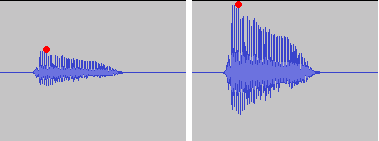
Loudness Normalization

Have you ever noticed that some songs are louder than others? Sometimes, you have to turn up the volume to hear a soft song, and then turn it down again when a loud song comes on. This can be annoying, but it’s actually a problem that can be solved with something called “loudness normalization.”

Loudness Normalization

What is Loudness Normalization?

Loudness normalization is a process that evens out the volume of different songs or audio tracks. It makes sure that they all have a similar volume level, so you don’t have to adjust your volume settings constantly. It’s a common technique used in the music industry, where songs from different sources need to be combined into one album or playlist.

Why is Loudness Normalization Important?

There are a few reasons why loudness normalization is important:

  • Consistency: When all of your songs are at a similar volume level, you can listen to your music without having to adjust the volume constantly. This makes for a better listening experience.
  • Preventing Damage to Your Ears: If a song suddenly plays at a much louder volume, it can be harmful to your ears. Loudness normalization prevents this by keeping the volume level consistent.
  • Making Your Music Sound Better: By evening out the volume levels, you can hear all the details in your music. This is especially important when listening to music with headphones, where imbalances in volume can be even more noticeable.

How is Loudness Normalization Done?

Loudness normalization can be done manually by adjusting the volume levels of each individual song, but this is time-consuming and can be difficult to get right. Instead, many people use software that can automatically adjust the volume levels for them. This software analyzes the audio file and adjusts the volume levels so that they are all similar.

One popular software that can do this is Mp4Gain. It’s easy to use and can normalize the volume levels of many different audio file formats. Mp4Gain analyzes the loudness of each audio file and then adjusts the volume levels to make them all similar. This can be done with just a few clicks of a button.

Conclusion

Loudness normalization is an important technique for anyone who wants to listen to music without constantly adjusting the volume. It ensures consistency and can make your music sound better. If you want to easily normalize the volume levels of your audio files, then Mp4Gain is the best solution for you.



Free Download Mp4Gain
picture


Mp4Gain Main Window
picture


Mp4Gain Features
picture


Free Download Mp4Gain
picture

Understanding Audio Normalization

Understanding Audio Normalization

Audio Normalization
Audio Normalization

Audio normalization is the process of adjusting the loudness of an audio recording to a standard level. The goal is to ensure that all audio files have a consistent volume, making them easier to listen to and preventing ear fatigue. In this article, we will explore the different types of audio normalization and how they work.

Audio Normalization
Audio Normalization

Peak Normalization

Peak normalization is the process of adjusting the peak amplitude of an audio recording to a certain level. The peak amplitude is the highest point in the audio signal, and it is measured in decibels (dB). The goal of peak normalization is to ensure that all audio files have the same peak amplitude, making them easier to listen to and preventing ear fatigue.

Peak normalization is typically used for digital audio files, such as MP3 and WAV files. These files are usually stored in a digital format that allows for easy manipulation of the audio data. However, peak normalization can also be applied to analog audio recordings, such as cassette tapes or vinyl records.

RMS Normalization

RMS normalization is the process of adjusting the root mean square (RMS) level of an audio recording to a certain level. The RMS level is a measure of the average power of an audio signal, and it is measured in decibels (dB). The goal of RMS normalization is to ensure that all audio files have the same RMS level, making them easier to listen to and preventing ear fatigue.

RMS normalization is typically used for digital audio files, such as MP3 and WAV files. However, it can also be applied to analog audio recordings, such as cassette tapes or vinyl records.

RMS normalization is often considered to be a more accurate method of normalizing audio than peak normalization because it takes into account the average power of the audio signal, rather than just the peak amplitude.

Loudness Normalization

Loudness normalization is the process of adjusting the loudness of an audio recording to a certain level. The loudness of an audio recording is measured in loudness units (LU). The goal of loudness normalization is to ensure that all audio files have the same loudness, making them easier to listen to and preventing ear fatigue.

Loudness normalization is typically used for broadcast audio, such as television and radio. Loudness normalization is required by many countries to ensure that the audio levels of all broadcast programs are consistent, making them easier to listen to and preventing ear fatigue.

Loudness normalization is often considered to be a more accurate method of normalizing audio than peak or RMS normalization because it takes into account the perceived loudness of the audio signal, rather than just the peak amplitude or RMS level.

Conclusion

Normalizing audio is an important process for ensuring that all audio files have a consistent volume, making them easier to listen to and preventing ear fatigue. There are several different types of audio normalization, including peak normalization, RMS normalization, and loudness normalization. Each method has its own advantages and disadvantages and is best suited for different types of audio.

When it comes to audio normalization, one solution that stands out is Mp4Gain. It is a software that allows you to normalize your audio files in a quick and efficient way. It can be used to normalize a single audio file or multiple files at once. It also supports a wide range of audio file formats, including MP3, WAV, and more. Furthermore, Mp4Gain is user-friendly and easy to navigate, making it a great option for both professional and casual users.

In conclusion, audio normalization is a crucial process for ensuring that all audio files have a consistent volume, making them easier to listen to and preventing ear fatigue. There are several different types of audio normalization, including peak normalization, RMS normalization, and loudness normalization. Each method has its own advantages and disadvantages and is best suited for different types of audio. Mp4Gain is a powerful and easy-to-use software that can help you normalize your audio files quickly and efficiently.

DIFFERENCES BETWEEN NORMALIZE AND MASTERIZE

The process and the differences between normalizing and mastering are often confused. Although it may seem to be the same, it is not.

Mastering can be of crucial importance according to which processes, for example: in musical matters, there are mastering engineers who are dedicated exclusively to that.

That does not mean that we cannot learn or acquire the necessary knowledge to be able to properly use some processing effect or some plugin in an appropriate way to be able to get more out of our audio file.

But you have to keep in mind that this audio processing helps your audio montage, song … sound with more punch, more strength, more energy, have more life.

Is mastering compressed or limited?

Rather those two processes and some more are done.

volume booster

Its mission is to maintain the same volume amplitude throughout the audio file, that is, it compresses when it has to compress and limits when it has to limit.

I’m going to give a rough example of what manual mastering would be like.

Can you still imagine the sound technician who detects when the signal volume is too high (the singer gets too close to the microphone, shouts …) and lowers the fader. Or the opposite case, when it detects the low volume (the singer moves too far from the microphone, does not speak with enough force …) and raises the fader. Always trying to maintain the same volume amplitude.

I’m going to give you a homemade definition: “lower what is high and raise what is low“.

As before it was an invented example, to do the job of processing the sound we regulate the different parameters available to the “processor” (Mastering is also called “processing” since in the past a device called “processor” was used which comes from “dynamics processor”). These parameters are:

The threshold (threshold): fundamental characteristic of the compressor that represents the point or level from which if the volume of the sound exceeds or lowers it, the dynamics processor is put into operation.

Ratio (Attenuation or Gain Ratio): Defines the amount of attenuation or gain that is applied to the signal. At noise gates the attenuation can be preset so that it really is a mute.

Attack time: This is the time it takes for the signal to attenuate, limit, mute or amplify. In general, slower times work best at low frequencies and fast ones at high frequencies. When processing a signal containing all frequencies, a compromise situation is forced.

To maximize the energy of the signals, particularly in broadcasting applications, there are multiband compressors that divide the spectrum into several bands and apply different times to each.

Release time: It is the opposite of the attack time, that is, the time it takes to go from the state where the processing is running to rest. They are usually longer times than those of attack.

Hold (maintenance time): Specifies the minimum time that processing will take place.

Stereo link (stereo link): With dynamics processors in general when used to process a two-channel (stereo) signal, it is necessary to link the processing action of both channels to happen on both at the same time. Otherwise, the sound image will be confusing and changing from the center to one side or the other.

Automatic: This function allows you to control any of the parameters listed automatically depending on the characteristics of the signal.

By pass (deactivation): Activating it allows you to hear the unprocessed signal, while if it is not activated you hear the processed signal.

Normalization is a process by which the highest peak is sought and reduced or increased (dB) as adjusted. Never pass the 0dB in normalization or mastering, because then it would be itching “clipping”.