Loudness Normalization: Making Your Music Sound Balanced


Free Download Mp4Gain
picture

Loudness Normalization: Making Your Music Sound Balanced
Loudness Normalization

Have you ever noticed that some songs are louder than others? Sometimes, you have to turn up the volume to hear a soft song, and then turn it down again when a loud song comes on. This can be annoying, but it’s actually a problem that can be solved with something called “loudness normalization.”

Loudness Normalization

What is Loudness Normalization?

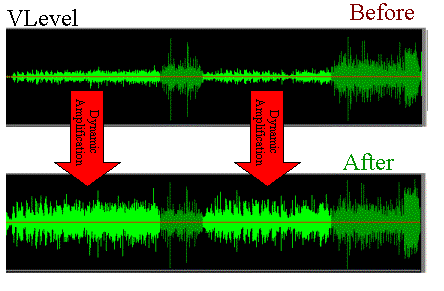
Loudness normalization is a process that evens out the volume of different songs or audio tracks. It makes sure that they all have a similar volume level, so you don’t have to adjust your volume settings constantly. It’s a common technique used in the music industry, where songs from different sources need to be combined into one album or playlist.

Why is Loudness Normalization Important?

There are a few reasons why loudness normalization is important:

  • Consistency: When all of your songs are at a similar volume level, you can listen to your music without having to adjust the volume constantly. This makes for a better listening experience.
  • Preventing Damage to Your Ears: If a song suddenly plays at a much louder volume, it can be harmful to your ears. Loudness normalization prevents this by keeping the volume level consistent.
  • Making Your Music Sound Better: By evening out the volume levels, you can hear all the details in your music. This is especially important when listening to music with headphones, where imbalances in volume can be even more noticeable.

How is Loudness Normalization Done?

Loudness normalization can be done manually by adjusting the volume levels of each individual song, but this is time-consuming and can be difficult to get right. Instead, many people use software that can automatically adjust the volume levels for them. This software analyzes the audio file and adjusts the volume levels so that they are all similar.

One popular software that can do this is Mp4Gain. It’s easy to use and can normalize the volume levels of many different audio file formats. Mp4Gain analyzes the loudness of each audio file and then adjusts the volume levels to make them all similar. This can be done with just a few clicks of a button.

Conclusion

Loudness normalization is an important technique for anyone who wants to listen to music without constantly adjusting the volume. It ensures consistency and can make your music sound better. If you want to easily normalize the volume levels of your audio files, then Mp4Gain is the best solution for you.


Free Download Mp4Gain
picture


Mp4Gain Main Window
picture


Mp4Gain Features
picture


Free Download Mp4Gain
picture

Let’s talk about “musical dynamics” and “musical loudness” Part 2

Let’s talk about “musical dynamics” and “musical loudness” Part 2

Loudness

The two brief examples above are to tell you that frequency content, sound pressure, and sound duration will affect people’s perception of sound volume.

Loudness

That is why it is said that “loudness tends to human subjective perception”.

Since the volume is the subjective perception of people, how to quantify it?

To quantify “loudness”, the first thing you need to look at is the relationship between the frequency and the loudness of the human ear. There are two pictures below, you can read them carefully for reference:

Looking at the two images above, you will clearly see that the human ear and the human brain are not an organ that flattens the receiving frequency. It will not develop here. For the basis of loudness quantization, see the second image, there is a unit called “fon”. The phon unit is an attempt to quantize loudness. We take a 1kHz signal as an example, and it can be perceived at a volume of 40dB at 1kHz, so it is 40phon. Based on this, another unit is called a sone, 1 sone = 40phon. Both are units that attempt to quantify volume.

The international organization will be the ITU and the EBU…etc. The characteristics of the human ear, the psychoacoustics of the human brain, etc., all factors that affect loudness perception are considered together, and these factors are calculated through complicated mathematical calculations Define and standardize the reasonable loudness range for ” sound reproduction” only after statistically significant results have been obtained. Those interested can search: “ITU-R 1770 and ITU-R 1771”.

Should the rules be followed?

Of course continue! In fact, there is such a problem in Taiwan. Not to mention music, only the fourth channel and MOD, the sound level of each channel is different! The scariest thing is switching from the movie station to the shopping channel and often still being scared by the sudden volume of the shopping channel. Even radio shows have this kind of situation.

Here, you can go to Google again: “Volume War Loudness War”. All this is commonplace. This article is mainly to introduce the definition and specification of loudness.

Effects of loudness specifications

Although ITU, EBU, ISO, ANSI and other organizations have introduced loudness specifications, major music and video streaming platforms still have their own standards. However, the standards of the main platforms will continue to be around the specifications, and there will be no big or outside. When it comes to the audiovisual industry, it will generally affect these things:

Music streaming platforms: Records must meet loudness specifications at time of release

Video streaming platforms: Loudness specifications must be met when movies are released

Let’s talk about “musical dynamics” and “musical sonority”

Let’s talk about “musical dynamics” and “musical sonority”

Loudness

Where does the music we listen to come from?

Loudness

Before we talk about it, it is necessary to quickly talk about the disc creation process. In principle, it can be divided into three parts: the initial stage, the intermediate stage and the later stage.

First stage: compose, arrange

Middle term: recording, mixing

Post: post mastering, distribution, marketing

Whether a piece of music is good or not can be determined at the initial stage of the arrangement. Then there is the recording. The recording process can be finding real musicians to record the sound of real instruments, or completing the melody required by the arrangement through software instruments. Then find a singer or singers to sing… and so on. This process is called recording.

The “balance” of a song is not only achieving the balance of the melody in the arrangement, on the other hand, it is leaning on the mix to make the recorded elements a harmony in listening and frequency, it is also usually necessary to coordinate It depends on where the track goes, or what the producer wants. After all, the purpose of a song or album is to become a commercial release, and the post-production and embellishment processes that need to be done are necessary.

Usually the post-mastering process will be done last. After the entire album’s timbre direction, volume adjustment and minor flaws etc. are fixed, the final mastering will be uploaded according to the loudness specifications required by each streaming platform. .

Quantify the volume and intensity of what we hear

Sometimes people equate loudness with loudness. Actually the two are different. They are different and at the same time influence each other.

Loudness can be quantified, in simple terms, it is our most used “decibel dB”. Volume, on the other hand, tends to be subjectively perceived by people. how to say? Different 75-decibel musical signals are sent out at a time, and everyone has different feelings about its loudness and volume.

Because loudness is related to three things: frequency content, duration, and sound pressure.

We played a 1000 Hz test signal for three minutes at a sound pressure of 80 decibels. Your perception of the volume of this signal will be very different from playing it for 10 seconds or 30 seconds.

Let us take two singers as an example, one of them has a more evident timbre in the mid-high frequency band, and the other has a more evident mid-low frequency band, they sing the same song, and they sing with the same key and similar sound pressure, generally in the mid-high frequency band. The sound of the sound will feel stronger.

Loudness normalization

Loudness normalization

Loudness Normalization

When you have a lot of mp3 files, you often look for loudness normalization.

Loudness Normalization

What usually happens is that we have mp3s (although Mp4Gain can do Loudness normalization of many other audio and video formats!!) that have been created with different settings, for example different bit rates… which causes them to have a loudness different and that is annoying to the ear.

Many times we have been collecting mp3s from different sources, finding one here and another there and over time we have managed to have a good collection that is worth thinking about, but we have a problem: the loudness differs between different music or video files.

And this has generated that we desperately need to find a solution.

Mp4Gain is the result of many years of experience and is definitely the best normalizer out there, I have no doubt.

Even for very advanced users, it offers different settings to adjust exactly what you are looking for. Pewreo if you are a common user, you will not need anything, just load the song or video (you can normalize one or hundreds at the same time) and click a button, it’s that simple.

YouTube quietly changed its loudness playback policy to achieve full average

YouTube quietly changed its loudness playback policy to achieve full average

YouTub Loudness

Youtube 14 lufs

loudness youtube

YouTube quietly adjusted its playback volume to -14 LUFS, achieving full equalization. The way YouTube regulates volume at first didn’t use -14 LUFS, which is an exact value. Starting in 2015, they turned down the volume on music videos relatively loudly to avoid freaking out about the volume when switching videos, resulting in a bad experience. ., Set the volume to a low level and reproduce almost the same volume, the overall loudness value set is about -13 LUFS.

What is LUFS? It is short for loudness units relative to full scale, which is the unit used in EBU R128, and EBU R128 is a set of guidelines for standardizing loudness and the maximum allowable audio signal level. The average volume of the overall sound is calculated and then the average volume is calculated and the difference between the volume and the desired volume can be adjusted.

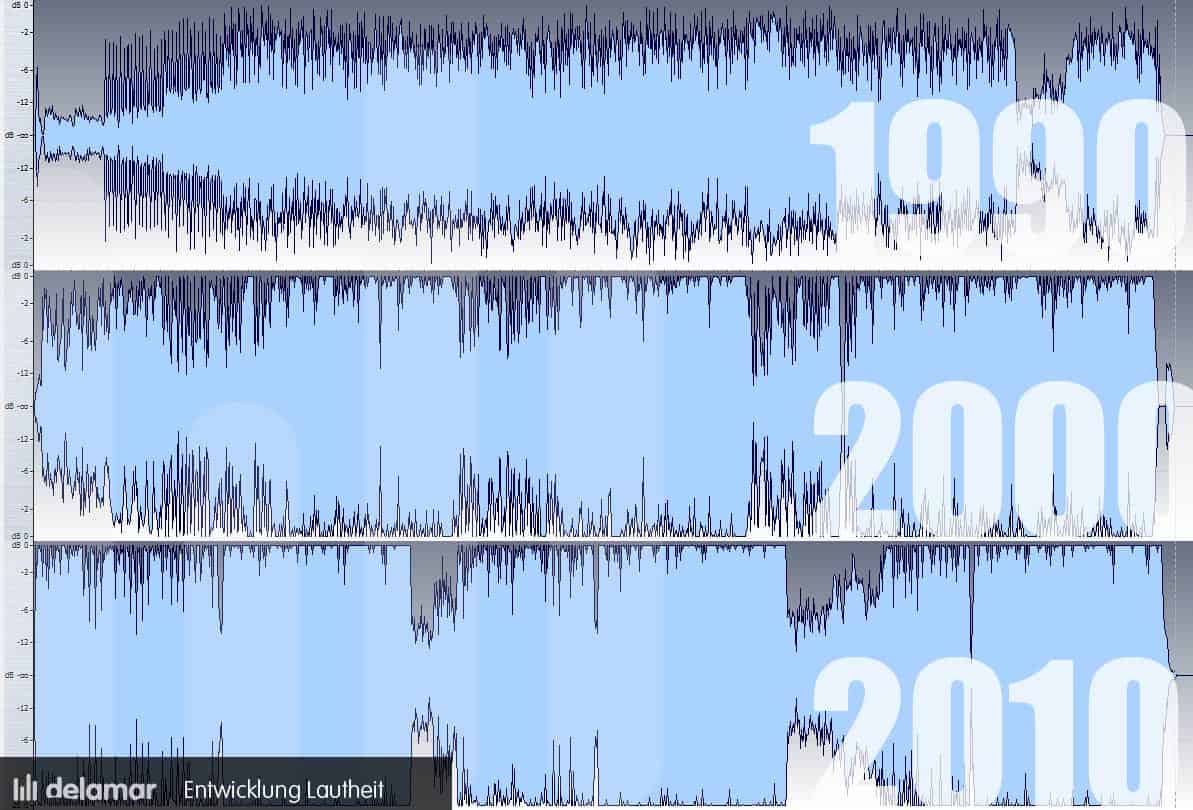
TV stations, radio and online music streaming platforms will play the volume for processing, which can avoid the phenomenon of turning up the volume to attract attention, which is what we call volume competition. After averaging the volume, you can reduce unnecessary volume and focus more on sound quality. TIDAL, Amazon Music, and YouTube now use the same method to manage loudness. Average loudness can provide a better user experience and be more consistent across platforms. This is good for the listening experience and cross-platform management, and it can also avoid the problem of volume competition.

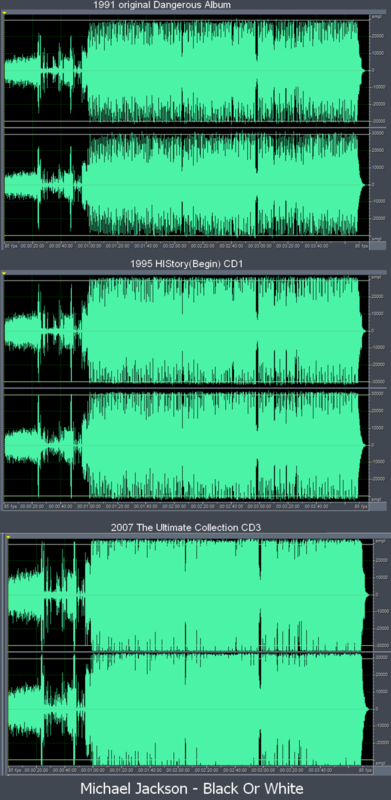
The volume of Michael Jackson’s Black or White has increased year after year in the various versions released between 1991 and 2007.

So do we need to start standardizing all sounds produced at -14 LUFS? Of course, no. Although many platforms have been averaging, there are still platforms that have not yet used the LUFS standard. For example, Spotify has not yet used this standard. Generally speaking, we don’t use the same volume and mix processing for soft rock and folk music. songs; and, conversely, this result will cause several songs of different key to sound at the same volume. In fact, most music has different volume settings in response to the performance of the music content during the CD release and initial mixdown. Like a jazz performance with a wide dynamic range and a volume of -18 LUFS or a hardcore 1990 techno, it can sound the same volume as a string quartet

A brief explanation of loudness normalization

A brief explanation of loudness normalization

Audio Normalization

Loudness Normalization

Audio Normalization

・ Is the volume of the sound source uploaded to the video site lower than that of the original sound source?
・ The sound source and volume of the CD are completely different from those of Youtube.
・ Sound pressure and volume increase with MIX, but it sounds small for some reason.
Have you ever felt like this when you were singing or posting on YouTube?
This is all because a feature called loudness normalization is working.

It has recently been introduced to Nico Nico Douga and applied to most music streaming services (subscriptions, etc.) in recent years.
Let’s briefly explain what happens to loudness normalization and what to do in the future.

1 What is loudness normalization?
2 It is important to have a mix with “margin”
3 How to know how much the volume has been lowered
3.1 For Youtube
3.2 Other services
4 Summary

What is loudness normalization?
In conclusion, loudness normalization is a
A specification that automatically reduces the sound when the volume exceeds a certain value.

It can be misinterpreted, but it is not a specification that reduces sound pressure.

Loud sounds are louder and cooler than listening to soft-sounding music!
I think there are a lot of people who say that.
However, if I personally think about why I voluntarily decided to lower the volume, I would like to increase the credit.

merit
・ Eliminate variation in the sound of each song ・
No need to adjust the volume every time you watch videos continuously
・ As a result, your ears do not get tired
The above can be mentioned.
All songs have a constant volume, so even
If you play music or videos continuously, you can avoid the problem of “the volume suddenly increased when the next song came!”.

You don’t need to turn down the volume, and it seems to be just a merit, but from a musical point of view, there are a few issues to consider.

A mix with “margin” is important
I’m sure there are people who say, “If you can turn it down without permission, no problem with high volume and sound pressure!”
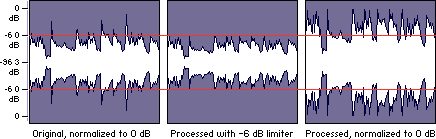
Anyway, it’s great! I have prepared a simple diagram of what happens to the sound source mixed with loudness normalization.

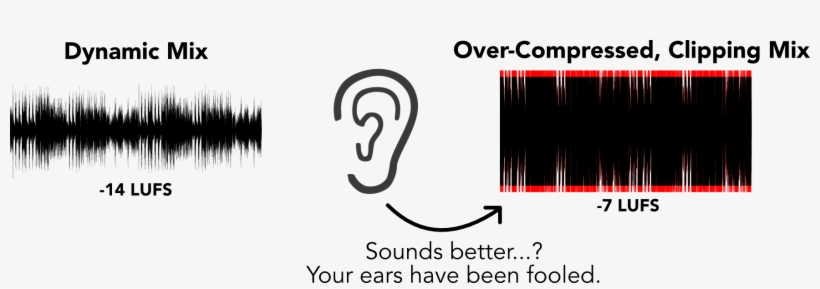
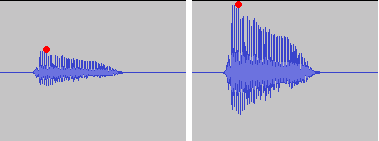
As you know, if you increase the sound pressure too much by mastering, the waveform will become a sound source that will fill with sound and get louder.

If the volume is forcibly reduced by normalizing the loudness in the state of a sound source with lost dynamics, the lack of power can be highlighted and heard.

Adjust volume using volume normalization or gain compensation

Adjust volume using volume normalization or gain compensation

Loudness

Gain compensation and automatic source normalization can be used to adjust the volume of individual audio sources. These volume controls, unlike other Wwise volume control functions, are transparent in terms of all logical operations related to volume. For example, it does not affect the decision to make a voice below the threshold (virtual voice) and is not considered in the evaluation of the HDR attenuation. It also does not appear in Voice Monitor.

Loudness

The sum of the gains for each source is displayed in the Wwise Profiler, Voices tab, in the Normalization / Compensation Gain column.

Font normalization
Loudness data collected during the analysis phase of your original file can be leveraged in Wwise to automatically normalize assets at runtime based on the expected loudness. Loudness value calculation is recommended by ITU-R BS.1770 for loudness measurement applying K-weighting filter, -70 dB absolute gate, -10 dB relative gate, 400 ms window and 75% overlap. Almost compatible.

The source normalization process is non-destructive and the loudness values ​​obtained from sound analysis are stored separately in Wwise and the appropriate normalization gain is applied at runtime. This gain is calculated based on the loudness value and is “gain = – loudness – 23 [dB]”. For example, if the loudness value of the sound analysis is -37dB, enabling source normalization will cause Wwise to apply a normalization gain of “+ 14dB (+ 37-23)” at runtime. Also, if the loudness value by sound analysis is -12dB, the normalization gain is “-11dB (+ 12-23)”. That is, small sounds are amplified and loud sounds are attenuated. If you are not satisfied with the normalization gain calculated based on the loudness value, you can make fine adjustments using the compensation gain.

Will you survive the loudness war?

Will you survive the loudness war?

Loudness War

Loud War Countermeasures in the Age of Music Broadcasting

Loudness War

Spotify and Apple Music can enable / disable volume normalization based on user settings
Let’s go back to streaming music. Since the music industry does not have volume regulation like the broadcast industry, when playing a playlist as described above, there is a possibility that a comfortable listening experience cannot be provided due to a difference in the feeling of volume of music.

Therefore, streaming service companies such as Spotify, Apple Music, and YouTube have established a mechanism to perform “volume normalization” (volume leveling) in order to unify the volume of content. It is a function that semi-forces the side of the platform to provide the same volume.

There is a reason for saying “semi-mandatory”. Spotify and Apple Music are application settings for playback that allow the user to decide whether or not to apply volume normalization.

For the Spotify iOS app, you can select Settings-> Play-> “Enable Audio Normalization”. Apple Music can be turned on and off by selecting “Music” -> “Adjust volume automatically” in the “Settings” application. YouTube, on the other hand, seems to be forced to apply volume normalization to all content.

Below are estimates of loudness normalization for the major platforms. Each company sends music according to this standard value. If the measured value is greater than this, the volume is suppressed and if it is less, it is amplified to this value. However, only Spotify officially publishes the loudness value in “Spotify for Artists”.

This default is not an officially announced value except in some cases. Also, it may change in the future. About AWA, the information I heard directly from “the person inside” before
Since J-POP generally has a higher sound pressure than this default, it means that the volume is lowered when shipped. It can be inferred that the high sound pressure regulation of AWA, a domestic platform, reflects such domestic circumstances.

As a music producer, I am concerned that if loudness normalization is applied to music with high SPL and the volume is forcibly lowered, the way the music is heard will be contrary to the artist’s intent. There is a possibility.

For music with volume normalization applied to music with high sound pressure, even when the volume of the playback device is turned up, the already small dynamic range becomes even smaller and the flat plate may feel thin.

The importance of loudness normalization Part 1

The importance of loudness normalization Part 1

Loudness Normalization

Regarding the importance of loudness normalization in streaming services, Shimamoto says: “The volume of musical works varies greatly depending on the era in which they were made and each album.

Matching Levels in Home Recordings for Even Playback | LedgerNote

When playing a single album on a CD, I just had to adjust the volume to the appropriate level first, but in music distribution, it varies. Music of different ages and genres will be mixed. At this time, if there is a volume difference for each song, the user will need to adjust the volume one by one. Therefore, to improve the user experience. A mechanism is now required. ” On

music streaming, volume normalization generally calculates the volume value that indicates the perceived volume for each album, and for songs that exceed the standard value, please lower the volume in the application to the standard value. It works in the way you play for it to become.

Currently, the services that have announced the installation of such loudness normalization are used in TIDAL, Amazon Music HD, Spotify and Nico Nico Douga. Although YouTube has not officially announced it, it has been confirmed that it has adopted a mechanism that conforms to the same international standard. On the other hand, some streaming services, such as mora qualitas and LINE MUSIC, do not have these standards (* as of October 2020).

The TIDAL application also has a “Loudness Normalization” item that can be turned on and off.
European broadcasters have adopted the standard of -23LUFS plus or minus 1. Streaming services do not necessarily publish this number, but for example TIDAL has advertised it as -14LUFS and Nico Nico Douga has advertised it as -15LUFS. Also, Spotify uses a different standard called Replay Gain, but it is supposed to be around -14 LUFS.

Nico Nico Douga has clearly established the “normalization of loudness” standard for January this year.
■ Impact of

Loudness normalization in audio listening I tested various music services to see how loudness normalization actually affects audio listening. The song uses “Pretender” by Official Hige Dandism.

Loudness normalization settings are built into PC and smartphone applications. It is often on by default, for example Amazon Music HD allows you to uncheck “Loudness Normalization” in “Settings”. With Spotify, you can turn it on and off with the item “Standard volume settings: play all songs at the same volume”.

First, play “Pretend” normally from the Spotify application on your PC. After that, when I turned off the “Standard volume settings / Play all songs at the same volume” item in the settings and played the song again, I felt the volume clearly increased even when listening with headphones. (Note: Loudness normalization in Spotify works when you pause one song and then play the next song again. Pause doesn’t work).

Playing music from the Spotify PC app (left) and the volume normalization setting screen (right)
Now let’s try it on Amazon Music HD. This is easy to understand because the volume changes clearly if you uncheck “Loudness Normalization” even during music playback. I couldn’t find a clear statement on what kind of Amazon Music HD standard sets, but since there is a notation that it is equivalent to -14LUFS as a guide when creating content for Alexa, a standard equivalent to this is set. a high possibility that it is.

Played from the Amazon Music HD PC app (left) and the volume normalization setup screen (right)
Let’s see it on YouTube this time. YouTube does not have a volume normalization on / off feature, but you can see how much the volume has dropped from the original source in the “stats”. If you right-click while playing “Pretend” and look at “Detailed Statistics”, “Volume / Normalized 100% / 41% (content volume 7.7dB)” is displayed. In other words, it plays with the volume reduced by about 7.7 dB.

When I measured the volume of “Pretender” using iZotope’s music editing software “iZotope RX 7 Audio Editor”, this song was displayed as “-6.3 LUFS”. Since the standard level of loudness normalization differs according to the distribution site, it cannot be said unconditionally, but considering this information, it is estimated that it is reproduced with the volume lowered between 7 and 8 dB. NS

The importance of loudness normalization

The importance of loudness normalization

Normalize Audio

With the rise of music streaming services, the term “volume normalization” is back in the spotlight. Music distribution platforms and streaming services that can be used in Japan have also announced the adoption of this “loudness normalization”, and discussions on this topic are becoming more active, especially among creators.

Volume normalization

We spoke to David Shimamoto, who is actively spreading the word about studio engineering, what loudness in the first place means, and what loudness normalization means to audiophiles.

David Shimamoto, representative of Vocal-EDIT.com

David Shimamoto Vocal Editing Service Representative
Vocal-EDIT.com. Graduated from the Department of Music Technology / California Institute of the Arts. After working in USEN Corporation’s in-house SSL studio, he moved into the international video streaming business. After a dozen years, he returned to the world of music. The book “Tokubakku-The Story of Digital Studio”, which focuses on the subject of loudness and deals with the Yomoyama story related to mixing and mastering from a unique perspective, is a self-funded book, but it is a lecture in many colleges music and vocational schools, has been adopted and introduced as reference material on Nico Nico Douga’s official blog. Twitter ID: @gyokimae

■ “Loudness” that quantifies how people hear it.

Loudness normalization is a mechanism that standardizes the volume of content playback that was originally introduced by broadcasting stations in Europe and the United States. Specifications established by an industry group called EBU (European Broadcasting Union) / ITU (International Telecommunication Union) are currently used throughout the world. LUFS (Loudness Units Full Scale) is primarily used as a unit to express loudness (sometimes the unit called LKFS is used, but the meaning is almost the same).

In TV broadcast, if the volume differs depending on the content, such as commercials, dramas and music shows, it will cause annoyance to the viewer. Therefore, a certain standard was set as a request from the broadcasting station.

The normalization of loudness was originally born from the request for television broadcasting and is a mechanism devised to keep the perceived volume of various content constant.
First of all, “loudness” is a different concept from the mere volume and level of electrical signals. Since the human ear does not sound the same at all frequencies, the concept of “volume” was born as a method to reduce it quantitatively based on “how loud it can be heard by the human ear.”

Even at the same signal level, the human ear has the characteristic that low-frequency sounds are more difficult to hear, sounds are more audible around 4kHz, and continuous sounds are more audible than instantaneous ones. Loudness is a quantification of how music is heard based on these characteristics.
There is also the word “sound pressure” as a word with similar nuances. The original meaning of the word “sound pressure” is to express how much is greater than the minimum level that the human ear can perceive, with one unit of pressure. However, today, as the word “sound pressure warfare” represents it, there is a slight deviation in its meaning.

Therefore, based on the intention of Mr. Shimamoto in this document, we do not dare to use the word “sound pressure”, but we use two things: “signal level”, which indicates the magnitude of the digital signal, and “loudness”, which quantifies the hearing of the human ear. I want to try to explain in words.

(Since the method of calculating the loudness value is complicated, I will skip it here. To understand this article, I would like you to keep in mind that the higher the number, the louder the sound.)

■ Broadcast service The role of loudness normalization in

Listeners in general are rarely aware of the existence of loudness normalization when used as a broadcast application. However, with the launch of music streaming services, it has also become of great importance to music listeners. Specifically, the user can now configure the on / off in the application.