Loudness Normalization: Making Your Music Sound Balanced


Free Download Mp4Gain
picture

Loudness Normalization: Making Your Music Sound Balanced
Loudness Normalization

Have you ever noticed that some songs are louder than others? Sometimes, you have to turn up the volume to hear a soft song, and then turn it down again when a loud song comes on. This can be annoying, but it’s actually a problem that can be solved with something called “loudness normalization.”

Loudness Normalization

What is Loudness Normalization?

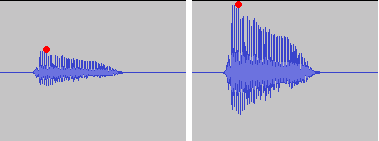
Loudness normalization is a process that evens out the volume of different songs or audio tracks. It makes sure that they all have a similar volume level, so you don’t have to adjust your volume settings constantly. It’s a common technique used in the music industry, where songs from different sources need to be combined into one album or playlist.

Why is Loudness Normalization Important?

There are a few reasons why loudness normalization is important:

  • Consistency: When all of your songs are at a similar volume level, you can listen to your music without having to adjust the volume constantly. This makes for a better listening experience.
  • Preventing Damage to Your Ears: If a song suddenly plays at a much louder volume, it can be harmful to your ears. Loudness normalization prevents this by keeping the volume level consistent.
  • Making Your Music Sound Better: By evening out the volume levels, you can hear all the details in your music. This is especially important when listening to music with headphones, where imbalances in volume can be even more noticeable.

How is Loudness Normalization Done?

Loudness normalization can be done manually by adjusting the volume levels of each individual song, but this is time-consuming and can be difficult to get right. Instead, many people use software that can automatically adjust the volume levels for them. This software analyzes the audio file and adjusts the volume levels so that they are all similar.

One popular software that can do this is Mp4Gain. It’s easy to use and can normalize the volume levels of many different audio file formats. Mp4Gain analyzes the loudness of each audio file and then adjusts the volume levels to make them all similar. This can be done with just a few clicks of a button.

Conclusion

Loudness normalization is an important technique for anyone who wants to listen to music without constantly adjusting the volume. It ensures consistency and can make your music sound better. If you want to easily normalize the volume levels of your audio files, then Mp4Gain is the best solution for you.


Free Download Mp4Gain
picture


Mp4Gain Main Window
picture


Mp4Gain Features
picture


Free Download Mp4Gain
picture

Loudness normalization

Loudness normalization

Loudness Normalization

When you have a lot of mp3 files, you often look for loudness normalization.

Loudness Normalization

What usually happens is that we have mp3s (although Mp4Gain can do Loudness normalization of many other audio and video formats!!) that have been created with different settings, for example different bit rates… which causes them to have a loudness different and that is annoying to the ear.

Many times we have been collecting mp3s from different sources, finding one here and another there and over time we have managed to have a good collection that is worth thinking about, but we have a problem: the loudness differs between different music or video files.

And this has generated that we desperately need to find a solution.

Mp4Gain is the result of many years of experience and is definitely the best normalizer out there, I have no doubt.

Even for very advanced users, it offers different settings to adjust exactly what you are looking for. Pewreo if you are a common user, you will not need anything, just load the song or video (you can normalize one or hundreds at the same time) and click a button, it’s that simple.

Why normalize an audio or a video?

People are desperately searching for a way to avoid having problems with the audio, either because it sounds unevenly loud, or because it is too low or too loud.

Loudness Normalization

If someone asks, why normalize a video to a song or audio, the answer is simple: their ears will ask. You will quickly notice that something is not right in relation to the volume of that video or audio, compared to the others and many times, the audio is not even internally correct. It is too strident or hardly heard due to its low loudness.

Audio Normalization

Video Boost volume

Today we live in an era where an enormous amount of digital videos and audios are consumed and the process of producing them digitally has caused the sound levels of videos or songs to present problems and the user perceives that they must correct them, that they must boost the loudness or boost the basss or boost the volume level.

Of course, normalizing in 2019 or 2020 does not mean the same as what normalizing volume or loudness meant in 2004, for example. Not even the equipment is the same, the devices have improved too much, people have become demanding, people have educated their ears in the technical sense and today they require the ability to normalize the audio as only the Mp4Gain can offer.

Boost the loudness of videos and audios.

Normalizing the audio level today requires a very modern algorithm, which is capable of providing a high level of quality audio, according to current devices and those that will come in the future.

Before, the audio began to normalize simply by measuring the sound peaks, a very elementary system. Nothing to do with the sophistication that Mp4Gain offers.

Because in addition, when compressing the files so that they occupy less space (audio or video files) almost all discard information. Therefore, the normalization must take into account all this, to achieve a true audio optimization. Even getting some sounds that were practically inaudible to be heard again.

Another effect that applies a lot when compressing the audio, is the so-called masking, where some “redundant” sounds are also discarded, at least in part. So there is a depletion, especially if the file was compressed with a very low bit rate.

All of this must be taken into account when normalizing loudness today. It is not about normalizing the overall loudness only, but by frequencies. Anyway, the process is complex nowadays but it manages to correct those things that we want to correct with respect to loudness and boost the volume level, both of videos and songs and audios in general, of the most successful and popular formats.

Normalize or improve the volume of audio or video files

When vinyl records existed, music was recorded in an analog way, nobody ever thought about the space they occupied, because the amount of information was not a variable that will be taken into account.

vinyl

On the other hand, when a new technology appeared that would allow the audio to be digitized, the space occupied by such information did have relevance.

Especially when it was stored on desktop computers that had hard drives that had little space.

normalize loudness

Then the idea arose to compress the music trying to discard information but always trying that this process would not be noticeable.

But an important part of the process that is used to compress music is based on volume.
The volume of the different sounds is measured assuming that when there is a louder sound, the other sounds nearby at that frequency can be eliminated without the human being noticing it.

And in general the process of eliminating information added to what has been called the war of the volume What made the songs to be recorded a higher volume each time, have generated that the collections of audio files have very large differences in loudness between one audio file and one audio file.

And this has made it necessary to normalize the volume and loudness of the audio either from the audio files or from the video files.

Because with the video files the same thing happens: the audio that accompanies the video is also compressed and the same loss of information is suffered by what the musical files.

Therefore it does not matter if it is an MP4 or an mp3 or any other audio or video format, it is most likely necessary to normalize the volume to obtain an adequate loudness.

This is why it is so common that even batch normalization is done.
In other words, many audio or video files are normalized at the same time because people have large audio or video connections that need loudness normalization to correct loudness and volume problems.

Mp4gain is the only and the most efficient program that has the ability to normalize the loudness of most of the audio and video formats.

In turn, mp4gain is an audio converter and a video converter and even a converter. What can extract audio from a video file AND transfer it to an audio format.

Extract the audio from an MP4 and convert it into an mp3 with high sound quality.

Batch normalization of videos

Since the ability to digitize audio was born, as you can use many different codecs, different containers, different sample trates, different bitrates, etc. it can be verified that this has produced that the level of sound of different videos is not the same.

Single or batch normalization of videos

Then the need has arisen to normalize the loudness of videos of very diverse formats.
Mp4Gain comes to be the solution to be able to normalize in batch mode or in sigle mode the lodness of the videos.

video loudness normalization

Increase the loudness of a video in any format

With Mp4Gain you can normalize the volume level of any audio or video file in the most popular formats.

It really has been a breakthrough to be able to boost the volume of a video file or a group of video files with just one click.

In fact, apart from normalizing the volume, mp4gain is also capable of Modifying the PC without modifying the speed and vice versa, or of equalizing the sound to improve it and some other very useful functions.

Of course it is capable of converting most of the audio and video formats to each other.

With which you can convert a video format into any other video format, an audio format into any other audio format, but you can also convert a video format into any other audio format, that is, extract the audio from any video and get a mp3 in flac or any other popular audio format of your choice.