Let’s talk about “musical dynamics” and “musical loudness” Part 2

The two brief examples above are to tell you that frequency content, sound pressure, and sound duration will affect people’s perception of sound volume.
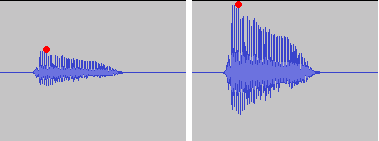
That is why it is said that “loudness tends to human subjective perception”.
Since the volume is the subjective perception of people, how to quantify it?
To quantify “loudness”, the first thing you need to look at is the relationship between the frequency and the loudness of the human ear. There are two pictures below, you can read them carefully for reference:
Looking at the two images above, you will clearly see that the human ear and the human brain are not an organ that flattens the receiving frequency. It will not develop here. For the basis of loudness quantization, see the second image, there is a unit called “fon”. The phon unit is an attempt to quantize loudness. We take a 1kHz signal as an example, and it can be perceived at a volume of 40dB at 1kHz, so it is 40phon. Based on this, another unit is called a sone, 1 sone = 40phon. Both are units that attempt to quantify volume.
The international organization will be the ITU and the EBU…etc. The characteristics of the human ear, the psychoacoustics of the human brain, etc., all factors that affect loudness perception are considered together, and these factors are calculated through complicated mathematical calculations Define and standardize the reasonable loudness range for ” sound reproduction” only after statistically significant results have been obtained. Those interested can search: “ITU-R 1770 and ITU-R 1771”.
Should the rules be followed?
Of course continue! In fact, there is such a problem in Taiwan. Not to mention music, only the fourth channel and MOD, the sound level of each channel is different! The scariest thing is switching from the movie station to the shopping channel and often still being scared by the sudden volume of the shopping channel. Even radio shows have this kind of situation.
Here, you can go to Google again: “Volume War Loudness War”. All this is commonplace. This article is mainly to introduce the definition and specification of loudness.
Effects of loudness specifications
Although ITU, EBU, ISO, ANSI and other organizations have introduced loudness specifications, major music and video streaming platforms still have their own standards. However, the standards of the main platforms will continue to be around the specifications, and there will be no big or outside. When it comes to the audiovisual industry, it will generally affect these things:
Music streaming platforms: Records must meet loudness specifications at time of release
Video streaming platforms: Loudness specifications must be met when movies are released