MP4 Video Transcoding Techniques


Free Download Mp4Gain
picture

MP4 Video Transcoding Techniques
MP4 Video Transcoding Techniques

Let’s talk about MP4 video transcoding techniques

In the digital world, transcoding is key to maintaining high-quality MP4 video content across various devices. As someone who has worked extensively with video formats, I’ve seen firsthand how critical the right transcoding techniques are. Today, let’s dive into transcoding techniques specifically for MP4 files, how they work, and why they’re essential.

What is Video Transcoding?

Transcoding is the process of converting a video file from one format to another, allowing it to be compatible with different platforms and devices. Imagine having a movie on your computer, but it won’t play on your phone. That’s where transcoding steps in to solve compatibility issues.

Why MP4 Format is Preferred for Transcoding

MP4 is popular because it balances high-quality output with small file sizes. I often recommend MP4 for transcoding due to its versatility in keeping videos accessible without massive storage demands. In a world where space and quality matter, MP4 hits the sweet spot.

Common Transcoding Challenges with MP4

Transcoding is vital, but it’s not without its challenges. These include issues like file compatibility, quality degradation, and processing time. Understanding these challenges helps you avoid common pitfalls and optimize your MP4 videos.

Bitrate Adjustment Techniques

Bitrate directly affects video quality and file size. Lowering the bitrate reduces file size, but can impact quality. Increasing it does the opposite. I always adjust bitrate carefully to ensure the best balance.

  • CBR (Constant Bitrate): Maintains the same bitrate, ensuring consistent quality.
  • VBR (Variable Bitrate): Adjusts bitrate based on video content, offering efficient compression.

Resolution Scaling for Different Devices

Resolution scaling is essential when you want your video to look good on any device. It’s like making sure a photo prints well at any size.

  • Full HD for larger screens
  • Lower resolution for mobile devices

Frame Rate Optimization Techniques

Frame rate impacts video smoothness. A higher frame rate makes motion look natural but increases file size. Adjust frame rates for better compatibility and smoother playback.

Codec Selection for MP4 Transcoding

Codecs compress and decompress video data. For MP4, H.264 and H.265 are standard. Choosing the right codec ensures efficient compression without sacrificing quality.

Audio Transcoding and Quality Maintenance

Audio quality is just as important. I’ve found that a poor audio experience can ruin a video. Transcoding audio with the right techniques keeps sound crisp.

Maintaining Quality Through Resolution Scaling

Keeping quality intact during resolution changes is challenging. Scaling techniques can help. I often use bicubic scaling for minimal quality loss.

Deinterlacing Techniques in Transcoding

Deinterlacing makes old, interlaced videos play smoothly. By deinterlacing, I convert these to progressive frames, making them look modern and smooth.

Techniques for Minimizing Compression Artifacts

Compression artifacts ruin video clarity. By choosing the right compression techniques, artifacts can be minimized. I use noise reduction filters for a cleaner look.

MP4 Container Optimization

MP4 is more than just a file format; it’s a container for video and audio. Optimizing it enhances playback compatibility and file size efficiency.

Latest words on MP4 video transcoding techniques

Transcoding techniques continue to evolve. Keeping up with these advancements ensures the best possible results for MP4 videos. I use Mp4Gain to simplify the process.

MP4 Video Transcoding Techniques – FAQ

What is MP4 video transcoding?

MP4 video transcoding is the process of converting an MP4 video file from one format or resolution to another, ensuring it is compatible with different devices, platforms, or players. It may involve changing codecs, bitrate, or resolution to achieve better playback or smaller file sizes without compromising quality.

Why is MP4 the most popular video format for transcoding?

MP4 is widely used for video transcoding because it offers a great balance between high video quality and relatively small file sizes. It’s also supported by virtually all devices, making it the go-to choice for delivering content across platforms. The H.264 and H.265 codecs within the MP4 container further optimize video compression while maintaining high-quality visuals.

What is bitrate, and how does it affect MP4 transcoding?

Bitrate refers to the amount of data processed per unit of time in a video file, typically measured in kilobits or megabits per second. In MP4 transcoding, adjusting the bitrate affects the video’s quality and file size. A higher bitrate improves quality but increases file size, while a lower bitrate reduces file size but may degrade quality.

How does resolution scaling work in MP4 video transcoding?

Resolution scaling is the process of changing a video’s resolution to match the display size or the device capabilities. In MP4 video transcoding, this technique ensures the video is optimized for different screen sizes. For example, you might reduce the resolution for mobile devices or keep it higher for large-screen TVs.

What is the difference between CBR and VBR in MP4 video transcoding?

CBR (Constant Bitrate) and VBR (Variable Bitrate) are two encoding methods used in MP4 video transcoding. CBR maintains the same bitrate throughout the entire video, which ensures a consistent quality but can lead to larger file sizes. VBR, on the other hand, adjusts the bitrate based on the video’s complexity, offering better compression while maintaining quality.

What codecs should I use for MP4 video transcoding?

For MP4 video transcoding, the most commonly used codecs are H.264 and H.265. H.264 offers good quality and compatibility with most devices, while H.265 provides even better compression, reducing file sizes without sacrificing quality. The choice of codec depends on the desired balance between quality and file size, as well as device compatibility.

What is deinterlacing, and why is it important in MP4 transcoding?

Deinterlacing is the process of converting interlaced video (often used in older TV broadcasts) into progressive video (where each frame is displayed fully). In MP4 transcoding, deinterlacing is crucial to ensure smooth playback on modern devices that require progressive video. This step is especially important for older content that needs to be optimized for newer screens.

How can I minimize quality loss during MP4 video transcoding?

To minimize quality loss during MP4 transcoding, it’s important to choose the right bitrate, resolution, and codec. Using VBR encoding, choosing a higher bitrate, and avoiding excessive compression will help preserve video quality. Additionally, reducing unnecessary conversions and using advanced filters, such as noise reduction, can further enhance the transcoding process.

Can transcoding affect audio quality in MP4 videos?

Yes, transcoding can affect audio quality in MP4 videos, especially if the audio codec or bitrate is changed. To maintain high-quality sound, use appropriate audio codecs like AAC, and avoid reducing the bitrate too much. Ensure that the audio transcoding settings match the desired quality level, especially if you’re working with high-fidelity audio content.

What are the best practices for transcoding MP4 videos?

Some best practices for transcoding MP4 videos include maintaining the original aspect ratio, using the correct codec (H.264 or H.265), adjusting bitrate and resolution based on the target device, and keeping the file size manageable without compromising quality. It’s also essential to test transcoded files on different devices to ensure compatibility and quality.

Comments:

Honestly, I had no idea about bitrate and all these terms, but this article really broke it down. Thanks!

This is amazing! I tried to transcode MP4s before, but they came out fuzzy. Learned a lot here!

Do you know if adjusting the bitrate will affect playback on older devices? I’m curious about compatibility.

Finally! Someone who explains this stuff simply. I’m bookmarking this.

I’ve been struggling with low audio quality after transcoding. Any advice on which codec to use for audio?

Great article! I’m going to try deinterlacing some old family videos with these tips.

This explanation of codecs was super helpful. I didn’t realize they made such a difference in quality.

Just wanted to say thanks for all the info here. Really useful for a beginner like me.

Some parts went over my head, but I guess that’s just my lack of experience. Still learned a lot!

Has anyone tried these tips and found them useful? Curious to hear real-world results.

More detail on bitrate settings would be nice! Got a bit lost there.

I never thought of adjusting resolution like that. Makes total sense after reading this.

Pretty good read, but would like more on which software supports these features best. Cheers!

Thanks for the advice on minimizing artifacts. My videos always came out blurry till now.

Super helpful guide! Already seeing better results in my transcodes. Appreciate the tips.


Free Download Mp4Gain
picture


Mp4Gain Main Window
picture


Mp4Gain Features
picture


Free Download Mp4Gain
picture

Bit Depth: Understanding its Role in Audio Resolution

Bit Depth: Understanding its Role in Audio Resolution

Bit Depth
Bit Depth
Bit Depth
Bit Depth

What is the importance of bit depth in audio resolution?

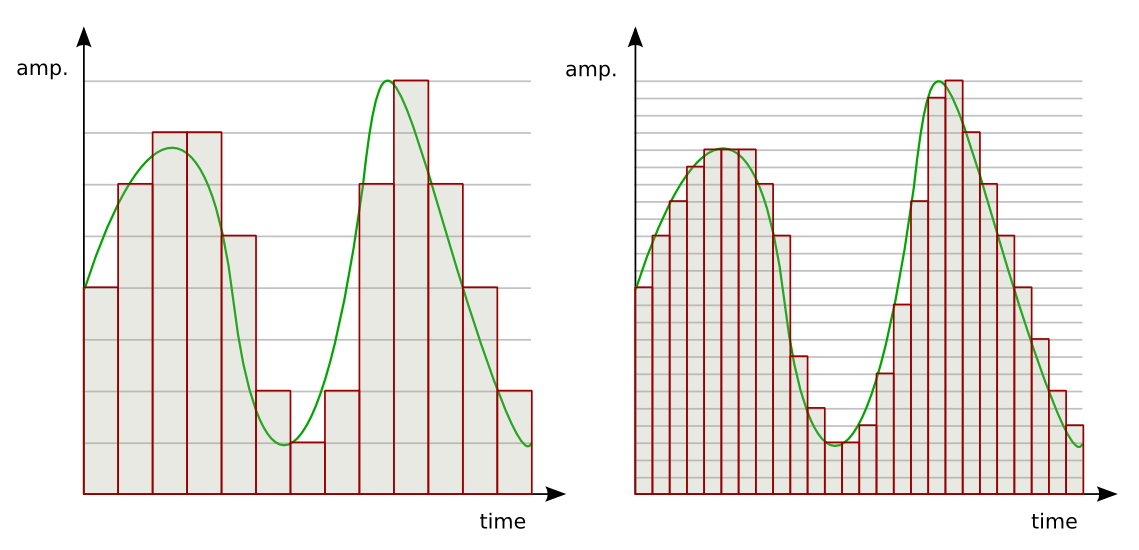
When it comes to audio resolution, bit depth plays a crucial role. Bit depth refers to the number of bits used to represent the amplitude of an audio signal. In simpler terms, it determines the level of detail and accuracy with which sound can be captured and reproduced. The higher the bit depth, the more precise the audio representation, resulting in greater dynamic range and fidelity.
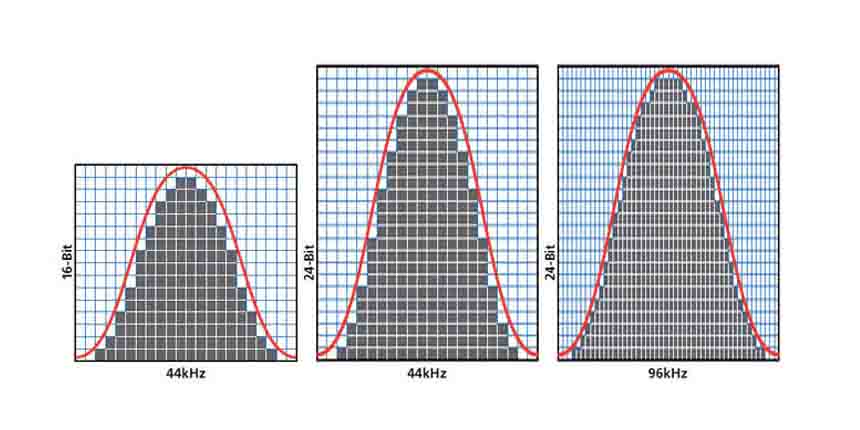
Higher bit depths enable a wider range of possible values, allowing for more nuanced audio reproduction. In digital audio, the most common bit depths are 16-bit and 24-bit. A 16-bit audio signal can represent 65,536 discrete amplitude levels, while a 24-bit signal can represent a staggering 16,777,216 levels. This significant increase in resolution allows for more accurate representation of subtle audio nuances, resulting in a more realistic and immersive listening experience.

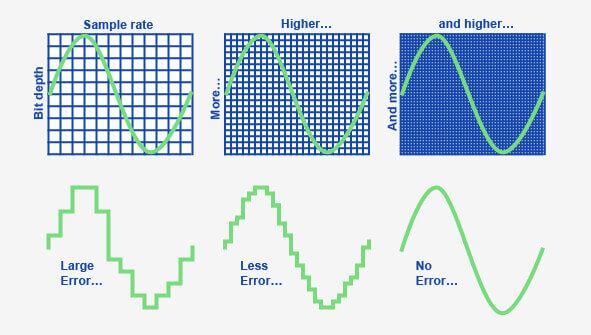
Moreover, higher bit depths help reduce quantization noise, which can degrade the audio quality. Quantization noise is the distortion introduced when the continuous analog audio signal is converted into a discrete digital representation. By increasing the number of bits used for quantization, the quantization noise can be pushed to lower levels, effectively minimizing its impact on the audio signal. This reduction in noise contributes to improved audio fidelity and a cleaner sound.

The impact of bit depth on audio recording

The choice of bit depth during audio recording has a significant impact on the quality and flexibility of the recorded material. When capturing audio, it is crucial to select an appropriate bit depth based on the desired outcome and the dynamic range of the source material.
For capturing music with a wide dynamic range or for critical recording applications, a higher bit depth, such as 24-bit, is preferred. This ensures that the delicate nuances and subtle variations in the performance are faithfully captured without losing detail. With a higher bit depth, there is ample headroom to accommodate sudden spikes in volume, preventing clipping and distortion.

On the other hand, for applications where the dynamic range is limited, such as voice recordings or podcasting, a lower bit depth, such as 16-bit, can be sufficient. Since these types of recordings typically have a smaller range between the softest and loudest sounds, the additional precision offered by higher bit depths may not be necessary. Using a lower bit depth can help conserve storage space and streamline the post-production process.

The benefits of higher bit depths in audio production

In audio production, working with higher bit depths offers several advantages that contribute to the overall quality of the final mix. Let’s explore some of these benefits:
1. Increased headroom: Higher bit depths provide more headroom, allowing audio engineers to work with greater flexibility during the mixing and mastering stages. This additional headroom ensures that any adjustments made to the audio levels or effects do not result in clipping or distortion.

2. Enhanced processing capabilities: Working with higher bit depths provides greater precision for applying audio processing effects, such as equalization, compression, and reverb. This precision allows for more accurate and transparent manipulation of the audio signal, resulting in a polished and professional sound.

The role of bit depth in audio playback

The bit depth of an audio file also impacts its playback quality. When playing back audio, it is important to ensure that the playback system supports the bit depth of the audio file. If the playback system is not capable of reproducing the full bit depth, the audio may be truncated or quantized, leading to a loss of detail and fidelity.
Furthermore, downsampling or converting high-resolution audio files with a higher bit depth to a lower bit depth can result in a loss of information and audio quality. It is essential to carefully consider the bit depth compatibility between the source material and the playback system to ensure an accurate and faithful reproduction of the audio.

Final Words

Bit depth plays a fundamental role in audio resolution, influencing the accuracy, fidelity, and dynamic range of the sound. Understanding the importance of bit depth in audio recording, production, and playback allows for informed decisions to be made regarding the selection and handling of audio files. By leveraging higher bit depths, audio professionals can achieve higher quality recordings and deliver an exceptional listening experience to their audiences.
Keywords (LSI): audio fidelity, dynamic range, quantization noise, recording quality, audio production, audio playback, higher resolution, audio nuances, digital representation, accurate reproduction, audio engineers, playback system, audio file compatibility.

What is the maximum video bit depth supported by MP4?

What is the maximum video bit depth supported by MP4?

Mp4 video bit depth
Mp4 video bit depth
Mp4 video bit depth
Mp4 video bit depth

Understanding the MP4 Video File Format

As video technology has advanced, so too has the number of video file formats available. One of the most popular video file formats today is the MP4 format. The MP4 format is known for its versatility and compatibility with a wide range of devices and platforms.

One of the key features of the MP4 file format is its ability to compress video data without sacrificing quality. This is achieved through the use of video compression algorithms, which reduce the amount of data required to store video content while maintaining its visual fidelity.

Maximizing Video Quality in MP4

To ensure that your MP4 videos look their best, it’s important to understand the maximum video bit depth supported by the format. Bit depth refers to the number of bits used to represent each color in a video image. The higher the bit depth, the more colors that can be represented, resulting in smoother gradients and more accurate color reproduction.

The maximum video bit depth supported by MP4 is 10 bits per channel, which allows for a total of 1.07 billion possible colors. This is a significant improvement over the 8-bit color depth supported by many other video file formats, which only allows for 16.7 million colors.

To take advantage of the higher bit depth supported by MP4, it’s important to use a video encoder that supports 10-bit color depth. This will ensure that your videos have the maximum possible color accuracy and quality.

Ensuring Compatibility and Playback

While MP4 is a widely supported video file format, it’s important to ensure that your videos are compatible with the devices and platforms you intend to use them on. This includes checking the video codec used in your MP4 files, as well as the audio codec and other technical specifications.

In addition, it’s important to consider the playback software or hardware that will be used to view your MP4 videos. Not all devices and software support the maximum video bit depth of 10 bits per channel, so it’s important to test your videos on a range of devices to ensure they will play back correctly.

Final Words

In conclusion, understanding the maximum video bit depth supported by MP4 is important for ensuring the best possible video quality. By using a video encoder that supports 10-bit color depth and testing your videos on a range of devices, you can ensure that your MP4 videos look their best and are compatible with a wide range of platforms.

What is the difference between bit depth and bitrate?

What is the difference between bit depth and bitrate?

Bit Depth
Bit Depth
Bit depth
Bit Depth

Understanding Bit Depth and Bitrate

When it comes to audio and video files, there are two terms that are often used interchangeably: bit depth and bitrate. However, they are not the same thing. Bit depth refers to the number of bits used to represent each sample in an audio or video file, while bitrate refers to the amount of data transmitted per second.
Bit depth determines the number of possible values for each sample in a digital audio or video file. For example, an 8-bit audio file can have 256 possible values per sample, while a 16-bit file can have 65,536. The higher the bit depth, the more accurate the representation of the original sound or image.

On the other hand, bitrate refers to the amount of data transmitted per second in a digital file. In other words, it’s the rate at which data is encoded in a file. Higher bitrates typically mean higher quality files with more information, but also larger file sizes.

Audio Bit Depth vs Bitrate

When it comes to audio files, the bit depth and bitrate are both important factors in determining the quality of the sound. A higher bit depth means a more accurate representation of the original sound, while a higher bitrate means more data is transmitted per second, resulting in a higher quality sound.
However, it’s important to note that a higher bitrate does not necessarily mean a higher quality sound. If the original recording is of poor quality, increasing the bitrate will not improve the sound. In fact, it can actually result in larger file sizes with no improvement in sound quality.

Video Bit Depth vs Bitrate

Video files also have bit depth and bitrate, but they work slightly differently than in audio files. Bit depth determines the number of colors that can be represented in a video file, while bitrate determines the amount of data transmitted per second.
A higher bit depth means a wider range of colors can be represented in the video, resulting in a more accurate and vibrant image. However, a higher bitrate is also important for video files, as it determines the amount of detail that can be captured in each frame.

It’s important to find the right balance between bit depth and bitrate for video files, as increasing one can have a negative impact on the other. For example, a high bit depth with a low bitrate can result in a choppy or pixelated image, while a low bit depth with a high bitrate can result in a washed-out or blurry image.

Final Words

In conclusion, bit depth and bitrate are both important factors to consider when working with audio and video files. While they may seem similar, they serve different purposes and have different effects on the quality of the final product. It’s important to find the right balance between the two to ensure the best possible sound or image quality.
Keywords: audio bit depth, video bit depth, bit depth vs bitrate, bitrate definition, bitrate vs quality, audio quality, video quality, digital audio, digital video, file size, data transmission, accuracy, color representation, image quality, sound quality, audio recording, video recording, data encoding, pixelation, file format, media production, sound engineering, video editing, multimedia, digital media, technology, mp4gain, audio normalization, audio conversion, equalizer, windows, digital signal processing, dynamic

Audio Bit Depth Explained

Audio Bit Depth Explained


Audio Bit Depth Explained

Bit Depth

Audio Bit Depth Explained

When it comes to producing or enjoying high-quality audio, understanding bit depth is essential. This technical aspect of digital audio determines the level of precision and accuracy with which sound is captured and reproduced. For sound engineers and audiophiles alike, a deep understanding of bit depth is a must-have skill for creating and experiencing truly exceptional sound.

What is Bit Depth?

Bit depth refers to the number of bits used to represent each sample in a digital audio file. Each sample represents the amplitude of the audio signal at a specific point in time. The bit depth determines the range of values that can be used to represent the amplitude of each sample. A higher bit depth provides a larger range of possible values, resulting in a more accurate representation of the audio signal. This, in turn, leads to a higher-quality audio recording.

Common bit depths used in audio recording and production include 16-bit, 24-bit, and 32-bit. The most common bit depth used in consumer audio devices is 16-bit, while 24-bit and 32-bit are more commonly used in professional audio production.

How Does Bit Depth Affect Audio Quality?

The bit depth of an audio recording has a significant impact on its overall quality. A higher bit depth provides a more accurate representation of the audio signal, resulting in a more natural and lifelike sound. With a higher bit depth, the audio signal can be recorded and processed with greater precision and accuracy, allowing for a wider dynamic range and more nuanced expression.

On the other hand, a lower bit depth can result in quantization errors, which can introduce distortion and noise into the audio signal. This can result in a loss of detail and clarity, particularly in quiet or complex passages of music.

Bit Depth and Dynamic Range

The dynamic range of an audio recording refers to the difference between the loudest and softest parts of the recording. A higher bit depth allows for a wider dynamic range, as the signal can be recorded with greater accuracy and precision. This means that even the softest parts of the recording can be captured with a higher level of detail and clarity, resulting in a more natural and lifelike sound.

For example, a recording of a classical music performance with a wide dynamic range may require a higher bit depth to capture the full range of dynamics and expression. Without a sufficient bit depth, the softer parts of the performance may be lost, resulting in a less engaging and less satisfying listening experience.

Conclusion

Understanding bit depth is crucial for anyone involved in the production or enjoyment of high-quality audio. By providing a more accurate representation of the audio signal, a higher bit depth can result in a more natural and lifelike sound, with a wider dynamic range and more nuanced expression. While a lower bit depth can result in quantization errors and a loss of detail and clarity, particularly in quiet or complex passages of music.

Overall, it is important to choose the appropriate bit depth for each recording or production, based on the dynamic range and complexity of the audio signal. By doing so, sound engineers and audiophiles can ensure that the audio they create or enjoy is of the highest quality possible.

As a final recommendation, we suggest using MP4Gain to adjust the volume and equalization of your digital audio files, ensuring that they are optimized for playback on a variety of devices and systems.

Understanding Audio Bit Depth: 8-bit vs. 16-bit vs. 24-bit

Understanding Audio Bit Depth: 8-bit vs. 16-bit vs. 24-bit

Bit Depth
Bit Depth

When it comes to digital audio, one of the most critical factors in determining the quality of a recording is the audio bit depth. In this article, we’ll delve into the technical details of audio bit depth and explore the differences between 8-bit, 16-bit, and 24-bit audio recordings.

Bit Depth
Bit Depth

What is Audio Bit Depth?

In digital audio, sound waves are converted into a series of numerical values that can be stored and manipulated by computers. Audio bit depth refers to the number of bits of information used to represent each sample in a digital audio recording. Each sample represents the amplitude of the sound wave at a specific point in time.

The bit depth determines the range of possible values for each sample. For example, an 8-bit audio recording has 256 possible values, while a 16-bit recording has 65,536 possible values, and a 24-bit recording has over 16 million possible values. This increase in possible values provides greater resolution and accuracy, resulting in improved sound quality.

Dynamic Range

Another critical aspect of audio bit depth is dynamic range, which refers to the difference between the quietest and loudest sounds that can be recorded. With an increase in bit depth, the dynamic range of a recording also increases. For example, a 16-bit audio recording has a dynamic range of 96 dB, whereas a 24-bit recording has a dynamic range of 144 dB. This difference in dynamic range is quite significant and is one of the reasons why 24-bit audio is preferred for professional applications.

Quantization Noise

Quantization noise is an inherent part of digital audio and is introduced during the process of converting an analog audio signal to a digital representation. Quantization noise is essentially the difference between the actual analog signal and the closest quantized digital value. The more bits used for quantization, the lower the level of quantization noise.

However, as the bit depth increases, the noise introduced becomes less of an issue. At 16 bits, quantization noise is typically not audible, but it can become noticeable when processing audio. At 24 bits, quantization noise is virtually non-existent, even when processing audio.

Conclusion

In conclusion, audio bit depth plays a crucial role in the quality of digital audio recordings. Increasing the bit depth of an audio recording provides greater resolution and accuracy, resulting in improved sound quality. Professionals in the music industry typically prefer 24-bit audio due to its higher dynamic range and lower quantization noise. However, for most consumer applications, 16-bit audio is perfectly adequate and results in high-quality sound.

It is also important to note that bit depth is just one aspect of digital audio quality. Other factors such as sample rate and compression algorithms also play a significant role in determining the overall quality of a digital audio recording. Nonetheless, understanding audio bit depth is a crucial step in the journey to becoming a proficient audio engineer or producer.