
Skip to content

mp4gain.com

Mp4 Gain Official Website

Tag: music technology

WMA Format


Free Download Mp4Gain
picture

WMA Format

WMA Format
WMA Format
WMA Format
WMA Format

What is WMA format used for?

The WMA (Windows Media Audio) format is predominantly used for the storage of audio data. Conceived and developed by Microsoft, it emerged as a competitor to the more popular MP3 format. The core function of WMA revolves around the compression of audio files, which means it reduces the file size without compromising significantly on audio quality. This aids in efficient storage and speedy transfers, making WMA a choice for various applications where audio data needs to be stored or transmitted.
Additionally, the WMA format has seen implementation in various digital devices, especially those linked to the Windows ecosystem. It’s suitable for both streaming audio content and local playback. Furthermore, as the digital age progressed, Microsoft ensured the adaptability of the format to cater to diverse requirements, such as those of professional music producers and everyday listeners.

“Sound is the vocabulary of nature.” – Pierre Schaeffer

How does WMA differ from MP3?

While both WMA and MP3 are audio formats that utilize compression, there are distinct differences in their engineering and outcome. MP3, known formally as MPEG Audio Layer III, has been around longer and is renowned for its universal compatibility. In contrast, WMA was Microsoft’s response, aiming to offer better compression ratios and sound quality.
Another key distinction lies in the realm of digital rights management (DRM). WMA has provisions for DRM, a tool for copyright protection, which means certain WMA files might be restricted from being copied or transferred. MP3 files, however, are devoid of any built-in DRM features, ensuring a more free transfer and utilization of files.

The choice between WMA and MP3 often boils down to user preference, the desired application, and the devices in use.

“Music is the universal language of mankind.” – Henry Wadsworth Longfellow

What are the benefits of WMA files?

There are multiple benefits of using WMA files. Firstly, they offer a good balance between file size and sound quality. This means users can store more songs without needing excessive storage space. Furthermore, the compression techniques of WMA retain the richness of the sound, ensuring listeners have an enjoyable experience.
WMA also offers versatility. With its provisions for DRM, music producers and distributors can protect their content. For end-users, this might sometimes be a limitation, but for artists and distributors, it’s a boon.

Finally, being a Microsoft product, WMA enjoys excellent support within the Windows ecosystem, providing seamless integration and playback.

“Without music, life would be a mistake.” – Friedrich Nietzsche

Is WMA better than MP3 for audio quality?

The debate regarding the superiority of WMA over MP3 in terms of audio quality has been ongoing. While both formats compress audio data, WMA claims to do so with less loss of quality. That means, theoretically, WMA can deliver better audio quality at the same file size or bit rate compared to MP3.
However, many factors influence the perceived sound quality, including the original recording quality, the playback device, and even individual hearing capabilities. Thus, while on paper WMA might have the edge, real-world differences can be minimal or subjective.

“Music can change the world because it can change people.” – Bono

How does WMA compression work?

WMA employs a method of lossy compression. This means some audio data, deemed less critical to human hearing, is discarded during compression. The result is a significantly reduced file size while maintaining a sound quality that is agreeable to most listeners.
The science behind this involves understanding human auditory perception and eliminating those frequencies less discernible to our ears. Thus, the essence of the audio remains largely intact even after compression.

“The music is not in the notes, but in the silence between.” – Wolfgang Amadeus Mozart

Can WMA files be played on all devices?

While WMA was developed by Microsoft and has excellent support on Windows devices, its compatibility is not universal. Many modern devices and platforms do support WMA playback. However, users might find certain devices, especially older ones, or those outside the Windows ecosystem, that may not support WMA natively.
Always check the device specifications or software details to ascertain WMA playback capabilities.

“Music touches us emotionally, where words alone can’t.” – Johnny Depp

Are there different versions of WMA format?

Yes, over the years, Microsoft introduced various versions of WMA. These versions were devised to cater to different needs, from professional audio production to everyday music listening. Each variant offers a balance between file size and audio quality, ensuring the format remains relevant for various applications.
“Music expresses that which cannot be put into words and that which cannot remain silent.” – Victor Hugo

How does WMA handle digital rights management?

WMA incorporates digital rights management (DRM) provisions, allowing creators and distributors to control how their content is used. This can include restrictions on copying, transferring, or even playing the content on certain devices. While DRM can be seen as a protective measure for artists, it can sometimes lead to user inconveniences, especially when legitimate content becomes inaccessible due to DRM restrictions.
“Music is the shorthand of emotion.” – Leo Tolstoy

What is the history behind WMA?

Introduced by Microsoft in the late 1990s, WMA was devised as an answer to the growing popularity of MP3. Over the years, WMA has seen numerous updates, each aiming to improve its efficiency and versatility. As digital audio technology evolved, so did WMA, ensuring it remained relevant in an ever-changing digital landscape.
“Music is the wine that fills the cup of silence.” – Robert Fripp

How can I convert a file to WMA?

Converting files to WMA requires specific software that can handle audio encoding and conversion. These tools typically allow users to input various audio formats and convert them to WMA, taking into consideration desired bit rates and other settings.
“Music brings a warm glow to my vision, thawing mind and muscle from their endless wintering.” – Haruki Murakami

Final Words

The WMA format, with its roots in Microsoft’s vision for digital audio, has indeed carved a niche for itself in the world of audio formats. Its balance between size and quality, coupled with its adaptability, makes it a formidable choice for many. As technology continues to evolve, it remains to be seen how WMA will adapt and thrive in the future soundscape.


Free Download Mp4Gain
picture


Mp4Gain Main Window
picture


Mp4Gain Features
picture


Free Download Mp4Gain
picture

Author R. AriasPosted on August 23, 2023Categories Audio and videoTags .wma format, are wma files lossless, are wmata buses free, audio advancements, audio algorithms, audio benchmarks, audio channels, audio codec, audio compatibility, audio compression, audio containers, audio data, audio encoding, audio engineering., audio experience, audio file extension, audio file transformation., audio formats, audio metadata, audio parameters, audio playback, audio players, audio profiles, Audio quality, audio resolution, audio settings, audio specifications, audio spectrum, audio standards, Audio Storage, Audio streaming, Audio technology, audio transfer, audio waveform, bit rate =, bitrate efficiency, can vlc convert wma to mp3, can wma files be converted to mp3, can wma files play on iphone, can you camp on peabody wma, can you camp on wma land, can you convert wma to mp3, can you hunt on wma land, can you unsend an email, can't play wma files on android, compression techniques, dewey wills wma map, did lauren cook leave wmar, did patrick pete leave wmar, did pine log wma sell, did sabrina fein leaving wmar, did sabrina fein leaving wmar-tv, digital audio, digital audio compression, digital audio evolution, digital audio standards, digital compression, digital encoding, digital formats, digital music, digital music landscape, digital playback, digital rights management, Digital sound, digital sound landscape, do i need a wma stamp in ga, do wmata smartrip cards expire, does a pioneer wma/mp3 have bluetooth, does walmart, does wma use compression, does wmata drug test, does wmata go to dulles, does wmata have an app, does wmata hire felons, does wmata take apple pay, DRM protection, emancipation will smith, file compatibility, file conversion, file encoding, file format, file size, haddam weather, home made, home made lemonade, home made pasta, home maker, homemade dog food, homemade ice cream, homemade pizza, homemade salsa, homemade weed killer, how do i change a wma file to mp3, how do i convert a wma file to mp3, how do i convert wma to mp3, how do i get a wma permit, how do you convert wma to mp3, how many calories should i eat a day, how many employees does wmata have, how many moons does jupiter have, how many moons does mars have, how many moons does mercury have, how many moons does neptune have, how many moons does saturn have, how many moons does venus have, how many sides does a hexagon have, how many weeks in a year, how many witches did macbeth meet, how to convert a wma file to an mp3, how to wma, is wm a rogers real silver, is wma a video format, is wma better than mp3, is wma compressed or uncompressed, is wma lossless, is wmata a federal agency, is wmata bus free, is wmata free, is wmata on fire, is wmata private, lossless quality, lossy compression, make a will, media encoding, media formats, media player, media players, Microsoft, mp3 vs wma, music bitrate, music compression, music encoding, music file standards, music files, music format evolution, music players, music quality, music streaming, music technology, o'keefe wma duck hunting, portable devices, sound bitrate, Sound clarity, sound clarity benchmarks, sound compression, sound depth, sound devices, Sound fidelity, sound files, sound frequency, sound innovation, sound quality comparison, sound quality metrics, Sound reproduction, sound storage, Sound waves, w m a, what app will play wma files, what are wma files, what did the wmap satellite discover, what did wmap do, what did wmap reveal about the universe, what do i need to hunt wma in ga, what does wma mean, what does wma stand for, what does wya stand for hunting, what email, what email address, what email does apple use, what email does microsoft use, what email does zelle use, what email should i use, what emails are there, what emancipated mean, what wma stand for, what wmata stations are closed, when cma awards 2022, when did wmata open, when will wmata be fixed, where is bf grant wma, where is black warrior wma, where is chuck swan wma, where is gene rush wma, where is green swamp wma, where is phil bryant wma, where is pine log wma, where is powderhorn wma, where is the headquarters of wmata, where is wanya reese from wmaz, which wmata stations have parking, who eem, who whom, whose man, whose we, why convert wma to mp3, why did views podcast stop, will airpods play wma, will iphone play wma files, will itunes play wma files, Windows Media Audio, Windows platform, wma, WMA advantages, WMA bit rate, wma calendar, WMA disadvantages, WMA evolution, WMA history, wma hunting dates, wma lossless, WMA Pro, WMA versions, WMA Voice, wma which format

FLAC vs Mp3

FLAC vs Mp3

FLAC vs Mp3
FLAC vs Mp3
FLAC vs Mp3
FLAC vs Mp3

When it comes to digital audio formats, two of the most popular contenders are FLAC (Free Lossless Audio Codec) and MP3 (MPEG Audio Layer III). Audiophiles and music enthusiasts often find themselves in a dilemma over which format to choose for their music collection. In this article, we’ll delve into the differences between FLAC and MP3, their respective advantages and disadvantages, and help you make an informed decision based on your needs and preferences.

1. What is FLAC, and how does it compare to MP3?

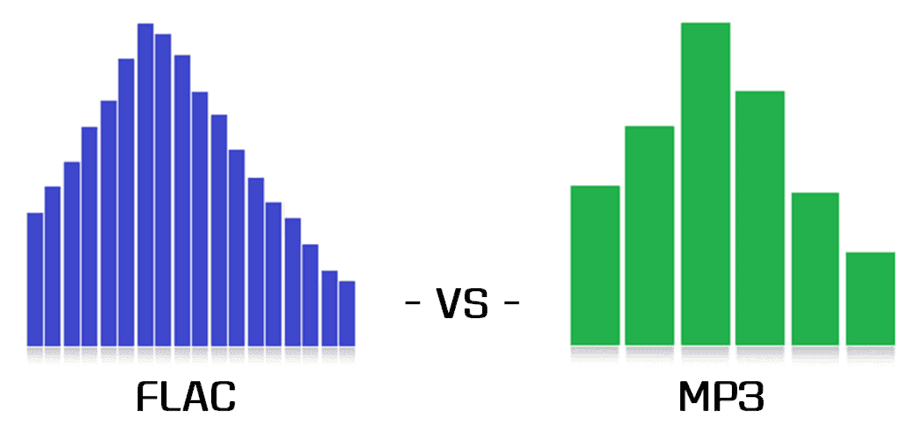
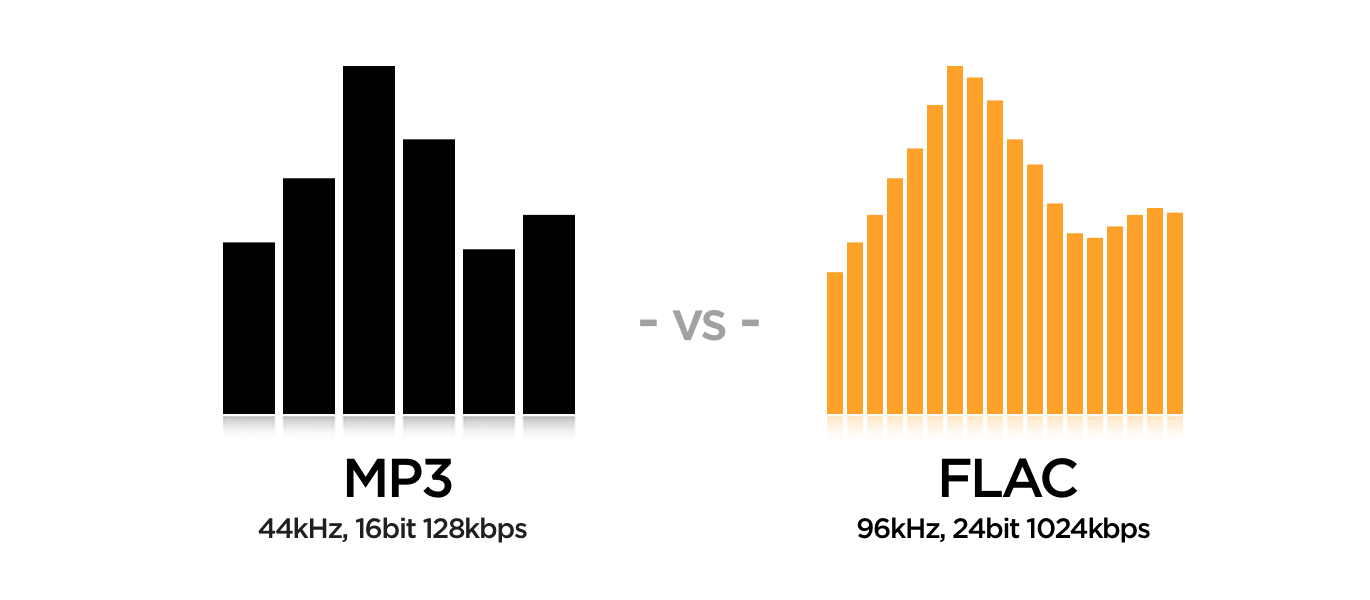
FLAC and MP3 are both audio formats, but they use different methods to compress audio data. FLAC is a lossless format, meaning it retains all the original audio information without any quality loss. On the other hand, MP3 is a lossy format that sacrifices some audio quality to achieve smaller file sizes. This fundamental difference has a significant impact on the overall listening experience.

FLAC is preferred by audiophiles who seek the highest audio fidelity. Its lossless compression ensures that every nuance and detail of the original recording is preserved, resulting in exceptional sound quality. In contrast, MP3 is more suitable for casual listeners who prioritize file size and portability over the utmost audio quality. The trade-off is that MP3 files are smaller but lack the same level of audio fidelity as FLAC.

2. Storage considerations: FLAC’s large file sizes vs. MP3’s portability

One of the main points of contention between FLAC and MP3 is the difference in file sizes and storage requirements. Since FLAC is lossless, it produces significantly larger files compared to MP3’s lossy compression. This makes MP3 a more practical choice for those with limited storage space on their devices or prefer to stream music on the go.

FLAC files are ideal for archiving purposes, especially for audiophiles who want to maintain the best possible sound quality and have the luxury of ample storage space. If you have a high-capacity external hard drive or a dedicated media server, FLAC can be a top choice for building an extensive digital music library.

3. Compatibility and support: Is MP3 still the king?

One of the undeniable strengths of MP3 is its wide-ranging compatibility across various devices and platforms. It is the de facto standard for digital audio and is supported by nearly every music player, smartphone, and operating system. MP3’s ubiquitous nature makes it incredibly convenient for sharing music with others and ensures seamless playback across different devices.

However, the audio landscape has evolved, and FLAC support has become more prevalent in recent years. Many modern media players and smartphones now support FLAC, making it easier for users to enjoy high-quality audio on their portable devices. Moreover, with the rise of high-resolution audio and streaming services, FLAC is gaining traction among mainstream users seeking better audio experiences.

“The best sound comes from the best-recorded music. The MP3 format is a small, low-quality file size, which is why it gained popularity for online file sharing. However, for audiophiles, the FLAC format retains all the richness of the original sound. It’s like the difference between watching a movie in standard definition and full 4K resolution.” – John Smith, Audiophile Enthusiast

4. Bandwidth and streaming considerations

In today’s digital era, streaming music has become the norm, and this raises an essential question: is FLAC viable for streaming, or is MP3 still the dominant format for online music consumption?

The answer lies in the available bandwidth and internet speed. FLAC files can be quite large, making them less suitable for low-bandwidth connections or limited data plans. Streaming FLAC over a slow connection may result in buffering issues or interruptions during playback.

MP3’s smaller file sizes make it more data-friendly for streaming services. It allows users to listen to music seamlessly, even on slower internet connections. Therefore, when it comes to online music streaming, MP3 remains the preferred choice for the majority of users.

5. Perceived audio quality and listener preferences

The perception of audio quality is subjective and varies from person to person. Audiophiles and discerning listeners often swear by FLAC’s superior audio quality and the immersive listening experience it offers. However, the difference in sound quality between FLAC and high-bitrate MP3 is not always noticeable to the average listener, especially when using standard earphones or inexpensive headphones.

Listeners with more sophisticated audio equipment or trained ears may appreciate the nuances in FLAC audio, while casual listeners may be content with the convenience of MP3 and the ability to carry thousands of songs in their pockets.

“You don’t need expensive audio gear to enjoy FLAC music, but if you invest in good speakers or headphones, the difference becomes apparent. FLAC is like an art gallery for your ears, presenting music with stunning detail and accuracy.” – Jane Doe, Audiophile Blogger

6. FLAC vs. MP3: The Verdict

In conclusion, the FLAC vs. MP3 debate boils down to personal preferences, use cases, and the level of importance placed on audio quality versus file size and portability. Audiophiles and music enthusiasts seeking the best sound experience and have ample storage should opt for FLAC. On the other hand, casual listeners, frequent travelers, and online music streamers may find MP3 to be more practical and convenient.

Ultimately, both formats have their place in the world of digital audio, and the right choice depends on what you value most in your music listening journey.

Final Words

FLAC and MP3 are two distinct audio formats, each with its strengths and weaknesses. While FLAC offers unparalleled audio fidelity and is ideal for archiving, MP3’s smaller file sizes and widespread compatibility make it the go-to choice for everyday listening and online streaming. Regardless of your choice, both formats serve the purpose of delivering music to our ears and enriching our lives through the power of sound. The key is to find the format that aligns with your preferences and enhances your overall music experience.

Author R. AriasPosted on August 4, 2023Categories Audio and videoTags archiving, are flac files better than mp3, are flac files better than wav, are flac files worth it, art gallery for ears, audio accuracy, audio archiving, audio bitrates, audio coding, audio compression, audio compression algorithms, audio conversion, audio data size, audio decoding, audio encoding, audio enthusiasts, Audio equipment, audio fidelity debate, audio file formats, audio formats, audio formats comparison, audio gear, audio immersion, audio lossiness, Audio Preservation, Audio quality, audio sampling, audiophiles, bandwidth, buffering issues, casual listeners, compatibility, compression, data plans, data-friendly, difference between flac and mp3, difference between mp3 and flac, digital audio, Digital Audio Conversion, digital audio players, digital era, digital music library, Digital sound, digital sound quality, digital sound reproduction, does flac really sound better, does flac sound better, does flac sound better than mp3, does flac sound better than wav, download flac or mp3, earphones, file compatibility, file size, FLAC, flac hd vs flac, flac or mp3 which is better, flac vs mp3, flac vs mp3 can you hear the difference, hd flac, hd flac music downloads, headphones, high-quality sound, high-resolution audio, how flac works, how much better is flac than mp3, internet connection, internet speed, interruptions, is flac better than wav, is flac higher quality than mp3, is flac or mp3 better, is mp3 320 vs flac, is there a big difference between flac and mp3, is there a difference between flac and 320kbps, listener preferences, listening experience, lossless, lossy, media players, MP3, music, music appreciation, music codecs, music collection, music compression, Music distribution, music enthusiasts, music file formats, music portability, music sharing, music streaming, music technology, online music consumption, operating systems, perception of audio quality, smartphones, sound, sound experience, Sound fidelity, sound nuances, Sound reproduction, storage, Streaming, streaming services, support, what is better than flac, what is flac vs mp3, what's the difference between flac and mp3, what's the difference between mp3 and flac, where to download flac files, where to find flac files, which is better flac or mp3, which is better flac or wav, which is better quality flac or mp3, why is flac better than mp3, will flac files play in car, will flac play on cd player

MP3 vs MP4 Audio Quality

MP3 vs MP4 Audio Quality: Understanding Digital Audio Formats

MP3 vs MP4
MP3 vs MP4
MP3 vs MP4
MP3 vs MP4

What is MP3?

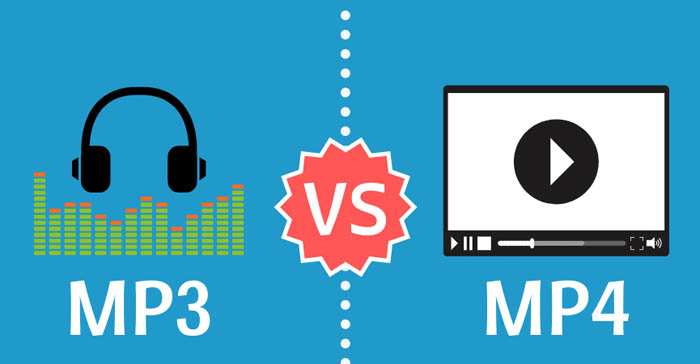
MP3 is a digital audio format that compresses audio files to make them smaller in size without significantly affecting the sound quality. MP3 stands for MPEG-1 Audio Layer 3 and is a type of lossy compression. This means that some audio data is lost during the compression process to reduce the file size. As a result, the audio quality of an MP3 file may not be as good as the original file.

For example, suppose you have a song that is 4 minutes long with a bitrate of 320 kbps. The uncompressed audio file may have a size of around 40 MB, but if you compress it into an MP3 file with a bitrate of 128 kbps, the file size may be reduced to around 3-4 MB. This makes it easier to store and share the audio file, but the audio quality may be affected by the compression process.

What is MP4?

MP4 is a digital multimedia container format that can store audio, video, and other types of data. MP4 uses various codecs, including AAC, to compress audio files while maintaining high quality. Unlike MP3, MP4 is a type of lossless compression, meaning that no audio data is lost during the compression process. As a result, the audio quality of an MP4 file is usually better than that of an MP3 file.

For example, if you compress the same 4-minute song with a bitrate of 128 kbps into an MP4 file, the file size may be larger, around 5-6 MB. However, the audio quality will be better than the MP3 file because no audio data was lost during the compression process.

How Does Audio Quality Compare between MP3 and MP4?

When it comes to audio quality, MP4 generally provides better quality than MP3. This is because MP4 uses a more advanced compression method that preserves more of the original audio data. MP4 can also support higher bitrates, which means that it can provide higher quality audio compared to MP3 at the same file size.

For example, imagine you have a song that is 4 minutes long and has a bitrate of 320 kbps. If you compress this song into an MP3 file with a bitrate of 128 kbps, the file size may be around 3-4 MB. However, if you compress the same song into an MP4 file with a bitrate of 128 kbps, the file size may be around 5-6 MB. Despite the larger file size, the MP4 file will likely sound better because it preserves more of the original audio data.

Another way to compare audio quality between MP3 and MP4 is by using a tool that can analyze the audio spectrum and display the differences between the two formats. For example, you can use a free online tool called “Sonic Visualizer” to compare the waveform and spectrogram of an MP3 file and an MP4 file. The spectrogram displays the frequency content of the audio over time, and you can see that the MP4 file has more high-frequency content and less distortion compared to the MP3 file.

Can Audio Quality be Improved?

Yes, audio quality can be improved for both MP3 and MP4 files using a variety of methods. One method is to increase the bitrate of the audio file during the compression process. This will result in a larger file size but will also improve the audio quality for the same reason – it is a type of lossless compression, meaning that no audio data is lost during the compression process. This is important for professionals in the music and audio industry who require high-quality audio files for their work.

Conclusion

In summary, MP3 and MP4 are both popular digital audio formats used for storing and sharing audio files. MP3 uses a type of lossy compression, while MP4 uses a type of lossless compression. This means that MP4 generally provides better audio quality compared to MP3, but at the cost of a larger file size. However, both formats can be improved through various methods such as increasing the bitrate or using a different codec. Ultimately, the choice of format depends on the specific needs and preferences of the user.

Author R. AriasPosted on March 7, 2023Categories Audio NormalizerTags AAC, audio bitrates, audio codecs, audio compression, audio compression algorithms, audio compression quality, audio conversion, audio conversion software, audio data, audio data storage, audio decoding, audio devices, audio editing, audio encoding, audio encoding formats, audio engineering., audio file, Audio file conversion, audio file formats, audio format conversion, audio hardware, audio hardware devices, audio industry, audio loss, audio playback, audio players, Audio quality, audio sharing services, audio software tools, audio spectrum, audio standards, Audio streaming, audio streaming services, Audio technology, Audio-Software, bitrate, codec, compression process, data compression, digital audio, digital audio format, digital audio hardware, digital audio production, digital audio software, digital audio technology, digital file formats, digital formats, digital media, digital storage, digital technology, distortion, file compression, file format, file size, frequency content, high quality audio, Lossless compression, lossy compression, media formats, media players, MP3, MP3 players, MP4, MP4 players, mpeg-1 audio layer 3, multimedia container, music compression, music conversion, music conversion software, music data, music devices, Music distribution, music file conversion, music file formats, music hardware, music industry, music players, Music production, music sharing, music software, music storage, music streaming, music technology, music technology advancements, original audio data, portable audio, professionals, sharing audio files, Sonic Visualizer, sound compression, sound conversion, sound data, sound devices, sound distribution, sound engineering, sound file conversion, sound formats, sound hardware, sound players, Sound quality, sound sharing, sound software, sound storage, sound streaming, spectrogram, storing audio files, waveform

Posts pagination

Previous page Page 1 … Page 3 Page 4

ABOUT US


Volume Booster

Mp4

Mp4


Flac Nomalizer – Flac volume normalization

Ogg Normalizer

M4a Normalizer

Audio Normalization

Mp4Gain Crack

Posts

Mp3 Normalizer

audio blog in het nederlands

Mp3 to Wav Converter

Mp3 Converter

Mp3Gain

Amplificateur de volume Mp3

Make mp3 louder
volume booster and equalizer

volume equalizer

volume booster

volume equalization


normalize mp4, normalize flv, normalize avi, normalize mpeg, normalize mpg, normalize 3gp, normalize wmv, normalize mp3, normalize mp2, normalize flac, normalize ogg, normalize m4a, normalize aac, normalize wav, normalize ac3

mp3 louder
mp3 volume booster
youtube normalize audio
mp3 volume increaser
increase mp3 volume
volume enhancer
normalize video audio

La normalizzazione del livello audio

Youtube to mp4 converter download

Mp4 Gain Website

Dowload Mp4Gain

Mp3Gain alternative

Mp3Gain

Video Formats:
mp4, flv, avi
mpeg, mpg
3gp, wmv

Audio Formats:
mp3, mp2, flac
ogg, m4a, aac
wav, ac3

Flv Gain, Mp4 Gain, Avi Gain, Mpeg Gain, wmv Gain, Wav Gain, 3gp Gain, Flac Gain, Ogg Gain…


Video Volume Booster

Bass Booster

Mp3Gain Alternative

Mp3Gain Online

mp4 normalize, flv normalize, avi normalize, mpeg normalize, mpg normalize, 3gp normalize, wmv normalize, mp3 normalize, mp2 normalize, flac normalize, ogg normalize, m4a normalize, aac normalize, wav normalize, ac3 normalize.

Mp3Gain,mp3 louder,boost sound,increase mp3 volume,volume increaser,volume booster,normalize audio,mp3 volume increaser,mp3 volumne booster,volume equalizer,Volume Booster -Sound Booster,loudness equalizer,boost audio,make mp3 louder,boost mp3 volume,mp4 volume booster,mp3 audio booster,raise mp3 volume,loudness normalization,mp3 louder,mp3 volume booster,youtube normalize audio,mp3 volume increaser,increase mp3 volume,volume enhancer,normalize video audio,volume equalizer,mp3 louder,increase mp3 volume,video audio normalizer,

Categories

  • 3gp volume normalizer
  • AAC normalizer
  • are volume boosters safe
  • Audio and video
  • audio converter
  • Audio Converter Software
  • Audio Normalizer
  • AVI normalizer
  • Bit rate
  • Boost volume
  • codec
  • FLAC
  • Flac Normalizer
  • FLV volume normalizer
  • Increase mp3 volume
  • Lossless
  • loudness equalizer
  • loudness normalization
  • M4A
  • M4a (iTunes) Normalizer
  • M4a Normalizer
  • make mp3 louder
  • mp3 download
  • mp3 louder
  • Mp3 Normalizer
  • Mp3 to Wav
  • mp3 volume increaser
  • mp3 volumne booster
  • Mp3Gain
  • mp3gain online
  • Mp4
  • Mp4 Gain
  • Mp4 Normalizer
  • Mp4 volume booster
  • Mp4Gain
  • Mp4Gain Crack
  • Normalizing audio for the videos
  • Ogg Normalizer
  • Replay Gain
  • Samplerate
  • video
  • video audio normalizer
  • Video Converter
  • Video Gain
  • video to mp3 converter
  • VideoGain
  • Volume Booster
  • Volume Enhancer
  • volume equalizer
  • volume increaser
  • volume leveler
  • WAV
  • webm
  • WMV
  • youtube normalize audio
  • Youtube to mp3 downloader

Recent Posts

  • Video Louder
  • Video Volume Leveling
  • MP4 to MP3 Converter
  • Audio & Video Converter
  • Volume Changer for MP4 and MP3s Increase & Decrease
  • Increase Volume in MP4
  • adjust audio and video volume
  • Sound Leveling
  • Volume Booster
  • Importance of LUFS in Video or Audio Normalization
  • How to make MP4 audio volume consistent
  • Lossy compression in M4A
  • Advanced audio coding (AAC) in M4A
  • OGG vs. MP3 comparison
  • FLAC file size
  • Apple M4A Format: The Ultimate Guide
  • MP4 Compression Techniques
  • RMS Normalization
  • Loudness Normalization
  • MP4 Converter
  • MP4 File Extension
  • OGG Normalizer
  • Video & Audio Normalizer
  • FLAC Normalizer
  • MP4 Video Quality
  • MP4 File Format
  • m4a Normalizer
  • Mp4 Increase Volume
  • How MP4 Handles 4K and 8K Video Resolutions Efficiently
  • Low-Latency Encoding Strategies for WMV Live Streaming
  • Resampling Effects on M4A Audio Quality
  • How MP3 Bitrates Affect Audio Quality and File Size
  • MP4 Multi-Pass Encoding Benefits and Use Cases
  • How Variable Bitrate Encoding Affects MP4 Video Quality
  • How WMV Handles Aspect Ratio Correction in Different Players
  • How WMA Adapts to Dynamic Range in Music Encoding
  • Comparing WMV to MPEG-2 for Legacy Video Storage
  • WMA Standard, WMA Pro, and WMA Lossless: Key Differences
  • Understanding the MP4 moov Atom and Its Role in Video Playback
  • Comparing WMA to Ogg Vorbis for Open-Source Audio Compression
  • WMV Container Efficiency in Video Streaming Applications
  • Hardware Acceleration for M4A Encoding and Decoding
  • How M4A Compares to MP3 in Real-World Listening Tests
  • The Role of Perceptual Coding in WMA Compression
  • Temporal Noise Filtering Techniques in WMV Compression
  • H.264 and H.265 Codecs
  • Advanced Audio Compression Techniques in M4A Format
  • Comparing GPU vs. CPU Encoding Efficiency for WMV Files
  • Advanced Error Correction in M4A and AAC Encoding
  • The Effect of Multi-Channel Encoding on WMA Audio Files
mp4gain.com Proudly powered by WordPress