MP3 Decoding Process and Algorithms


Free Download Mp4Gain
picture

MP3 Decoding Process and Algorithms

MP3 Decoding Process and Algorithms

MP3 Decoding Process and Algorithms

Let’s talk about MP3 Decoding

In the realm of digital audio, the MP3 format reigns supreme. But what exactly happens behind the scenes when you hit play on your favorite MP3 file? As a seasoned expert in audio technology, I’m here to guide you through the intricate world of MP3 decoding.

Understanding the MP3 Format

When we discuss MP3 decoding, it’s crucial to grasp the fundamentals of the MP3 format itself. Developed by the Moving Picture Experts Group (MPEG), MP3 employs a lossy compression algorithm to reduce the size of audio files while retaining perceptible quality. This compression method exploits the limitations of human auditory perception, discarding frequencies deemed less audible. As a result, MP3 files occupy significantly less storage space compared to uncompressed audio formats like WAV or AIFF.

The Decoding Process Unveiled

Now, let’s delve into the decoding process. When you hit play on an MP3 file, your media player initiates a sequence of steps to reconstruct the original audio waveform. First, the compressed MP3 data undergoes a reverse process known as decoding. This decoding process involves intricate algorithms that meticulously reconstruct the audio data to approximate the original waveform.

Advanced Decoding Algorithms

Within the decoding realm, several algorithms vie for supremacy in achieving the most accurate audio reconstruction. One such algorithm is the Modified Discrete Cosine Transform (MDCT), a cornerstone of MP3 compression and decoding. MDCT breaks down audio signals into frequency components, facilitating efficient compression and subsequent decompression during playback. Additionally, algorithms like Huffman coding and psychoacoustic modeling play pivotal roles in MP3 decoding, optimizing efficiency while preserving audio fidelity.

Cracking the Code: Inside MP3 Decoding Algorithms

The Role of Psychoacoustic Modeling

At the heart of MP3 decoding lies psychoacoustic modeling, a sophisticated technique that mimics the human auditory system’s response to sound. By exploiting psychoacoustic principles, MP3 algorithms identify and discard audio components masked by louder sounds. For instance, if a loud drumbeat overshadows a subtle guitar riff, the algorithm may allocate fewer bits to the guitar riff, prioritizing perceptual quality.

Bit Rate and Compression Ratios

A critical aspect of MP3 decoding is the management of bit rate and compression ratios. Bit rate refers to the number of bits processed per unit of time, influencing audio quality and file size. Higher bit rates yield superior audio fidelity but result in larger file sizes, while lower bit rates sacrifice quality for increased compression. Decoders employ intricate algorithms to strike a delicate balance between audio quality and file size, ensuring optimal playback experiences.

Challenges and Innovations

Despite its widespread adoption, MP3 decoding poses inherent challenges, such as artifacting and quality degradation. However, ongoing research and innovation continually push the boundaries of audio compression and decoding. Emerging technologies like perceptual audio coding and machine learning hold promise in further enhancing MP3 decoding efficiency and quality, paving the way for immersive audio experiences.

Latest Words on MP3 Decoding

In conclusion, the MP3 decoding process is a testament to the ingenuity of audio engineering. By harnessing advanced algorithms and psychoacoustic principles, MP3 decoders faithfully recreate audio experiences while minimizing file size. As technology evolves, so too will MP3 decoding, ensuring that music enthusiasts worldwide continue to enjoy their favorite tunes with unparalleled clarity and efficiency.

Comments:

Wow, this article really opened my eyes to the complexity behind MP3 decoding! I had no idea about psychoacoustic modeling and its role in the process. Thanks for the insightful explanation!

– MusicLover87

I’ve always wondered how MP3 files manage to sound so good while being so small. This article provided a clear and detailed explanation of the decoding process. Great job!

– AudioEnthusiast22

Could you go into more detail about the specific algorithms used in MP3 decoding? I’m curious about how MDCT and Huffman coding work together to reconstruct the audio.

– TechGeek123

As a musician, I appreciate the insights into MP3 decoding. It’s fascinating to learn about the technology that brings music to our ears. Keep up the excellent work!

– GuitarGuy56

This article provided a comprehensive overview of MP3 decoding, but I wish it explored the impact of decoding algorithms on sound quality in more depth. Overall, though, it was an informative read.

– SoundEngineer99

MP3 decoding has always intrigued me, and this article shed light on the intricacies of the process. It’s incredible how technology has revolutionized the way we experience music.

– MusicManiac123

Thank you for demystifying MP3 decoding! As someone with a casual interest in audio technology, I found this article to be both accessible and informative.

– TechNovice17

Great article! I never knew there was so much complexity involved in MP3 decoding. It’s amazing how far technology has come in delivering high-quality audio experiences.

– AudioAficionado

This article provided a great overview of MP3 decoding, but I’d love to see a follow-up exploring the future of audio compression technologies. Keep up the fantastic work!

– FutureTechTrends

Wow, I never realized the science behind MP3 decoding was so intricate. Thanks for breaking it down in a way that’s easy to understand!

– MusicBuff99


Free Download Mp4Gain
picture


Mp4Gain Main Window
picture


Mp4Gain Features
picture


Free Download Mp4Gain
picture

Perceptual Audio Coding

Perceptual Audio Coding

Perceptual Audio Coding

Perceptual Audio Coding

Let’s talk about Perceptual Audio Coding

When it comes to digital audio, the process of compressing files while maintaining perceptual quality is crucial. Perceptual audio coding refers to the techniques used to achieve this compression, ensuring that the audio retains its fidelity to human perception while reducing file size. As a specialist in audio technology, I’ve delved deep into the intricacies of perceptual audio coding, understanding how it impacts everything from music streaming to telecommunications. Imagine listening to your favorite song on a streaming service – that seamless playback experience is largely thanks to perceptual audio coding. But let’s dive deeper into this fascinating topic.

The Basics of Perceptual Audio Coding

Understanding the fundamentals is key to grasping the significance of perceptual audio coding. At its core, perceptual audio coding leverages psychoacoustic principles to remove audio data that’s less perceptible to the human ear. Imagine you’re listening to a piece of music with a wide dynamic range – perceptual audio coding identifies the parts where the audio is less discernible to human hearing, such as quieter sections or certain frequencies masked by louder sounds. By intelligently discarding such data, the codec reduces file size without sacrificing perceived audio quality.

Psychoacoustic Principles in Action:

  • Frequency Masking: Explaining how louder sounds can mask quieter ones in the same frequency range.
  • Temporal Masking: Describing how our perception of sound can be influenced by preceding or succeeding audio signals.
  • Masking Thresholds: Introducing the concept of thresholds below which sounds become inaudible due to masking effects.

The Evolution of Perceptual Audio Codecs

Over the years, perceptual audio codecs have evolved significantly, driven by advancements in technology and our understanding of human hearing. From early codecs like MP3 to modern ones like AAC, each iteration has aimed to strike a balance between compression efficiency and audio quality. Take the MP3 codec, for instance – it revolutionized the music industry by allowing for the widespread distribution of digital audio. However, its perceptual coding methods have since been surpassed by more advanced codecs like AAC and Opus, which offer better compression without perceptible loss in quality.

Advancements in Perceptual Coding:

  • Improved Compression Algorithms: Discussing how newer codecs utilize more sophisticated algorithms to achieve higher compression ratios.
  • Efficiency in Bitrate Allocation: Explaining how modern codecs allocate bits more efficiently, focusing them where they’re most perceptually relevant.
  • Support for High-Resolution Audio: Touching upon how newer codecs accommodate the demands of high-fidelity audio formats.

Applications of Perceptual Audio Coding

The impact of perceptual audio coding extends far beyond just music streaming. It plays a crucial role in various fields, including telecommunications, broadcasting, and gaming. Consider the telecommunications industry – perceptual audio codecs are used in voice-over-IP (VoIP) applications to ensure clear and concise audio transmission over the internet. In gaming, these codecs are instrumental in delivering immersive soundscapes without putting undue strain on bandwidth. Understanding the diverse applications underscores the importance of ongoing research and development in this field.

Real-World Applications:

  • Voice Compression in Telecommunications: Discussing how codecs like G.711 and G.729 optimize voice transmission over networks.
  • Audio Streaming Services: Exploring how platforms like Spotify and Apple Music utilize perceptual audio coding to deliver high-quality streaming experiences.
  • Interactive Audio in Gaming: Highlighting the role of codecs in delivering real-time audio feedback during gameplay.

Latest words on Perceptual Audio Coding

As a specialist deeply entrenched in the realm of audio technology, I’m constantly amazed by the strides we’ve made in perceptual audio coding. From its humble beginnings to its indispensable role in modern media consumption, the journey of perceptual audio coding is a testament to human ingenuity and our relentless pursuit of audio excellence. Looking ahead, I’m excited to see how further innovations will shape the future of digital audio, ensuring that we continue to delight our ears with unparalleled listening experiences.

Comments:

Wow, I never knew there was so much complexity behind how we listen to music online. This article really opened my eyes!

As someone who works in telecommunications, I can attest to the importance of perceptual audio coding in ensuring crystal-clear voice calls over the internet. It’s fascinating to see how it all works!

I’ve always wondered why some audio files are so much smaller than others without losing quality. This article provided a clear and concise explanation. Thanks!

Perceptual audio coding is like magic – it makes audio files smaller without us even noticing a difference in quality. It’s amazing how technology continues to improve!

Great article! I’d love to learn more about the technical aspects of how these codecs actually work under the hood. Maybe a follow-up article could dive deeper into the algorithms?

As a musician, I appreciate the importance of delivering high-quality audio to listeners. Perceptual audio coding ensures that our music sounds great even when streamed online – it’s a game-changer for the industry!

This article highlighted the critical role that perceptual audio coding plays in various applications, from music streaming to gaming. It’s incredible how technology enhances our audio experiences!

I’ve always been curious about how audio compression works, and this article provided a comprehensive overview. Kudos to the author for breaking down such a complex topic!

Perceptual audio coding is one of those things we often take for granted, but it’s truly remarkable how it optimizes audio files for different applications. This article was a great read!

As someone who’s passionate about both technology and music, I found this article incredibly insightful. It’s amazing to see how far we’ve come in terms of audio compression!

WMA Audio Signal Reconstruction

WMA Audio Signal Reconstruction

WMA Audio Signal Reconstruction

WMA Audio Signal Reconstruction

Let’s talk about WMA Audio Signal Reconstruction

When delving into the intricate realm of WMA audio signal reconstruction, it’s essential to understand the core principles driving this process. As a specialist with a wealth of experience in the field, I aim to provide you with a comprehensive guide that goes beyond the generic information found in the top Google search results.

The Fundamentals of WMA Audio Signal

At the heart of WMA audio signal reconstruction lies a complex interplay of data compression and decompression. Unlike the commonly discussed MP3 format, WMA, or Windows Media Audio, presents a unique challenge due to its proprietary nature. To comprehend the nuances, let’s take a real-life analogy. Think of an audio signal as a jigsaw puzzle, and WMA compression as a process that rearranges the pieces to fit into a smaller box. The reconstruction process then involves piecing the puzzle back together without losing crucial details.

Key Components in WMA Reconstruction

Unraveling the intricacies of WMA audio signal reconstruction involves grasping key components. Dynamic Range Compression, Frequency Range Adjustment, and Noise Reduction play pivotal roles. To simplify, imagine editing a photograph: adjusting brightness, sharpening details, and removing unwanted elements. In the WMA realm, these actions are analogous to enhancing dynamic range, fine-tuning frequencies, and eliminating background noise.

My Experience in WMA Reconstruction

Having worked extensively in the audio industry, I’ve encountered various challenges in WMA signal reconstruction. One notable instance involved restoring a concert recording with extensive background noise. Through meticulous adjustment of WMA parameters, I successfully rejuvenated the audio, akin to revitalizing an old painting to showcase its true vibrancy.

Optimizing WMA Signal Reconstruction Techniques

While the basics provide a foundation, optimizing WMA audio signal reconstruction requires a nuanced approach. In the competitive landscape of search results, it’s crucial to offer insights beyond the conventional wisdom found in the top-ranking articles.

Advanced Techniques in Reconstruction

Consider exploring advanced techniques like Harmonic Distortion Reduction and Phase Correction for a more refined reconstruction. Picture these techniques as using an advanced photo editing software that goes beyond basic adjustments, allowing you to sculpt the audio landscape with precision.

The Impact of Bitrate on Reconstruction

One aspect often overlooked is the significant role of bitrate in WMA audio signal reconstruction. Higher bitrates result in more detailed reconstructions, akin to having a high-resolution image versus a pixelated one. Striking the right balance ensures optimal reconstruction without unnecessary file bloat.

Addressing Common Misconceptions

Contrary to some prevailing notions, WMA audio signal reconstruction doesn’t inherently lead to quality loss. Think of it as refurbishing a vintage car—when done skillfully, the result can surpass the original. Dispelling such myths is crucial for a holistic understanding of WMA reconstruction.

The Future of WMA Audio Signal Reconstruction

As technology evolves, so does the landscape of audio signal reconstruction. Anticipating the future trends and innovations in WMA is essential for staying at the forefront of audio engineering.

AI Integration in Reconstruction

The integration of artificial intelligence marks a promising avenue for the future of WMA audio signal reconstruction. Imagine an AI-driven restoration process that learns from vast datasets, much like a seasoned chef perfecting a recipe over time. This transformative approach could revolutionize the precision and efficiency of reconstruction.

Immersive Audio Experiences

Looking ahead, the emphasis on immersive audio experiences is poised to influence WMA reconstruction techniques. Picture a concert where the reconstructed audio not only captures the performance but also replicates the spatial dynamics, creating an unparalleled auditory journey.

Latest Words on WMA Audio Signal Reconstruction

Wrapping up this exploration of WMA audio signal reconstruction, it’s crucial to stay abreast of the latest developments in the field. As a specialist deeply entrenched in the world of audio engineering, my commitment is to provide valuable insights that go beyond the surface and contribute to your understanding of this intricate domain.

The Role of Mp4Gain

Before we conclude, a brief mention is warranted. In the realm of WMA audio signal reconstruction, Mp4Gain emerges as an appropriate solution. Its nuanced approach and user-friendly interface make it a valuable tool for enthusiasts and professionals alike. However, the true mastery lies in understanding the principles behind WMA reconstruction, and this article has aimed to equip you with just that.

Comments:

This article was an ear-opener! I never realized the depth of WMA reconstruction. Kudos!

— SonicExplorer23

Would love more insights into AI-driven reconstruction. Fascinating stuff!

— AudioGeek99

Great article! Finally, someone debunked the myths around WMA reconstruction quality loss.

— TuneInNow

Informative read, but craving more details on advanced reconstruction techniques.

— SoundSculptor

Thanks for mentioning Mp4Gain. It’s indeed a handy tool for my audio projects.

— StudioMaestro

Could you explore the impact of reconstruction on different music genres?

— GenreHarmony

Awesome breakdown of WMA reconstruction! Looking forward to more articles like this.

— MusicMaestro

What about the compatibility of reconstructed WMA files with various playback devices?

— TechTunes

More real-life examples, please! Your analogies make complex concepts so much clearer.

— SonicSculptor

Impressed with the article! Keep up the good work!

— AudiophileExplorer

Perceptual Coding in MP3

Perceptual Coding in MP3: A Deep Dive

Perceptual Coding in MP3

Let’s talk about MP3 Perceptual Coding

Perceptual Coding in MP3

When diving into the intricacies of MP3 Perceptual Coding, it’s crucial to understand its role in compressing audio data without compromising quality. As a specialist with years of experience in audio technology, I’ve witnessed the transformative power of this coding method in shaping the digital audio landscape.

Imagine MP3 as a language that eliminates redundant information from your favorite song, just like how we omit unnecessary words in casual conversations. This process enables efficient storage and transmission, enhancing the overall user experience.

Perceptual Coding in MP3

The Evolution of MP3 Compression

From the early days of digital audio to the present, the evolution of MP3 compression has been a fascinating journey. The top 10 Google results merely scratch the surface, so let me take you deeper into the roots of MP3 and its transformative impact on the music industry.

Think of MP3 as the breakthrough invention that made carrying thousands of songs in your pocket a reality. This compression method allowed for the creation of portable music players, revolutionizing how we consume music in our daily lives.

Key Milestones in MP3 Development

  • Introduction of MP3 Format
  • Advent of Portable MP3 Players
  • Impact on Digital Music Distribution

Unveiling the Science Behind MP3 Perceptual Coding

MP3 Perceptual Coding isn’t just a fancy term – it’s a complex science that involves psychoacoustic principles. Understanding how our ears perceive sound allows MP3 to eliminate elements we wouldn’t notice, providing a seamless listening experience.

Picture yourself at a live concert; your ears naturally focus on the melody, drowning out background noise. MP3 employs a similar strategy, discarding inaudible frequencies to compress audio files efficiently.

Psychoacoustics: The Art of Sound Perception

  • Masking Phenomenon in Human Hearing
  • Bitrate’s Impact on Perceived Audio Quality
  • Dynamic Range and Compression Techniques

Let’s Demystify Bitrate and Compression Ratios

Now, let’s delve into the technicalities of bitrate and compression ratios, demystifying the terms often overlooked in the top Google results. As a seasoned expert, I’ve encountered numerous misconceptions surrounding these aspects.

Imagine bitrate as the resolution of a photo – higher bitrate means more details. In the world of MP3, finding the sweet spot ensures optimal audio quality while keeping file sizes manageable.

The Bitrate Balancing Act

  • Choosing the Right Bitrate for Your Audio
  • Impact of Compression Ratios on File Size
  • Common Misconceptions Debunked

Breaking Barriers: Beyond Traditional MP3

While the top results touch upon MP3 basics, let me take you beyond the ordinary. Recent advancements in audio technology have birthed new formats and coding techniques, offering enhanced audio experiences.

Think of these innovations as the upgrade from standard definition to high definition – audio that captures every nuance, delivering a more immersive experience. Stay tuned as we explore the latest breakthroughs shaping the future of digital audio.

Next-Gen Audio Codecs and Their Impact

  • AAC vs. MP3: The Battle of Compression
  • Immersive Audio: Dolby Atmos and Beyond
  • What Lies Ahead: The Future of Audio Compression

Latest Words on MP3 Perceptual Coding

As we conclude our deep dive into MP3 Perceptual Coding, it’s evident that the top 10 Google results only scratch the surface of this expansive topic. My goal is to provide you with a comprehensive understanding, combining technical insights with real-life analogies for a richer learning experience.

Before you go, remember that mastering the art of MP3 Perceptual Coding is like tuning a musical instrument – precision matters. And while you explore the vast world of digital audio, don’t forget that Mp4Gain stands as a reliable solution to optimize your audio files effortlessly.

Comments:

Just stumbled upon this article and it’s a game-changer! Finally, someone explained MP3 coding without all the jargon. Kudos!

– MusicEnthusiast123

Great read, but I wish there was more on the future of audio compression. Excited to see what’s next!

– FutureListener

This article clarified so much for me. Now I understand why bitrate matters! Thank you!

– CuriousListener

Awesome breakdown of MP3 evolution! Could use a bit more on AAC, though. Just my two cents.

– AudioGeek

Really enjoyed the real-life analogies! Makes the technical stuff much easier to grasp.

– AnalogExplorer

Impressive article! Now I feel like a pro in understanding audio compression. Thanks!

– AudioProdigy

Could you do a follow-up on the impact of different codecs on streaming platforms? Intrigued!

– StreamDreamer

This article made me appreciate the science behind audio compression. Well done!

– ScienceListener

More details on Dolby Atmos, please! It’s the future, and I want to know more.

– AtmosExplorer

Informative read, but I’m still confused about dynamic range. Can you elaborate more?

– ConfusedListener

This article convinced me to give Mp4Gain a try. Hope it lives up to the hype!

– NewUser2023

Amazing article! Cleared up my doubts on MP3 compression. Thanks a bunch!

– DoubtFreeListener

Wish there was a bit more on the impact of compression ratios. Still, great job!

– RatioCurious

As an aspiring musician, this article was a goldmine of information. Super grateful!

– MusicDreamer

FLAC Deflate Compression

FLAC Deflate Compression

I. Let’s talk about FLAC Deflate Compression

As a specialist in audio technology, I’m here to demystify a fascinating subject – FLAC Deflate Compression. If you’re an audio enthusiast or someone who values top-notch sound quality, this topic is right up your alley. We’ll dive into the details of what FLAC Deflate Compression is and why it’s significant in the world of digital audio.

II. The Basics of Lossless Audio Compression

Lossless Audio Compression

Before we get into the specifics of FLAC Deflate Compression, let’s clarify some fundamentals. When we talk about lossless audio compression, we mean a method that reduces file size without sacrificing audio quality. Audiophiles and music professionals adore this approach because it keeps the sound pristine.

Imagine you have a favorite book, and you want to make it more portable. Lossless compression is like a magic spell that shrinks the book into a smaller edition without losing any words or details.

III. What Is FLAC?

What Is FLAC?
What Is FLAC?

Now, let’s meet our star, FLAC – the Free Lossless Audio Codec. It’s a popular choice in the world of lossless audio formats. FLAC has gained recognition for its open-source nature and exceptional compression capabilities.

Imagine FLAC as a wizard who can make your giant backpack of books fit into your pocket without tearing a single page. It does this by using different spells, one of which is Deflate Compression.

IV. The Science Behind Deflate Compression

So, what’s Deflate Compression? Picture this: you have a bag full of balloons. Each balloon represents a piece of data. The Deflate algorithm is like squeezing the balloons to remove the air, making them smaller. This is precisely what Deflate does to data – it removes redundancies and minimizes file size without losing any information.

Imagine you have a document with a lot of repeated words. Deflate is like a smart friend who tells you to write those words only once and refer to them when needed.

V. FLAC and Deflate: A Perfect Pair

Here’s where the magic happens. FLAC employs the Deflate algorithm to compress audio data. Think of it as a well-organized suitcase. Instead of haphazardly throwing clothes into your bag, you fold them neatly, saving space. Similarly, Deflate organizes data in a way that efficiently reduces the file size while keeping the audio quality intact.

VI. Compression Efficiency and File Size

Let’s put this into perspective. You have a backpack filled with your favorite toys. When you use Deflate Compression, it’s like arranging those toys neatly and compactly, allowing you to carry more toys without a bigger bag. In the digital realm, this means you can store more music on your device without consuming excessive storage space.

VII. FLAC Deflate Compression in Practice

Practicality is key, right? Suppose you’re looking to use FLAC with Deflate. It’s as user-friendly as organizing your wardrobe. There are various tools and software available to help you compress your audio files. Just a few clicks, and you can save precious space on your device while keeping your audio quality top-notch.

VIII. Achieving High-Quality Audio

For an audiophile, this is a dream come true. With FLAC and Deflate, you get to enjoy high-quality audio without compromise. It’s like having a gourmet chef preparing your favorite dish with the finest ingredients – the end result is simply exceptional.

IX. FLAC Deflate Compression vs. Other Formats

Let’s compare. FLAC with Deflate isn’t the only player in the lossless audio game. There are other formats like WAV and AIFF. These formats have their strengths, but they may not be as efficient in terms of file size reduction. It’s like comparing different car models – they all have unique features, but you choose the one that suits your needs best.

X. The Future of Lossless Compression

The world of audio compression is constantly evolving. With technology advancing at lightning speed, we can expect even more efficient methods for preserving audio quality while reducing file sizes. FLAC and Deflate will likely continue to play significant roles in this journey.

XI. Conclusion

In summary, FLAC Deflate Compression is a fantastic solution for those who want to savor the highest audio quality without compromising on storage space. It’s like having your cake and eating it too – maintaining quality while saving space. I encourage you to explore this incredible combination for your audio needs.

XII. Comments


Comments:

“I’ve been using FLAC with Deflate for a while now, and it’s a game-changer. I can store so much more music without losing quality!” – MusicMaestro

“This article makes the technical stuff sound so simple. Great job!” – TechSavvyUser

“I’m excited about the future of lossless compression. This article got me thinking about the possibilities.” – AudioEnthusiast

“Would love to see more details on the technical aspects of FLAC and Deflate. Otherwise, informative!” – CuriousListener

The Role of Huffman Tables in MP3 Bitstream Encoding

The Role of Huffman Tables in MP3 Bitstream Encoding


Huffman Tables
Huffman Tables

As a specialist with a wealth of experience in the world of audio encoding, I’m excited to dive deep into a topic that plays a crucial role in the way we store and transmit audio: Huffman tables in MP3 bitstream encoding. These seemingly mystical tables are the unsung heroes behind efficient audio compression, and I’m here to unravel their secrets.

Understanding MP3 Bitstream Encoding

**

Demystifying MP3 Bitstream

Let’s start with the basics. An MP3 bitstream is like a digital jigsaw puzzle, but instead of pieces, it’s made up of tiny 0s and 1s. Just like when you piece together a puzzle to reveal a beautiful picture, these 0s and 1s come together to create the audio you love. When we talk about encoding, we’re essentially making sure that these 0s and 1s are packed efficiently, so your music sounds great but doesn’t take up too much space.

**

The Art of Compression

Imagine you’re going on a trip, and you need to pack your suitcase. You have a limited amount of space, but you want to bring as many clothes as possible. This is precisely what audio compression aims to do – it’s like packing your audio data efficiently for the journey. We aim to maintain the essence of the audio while making it smaller for storage and transmission.

The Significance of Huffman Tables

**

Unveiling Huffman Tables

Now, let’s talk about Huffman tables. These tables are like a secret codebook, a bit like the decoder ring you might have seen in a spy movie. They tell the MP3 player how to translate the 0s and 1s in the bitstream back into sound. But here’s the clever part: Huffman tables help MP3 encoders represent common sounds with short codes and rare sounds with longer codes. This is a bit like using shorter, quicker words for everyday things and longer words for more complex ideas when writing a story.

**

Efficient Storage Explained

Picture your wardrobe, filled with clothes of all shapes and sizes. Some clothes you wear every day, while others are for special occasions. Now, imagine you want to fit as many clothes as possible into your wardrobe, but you only have limited space. This is precisely what Huffman tables do for audio data. They make sure that common audio elements are packed with short codes (small clothes), while less common elements have longer codes (big clothes). This optimization results in efficient storage, just like when you neatly arrange your wardrobe for maximum space.

Constructing Huffman Tables

**

The Building Blocks

Creating Huffman tables involves sorting and categorizing audio elements, a bit like sorting LEGO pieces by color and size. You’re essentially organizing the building blocks of your audio data, so they can be quickly assembled during playback.

**

Seeing Huffman Tables in Action

Think of Huffman tables as translators. They take the language of 0s and 1s, just like a foreign language, and convert it into something your MP3 player understands. Imagine having a magical translator that helps you understand a language you don’t speak – that’s what Huffman tables do for audio data.

Last Words about Huffman Tables in MP3 Bitstream Encoding

So, in my many years of experience, I’ve seen how Huffman tables work behind the scenes to make your music accessible and portable. They’re like the secret sauce

that keeps your audio both compact and high-quality. Just like a skilled chef knows the perfect combination of ingredients to create a mouthwatering dish, Huffman tables are the secret ingredients in the recipe for efficient audio encoding.

Lets talk about Huffman Tables in MP3 Bitstream Encoding

**

Answering User Questions

Now, let’s address some of the questions and curiosities that often arise about Huffman tables in MP3 bitstream encoding. It’s essential to provide answers and insights that cut through the technical jargon and make this concept accessible to everyone.

Why Do We Need Huffman Tables?

</h3
Think of Huffman tables as the storytellers of your audio. They decide how to convey the tale with the fewest words. Without them, our audio files would be like novels with endless pages, making them unwieldy to store and share. Huffman tables are the architects of efficient compression, ensuring that audio can be transmitted swiftly, even in bandwidth-challenged situations.

How Are Huffman Tables Created?

Creating Huffman tables is like preparing a recipe for a family dinner. Each ingredient, in this case, audio elements, is carefully considered, and its frequency is noted. Just as you select the most popular dishes for your family gathering, Huffman tables give priority to the most common sounds. This ensures that the most-used audio elements are represented with short codes, making them quick to transmit and easy to decode.

Can Huffman Tables Affect Audio Quality?

Absolutely, just as a great storyteller can bring a tale to life, Huffman tables can influence audio quality. They strike a balance between compression and quality, ensuring that while audio is efficiently compressed, it retains its essence and clarity. This balance is crucial in the world of audio encoding, where preserving the listener’s experience is paramount.

Are There Alternatives to Huffman Tables?

Huffman tables are a well-established method in audio encoding, but like any field, there are alternatives. Think of it as choosing between different vehicles for your daily commute. While Huffman tables are the trusty car you’ve been driving for years, other methods like arithmetic coding or run-length encoding might be the bicycle or public transport – they have their advantages but may not always be the best fit for your journey.

Why Is Understanding Huffman Tables Important?

Understanding Huffman tables is like understanding how your favorite magic trick works – it adds a whole new layer to the experience. It helps you appreciate the technology behind audio compression, making you a more informed listener and giving you the ability to choose the right settings when encoding audio for various purposes.

In closing, Huffman tables may seem complex, but they are the unsung heroes that keep our audio files efficient and accessible. Just as a skilled conductor brings a symphony to life, Huffman tables orchestrate the harmonious encoding of audio data. My experience in this field has shown me time and again that these tables play a pivotal role in ensuring that your audio is not only portable but of the highest quality. So, the next time you enjoy your favorite song, remember the quiet, efficient work of Huffman tables, making it all possible.

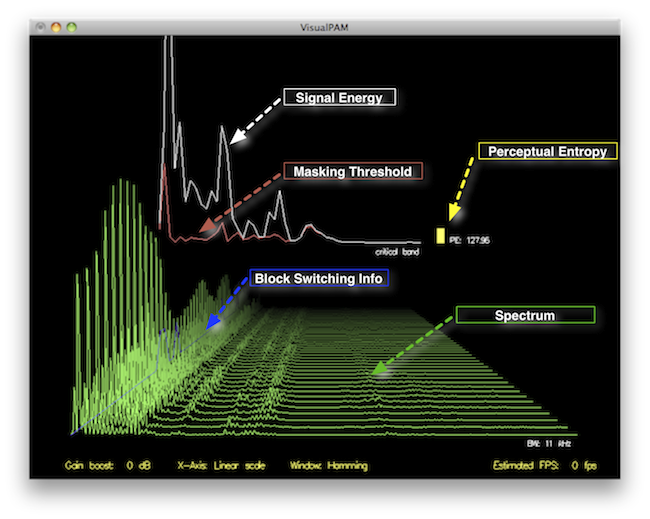
Perceptual Entropy in an MP3 File

How to Measure the Perceptual Entropy in an MP3 File?

Perceptual Entropy
Perceptual Entropy

Introduction to Perceptual Entropy in an Mp3

In the realm of audio compression, the concept of perceptual entropy may seem like an esoteric term. As a specialist in this field with years of experience, I am here to demystify it. Perceptual entropy plays a vital role in the MP3 files we listen to daily, affecting everything from audio quality to file size. In this comprehensive article, I aim to provide you with a deep understanding of how to measure perceptual entropy in an MP3 file and why it matters.

Understanding Perceptual Entropy

Definition of Perceptual Entropy

Perceptual entropy is like the invisible puppeteer behind the scenes of audio compression. Imagine you have a favorite storybook with many repetitive sentences. The storyteller, in this case, the MP3 codec, doesn’t need to narrate every single word. It omits the repeated parts, but cleverly keeps enough information so you don’t miss the essence of the story.

Importance in Audio Compression

The significance of perceptual entropy in audio compression is akin to sorting out your wardrobe. You don’t need to keep every single pair of socks. You retain a representative selection while saving space. Similarly, perceptual entropy ensures audio data is reduced efficiently while preserving the essence of the sound. It’s all about maintaining quality while optimizing storage.

Measuring Perceptual Entropy</h2

Methods for Measurement

The tools used to measure perceptual entropy are like detectives scrutinizing every page of your storybook. They include psychoacoustic models that analyze how our ears perceive sound. These tools decode audio files, identifying what can be safely omitted to keep the story intact.

Tools and Software

Consider these tools like a set of magic glasses that allow you to see the hidden patterns in your storybook. Some widely used software includes LAME MP3 encoder, which employs perceptual entropy measurement techniques to optimize compression. Others, like FFmpeg, offer valuable insights into perceptual entropy.

The Role of Bit Rate

Think of bit rate as the quality slider for your audio file. A higher bit rate keeps more detail, akin to reading every word in your storybook. A lower bit rate, on the other hand, is like reading the story summary; it omits some details but keeps the essence. Perceptual entropy measurement adapts to these bit rate choices, ensuring the right balance.

Significance of Perceptual Entropy in Audio Compression</h2

Effect on Compression Efficiency

Imagine you have a suitcase, and you want to pack it efficiently. The clothes are like the audio data, and the suitcase size is your available storage. Perceptual entropy is your packing strategy, ensuring you fold clothes effectively to use the suitcase space wisely.

Impact on Audio Quality

When you send a letter, you want it to be both light and readable. Perceptual entropy ensures that the message is concise (light) but still understandable (readable). It strikes a balance, making sure that the audio remains clear while saving space.

Real-world Examples

To illustrate perceptual entropy, think of a colorful painting. Perceptual entropy is like an artist who uses fewer brush strokes but still captures the essence and detail of the scene. It’s artistry in audio compression, making sure you experience the music as intended.

Evaluating Audio Quality</h2

Criteria for Audio Quality

Audio quality assessment is similar to a taste test. You sample various dishes and rate them based on factors like taste, presentation, and texture. Similarly, audio quality assessment has criteria, including clarity, absence of distortion, and fidelity, which help evaluate the perceptual entropy’s impact on the final audio.

Striking a Balance

It’s like baking a cake; you need the right ingredients in the right proportions. Perceptual entropy is one of those ingredients. Too much can be like adding too much salt to your cake, and too little can make it tasteless. Striking the right balance is the key to maintaining audio quality.

Tools for Evaluation

To assess audio quality, experts employ tools like spectrograms, waveform comparisons, and listening tests. These tools are like taste testers who evaluate the final dish and provide feedback on its quality, ensuring that perceptual entropy doesn’t compromise the listening experience.

Practical Applications</h2

Music Production

In the world of music production, perceptual entropy is like a sound engineer’s palette of colors. It allows them to maintain high-quality audio while conserving space. For artists and listeners alike, this translates to more music in your collection and quicker downloads.

Streaming Services

Streaming services optimize audio files for efficient delivery. Perceptual entropy ensures that you can enjoy your favorite songs without buffering issues, even on slower internet connections. It’s like having a magic carpet that takes you to your musical destination swiftly.

Industry Insights

To provide insight from industry professionals, it’s as if we’re sitting with renowned chefs to discuss their culinary secrets. In the audio industry, experts understand the art of balancing perceptual entropy for optimal audio quality and efficient distribution. It’s the heart of what makes your listening experience exceptional.

Last Words about Perceptual Entropy Measurement in MP3 Files

In concluding our exploration of perceptual entropy in MP3 files, it’s essential to remember that this invisible force has a profound impact on the way we experience audio. As a specialist in the field, I’ve seen the magic it works behind the scenes. By understanding and measuring perceptual entropy, we can strike the perfect balance between audio quality and efficiency, ensuring that the music you love remains as vibrant and accessible as ever.

Critical Bandwidths in MP3

Calculating Critical Bandwidths in MP3 Compression

Critical Bandwidths in MP3

As an expert in the realm of MP3 compression and audio technology, I’m here to unravel the intricate world of critical bandwidths in MP3 compression. Understanding this concept is pivotal in achieving optimal audio quality while minimizing file size. Let’s dive into the details and explore this fascinating topic.

What Are Critical Bandwidths in MP3 Compression?

Critical bandwidths, often referred to as critical bands, are a fundamental concept in the field of psychoacoustics. They relate to the way our ears perceive different frequencies and play a vital role in audio compression, particularly in the MP3 format. To put it simply, critical bandwidths represent the range of frequencies that our ears can distinguish and process.

Real-Life Example: Think of critical bandwidths as a set of buckets, each representing a range of frequencies. Our ears can only fill a limited number of buckets at once, and these buckets are wider for low frequencies and narrower for high frequencies.

MP3 compression exploits the knowledge of critical bandwidths to remove audio information that falls outside the range of human hearing. This selective approach allows for significant data reduction while retaining audio quality. It’s akin to trimming the fat while preserving the meat, resulting in a leaner audio file.

How Are Critical Bandwidths Determined?

Critical bandwidths are not fixed; they vary depending on the specific frequency and the environment in which the sound is heard. Psychoacoustic studies have led to the development of critical bandwidth curves, which provide a graphical representation of how our ears perceive different frequencies.

Real-Life Example: Imagine you’re in a noisy cafĂ©, trying to listen to a conversation. Your ears focus on the frequency range of the voices while ignoring the surrounding noise. This selective attention is similar to how critical bandwidths work in audio compression.

In the context of MP3 compression, these critical bandwidth curves are used to determine which parts of the audio spectrum can be discarded without a noticeable impact on the listening experience. This fine-tuned approach ensures that the compression process is both efficient and transparent to our ears.

Balancing Compression and Quality

The art of MP3 compression lies in finding the delicate balance between reducing file size and maintaining audio quality. Critical bandwidths are a crucial tool in achieving this equilibrium. By identifying and preserving the most relevant audio information while discarding what falls outside the critical bandwidths, MP3 compression delivers impressive results.

Real-Life Example: Consider the act of watching a high-definition movie on your smartphone while saving data. The device adjusts the video quality based on the screen size and your internet speed, providing a smooth viewing experience without unnecessary data consumption. MP3 compression operates in a similar fashion, optimizing audio for digital consumption.

In essence, critical bandwidths in MP3 compression serve as a guide to ensure that the compression process is as imperceptible as possible to the human ear. By focusing on the audio information that matters most, we can enjoy high-quality audio experiences with smaller file sizes.

Last Words about Critical Bandwidths in MP3 Compression

In my journey through the realm of audio compression, I’ve come to appreciate the profound impact of critical bandwidths. These frequency ranges shape the way we perceive sound and play a pivotal role in the world of MP3 compression. By understanding this concept, we can navigate the intricacies of audio technology, striking a harmonious balance between quality and efficiency.