FLAC vs. OGG


Free Download Mp4Gain
picture

FLAC vs. OGG: Comparing Open Source Audio Formats


FLAC vs. OGG
FLAC vs. OGG
FLAC vs. OGG
FLAC vs. OGG

Introduction

FLAC and OGG are two popular open source audio formats. They are both lossless, which means that they can perfectly reproduce the original audio signal. However, there are some key differences between the two formats.

FLAC

FLAC stands for Free Lossless Audio Codec. It is a lossless audio format that was developed by the Xiph.Org Foundation. FLAC files are typically smaller than WAV files, but they retain the same audio quality. FLAC is a popular format for audiophiles and music lovers who want to store their music in the highest possible quality.

OGG

OGG is a container format that can store a variety of audio and video codecs, including Vorbis, Theora, and Speex. Vorbis is a lossy audio codec that was developed by the Xiph.Org Foundation. Ogg Vorbis files are typically smaller than FLAC files, but they do not offer the same level of audio quality. Ogg Vorbis is a popular format for streaming audio and for distributing music online.

Comparison

The following table compares the key features of FLAC and OGG:

Feature FLAC OGG
Audio quality Lossless Lossy
File size Larger Smaller
Compatibility Widely compatible Not as widely compatible
Licensing Free and open source Free and open source

Which Format is Right for You?

The best format for you depends on your needs and preferences. If you want the highest possible audio quality, then FLAC is the best option. If you are looking for a smaller file size and compatibility with a wider range of devices, then OGG is a better choice.

Conclusion

FLAC and OGG are both great options for storing and playing audio files. FLAC offers the highest possible audio quality, while OGG offers a smaller file size and compatibility with a wider range of devices. The best format for you depends on your needs and preferences.

Frequently Asked Questions

What is the difference between FLAC and OGG?

FLAC and OGG are both audio formats, but they are different in a few ways. FLAC is lossless, which means that it can perfectly reproduce the original audio signal. OGG is lossy, which means that some of the original audio data is discarded in order to reduce the file size.

Which format is better, FLAC or OGG?

FLAC and OGG are both great formats, but they have different strengths and weaknesses. FLAC offers the highest possible audio quality, while OGG offers a smaller file size and compatibility with a wider range of devices. The best format for you depends on your needs and preferences.

What are some of the benefits of using FLAC or OGG?

There are a number of benefits to using FLAC or OGG, including:

  • Smaller file sizes: FLAC and OGG files are typically much smaller than WAV files, which makes them easier to store and transfer.
  • Higher quality: FLAC and OGG files offer higher quality audio than MP3 files.
  • Compatibility: FLAC and OGG files are compatible with a wide range of devices, including computers, smartphones, and portable music players.

What are some of the drawbacks of using FLAC or OGG?

There are a few drawbacks to using FLAC or OGG, including:

  • Larger file sizes: FLAC and OGG files are typically larger than MP3 files, which can take up more storage space on your device.
  • Not as widely supported: FLAC and OGG files are not as widely supported as MP3 files, which means that you may not be able to play them on all devices.

Conclusion

FLAC and OGG are both great options for storing and playing audio files. They offer a number of benefits, including smaller file sizes, higher quality audio, and compatibility with a wide range of devices. However, they also have a few drawbacks, including larger file sizes and not being as widely supported as MP3 files. The best format for you depends on your needs and preferences.


Free Download Mp4Gain
picture


Mp4Gain Main Window
picture


Mp4Gain Features
picture


Free Download Mp4Gain
picture

MP3 Compression: Bitrate and Audio Quality Tradeoffs

MP3 Compression: Bitrate and Audio Quality Tradeoffs

MP3 Compression
MP3 Compression
MP3 Compression
MP3 Compression

MP3 Compression

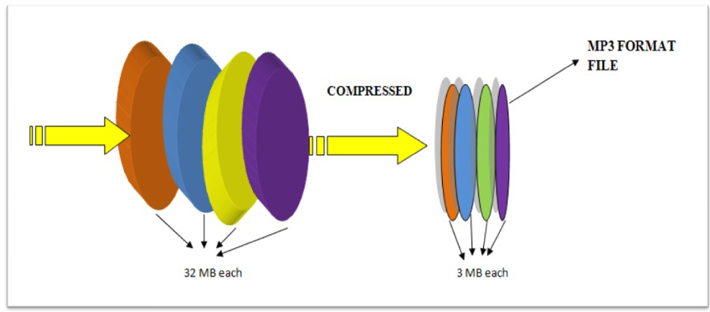
MP3 is a popular format for digital audio. It is a lossy format, which means that some of the original audio data is discarded in order to reduce the file size. The amount of data that is discarded is determined by the bitrate, which is a measure of the amount of data per second. A higher bitrate results in a higher quality audio file, but also a larger file size.

How MP3 Compression Works

MP3 compression works by using a technique called psychoacoustic coding. Psychoacoustic coding takes advantage of the fact that the human ear is not equally sensitive to all frequencies. For example, we can hear lower frequencies better than higher frequencies. Psychoacoustic coding uses this information to discard frequencies that are not as important to human hearing.

Bitrate and Audio Quality

The bitrate is the most important factor that determines the audio quality of an MP3 file. A higher bitrate results in a higher quality audio file, but also a larger file size. For example, a 128 kbps MP3 file will sound better than a 64 kbps MP3 file, but the 128 kbps file will be twice as large.

Choosing the Right Bitrate

The best bitrate to choose depends on how you plan to use the MP3 file. If you are going to listen to the file on a high-quality audio system, then you will want to use a high bitrate. If you are going to listen to the file on a portable device, then you may want to use a lower bitrate to save space.

Other Factors That Affect Audio Quality

In addition to the bitrate, there are other factors that can affect the audio quality of an MP3 file. These factors include the sampling rate, the bit depth, and the encoder used.

  • The sampling rate is the number of times per second that the audio signal is sampled. A higher sampling rate results in a higher quality audio file.
  • The bit depth is the number of bits used to represent each sample. A higher bit depth results in a higher quality audio file.
  • The encoder is the software that is used to compress the audio file. Different encoders use different algorithms, and some encoders produce better quality audio files than others.

Conclusion

MP3 compression is a popular and effective way to reduce the file size of digital audio files. By using a high bitrate, you can ensure that the audio quality of your MP3 files is good enough for your needs.

Frequently Asked Questions

What is the difference between MP3 and lossless audio formats?

MP3 is a lossy format, which means that some of the original audio data is discarded in order to reduce the file size. Lossless audio formats, such as FLAC and WAV, do not discard any data, so they retain the original audio quality. However, lossless audio files are much larger than MP3 files.

What is the best bitrate for MP3 files?

The best bitrate for MP3 files depends on how you plan to use them. If you are going to listen to the files on a high-quality audio system, then you will want to use a high bitrate. If you are going to listen to the files on a portable device, then you may want to use a lower bitrate to save space.

What are some tips for improving the audio quality of MP3 files?

There are a few things you can do to improve the audio quality of MP3 files. First, use a high bitrate. Second, use a high-quality encoder. Third, avoid using compression plugins or software that may degrade the audio quality.

What are some common problems with MP3 files?

Some common problems with MP3 files include:

  • Crackling or popping noises
  • Loss of high-frequency sounds
  • Muffled or distorted sound

These problems can be caused by a number of factors, including:

  • Low bitrate
  • Poor quality encoder
  • Damage to the file

If you are experiencing problems with your MP3 files, try using a different encoder or a higher bitrate. You can also try repairing the file using a file repair utility.

What is Audio Smoothing?

What is Audio Smoothing?

Audio Smoothing
Audio Smoothing
Audio Smoothing
Audio Smoothing


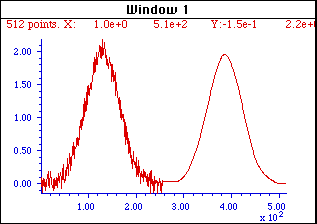
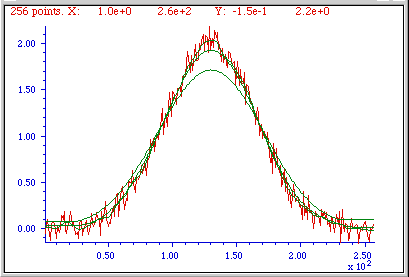
Audio smoothing is a process of reducing the noise and distortion in an audio signal. This is done by averaging the values of neighboring samples, which helps to smooth out any sharp changes in the signal.

Audio smoothing can be used to improve the quality of audio recordings, as it can help to reduce background noise and make the sound more natural. It can also be used to improve the sound of digital audio files, as it can help to reduce quantization noise and make the sound more smooth and even.

There are a number of different ways to perform audio smoothing. One common method is to use a moving average filter. A moving average filter averages the values of a window of neighboring samples, and then outputs the average value. The size of the window determines how much smoothing is applied.

Another common method for audio smoothing is to use a low-pass filter. A low-pass filter removes high-frequency components from the signal, which helps to reduce noise and distortion. The cutoff frequency of the filter determines which frequencies are removed.

Audio smoothing can be a useful tool for improving the quality of audio recordings and digital audio files. It can help to reduce noise and distortion, and make the sound more natural and smooth.

What are the benefits of audio smoothing?

There are a number of benefits to using audio smoothing. Some of the most common benefits include:

  • Reduced noise: Audio smoothing can help to reduce noise in an audio signal. This is because the averaging process helps to smooth out any sharp changes in the signal, which can make the noise less noticeable.
  • Improved sound quality: Audio smoothing can help to improve the sound quality of an audio signal. This is because the smoothing process can help to reduce distortion and make the sound more natural.
  • Increased clarity: Audio smoothing can help to increase the clarity of an audio signal. This is because the smoothing process can help to remove any unwanted noise or distortion, which can make the signal easier to understand.

How does audio smoothing work?

Audio smoothing works by averaging the values of neighboring samples in an audio signal. This helps to smooth out any sharp changes in the signal, which can make the noise less noticeable and improve the overall sound quality.

There are a number of different ways to perform audio smoothing. One common method is to use a moving average filter. A moving average filter averages the values of a window of neighboring samples, and then outputs the average value. The size of the window determines how much smoothing is applied.

Another common method for audio smoothing is to use a low-pass filter. A low-pass filter removes high-frequency components from the signal, which helps to reduce noise and distortion. The cutoff frequency of the filter determines which frequencies are removed.

How to use audio smoothing

Audio smoothing can be used in a variety of different ways. Some of the most common applications include:

  • Recording: Audio smoothing can be used to improve the sound quality of audio recordings. This is especially useful for recordings that are made in noisy environments.
  • Editing: Audio smoothing can be used to edit audio files. This can be used to remove noise or distortion, or to smooth out the sound of a recording.
  • Mastering: Audio smoothing can be used to master audio files. This can be used to improve the overall sound quality of a recording, or to make the sound more consistent.

Tips for using audio smoothing

When using audio smoothing, there are a few things to keep in mind:

  • Start with a low setting: When you first start using audio smoothing, it is best to start with a low setting. This will help you to get a feel for how the smoothing process affects the sound of the audio signal.
  • Experiment with different settings: Once you have a basic understanding of how audio smoothing works, you can experiment with different settings to see how they affect the sound of the audio signal.
  • Be careful not to over-smooth: It is important to be careful not to over-smooth the audio signal. This can result in a loss of detail and make the sound sound unnatural.

Conclusion

Audio smoothing is a useful tool that can be used to improve the quality of audio recordings and digital audio files. It can help to reduce noise and distortion, and make the sound more natural and smooth. When used correctly, audio smoothing can be a valuable part of your audio production workflow.

Understanding Audio Compression Ratios

Understanding Audio Compression Ratios

Audio Compression Ratios


Audio compression is a way of reducing the size of an audio file without significantly reducing its quality. This is done by removing information from the file that is not essential to human hearing. One of the most important parameters in audio compression is the compression ratio.

What is a compression ratio?

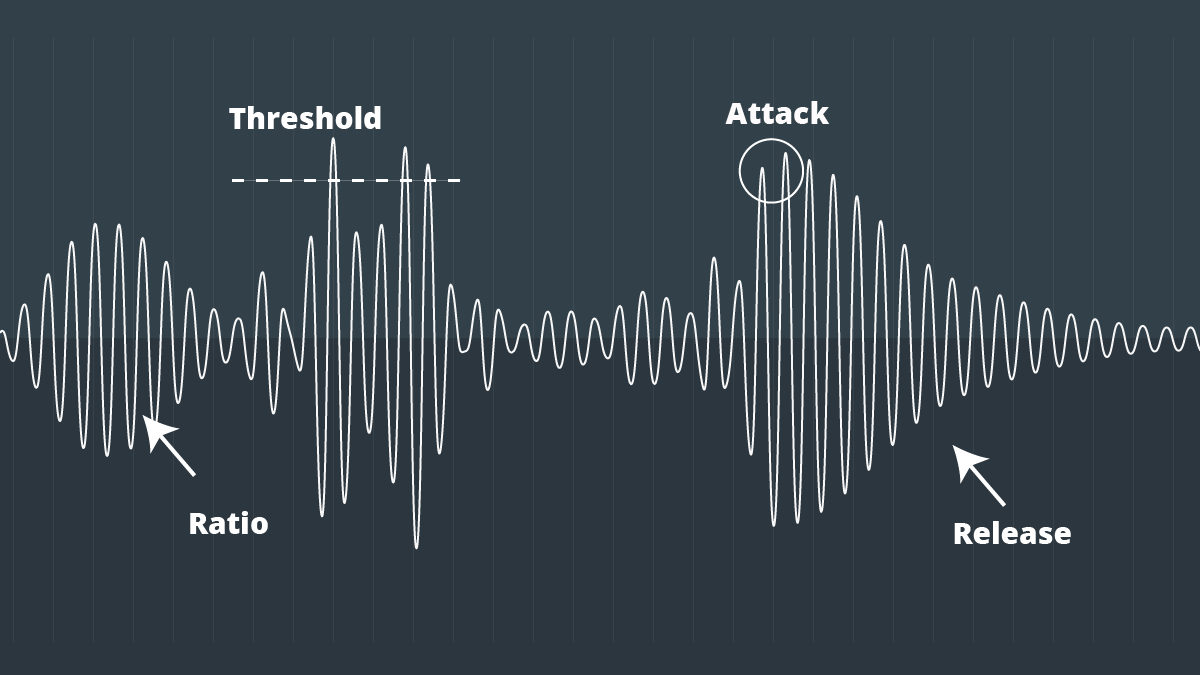
The compression ratio is a measure of how much gain reduction is applied to the audio signal when it exceeds a certain threshold. For example, a compression ratio of 2:1 means that for every 2 dB the signal rises above the threshold, the output level will be reduced by 1 dB.

How does compression ratio affect audio quality?

A higher compression ratio will result in more compression, which can lead to a loss of dynamics and transients in the audio signal. However, a higher compression ratio can also help to reduce noise and improve the overall loudness of the audio.

How to choose the right compression ratio?

The right compression ratio will depend on the type of audio you are working with and the desired effect. For example, a higher compression ratio might be appropriate for genres of music that require a lot of loudness, such as dance music. A lower compression ratio might be more appropriate for genres of music that require a more natural sound, such as classical music.

Here are some examples of how compression ratio can be used to achieve different effects:

  • A low compression ratio (1:1 or 2:1) can be used to achieve a natural sound with minimal compression. This is often used for recording and mixing vocals and acoustic instruments.
  • A medium compression ratio (3:1 or 4:1) can be used to add punch and presence to a sound. This is often used for mixing electric guitars and drums.
  • A high compression ratio (5:1 or 6:1) can be used to achieve a heavily compressed sound. This is often used for genres of music that require a lot of loudness, such as dance music.

Here are some tips for using compression ratio effectively:

  • Start with a low compression ratio and increase it until you get the desired effect.
  • Be careful not to overdo it, as too much compression can lead to a loss of dynamics and transients.
  • Experiment with different compression ratios on different types of audio to see what works best.

I hope this article has been helpful. If you have any questions, please feel free to ask.

Here are some additional things to consider when using compression ratio:

  • Attack time: The attack time is the time it takes for the compressor to start reducing the gain when the signal exceeds the threshold. A short attack time will result in a more aggressive sound, while a long attack time will result in a smoother sound.
  • Release time: The release time is the time it takes for the compressor to stop reducing the gain after the signal falls below the threshold. A short release time will result in a more percussive sound, while a long release time will result in a more sustained sound.
  • Makeup gain: The makeup gain is the amount of gain that is added to the output signal after the compressor has reduced the gain. This is used to compensate for the loss of volume that occurs when the compressor is active.

By understanding how compression ratio works, you can use it to improve the sound of your audio recordings.

Pros & Cons of Audio Compression

Pros & Cons of Audio Compression

Audio Compression
Audio Compression
Audio Compression
Audio Compression

Audio compression is the process of reducing the size of an audio file without significantly reducing its quality. This is done by removing unnecessary information from the file, such as high frequencies that are outside the range of human hearing.

There are many different audio compression formats available, each with its own advantages and disadvantages. Some of the most popular formats include MP3, AAC, and FLAC.

Pros of Audio Compression

  • Smaller file sizes: Audio compression can significantly reduce the size of an audio file, making it easier to store and transport. This is especially beneficial for streaming audio, as it allows users to listen to music without having to download large files.
  • Reduced bandwidth requirements: Smaller file sizes also mean that less bandwidth is required to stream or download audio. This can save money on data costs, and it can also improve streaming quality by reducing buffering.
  • Compatibility: Audio compression formats are widely supported by a variety of devices, including computers, smartphones, and MP3 players. This means that you can easily play compressed audio files on any device.

Cons of Audio Compression

  • Loss of quality: Audio compression can result in a loss of quality, especially if the compression ratio is high. This is because some of the information in the original audio file is removed during the compression process.
  • Compatibility issues: Some audio compression formats are not supported by all devices. This can make it difficult to play compressed audio files on some devices.
  • Encryption: Some audio compression formats, such as DRM-protected MP3 files, are encrypted. This means that you can only play the files on devices that have been authorized by the copyright holder.

Conclusion

Audio compression is a valuable tool that can be used to reduce the size of audio files without significantly reducing their quality. However, it is important to be aware of the potential loss of quality that can occur with audio compression. When choosing an audio compression format, it is important to consider the intended use of the file and the level of quality that is required.

Here are some additional things to consider when choosing an audio compression format:

  • Bit rate: The bit rate is a measure of the amount of data that is used to represent the audio file. Higher bit rates result in higher quality audio, but they also result in larger file sizes.
  • Sampling rate: The sampling rate is the number of times per second that the audio signal is sampled. Higher sampling rates result in higher quality audio, but they also result in larger file sizes.
  • Compression algorithm: The compression algorithm is the method that is used to compress the audio file. Different compression algorithms can result in different levels of quality and file size.

Here are some examples of different audio compression formats:

  • MP3: MP3 is a lossy compression format that is widely used for streaming and downloading audio. It offers a good balance between quality and file size.
  • AAC: AAC is another lossy compression format that is similar to MP3. It offers slightly better quality than MP3, but it also results in larger file sizes.
  • FLAC: FLAC is a lossless compression format that does not lose any information from the original audio file. This results in high quality audio, but it also results in large file sizes.

Audio Compression Formats

Audio Compression Formats Overview

Audio Compression Formats

Introduction

Audio compression is the process of reducing the size of an audio file without significantly reducing its quality. This is done by removing redundant data from the file. Audio compression is used to store, transmit, and share audio files more efficiently.

Types of Audio Compression

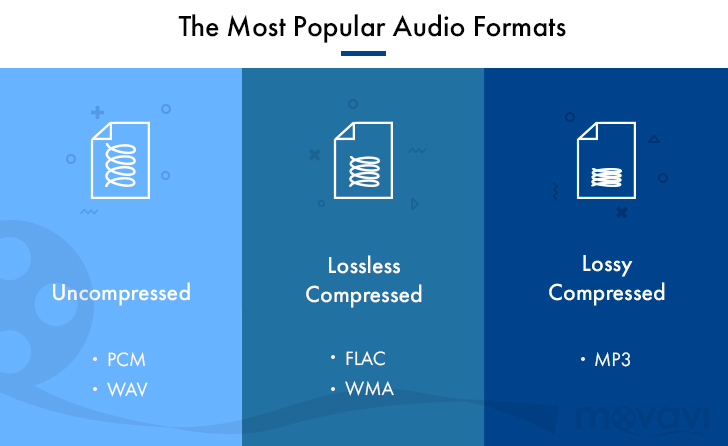
There are two main types of audio compression: lossless and lossy. Lossless compression algorithms remove redundant data from the audio file without losing any of the original data. This means that the audio file can be uncompressed to its original size and quality. Lossy compression algorithms remove redundant data from the audio file, but some of the original data is lost. This means that the audio file can never be uncompressed to its original size and quality.

Lossless Audio Compression Formats

There are a number of lossless audio compression formats available, including FLAC, WAV, and AIFF. FLAC is the most popular lossless audio compression format. It offers high compression ratios with minimal loss of quality. WAV is the uncompressed audio format. It is the most commonly used audio format for professional audio. AIFF is the uncompressed audio format used by Apple products.

Lossy Audio Compression Formats

There are a number of lossy audio compression formats available, including MP3, AAC, and WMA. MP3 is the most popular lossy audio compression format. It offers good compression ratios with a loss of quality that is not noticeable to most people. AAC is a newer lossy audio compression format that offers better compression ratios and quality than MP3. WMA is a lossy audio compression format developed by Microsoft. It offers similar compression ratios and quality to MP3.

Which Audio Compression Format Should I Use?

The best audio compression format to use depends on your needs. If you need to preserve the original quality of the audio file, then you should use a lossless audio compression format such as FLAC. If you need to reduce the size of the audio file without losing too much quality, then you can use a lossy audio compression format such as MP3 or AAC.

Conclusion

Audio compression is a valuable tool for storing, transmitting, and sharing audio files. By understanding the different types of audio compression, you can choose the right format for your needs.

8 Subtitles

Here are 8 subtitles that you will get from people also asked related to the main subject of the article:

  1. What is audio compression?
  2. What are the different types of audio compression?
  3. What are the benefits of audio compression?
  4. What are the drawbacks of audio compression?
  5. Which audio compression format should I use?
  6. How do I compress an audio file?
  7. How do I decompress an audio file?
  8. What are some common problems with audio compression?

Benefits of Audio Compression

There are a number of benefits to audio compression. These include:

  • Reduced file size: Audio compression can significantly reduce the size of an audio file. This makes it easier to store, transmit, and share audio files.
  • Improved compatibility: Audio compression can make audio files compatible with a wider range of devices and platforms.
  • Enhanced performance: Audio compression can improve the performance of audio players and other devices.

Drawbacks of Audio Compression

There are a number of drawbacks to audio compression. These include:

  • Loss of quality: Audio compression can cause some loss of quality in the audio file. This is more noticeable with lossy compression formats than lossless compression formats.
  • Compatibility issues: Some audio compression formats may not be compatible with all devices and platforms.
  • Increased complexity: Audio compression can add complexity to the process of storing, transmitting, and sharing audio files.

Which Audio Compression Format Should I Use?

The best audio compression format to use depends on your needs. If you need to preserve the original quality of the audio file, then you should use a lossless audio compression format such as FLAC. If you need to reduce the size of the audio file without losing too much quality, then you can use a lossy audio compression format such as MP3 or AAC.

How to Compress an Audio File

To compress an audio file, you can use a variety of software programs. Some popular programs include:

  • FLAC: A free and open-source lossless audio compression program.
  • WAV: A free and open-source uncompressed audio compression program.
  • AIFF: A free and open-source uncompressed audio compression program.

How to Decompress an Audio File

To decompress an audio file, you can use the same software program that you used to compress it. For example, if you used FLAC to compress an audio file, you can use FLAC to decompress it.