Digital Video: Encoding and Decoding Visual Information
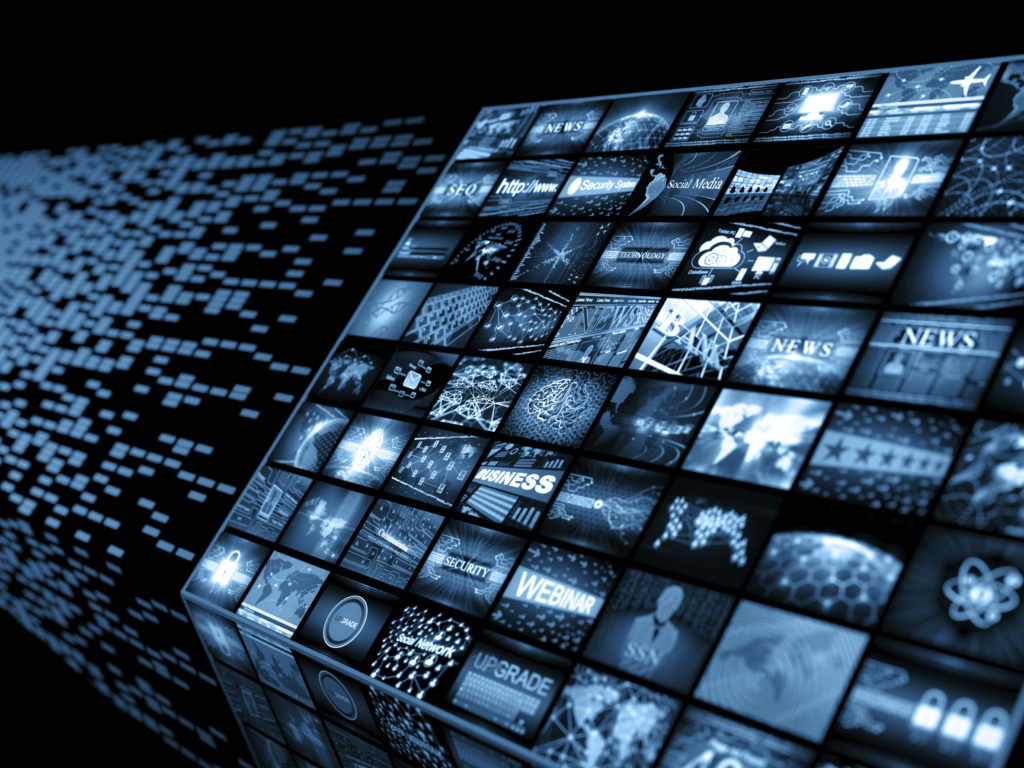

Digital video is a sequence of images, called frames, that are displayed in rapid succession to create the illusion of motion. The frames are encoded, or stored, in a digital format, and then decoded, or played back, on a device such as a television or computer.
What is encoding?
Encoding is the process of converting analog video signals into digital signals. This is done by sampling the analog signal at a certain rate and then quantizing the values of the samples. The sampling rate determines the number of frames per second, and the quantization level determines the number of possible values for each pixel.
What is decoding?
Decoding is the process of converting digital video signals back into analog signals. This is done by taking the digital signals and reconstructing the original analog signal. The decoding process is the opposite of the encoding process, and it uses the same sampling rate and quantization level to reconstruct the original signal.
Why is encoding and decoding important?
Encoding and decoding are important for storing and transmitting digital video. When video is encoded, it can be stored in a smaller file size, which makes it easier to store and transmit. When video is decoded, it can be displayed on a variety of devices, such as televisions, computers, and mobile phones.
How does encoding and decoding work?
Encoding and decoding are complex processes, but they can be simplified into a few basic steps.
- Sampling: The analog video signal is sampled at a certain rate. This means that the signal is measured at a certain number of points in time.
- Quantization: The values of the samples are quantized. This means that they are rounded to a certain number of possible values.
- Compression: The quantized values are compressed. This can be done using a variety of compression algorithms.
- Decoding: The compressed data is decoded. This means that the quantized values are converted back to their original values.
- Reconstruction: The original analog signal is reconstructed from the quantized values.
What are the different types of encoding and decoding?
There are two main types of encoding and decoding: lossless and lossy.
- Lossless encoding and decoding can perfectly reconstruct the original signal. This means that there is no loss of quality when the video is encoded and decoded.
- Lossy encoding and decoding cannot perfectly reconstruct the original signal. This means that there is some loss of quality when the video is encoded and decoded.
Lossless encoding and decoding is typically used for applications where quality is critical, such as for medical imaging and scientific research. Lossy encoding and decoding is typically used for applications where quality is less critical, such as for streaming video and video games.
What are the benefits of encoding and decoding?
Encoding and decoding offer a number of benefits, including:
- Smaller file sizes: Digital video files can be much smaller than analog video files. This makes it easier to store and transmit digital video.
- Increased compatibility: Digital video can be played on a wider range of devices than analog video.
- Improved quality: Digital video can be of higher quality than analog video.
What are the challenges of encoding and decoding?
Encoding and decoding can be challenging for a number of reasons, including:
- Complexity: The encoding and decoding processes are complex and require specialized hardware and software.
- Quality: It can be difficult to achieve high quality with lossy encoding and decoding.
- Compatibility: Not all devices are compatible with all digital video formats.
Conclusion
Encoding and decoding are essential for storing and transmitting digital video. They offer a number of benefits, including smaller file sizes, increased compatibility, and improved quality. However, they can also be challenging due to their complexity and the need for specialized hardware and software.