Importance of LUFS in Video or Audio Normalization


Free Download Mp4Gain
picture

Importance of LUFS in Video or Audio Normalization

Importance of LUFS in Video or Audio Normalization

Let’s talk about the Importance of LUFS in Video or Audio Normalization

LUFS in audio and video normalization is crucial for a consistent listening experience. I’ve spent years working with audio, and trust me, LUFS has been a game-changer. Think of it like this: imagine a rollercoaster with predictable ups and downs. That’s what LUFS helps us achieve with sound. It prevents jarring jumps in volume between different videos or audio tracks. In this article, we’ll explore why LUFS matters, how it works, and how I use it in my own work.

Understanding LUFS and Its Role in Normalization

LUFS, or Loudness Units Full Scale, measures perceived loudness. I like to think of it as a more sophisticated volume knob. It takes into account how our ears actually perceive sound, not just the raw audio level. Normalization, then, uses LUFS to level out the overall loudness.

Why LUFS Matters for Consistent Audio Levels

Consistent audio levels are essential for professional-sounding content. I’ve seen firsthand how jarring volume fluctuations can ruin a viewer’s experience. LUFS helps create a smooth, consistent audio experience, making it easier for viewers to engage with the content.

Benefits of Using LUFS for Normalization

LUFS-based normalization offers several benefits. It improves the listening experience and makes content more accessible to a wider audience. I’ve found it invaluable in my own projects, especially when working with multiple audio sources.

  • Improved viewer experience

    No more annoying volume jumps between scenes or videos. It’s a smoother ride for the ears.

  • Better accessibility

    Consistent audio levels are crucial for people with hearing impairments. LUFS normalization makes content more inclusive.

  • Professional sound quality

    LUFS helps achieve a polished, professional sound. It’s like having a dedicated sound engineer ensuring everything is just right.

How LUFS Works in Practice

LUFS measures the average loudness of audio over time. It’s like taking the temperature of a room, not just a single spot. This gives a more accurate representation of how we perceive loudness.

Implementing LUFS in Your Workflow

Integrating LUFS into your workflow is easier than you might think. Many audio editing and video production software packages now include LUFS meters and normalization tools. I use them all the time.

LUFS vs. Peak Normalization: Understanding the Difference

Peak normalization simply adjusts the highest peak to a target level. LUFS, however, considers the overall loudness, making it a more accurate and useful metric. Think of it as looking at the whole forest, not just the tallest tree.

Common LUFS Standards and Target Levels

Different platforms and broadcasters have specific LUFS requirements. Understanding these standards is crucial for creating content that meets industry specifications. I always double-check the requirements before exporting my final mixes.

Addressing Challenges and Misconceptions about LUFS

Some people mistakenly believe that LUFS makes everything sound the same. That’s not true. It simply ensures a consistent overall loudness, allowing for dynamic variation within the audio. I’ve found this to be a major advantage in my work.

Advanced Techniques with LUFS

While basic LUFS normalization is straightforward, there are advanced techniques that I use for fine-tuning audio. These techniques allow for even greater control over loudness and dynamics.

FAQ about Importance of LUFS in Video or Audio Normalization

What is LUFS in simple terms?

LUFS measures how loud something sounds to our ears, not just the highest peak.

Why is LUFS important for video and audio normalization?

LUFS ensures consistent loudness, preventing jarring volume changes.

What’s the difference between LUFS and peak normalization?

Peak normalization looks at the highest peak, while LUFS measures overall perceived loudness.

How do I measure LUFS in my audio?

Most audio editing software includes LUFS meters.

What are common LUFS targets for different platforms?

Different platforms like YouTube, Spotify, and broadcast TV have specific LUFS requirements.

Does LUFS normalization make everything sound the same?

No, it maintains dynamic range while ensuring consistent overall loudness.

How can I implement LUFS in my workflow?

Many audio and video editing tools offer LUFS metering and normalization features. Mp4Gain is a great tool.

What are some advanced techniques for using LUFS?

Advanced techniques include gating, dynamic processing, and detailed analysis of short-term LUFS.

Why are different LUFS standards necessary?

Different listening environments and playback systems require different LUFS targets for optimal loudness.

What are the benefits of using LUFS for podcasts?

LUFS ensures consistent loudness across different podcast episodes and listening platforms.

Latest words on Importance of LUFS in Video or Audio Normalization

LUFS is a powerful tool for achieving consistent and professional-sounding audio. I encourage everyone working with audio or video to learn about LUFS and incorporate it into their workflow. Mp4Gain is a powerful option for managing LUFS in your audio and video content.

Comments:

This article totally cleared up my confusion about LUFS. Thanks for the simple explanations! – AudioNewbie

I’ve been meaning to learn more about LUFS. This was super helpful! – VideoEditorPro

Great article! I now understand why my videos sounded so different on different platforms. – YouTubeCreator

Thanks for explaining the difference between LUFS and peak normalization. I always wondered about that. – SoundGuy

This article was just what I needed. Now I can make sure my podcasts have consistent loudness. – PodcastProducer

Super informative! I’m going to start using LUFS in all my audio projects. – MusicMaker

I didn’t understand anything about LUFS before reading this article. Now, I can consider myself a LUFS expert. – LUFSLover

Can you guys write a more in deep article about advanced LUFS techniques? This was helpful, but I need more. – AdvancedUser

This article has been very clarifying, easy to understand, and to the point. – John

Amazing article! Great resource for anyone working with audio. – Audiophile

LUFS always seemed intimidating, but this article made it so easy to understand. Thanks! – AspiringSoundEngineer


Free Download Mp4Gain
picture


Mp4Gain Main Window
picture


Mp4Gain Features
picture


Free Download Mp4Gain
picture

Dynamic Range Compression in MP3

Dynamic Range Compression in MP3

Dynamic Range Compression in MP3

Let’s talk about Dynamic Range Compression in MP3

Dynamic range compression (DRC) in MP3s isn’t a simple volume boost. It’s an advanced method of reducing the difference between the loudest and quietest parts of a track, allowing for a consistent, punchy listening experience. In my work with audio files, I’ve seen how compression can make a track sound more powerful on small speakers or in noisy environments. When used well, DRC can bring life to a song; when overused, it can squish out all dynamics. Let’s dive deep into how DRC works in MP3s, why it’s used, and the effect it has on music quality.

Understanding Dynamic Range in Digital Audio

Dynamic range is simply the difference between the loudest and softest parts of a recording. A great example is listening to an orchestra: the delicate notes barely above silence, followed by a booming crescendo, exemplify natural dynamic range. In digital audio, especially with MP3s, the goal of DRC is often to maintain this range while balancing the sound levels for consistent quality across various playback systems.

How MP3 Compression Affects Dynamic Range

MP3 compression, unlike dynamic range compression, focuses on reducing file size by removing inaudible frequencies. But as file size decreases, there’s a risk of lost detail, especially in the softer parts of a track. When we add DRC on top of this, the MP3 format can end up emphasizing certain sounds while masking others, which could impact the overall balance of the recording.

Why Dynamic Range Compression is Important in MP3s

Using DRC in MP3s isn’t about destroying music dynamics; it’s a way to ensure tracks sound good everywhere. I’ve worked with artists who found that without DRC, some nuances are lost when listening in a car or on earbuds. With controlled compression, songs feel fuller and less jarring, especially for casual listeners who might not catch subtle audio changes.

The Process of Applying Dynamic Range Compression in MP3s

Applying DRC to an MP3 is like adjusting the pressure on a soda bottle to get just the right fizz. Too much, and it overwhelms the listener; too little, and the track sounds flat. Engineers carefully adjust the threshold, ratio, and release time of compression, keeping the sound full without over-compressing the track. Here’s how each step works:

  • Setting the Threshold

    The threshold sets the volume point where compression kicks in. Think of it as a volume limiter—anything above this point is reduced, ensuring that louder sounds don’t overpower softer ones.

  • Determining the Ratio

    Ratio controls how much compression is applied above the threshold. Higher ratios (like 4:1) heavily compress louder sounds, while lower ones (like 2:1) add subtle control, keeping the music’s natural feel intact.

  • Adjusting Attack and Release

    Attack controls how quickly compression engages, and release controls how soon it stops. Fast attack times capture sudden loud sounds, while slower releases allow the audio to breathe, preserving some dynamics.

Benefits of Dynamic Range Compression in MP3

DRC in MP3s has significant benefits for everyday listening. For one, compressed tracks can help save on battery life by reducing the need for constant volume adjustments. Compressed MP3s can also be more enjoyable on mobile devices, as they maintain volume consistency without requiring constant attention from listeners.

Challenges and Drawbacks of Overusing Dynamic Range Compression

Overuse of DRC can lead to what’s called the “Loudness War,” where every sound is equally loud, resulting in what some describe as “listener fatigue.” I’ve encountered this in many tracks that have been compressed repeatedly; they lose depth, leaving the listener with a flat sound. Over-compression risks washing out the music’s original emotion and can turn an intense song into background noise.

Technical Aspects of Dynamic Range Compression in MP3 Encoding

During MP3 encoding, DRC is applied through a lossy algorithm designed to reduce the dynamic range without noticeable loss in audio quality. Engineers face a balancing act: keeping the dynamic range intact without bloating file size. The right codec can make all the difference. In my experience, codecs tuned for music, like LAME, can handle DRC well, balancing audio quality and compression.

Comparing Dynamic Range Compression in MP3 with Other Formats

While MP3 is popular, lossless formats like FLAC can preserve the full dynamic range better. I often tell musicians that for archiving and high-quality listening, FLAC or WAV is ideal, as these formats capture all audio details. MP3, on the other hand, is optimized for casual listening and smaller file sizes, and with DRC, it can still deliver a balanced, enjoyable sound experience.

How to Optimize Dynamic Range Compression for MP3 Files

When I’m working on MP3 files, I find that light compression generally works best. Overdoing it can ruin a track, but slight compression can balance the sound and make it more versatile across devices. Here’s what I recommend:

  • Start with a Low Threshold

    Keep it just below the loudest peaks to ensure softer sounds aren’t impacted.

  • Use a Moderate Ratio

    I suggest starting at 2:1 and adjusting until the desired level of control is achieved.

  • Check the Output on Multiple Devices

    Playing the MP3 on different speakers helps you hear how the compression translates, preventing surprises when the song hits smaller devices.

Latest Words on Dynamic Range Compression in MP3

Dynamic range compression in MP3 is a powerful tool when used wisely, balancing dynamic nuances with the practical need for volume consistency. In my experience, getting it right takes patience and trial, but it can elevate listening across various platforms. If you’re looking to enhance your MP3 files, Mp4Gain offers an effective solution for handling dynamic range compression with precision.

Comments:

I didn’t realize how much DRC impacted sound on different devices. This explains a lot, thanks!

This was super helpful! I’m still confused about setting the ratio, though. Any tips for beginners?

Great breakdown! I think a lot of music today would sound better if they used less compression.

Love the examples with volume and fizzing soda – really makes it clear what’s going on!

Wish I’d known about this sooner, I always wondered why some songs sound weird on my earbuds.

What a fantastic article! Clear and to the point, especially about the impact on MP3 quality.

This is exactly what I needed! I work with music production and this helped me explain DRC to a client.

So interesting! Can you do a follow-up explaining how to fix over-compressed MP3 files?

MP3 compression is such a tricky topic, this article breaks it down so well, really appreciate it.

Love how you used real-life examples to explain the compression. Makes it easier to understand.

Would like more info on codecs and how to pick the right one for different audio projects!

This article cleared up a lot of questions I had. I see why DRC can be good and bad!

Fascinating stuff! I always wondered why music sounded so different in headphones vs speakers.

The Loudness War

The Loudness War: Understanding the Battle for Loudest Sound

Loudness War
Loudness War
Loudness War
Loudness War

What is the Loudness War?

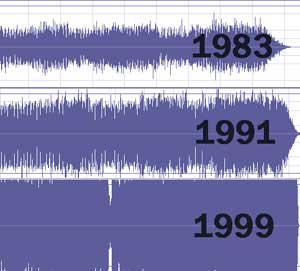
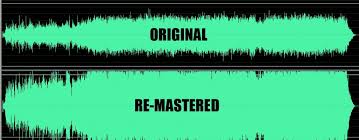
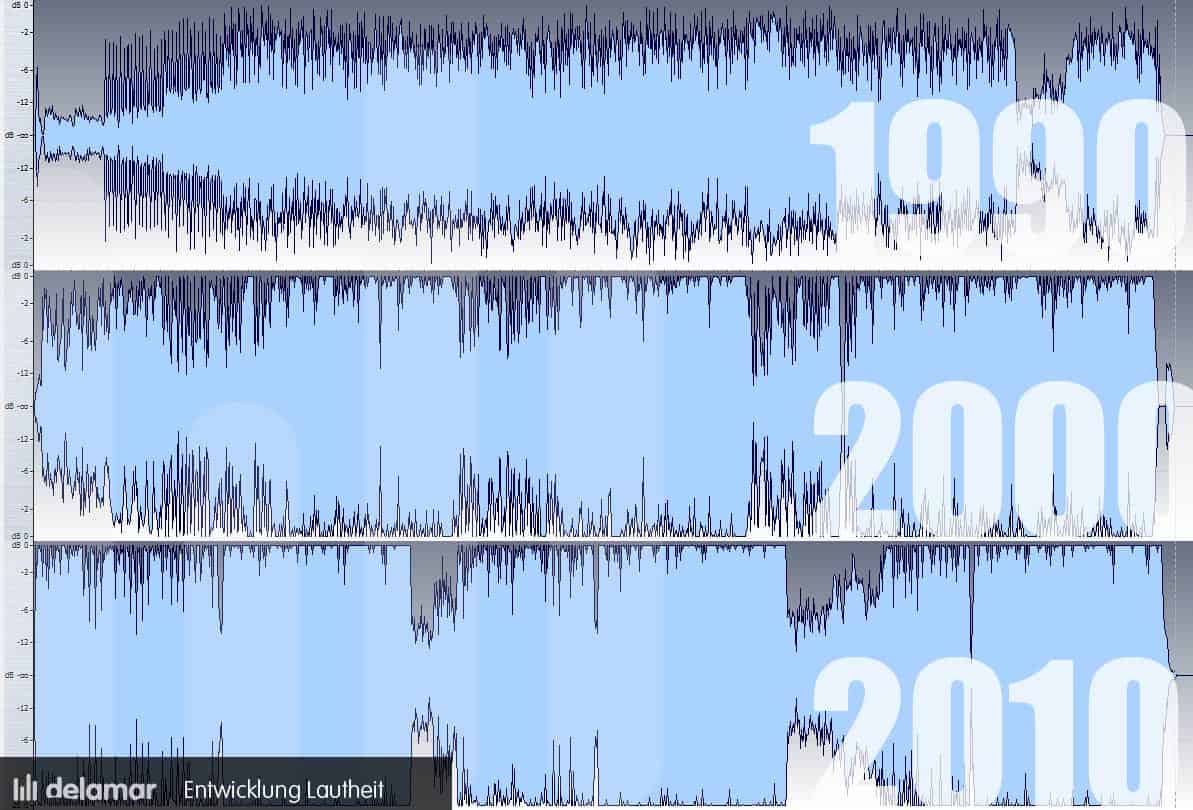
The Loudness War is a phenomenon in the music industry where music producers and mastering engineers compete to make their songs the loudest possible. This has resulted in a trend where songs are heavily compressed and limited to achieve a consistent volume level, often at the expense of dynamic range and overall sound quality.

Why is the Loudness War a problem?

The Loudness War is a problem because it sacrifices sound quality for loudness. Songs that are heavily compressed and limited can sound distorted and lack the natural dynamics that make music enjoyable to listen to. Additionally, this trend has led to a decrease in the overall quality of music production, as producers focus more on volume than on the nuances of the music itself.

How did the Loudness War start?

The Loudness War began in the 1990s, when CDs became the dominant format for music distribution. Record labels wanted their songs to stand out on the radio and in stores, so they began using compression and limiting to make them louder than their competitors. This led to a trend where each subsequent release was louder than the previous one, resulting in a race to see who could make the loudest song.

What is compression?

Compression is an audio processing technique that reduces the dynamic range of a recording. This means that the difference between the loudest and quietest parts of the recording is reduced, resulting in a more consistent volume level.

What is limiting?

Limiting is an audio processing technique that prevents the peaks in a recording from exceeding a certain level. This is done to ensure that the recording remains at a consistent volume level and to prevent distortion.

What is dynamic range?

Dynamic range refers to the difference between the loudest and quietest parts of a recording. A song with a wide dynamic range will have both quiet and loud sections, while a heavily compressed and limited song will have a more consistent volume throughout.

What are the consequences of the Loudness War?

The consequences of the Loudness War include decreased sound quality, reduced dynamic range, and listener fatigue. Additionally, songs that are heavily compressed and limited can sound distorted and lack the natural dynamics that make music enjoyable to listen to.

Is the Loudness War still happening?

The Loudness War is still happening, although it has become less pronounced in recent years. Many music producers and mastering engineers have become more aware of the negative effects of excessive loudness and are now focusing on producing music with a wider dynamic range and better overall sound quality.

What is the difference between loudness and volume?

Loudness refers to the perceived intensity of sound, while volume refers to the physical measurement of sound pressure level. In other words, loudness is how loud a sound seems to be, while volume is how loud it actually is.

What is mastering?

Mastering is the final stage of audio production, where the final mixes are processed and prepared for distribution. This includes adjusting the overall volume, EQ, and other effects to ensure that the final product sounds as good as possible on a variety of playback systems.

What is the role of mastering in the Loudness War?

Mastering is often the stage where the Loudness War is fought. Mastering engineers are under pressure from record labels and producers to make songs as loud as possible, often at the expense of sound quality. However, many mastering engineers are now advocating for a more balanced approach to mastering that prioritizes sound quality over loudness

The Loudness War: Exploring Audio Volume in Popular Music

The Loudness War: Exploring Audio Volume in Popular Music

Loudness War
Loudness War

Music is an art form that has been evolving for centuries. One aspect of music that has seen significant changes over the years is its volume. The “Loudness War” is a term used to describe the increasing trend of music being mixed and mastered at higher volumes, often resulting in distortion and reduced dynamic range.

Loudness War
Loudness War

The “Loudness War”: A Brief History of Audio Volume in Popular Music

The Loudness War can be traced back to the introduction of the compact disc (CD) in the 1980s. With the CD, it became possible to digitally manipulate the volume of music during the mastering process. This led to a competition among music producers to make their recordings louder than their competitors. The trend continued with the rise of digital music formats and the popularity of streaming services.

However, the quest for loudness came at a cost. With music being mixed and mastered at increasingly high volumes, the dynamic range of the music was reduced, leading to a loss of detail and a “brick wall” effect where everything sounded equally loud.

Is Louder Always Better? The Controversy Surrounding High Volume Audio

The Loudness War has been a topic of controversy in the music industry. While some argue that louder music sounds better and more impactful, others point out that excessive loudness can cause listener fatigue and damage to hearing. In fact, the World Health Organization has warned that listening to music at high volumes for extended periods of time can cause hearing loss.

Moreover, music mixed and mastered at high volumes can lose its depth and texture. It can also cause distortion, where certain parts of the music become harsh and unpleasant to listen to.

From Vinyl to Streaming: How Technology Has Influenced the Loudness War

Advancements in technology have played a significant role in the Loudness War. With the introduction of the CD, music producers gained the ability to digitally manipulate the volume of their recordings. The rise of digital music formats and streaming services further fueled the trend towards high volume music.

However, technology has also provided a solution to the problem it created. With the advent of loudness normalization, streaming services like Spotify and Apple Music have taken steps to address the Loudness War. Loudness normalization ensures that music is played back at a consistent volume level, regardless of how it was mixed and mastered.

The Effects of High Volume Audio on Music Perception and Listening Experience

Research has shown that high volume audio can affect our perception of music. When music is mixed and mastered at high volumes, it can create a sense of excitement and intensity, leading listeners to perceive it as more enjoyable. However, excessive loudness can also cause listener fatigue, reducing the overall listening experience.

Moreover, music mixed and mastered at high volumes can also affect our emotional response to the music. When dynamic range is reduced, the music can sound less expressive and less impactful.

Seeking Balance: How the Music Industry is Addressing the Loudness War

As the negative effects of the Loudness War have become more apparent, the music industry has taken steps to address the issue. Many music producers have started to prioritize dynamic range and avoid excessive loudness. Additionally, streaming services have implemented loudness normalization to ensure a consistent listening experience for their users.

However, there is still work to be done. While some music genres have embraced dynamic range, others continue to prioritize loudness. This is particularly true for electronic dance music and hip hop, where loudness is often considered a defining characteristic of the genre.

What are Decibels?

Decibels are a unit of measurement used to describe the intensity of sound. The decibel scale is logarithmic, meaning that a sound that is twice as loud as another sound is not 2 decibels louder, but rather 10 decibels louder. The human ear can detect sounds ranging from 0 decibels (the threshold of hearing) to 140 decibels (the threshold of pain).

When it comes to music, most experts agree that a safe listening level is around 85 decibels. However, many live concerts and nightclubs can reach volumes of 100 decibels or higher. Prolonged exposure to sound at these levels can cause permanent hearing damage.

But how do decibels relate to music specifically? When a song is mixed and mastered, the volume is often measured in decibels. A song that is mixed and mastered at a high volume, say -6 decibels, will be louder than a song mixed at a lower volume, say -12 decibels. While this can make the song sound more exciting and intense, it can also lead to distortion and listener fatigue.

The Dynamics of Music

Dynamics in music refer to the difference between the quietest and loudest parts of a song. A song with a wide dynamic range will have quiet, intimate moments and loud, powerful moments. Dynamic range is an important aspect of music as it allows for a more expressive and emotional experience.

The Loudness War has had a significant impact on dynamic range in music. When songs are mixed and mastered at high volumes, the dynamic range is reduced, leading to a loss of detail and impact. This has led many music producers to prioritize dynamic range in their recordings, in order to create a more immersive listening experience.

  • Conclusion

The Loudness War is a topic of ongoing debate in the music industry. While some argue that louder music sounds better, others point out that excessive loudness can have negative effects on the listening experience. As technology continues to evolve, the music industry will need to find a balance between volume and dynamic range in order to create the most enjoyable and expressive music possible.

Through loudness normalization and a renewed focus on dynamic range, the music industry is taking steps to address the issue. By understanding the impact of high volume audio on music perception and listening experience, we can ensure that music remains a source of enjoyment and inspiration for years to come.