Measuring the loudness of an audio file is an essential aspect of audio engineering. In this article, we will explore the various methods and techniques used to measure the loudness of audio files.
audio loudness
What is Loudness?
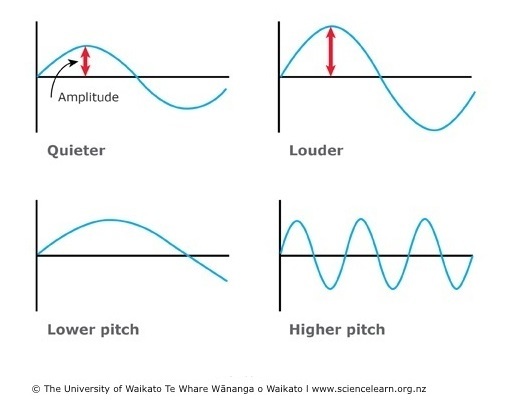
Loudness is a subjective perception of the intensity of sound. It is not the same as sound pressure level, which is a physical measurement of the pressure of sound waves. Loudness depends on various factors such as frequency, duration, and context.
Why Measure Loudness?
Measuring the loudness of an audio file is crucial to ensure that it is suitable for its intended purpose. For example, if you are producing music for radio, you need to ensure that the loudness level is within the range specified by the broadcasting standards. If the loudness level is too high or too low, it can result in a poor listening experience for the audience.
Methods of Measuring Loudness
Peak Level Metering
Peak level metering measures the highest level of sound in an audio file. It is a simple and straightforward method of measuring loudness, but it does not take into account the overall loudness perception of the audio file.
Root Mean Square (RMS) Metering
RMS metering calculates the average power of the audio signal. It provides a more accurate measurement of loudness than peak level metering, as it takes into account the entire audio signal. However, it still does not consider the subjective perception of loudness.
ITU-R BS.1770-4
ITU-R BS.1770-4 is a standard method of measuring loudness that takes into account the human perception of loudness. It measures loudness using a combination of RMS and other factors such as frequency weighting and gating. It is the most widely used method of measuring loudness and is used in broadcasting, music production, and other industries.
EbU R 128
EbU R 128 is a European Broadcasting Union (EBU) standard for measuring loudness that is similar to ITU-R BS.1770-4. It also takes into account the subjective perception of loudness and uses a combination of RMS and other factors to measure loudness.
Conclusion
Measuring the loudness of an audio file is essential to ensure that it is suitable for its intended purpose. There are various methods of measuring loudness, including peak level metering, RMS metering, ITU-R BS.1770-4, and EbU R 128. Each method has its advantages and disadvantages, and the choice of method depends on the specific application.
Ultimately, it is essential to ensure that the loudness of your audio files is appropriate for their intended use. If you are looking for a tool to help you measure and adjust the loudness of your audio files, you may want to check out MP4Gain.
The Loudness War: Exploring Audio Volume in Popular Music
Loudness War
Music is an art form that has been evolving for centuries. One aspect of music that has seen significant changes over the years is its volume. The “Loudness War” is a term used to describe the increasing trend of music being mixed and mastered at higher volumes, often resulting in distortion and reduced dynamic range.
Loudness War
The “Loudness War”: A Brief History of Audio Volume in Popular Music
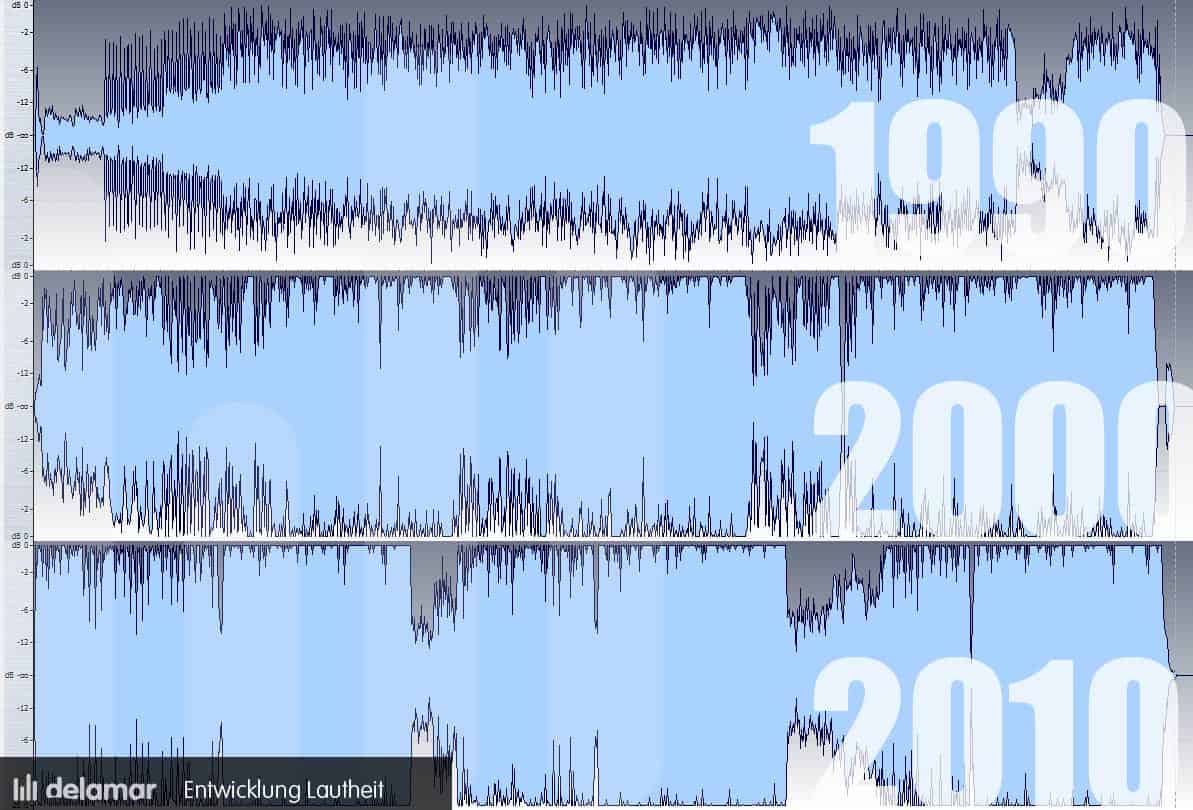
The Loudness War can be traced back to the introduction of the compact disc (CD) in the 1980s. With the CD, it became possible to digitally manipulate the volume of music during the mastering process. This led to a competition among music producers to make their recordings louder than their competitors. The trend continued with the rise of digital music formats and the popularity of streaming services.
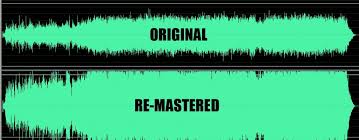
However, the quest for loudness came at a cost. With music being mixed and mastered at increasingly high volumes, the dynamic range of the music was reduced, leading to a loss of detail and a “brick wall” effect where everything sounded equally loud.
Is Louder Always Better? The Controversy Surrounding High Volume Audio
The Loudness War has been a topic of controversy in the music industry. While some argue that louder music sounds better and more impactful, others point out that excessive loudness can cause listener fatigue and damage to hearing. In fact, the World Health Organization has warned that listening to music at high volumes for extended periods of time can cause hearing loss.
Moreover, music mixed and mastered at high volumes can lose its depth and texture. It can also cause distortion, where certain parts of the music become harsh and unpleasant to listen to.
From Vinyl to Streaming: How Technology Has Influenced the Loudness War
Advancements in technology have played a significant role in the Loudness War. With the introduction of the CD, music producers gained the ability to digitally manipulate the volume of their recordings. The rise of digital music formats and streaming services further fueled the trend towards high volume music.
However, technology has also provided a solution to the problem it created. With the advent of loudness normalization, streaming services like Spotify and Apple Music have taken steps to address the Loudness War. Loudness normalization ensures that music is played back at a consistent volume level, regardless of how it was mixed and mastered.
The Effects of High Volume Audio on Music Perception and Listening Experience
Research has shown that high volume audio can affect our perception of music. When music is mixed and mastered at high volumes, it can create a sense of excitement and intensity, leading listeners to perceive it as more enjoyable. However, excessive loudness can also cause listener fatigue, reducing the overall listening experience.
Moreover, music mixed and mastered at high volumes can also affect our emotional response to the music. When dynamic range is reduced, the music can sound less expressive and less impactful.
Seeking Balance: How the Music Industry is Addressing the Loudness War
As the negative effects of the Loudness War have become more apparent, the music industry has taken steps to address the issue. Many music producers have started to prioritize dynamic range and avoid excessive loudness. Additionally, streaming services have implemented loudness normalization to ensure a consistent listening experience for their users.
However, there is still work to be done. While some music genres have embraced dynamic range, others continue to prioritize loudness. This is particularly true for electronic dance music and hip hop, where loudness is often considered a defining characteristic of the genre.
What are Decibels?
Decibels are a unit of measurement used to describe the intensity of sound. The decibel scale is logarithmic, meaning that a sound that is twice as loud as another sound is not 2 decibels louder, but rather 10 decibels louder. The human ear can detect sounds ranging from 0 decibels (the threshold of hearing) to 140 decibels (the threshold of pain).
When it comes to music, most experts agree that a safe listening level is around 85 decibels. However, many live concerts and nightclubs can reach volumes of 100 decibels or higher. Prolonged exposure to sound at these levels can cause permanent hearing damage.
But how do decibels relate to music specifically? When a song is mixed and mastered, the volume is often measured in decibels. A song that is mixed and mastered at a high volume, say -6 decibels, will be louder than a song mixed at a lower volume, say -12 decibels. While this can make the song sound more exciting and intense, it can also lead to distortion and listener fatigue.
The Dynamics of Music
Dynamics in music refer to the difference between the quietest and loudest parts of a song. A song with a wide dynamic range will have quiet, intimate moments and loud, powerful moments. Dynamic range is an important aspect of music as it allows for a more expressive and emotional experience.
The Loudness War has had a significant impact on dynamic range in music. When songs are mixed and mastered at high volumes, the dynamic range is reduced, leading to a loss of detail and impact. This has led many music producers to prioritize dynamic range in their recordings, in order to create a more immersive listening experience.
Conclusion
The Loudness War is a topic of ongoing debate in the music industry. While some argue that louder music sounds better, others point out that excessive loudness can have negative effects on the listening experience. As technology continues to evolve, the music industry will need to find a balance between volume and dynamic range in order to create the most enjoyable and expressive music possible.
Through loudness normalization and a renewed focus on dynamic range, the music industry is taking steps to address the issue. By understanding the impact of high volume audio on music perception and listening experience, we can ensure that music remains a source of enjoyment and inspiration for years to come.
Loudness correction is a process used to adjust the volume of audio files. This can be especially important for music, videos, and other audio content that is meant to be listened to on different devices.
Loudness Correction
Why do we need Loudness Correction?
Have you ever noticed that some music or videos sound louder or quieter than others even when played at the same volume on your device? This is because different audio files have different loudness levels. Loudness correction helps to standardize these levels, making sure that all of your audio content sounds consistent and easy to listen to, no matter where you play it.
How does Loudness Correction work?
Loudness correction works by analyzing the audio file and determining its average loudness level. It then adjusts the volume of the audio file so that it matches a desired loudness level, known as the target loudness. This can be done automatically or manually, depending on the tool being used.
Once the correction process is complete, the audio file should sound the same volume as other audio files with similar content, making it easier to listen to and enjoy.
Benefits of Loudness Correction
There are several benefits of using loudness correction on your audio files, including:
Improved audio quality: By standardizing the loudness levels of your audio files, you can ensure that your audio content sounds clear and consistent, regardless of the device it’s played on.
Reduced listener fatigue: If you listen to audio content with widely varying loudness levels, it can be tiring and even painful over time. Loudness correction helps to eliminate these fluctuations, making it easier and more enjoyable to listen to your audio content for longer periods of time.
Enhanced user experience: By making your audio content more consistent and easy to listen to, you can improve the overall user experience for your listeners and viewers, making them more likely to return for more.
Conclusion
Loudness correction is a powerful tool for improving the quality and consistency of your audio files. Whether you’re creating music, videos, or other audio content, loudness correction can help to ensure that your work sounds its best, no matter where it’s played.
If you’re looking for the best solution for loudness correction, look no further than Mp4Gain.
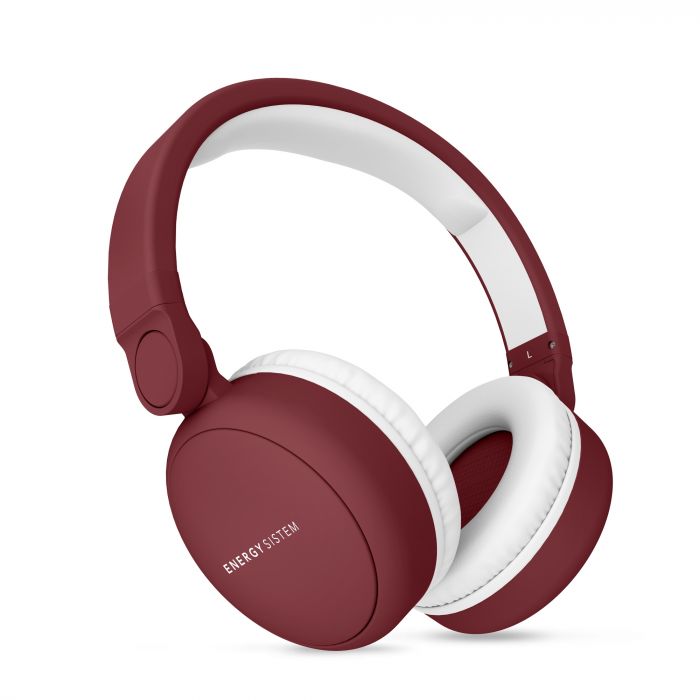
New headphones to protect the hearing ability of users.
Millions of people are risking their hearing due to prolonged exposure to loud music on MP3 players and smartphones. A headset technology developed by dB Logic in Indianapolis, Indiana (USA), aims to prevent this type of damage by limiting the maximum volume of music, and is able to do so without distorting the loudest passages or making Soft sounds are inaudible.
People have been listening to portable music players through headphones since 1979, when Sony introduced the Walkman. However, the widespread adoption of digital music players in the last decade represents a new risk to public health, as the devices store so much digital music that users can listen to it without interruption for hours. In the era of portable CD players, users “listened for up to seven hours, in most cases,” a week, says Brian Fligor, director of diagnostic audiology at Children’s Hospital in Boston (USA). ) and hearing loss expert caused by portable media players. Fligor has recently studied a group of digital player users in New York and found that “on average, they listened to 18 hours [of music] a week. We had some people who were listening more than 70 hours each week.”
Users risk hearing loss when they combine long periods of listening with a high volume. An investigation sponsored by the European Commission concluded that digital music players produce maximum noise levels ranging from 88 to 113 decibels (dB), with levels up to 120 dB depending on the type and placement of the headphones. (The quietest audible sound is zero dB, a normal conversation produces about 60 dB, and 120 dB is equivalent to the noise of an airplane taking off near us.) It is estimated that between 2.5 million and 10 million users of music players in the European Union are at high risk of hearing loss.
The dB Logic system limits the volume of the headphones with a circuit powered by the audio signal, eliminating the need for batteries. At the heart of the circuit is a small transformer that intensifies the small audio output voltages of the music player to levels that can operate the transistors that regulate the volume. The system only attenuates the volume if the average volume is consistently above 85 dB. This means that soft sounds can pass at full volume and that short passages of more than 85 dB are not abruptly attenuated. Two other popular methods to limit the volume – using a resistor to attenuate the audio signal regardless of its volume, and using a pair of diodes to trim all sounds above a certain threshold – are not able to do the same.
Although the dB Logic system could have been established to begin limiting at any particular loudness level, the 85 dB was chosen since that is the threshold at which the US Occupational Safety and Health Administration. forces employers to start protecting workers’ hearing, says Med Dwyer, chief technology officer and co-founder of dB Logic. “Very few users will listen to music at that level and believe that ‘it is not strong enough for me’, especially in our demographic goal of young people,” says Dwyer.
The Fligor audiologist doubts that volume limitation technologies alone can really solve the problem. Eighty-five dB “is not a magic figure above which we suffer a risk, and we are safe below it,” he says, and also notes that the duration of exposure is a critical factor. (After confessing that he enjoys music at full volume, Fligor listens to it at 89 dB for a maximum of 90 minutes a day, a volume and duration that, according to his calculations, will not harm his hearing.) For Fligor, Ideally, digital players track volume over time so users can see if their accumulated exposure is putting them at risk. “It is not that the devices do not have the computing capacity to do so, but that there has been no real protest that forces them to do so,” he says. “And why would the manufacturer include something that could generate litigation?”
Dwyer agrees that the duration is important. dB Logic has considered the creation of a product that tracks exposure time, as well as a limitation of levels