As a music lover, it’s frustrating when your favorite MP3 files are too quiet. You want to listen to them loudly without damaging your ears, but how can you make MP3 louder? The answer is MP4Gain. This Windows-based software can normalize and amplify the volume of your MP3 files without any loss in quality. With just a few clicks, you can increase the volume of your MP3s and enjoy them at the perfect volume.
Amplify MP3 Sound with Simple Steps
You don’t need to be an audio expert to make your MP3 files louder. With MP4Gain, it’s a simple process that anyone can do. After installing the software, just drag and drop your MP3 files into the program. MP4Gain will analyze and normalize the volume of each file, so they all sound at the same level. Then, you can amplify the volume to your desired level, and save the files. It’s that easy!
Make MP3 Louder Online with These Tips
If you don’t want to install software on your computer, you can make your MP3 files louder online. There are many websites that offer this service, but be careful as some of them can reduce the quality of your audio. Look for a reliable and trustworthy website that can amplify the volume without any loss in quality. Also, keep in mind that online tools may have limitations, and the results may not be as good as with dedicated software like MP4Gain.
How to Make MP3 Louder: Tips and Tricks
Aside from using software or online tools, there are some tips and tricks that you can use to make your MP3 files louder. For example, you can use an equalizer to boost the volume of certain frequencies. You can also try compressing the file, which can make the quieter parts louder while keeping the louder parts unchanged. However, keep in mind that these techniques may not work for all MP3 files, and you may still need to use dedicated software like MP4Gain to achieve the desired results.
Boost MP3 Volume: Conclusion
In conclusion, if you’re looking to make your MP3 files louder, MP4Gain is the ultimate solution. It’s easy to use, affordable, and can provide great results. Whether you’re a music lover, a podcaster, or a video creator, having your MP3 files at the perfect volume is essential. Don’t settle for quiet MP3s anymore, boost their volume with MP4Gain!
The Loudness War: Understanding the Battle for Loudest Sound
Loudness WarLoudness War
What is the Loudness War?
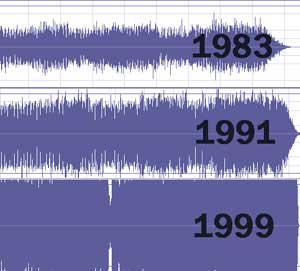
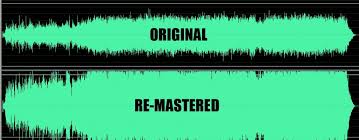
The Loudness War is a phenomenon in the music industry where music producers and mastering engineers compete to make their songs the loudest possible. This has resulted in a trend where songs are heavily compressed and limited to achieve a consistent volume level, often at the expense of dynamic range and overall sound quality.
Why is the Loudness War a problem?
The Loudness War is a problem because it sacrifices sound quality for loudness. Songs that are heavily compressed and limited can sound distorted and lack the natural dynamics that make music enjoyable to listen to. Additionally, this trend has led to a decrease in the overall quality of music production, as producers focus more on volume than on the nuances of the music itself.
How did the Loudness War start?
The Loudness War began in the 1990s, when CDs became the dominant format for music distribution. Record labels wanted their songs to stand out on the radio and in stores, so they began using compression and limiting to make them louder than their competitors. This led to a trend where each subsequent release was louder than the previous one, resulting in a race to see who could make the loudest song.
What is compression?
Compression is an audio processing technique that reduces the dynamic range of a recording. This means that the difference between the loudest and quietest parts of the recording is reduced, resulting in a more consistent volume level.
What is limiting?
Limiting is an audio processing technique that prevents the peaks in a recording from exceeding a certain level. This is done to ensure that the recording remains at a consistent volume level and to prevent distortion.
What is dynamic range?
Dynamic range refers to the difference between the loudest and quietest parts of a recording. A song with a wide dynamic range will have both quiet and loud sections, while a heavily compressed and limited song will have a more consistent volume throughout.
What are the consequences of the Loudness War?
The consequences of the Loudness War include decreased sound quality, reduced dynamic range, and listener fatigue. Additionally, songs that are heavily compressed and limited can sound distorted and lack the natural dynamics that make music enjoyable to listen to.
Is the Loudness War still happening?
The Loudness War is still happening, although it has become less pronounced in recent years. Many music producers and mastering engineers have become more aware of the negative effects of excessive loudness and are now focusing on producing music with a wider dynamic range and better overall sound quality.
What is the difference between loudness and volume?
Loudness refers to the perceived intensity of sound, while volume refers to the physical measurement of sound pressure level. In other words, loudness is how loud a sound seems to be, while volume is how loud it actually is.
What is mastering?
Mastering is the final stage of audio production, where the final mixes are processed and prepared for distribution. This includes adjusting the overall volume, EQ, and other effects to ensure that the final product sounds as good as possible on a variety of playback systems.
What is the role of mastering in the Loudness War?
Mastering is often the stage where the Loudness War is fought. Mastering engineers are under pressure from record labels and producers to make songs as loud as possible, often at the expense of sound quality. However, many mastering engineers are now advocating for a more balanced approach to mastering that prioritizes sound quality over loudness
The Loudness War: Exploring Audio Volume in Popular Music
Loudness War
Music is an art form that has been evolving for centuries. One aspect of music that has seen significant changes over the years is its volume. The “Loudness War” is a term used to describe the increasing trend of music being mixed and mastered at higher volumes, often resulting in distortion and reduced dynamic range.
Loudness War
The “Loudness War”: A Brief History of Audio Volume in Popular Music
The Loudness War can be traced back to the introduction of the compact disc (CD) in the 1980s. With the CD, it became possible to digitally manipulate the volume of music during the mastering process. This led to a competition among music producers to make their recordings louder than their competitors. The trend continued with the rise of digital music formats and the popularity of streaming services.
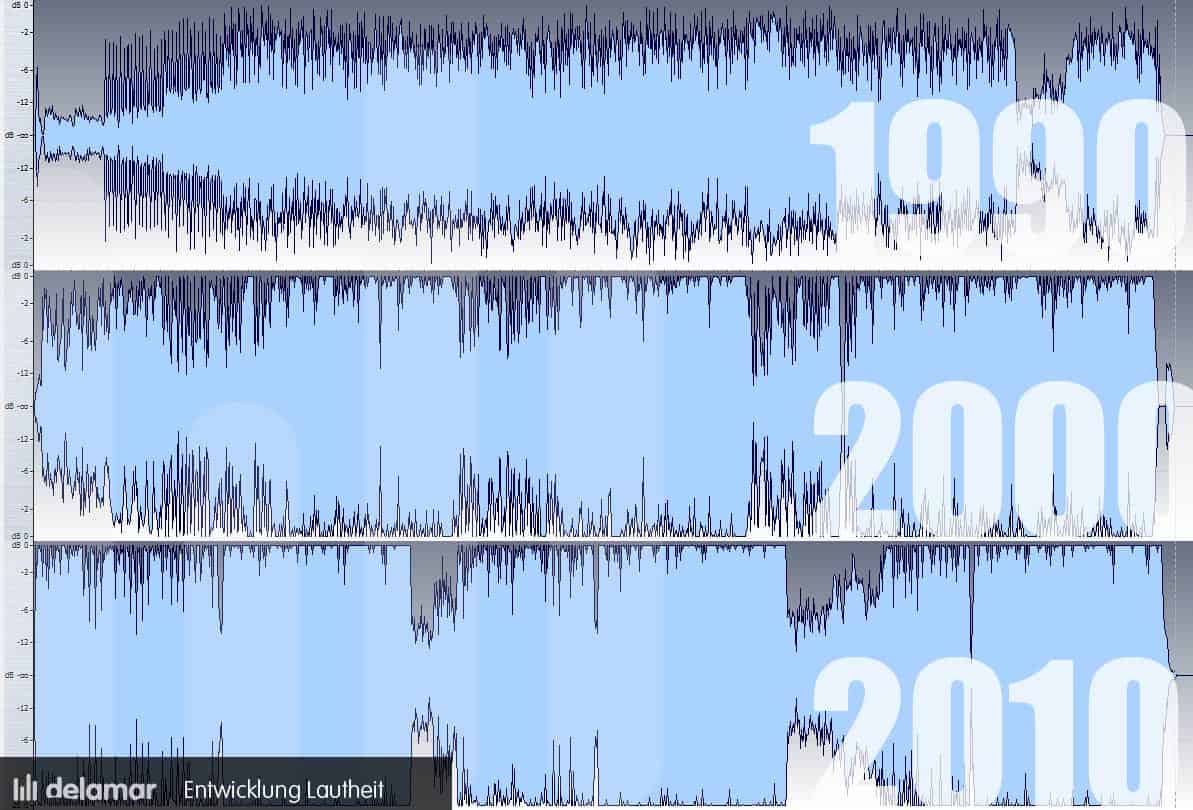
However, the quest for loudness came at a cost. With music being mixed and mastered at increasingly high volumes, the dynamic range of the music was reduced, leading to a loss of detail and a “brick wall” effect where everything sounded equally loud.
Is Louder Always Better? The Controversy Surrounding High Volume Audio
The Loudness War has been a topic of controversy in the music industry. While some argue that louder music sounds better and more impactful, others point out that excessive loudness can cause listener fatigue and damage to hearing. In fact, the World Health Organization has warned that listening to music at high volumes for extended periods of time can cause hearing loss.
Moreover, music mixed and mastered at high volumes can lose its depth and texture. It can also cause distortion, where certain parts of the music become harsh and unpleasant to listen to.
From Vinyl to Streaming: How Technology Has Influenced the Loudness War
Advancements in technology have played a significant role in the Loudness War. With the introduction of the CD, music producers gained the ability to digitally manipulate the volume of their recordings. The rise of digital music formats and streaming services further fueled the trend towards high volume music.
However, technology has also provided a solution to the problem it created. With the advent of loudness normalization, streaming services like Spotify and Apple Music have taken steps to address the Loudness War. Loudness normalization ensures that music is played back at a consistent volume level, regardless of how it was mixed and mastered.
The Effects of High Volume Audio on Music Perception and Listening Experience
Research has shown that high volume audio can affect our perception of music. When music is mixed and mastered at high volumes, it can create a sense of excitement and intensity, leading listeners to perceive it as more enjoyable. However, excessive loudness can also cause listener fatigue, reducing the overall listening experience.
Moreover, music mixed and mastered at high volumes can also affect our emotional response to the music. When dynamic range is reduced, the music can sound less expressive and less impactful.
Seeking Balance: How the Music Industry is Addressing the Loudness War
As the negative effects of the Loudness War have become more apparent, the music industry has taken steps to address the issue. Many music producers have started to prioritize dynamic range and avoid excessive loudness. Additionally, streaming services have implemented loudness normalization to ensure a consistent listening experience for their users.
However, there is still work to be done. While some music genres have embraced dynamic range, others continue to prioritize loudness. This is particularly true for electronic dance music and hip hop, where loudness is often considered a defining characteristic of the genre.
What are Decibels?
Decibels are a unit of measurement used to describe the intensity of sound. The decibel scale is logarithmic, meaning that a sound that is twice as loud as another sound is not 2 decibels louder, but rather 10 decibels louder. The human ear can detect sounds ranging from 0 decibels (the threshold of hearing) to 140 decibels (the threshold of pain).
When it comes to music, most experts agree that a safe listening level is around 85 decibels. However, many live concerts and nightclubs can reach volumes of 100 decibels or higher. Prolonged exposure to sound at these levels can cause permanent hearing damage.
But how do decibels relate to music specifically? When a song is mixed and mastered, the volume is often measured in decibels. A song that is mixed and mastered at a high volume, say -6 decibels, will be louder than a song mixed at a lower volume, say -12 decibels. While this can make the song sound more exciting and intense, it can also lead to distortion and listener fatigue.
The Dynamics of Music
Dynamics in music refer to the difference between the quietest and loudest parts of a song. A song with a wide dynamic range will have quiet, intimate moments and loud, powerful moments. Dynamic range is an important aspect of music as it allows for a more expressive and emotional experience.
The Loudness War has had a significant impact on dynamic range in music. When songs are mixed and mastered at high volumes, the dynamic range is reduced, leading to a loss of detail and impact. This has led many music producers to prioritize dynamic range in their recordings, in order to create a more immersive listening experience.
Conclusion
The Loudness War is a topic of ongoing debate in the music industry. While some argue that louder music sounds better, others point out that excessive loudness can have negative effects on the listening experience. As technology continues to evolve, the music industry will need to find a balance between volume and dynamic range in order to create the most enjoyable and expressive music possible.
Through loudness normalization and a renewed focus on dynamic range, the music industry is taking steps to address the issue. By understanding the impact of high volume audio on music perception and listening experience, we can ensure that music remains a source of enjoyment and inspiration for years to come.
Loudness correction is a process used to adjust the volume of audio files. This can be especially important for music, videos, and other audio content that is meant to be listened to on different devices.
Loudness Correction
Why do we need Loudness Correction?
Have you ever noticed that some music or videos sound louder or quieter than others even when played at the same volume on your device? This is because different audio files have different loudness levels. Loudness correction helps to standardize these levels, making sure that all of your audio content sounds consistent and easy to listen to, no matter where you play it.
How does Loudness Correction work?
Loudness correction works by analyzing the audio file and determining its average loudness level. It then adjusts the volume of the audio file so that it matches a desired loudness level, known as the target loudness. This can be done automatically or manually, depending on the tool being used.
Once the correction process is complete, the audio file should sound the same volume as other audio files with similar content, making it easier to listen to and enjoy.
Benefits of Loudness Correction
There are several benefits of using loudness correction on your audio files, including:
Improved audio quality: By standardizing the loudness levels of your audio files, you can ensure that your audio content sounds clear and consistent, regardless of the device it’s played on.
Reduced listener fatigue: If you listen to audio content with widely varying loudness levels, it can be tiring and even painful over time. Loudness correction helps to eliminate these fluctuations, making it easier and more enjoyable to listen to your audio content for longer periods of time.
Enhanced user experience: By making your audio content more consistent and easy to listen to, you can improve the overall user experience for your listeners and viewers, making them more likely to return for more.
Conclusion
Loudness correction is a powerful tool for improving the quality and consistency of your audio files. Whether you’re creating music, videos, or other audio content, loudness correction can help to ensure that your work sounds its best, no matter where it’s played.
If you’re looking for the best solution for loudness correction, look no further than Mp4Gain.