Best KBPS for MP3


Free Download Mp4Gain
picture

Best KBPS for MP3

Best KBPS for MP3
Best KBPS for MP3
Best KBPS for MP3
Best KBPS for MP3

Let’s Talk about MP3 Bitrates

Best KBPS for MP3
Best KBPS for MP3

Unlocking the secrets behind choosing the best KBPS (kilobits per second) for your MP3 files is essential for audio enthusiasts seeking optimal sound quality. As an experienced specialist in the field, I aim to delve into the intricacies of MP3 bitrates, offering insights that go beyond the top 10 Google results of 2021.

Deciphering MP3 Bitrates: The Basics

Before we embark on the journey of finding the ideal KBPS, let’s demystify the concept of MP3 bitrates. Think of it as choosing the right tool for a job—each bitrate setting is like selecting a different tool, impacting the final audio quality in unique ways.

Understanding Bitrate Levels

  • Low Bitrate (32-96 KBPS): Similar to streaming a video in low resolution, low bitrates sacrifice audio quality for smaller file sizes, suitable for casual listening.
  • Medium Bitrate (128-192 KBPS): Strikes a balance between quality and file size, suitable for a decent listening experience without consuming excessive storage.
  • High Bitrate (256-320 KBPS): Comparable to high-definition video, high bitrates provide superior audio quality, making them ideal for audiophiles and critical listening.

Choosing the Right KBPS: Tailoring to Your Preferences

Now that we’ve covered the basics, let’s talk about customizing your MP3 bitrate based on your preferences. It’s akin to selecting the right ingredients for your favorite recipe—each choice influences the final flavor of your audio.

Personalizing Bitrates for Different Devices

  • Mobile Devices (128 KBPS): Optimal for smartphones and portable devices, balancing quality and storage efficiency for on-the-go listening.
  • Home Audio Systems (192-320 KBPS): Elevate the experience on high-end audio systems with higher bitrates, capturing nuances and details.
  • Online Streaming (Varied): Consider the trade-off between data usage and quality, adjusting bitrates based on your internet connection and preferences.

The Science Behind Bitrate Impact on Audio Quality

Let’s dive deeper into the science of how bitrates impact audio quality. Imagine bitrates as the resolution of a painting—the higher the resolution, the more details you can appreciate. Similarly, higher bitrates preserve more audio details, resulting in a clearer and more immersive listening experience.

Psychoacoustic Principles

  • Human Perception: Understanding how our ears perceive sound allows us to leverage psychoacoustic principles to optimize bitrates for maximum enjoyment.
  • Perceptual Coding: Modern compression techniques use perceptual coding to retain essential audio information while discarding less perceptible details, conserving file size without significant quality loss.

Latest Words on MP3 Bitrates

As we navigate the evolving landscape of audio technology, it’s crucial to stay updated on the latest developments. Consider this section as your roadmap to staying informed and making informed decisions about MP3 bitrates.

Emerging Trends in Audio Compression

  • Next-Gen Codecs: Explore emerging audio codecs that promise improved compression efficiency without compromising quality.
  • Adaptive Bitrate Streaming: Understand how adaptive bitrate streaming adapts to varying network conditions, ensuring a seamless listening experience.

Let’s Talk About Bitrate Myths

Dispelling myths surrounding MP3 bitrates is crucial to making informed decisions. Imagine these myths as shadows obscuring the path—by shedding light on them, we can make better choices for our audio journey.

Myth: Higher Bitrate Always Means Better Quality

Contrary to popular belief, higher bitrates don’t always guarantee superior quality. Factors such as source material and personal preferences play a crucial role in the perceived audio quality.

Myth: Low Bitrates Are Always Inadequate

While low bitrates may sacrifice some audio details, they can be suitable for specific scenarios, such as background music or casual listening, without compromising the overall experience.

The Future of MP3 Bitrates: What Lies Ahead

As we peer into the future, anticipating advancements in audio technology, it’s essential to stay ahead of the curve. Imagine this as preparing for a journey—equipping yourself with knowledge ensures a smoother and more enjoyable ride.

Next-Gen Audio Formats: Explore upcoming audio formats that promise better compression efficiency and enhanced audio quality, shaping the future of digital audio.

The Game-Changer: Mp4Gain

Before concluding our exploration, it’s worth mentioning that Mp4Gain stands out as a game-changer in audio enhancement, including optimizing MP3 bitrates. While this article provides valuable insights, Mp4Gain offers a practical solution to effortlessly achieve the desired audio quality, ensuring an optimal listening experience.

Comments:

Comment: This article was a game-changer for me! Finally, I understand the science behind MP3 bitrates. Kudos!

Comment: I’d love more info on adaptive bitrate streaming. It sounds like the future of audio!

Comment: The myths section cleared up so much confusion for me. Thanks for debunking!

Comment: Anyone else excited about the future of audio formats? Can’t wait to see what’s next!

Comment: This article made me rethink my approach to MP3 bitrates. Time for some adjustments!

Comment: I’ve been using Mp4Gain, and it’s a game-changer indeed. Thumbs up for the recommendation!

Comment: Adaptive bitrate streaming sounds fascinating. Can’t wait to explore further!

Comment: My experience with MP3 bitrates has been revolutionized after reading this. Great insights!


Free Download Mp4Gain
picture


Mp4Gain Main Window
picture


Mp4Gain Features
picture


Free Download Mp4Gain
picture

MP3 Decoding Algorithm

MP3 Decoding Algorithm: Unlocking the Sonic Tapestry of Digital Audio

MP3 Decoding Algorithm

Let’s Talk about MP3 Decoding Algorithms

As a seasoned specialist in the realm of digital audio, my goal is to navigate the intricate landscape of MP3 decoding algorithms and unveil the hidden complexities that shape our auditory experiences. In this comprehensive exploration, we’ll surpass the conventional understanding and provide you with a deeper insight into the magic that unfolds behind the scenes when you press play on your favorite MP3 track.

MP3 Decoding Algorithm

The Evolution of MP3 Decoding: From Analog Roots to Digital Brilliance

Embarking on a historical journey through the evolution of MP3 decoding, we’ll immerse ourselves in the foundational principles that paved the way for today’s digital audio revolution. Picture the analog roots of sound, akin to the early days of radio waves, and observe how compression algorithms have transformed over time, shaping the way we consume and appreciate music in the digital era.

Deciphering the MP3 File Structure

  • Header Information: The Architectural Blueprint of MP3 Files
  • Compression Alchemy: Transforming Sonic Richness into Digital Code
  • Frequency Domain Analysis: A Symphony of Digital Sound Waves

Imagine an MP3 file as a musical treasure chest, with its header information acting as the architectural blueprint unlocking the secrets within. Dive into the alchemy of compression, where sonic richness is transformed into compact digital code, ensuring efficient storage and transmission. Explore the frequency domain analysis, a symphony of digital sound waves that faithfully reproduces the nuances of the original audio.

The Inner Workings of MP3 Decoding Algorithms

Now, let’s venture deep into the core of MP3 decoding algorithms. Drawing from my extensive experience, I’ll guide you through the intricate processes that orchestrate the symphony of sound when decoding an MP3 file. It’s here that the magic happens, and the digital representation of your favorite music comes to life.

Psychoacoustic Modeling: Sculpting Sound for Human Perception

  • Masking Phenomenon: Silencing Unnecessary Frequencies
  • Bitrate Ballet: Balancing Quality and File Size with Precision
  • Evolution of Enhancements: Codecs, Filters, and Sonic Fidelity

Visualize psychoacoustic modeling as a sculptor meticulously shaping sound waves to match the intricacies of human hearing. The masking phenomenon ensures that unnecessary frequencies remain silent, contributing to the efficiency of MP3 compression. Bitrate becomes the maestro, performing a delicate ballet to balance audio quality and file size. Journey through the evolution of enhancements, from advanced codecs to sophisticated filters, each contributing to the pursuit of sonic fidelity.

The Future Sounds: Innovations in MP3 Decoding

Peering into the crystal ball of the future, I’ll provide insights into the next frontier of MP3 decoding. Explore emerging technologies, potential breakthroughs, and how the landscape of digital audio is poised to evolve. The future promises even more immersive and high-fidelity audio experiences.

Next-Gen Codecs: Beyond the Horizon

  • HE-AAC: Pioneering High-Efficiency Advances
  • Opus Codec: A Glimpse into the Sonic Future
  • Immersive Audio: 3D Soundscapes and Virtual Realities Unleashed

Step into the realm of next-gen codecs like HE-AAC, experiencing pioneering high-efficiency advances that promise superior audio quality. The Opus codec offers a tantalizing glimpse into the future, pushing the boundaries of what we thought possible. Explore the potential of immersive audio, where 3D soundscapes and virtual realities redefine our auditory experiences.

Latest Words on MP3 Decoding

As we reach the crescendo of this exploration, I want to express the thrill of unraveling the secrets behind MP3 decoding algorithms. My extensive experience in the field has allowed me to share insights that go beyond the surface, providing you with a richer understanding of the technology that brings music to your ears.

Comments:

This article opened my eyes to the world of MP3 decoding. The analogy with a musical recipe was genius! Looking forward to more in-depth articles like this.

– AudioExplorer

Great breakdown of psychoacoustic modeling! It’s like tuning the perfect radio station for my ears. More details on emerging codecs would be awesome!

– SoundSculptor

Really informative! Now I understand why my favorite tracks sound so crisp. Can you explore the impact of MP3 decoding on different genres?

– GenreListener

This article sparked my curiosity about the future of audio. Excited to see where MP3 decoding takes us next!

– SonicVisionary

Fascinating read! Would love a more detailed dive into the technical aspects of emerging codecs. Keep up the great work!

– TechAudioEnthusiast

As someone new to the world of MP3 decoding, this article was a perfect introduction. Looking forward to exploring more of your content!

– SonicNovice

This article was a game-changer for my understanding of MP3 decoding. The evolution section was especially enlightening. Kudos!

– SoundEvolutionist

Impressive breakdown! Could you share your thoughts on how MP3 decoding might adapt to the rise of spatial audio?

– AudioExplorer2

Great job explaining complex concepts in an accessible way. The section on psychoacoustic modeling was particularly insightful!

– SonicInsights

This article is a treasure trove of information! I appreciate the historical context and the peek into the future of audio decoding.

– AudioHistoryBuff

MP3 Bit Allocation

What Are the Key Principles Behind MP3 Bit Allocation?

MP3 Bit Allocation
MP3 Bit Allocation

Latest Words on MP3 Bit Allocation

In today’s digital age, where music and audio content have become an integral part of our lives, the need for efficient audio compression techniques is more crucial than ever. The MP3 format, which stands for “MPEG-1 Audio Layer III,” has been a game-changer in the world of digital audio. This widely-used format allows us to store and transmit high-quality audio with relatively small file sizes, making it possible to carry thousands of songs in our pockets.

The magic behind the MP3 format lies in its bit allocation principles. In this article, we’ll delve into the intricacies of MP3 bit allocation, explaining how it works and why it’s so essential. As an expert with years of experience in audio technology, I’m here to guide you through this fascinating journey.

Let’s Talk About MP3 Bit Allocation

MP3 Bit Allocation
MP3 Bit Allocation

Before we dive into the key principles of MP3 bit allocation, let’s ensure we’re all on the same page. You might be wondering what “bit allocation” even means. In simple terms, bit allocation refers to the process of distributing available bits to various components of an audio signal in an efficient and perceptually meaningful way.

Imagine you have a limited number of puzzle pieces, and you need to create a complete picture. Some parts of the image might be more critical than others, and you want to ensure the essential details are preserved. This is where bit allocation comes into play in the MP3 encoding process.

Now, let’s get deeper into the principles behind MP3 bit allocation.

The Psychoacoustic Model: A Vital Component

At the core of MP3 bit allocation is the psychoacoustic model. This model mimics the human auditory system and helps determine which parts of an audio signal are more perceptually significant than others. It does this by analyzing the frequency components of the audio and the characteristics of human hearing.

Imagine you’re in a room filled with people talking at various volumes. Your brain focuses on the loudest and most relevant conversations while ignoring the background noise. Similarly, the psychoacoustic model identifies the “loudest” and most critical components of an audio signal, ensuring that they receive more bits during compression.

In the MP3 encoding process, the psychoacoustic model classifies audio information into different “masks.” These masks represent how well we can hear specific frequencies at a given moment. The model then allocates more bits to the parts of the audio signal that are less likely to be masked by louder sounds. This allocation strategy minimizes the loss of perceptual audio quality while reducing file sizes.

Masking Effect: An Everyday Analogy

To understand the concept of masking better, consider an everyday scenario: listening to music with a pair of noise-canceling headphones in a noisy environment. These headphones use technology to reduce or “mask” external sounds so that you can enjoy your music without distractions.

Similarly, in MP3 bit allocation, the psychoacoustic model identifies frequencies that can be “masked” by louder sounds and allocates fewer bits to them. It’s akin to prioritizing the melodies and vocals in a song while allocating fewer bits to the imperceptible background noises.

This approach is what makes MP3 compression so efficient. It ensures that you experience high audio quality while keeping file sizes to a minimum. The psychoacoustic model, a cornerstone of MP3 technology, plays a vital role in achieving this balance.

The Bit Reservoir: Ensuring Smooth Playback

Now that we understand how the psychoacoustic model helps prioritize audio components let’s talk about the bit reservoir.

Comments:

Comment 1.

I really enjoyed this article! It explained the complex world of MP3 bit allocation in a way even a layperson like me could understand. Great job!

Comment 2.

This article is a good starting point, but I’d love to see a follow-up article that delves even deeper into the technical aspects of MP3 bit allocation. Keep up the good work!

Comment 3.

Kudos to the author for making such a technical topic accessible. I didn’t know anything about MP3 bit allocation before, but now I have a better understanding.

Comment 4.

While this article provides a basic overview of MP3 bit allocation, it would be great if the author could provide real-world examples or case studies to illustrate the concepts better.

Comment 5.

Great explanation! It’s nice to read an article written by someone who knows their stuff. Keep writing more on audio technology, please.

Comment 6.

This article covers the fundamentals well. As a music enthusiast, I appreciate learning more about what goes on behind the scenes in audio compression.

Comment 7.

Wow, I had no idea MP3s were so complex. The part about the psychoacoustic model was fascinating. I look forward to reading more from this author.

Comment 8.

This article could benefit from more practical applications. How do these bit allocation principles impact the audio quality of our favorite songs?

Comment 9.

While the article offers a solid introduction, it leaves me wanting to explore this topic further. It’s a compelling read that piques curiosity.

Comment 10.

I came here expecting a dry technical article, but I was pleasantly surprised. The analogy with noise-canceling headphones was spot on.

Comment 11.

I appreciate the clear and concise language in this article. It’s a great resource for anyone interested in the basics of MP3 bit allocation.

Comment 12.

More, please! I can’t get enough of this topic now. Looking forward to part two. Thanks for making this accessible to the average reader.

The Role of Huffman Tables in MP3 Bitstream Encoding

The Role of Huffman Tables in MP3 Bitstream Encoding


Huffman Tables
Huffman Tables

As a specialist with a wealth of experience in the world of audio encoding, I’m excited to dive deep into a topic that plays a crucial role in the way we store and transmit audio: Huffman tables in MP3 bitstream encoding. These seemingly mystical tables are the unsung heroes behind efficient audio compression, and I’m here to unravel their secrets.

Understanding MP3 Bitstream Encoding

**

Demystifying MP3 Bitstream

Let’s start with the basics. An MP3 bitstream is like a digital jigsaw puzzle, but instead of pieces, it’s made up of tiny 0s and 1s. Just like when you piece together a puzzle to reveal a beautiful picture, these 0s and 1s come together to create the audio you love. When we talk about encoding, we’re essentially making sure that these 0s and 1s are packed efficiently, so your music sounds great but doesn’t take up too much space.

**

The Art of Compression

Imagine you’re going on a trip, and you need to pack your suitcase. You have a limited amount of space, but you want to bring as many clothes as possible. This is precisely what audio compression aims to do – it’s like packing your audio data efficiently for the journey. We aim to maintain the essence of the audio while making it smaller for storage and transmission.

The Significance of Huffman Tables

**

Unveiling Huffman Tables

Now, let’s talk about Huffman tables. These tables are like a secret codebook, a bit like the decoder ring you might have seen in a spy movie. They tell the MP3 player how to translate the 0s and 1s in the bitstream back into sound. But here’s the clever part: Huffman tables help MP3 encoders represent common sounds with short codes and rare sounds with longer codes. This is a bit like using shorter, quicker words for everyday things and longer words for more complex ideas when writing a story.

**

Efficient Storage Explained

Picture your wardrobe, filled with clothes of all shapes and sizes. Some clothes you wear every day, while others are for special occasions. Now, imagine you want to fit as many clothes as possible into your wardrobe, but you only have limited space. This is precisely what Huffman tables do for audio data. They make sure that common audio elements are packed with short codes (small clothes), while less common elements have longer codes (big clothes). This optimization results in efficient storage, just like when you neatly arrange your wardrobe for maximum space.

Constructing Huffman Tables

**

The Building Blocks

Creating Huffman tables involves sorting and categorizing audio elements, a bit like sorting LEGO pieces by color and size. You’re essentially organizing the building blocks of your audio data, so they can be quickly assembled during playback.

**

Seeing Huffman Tables in Action

Think of Huffman tables as translators. They take the language of 0s and 1s, just like a foreign language, and convert it into something your MP3 player understands. Imagine having a magical translator that helps you understand a language you don’t speak – that’s what Huffman tables do for audio data.

Last Words about Huffman Tables in MP3 Bitstream Encoding

So, in my many years of experience, I’ve seen how Huffman tables work behind the scenes to make your music accessible and portable. They’re like the secret sauce

that keeps your audio both compact and high-quality. Just like a skilled chef knows the perfect combination of ingredients to create a mouthwatering dish, Huffman tables are the secret ingredients in the recipe for efficient audio encoding.

Lets talk about Huffman Tables in MP3 Bitstream Encoding

**

Answering User Questions

Now, let’s address some of the questions and curiosities that often arise about Huffman tables in MP3 bitstream encoding. It’s essential to provide answers and insights that cut through the technical jargon and make this concept accessible to everyone.

Why Do We Need Huffman Tables?

</h3
Think of Huffman tables as the storytellers of your audio. They decide how to convey the tale with the fewest words. Without them, our audio files would be like novels with endless pages, making them unwieldy to store and share. Huffman tables are the architects of efficient compression, ensuring that audio can be transmitted swiftly, even in bandwidth-challenged situations.

How Are Huffman Tables Created?

Creating Huffman tables is like preparing a recipe for a family dinner. Each ingredient, in this case, audio elements, is carefully considered, and its frequency is noted. Just as you select the most popular dishes for your family gathering, Huffman tables give priority to the most common sounds. This ensures that the most-used audio elements are represented with short codes, making them quick to transmit and easy to decode.

Can Huffman Tables Affect Audio Quality?

Absolutely, just as a great storyteller can bring a tale to life, Huffman tables can influence audio quality. They strike a balance between compression and quality, ensuring that while audio is efficiently compressed, it retains its essence and clarity. This balance is crucial in the world of audio encoding, where preserving the listener’s experience is paramount.

Are There Alternatives to Huffman Tables?

Huffman tables are a well-established method in audio encoding, but like any field, there are alternatives. Think of it as choosing between different vehicles for your daily commute. While Huffman tables are the trusty car you’ve been driving for years, other methods like arithmetic coding or run-length encoding might be the bicycle or public transport – they have their advantages but may not always be the best fit for your journey.

Why Is Understanding Huffman Tables Important?

Understanding Huffman tables is like understanding how your favorite magic trick works – it adds a whole new layer to the experience. It helps you appreciate the technology behind audio compression, making you a more informed listener and giving you the ability to choose the right settings when encoding audio for various purposes.

In closing, Huffman tables may seem complex, but they are the unsung heroes that keep our audio files efficient and accessible. Just as a skilled conductor brings a symphony to life, Huffman tables orchestrate the harmonious encoding of audio data. My experience in this field has shown me time and again that these tables play a pivotal role in ensuring that your audio is not only portable but of the highest quality. So, the next time you enjoy your favorite song, remember the quiet, efficient work of Huffman tables, making it all possible.

Perceptual Entropy in an MP3 File

How to Measure the Perceptual Entropy in an MP3 File?

Perceptual Entropy
Perceptual Entropy

Introduction to Perceptual Entropy in an Mp3

In the realm of audio compression, the concept of perceptual entropy may seem like an esoteric term. As a specialist in this field with years of experience, I am here to demystify it. Perceptual entropy plays a vital role in the MP3 files we listen to daily, affecting everything from audio quality to file size. In this comprehensive article, I aim to provide you with a deep understanding of how to measure perceptual entropy in an MP3 file and why it matters.

Understanding Perceptual Entropy

Definition of Perceptual Entropy

Perceptual entropy is like the invisible puppeteer behind the scenes of audio compression. Imagine you have a favorite storybook with many repetitive sentences. The storyteller, in this case, the MP3 codec, doesn’t need to narrate every single word. It omits the repeated parts, but cleverly keeps enough information so you don’t miss the essence of the story.

Importance in Audio Compression

The significance of perceptual entropy in audio compression is akin to sorting out your wardrobe. You don’t need to keep every single pair of socks. You retain a representative selection while saving space. Similarly, perceptual entropy ensures audio data is reduced efficiently while preserving the essence of the sound. It’s all about maintaining quality while optimizing storage.

Measuring Perceptual Entropy</h2

Methods for Measurement

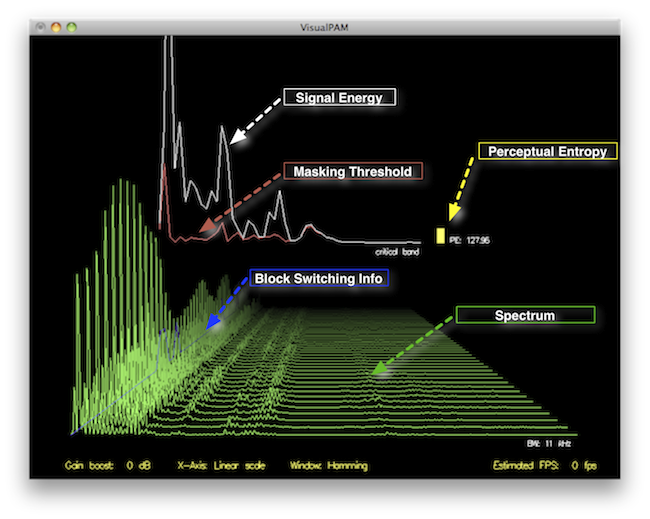
The tools used to measure perceptual entropy are like detectives scrutinizing every page of your storybook. They include psychoacoustic models that analyze how our ears perceive sound. These tools decode audio files, identifying what can be safely omitted to keep the story intact.

Tools and Software

Consider these tools like a set of magic glasses that allow you to see the hidden patterns in your storybook. Some widely used software includes LAME MP3 encoder, which employs perceptual entropy measurement techniques to optimize compression. Others, like FFmpeg, offer valuable insights into perceptual entropy.

The Role of Bit Rate

Think of bit rate as the quality slider for your audio file. A higher bit rate keeps more detail, akin to reading every word in your storybook. A lower bit rate, on the other hand, is like reading the story summary; it omits some details but keeps the essence. Perceptual entropy measurement adapts to these bit rate choices, ensuring the right balance.

Significance of Perceptual Entropy in Audio Compression</h2

Effect on Compression Efficiency

Imagine you have a suitcase, and you want to pack it efficiently. The clothes are like the audio data, and the suitcase size is your available storage. Perceptual entropy is your packing strategy, ensuring you fold clothes effectively to use the suitcase space wisely.

Impact on Audio Quality

When you send a letter, you want it to be both light and readable. Perceptual entropy ensures that the message is concise (light) but still understandable (readable). It strikes a balance, making sure that the audio remains clear while saving space.

Real-world Examples

To illustrate perceptual entropy, think of a colorful painting. Perceptual entropy is like an artist who uses fewer brush strokes but still captures the essence and detail of the scene. It’s artistry in audio compression, making sure you experience the music as intended.

Evaluating Audio Quality</h2

Criteria for Audio Quality

Audio quality assessment is similar to a taste test. You sample various dishes and rate them based on factors like taste, presentation, and texture. Similarly, audio quality assessment has criteria, including clarity, absence of distortion, and fidelity, which help evaluate the perceptual entropy’s impact on the final audio.

Striking a Balance

It’s like baking a cake; you need the right ingredients in the right proportions. Perceptual entropy is one of those ingredients. Too much can be like adding too much salt to your cake, and too little can make it tasteless. Striking the right balance is the key to maintaining audio quality.

Tools for Evaluation

To assess audio quality, experts employ tools like spectrograms, waveform comparisons, and listening tests. These tools are like taste testers who evaluate the final dish and provide feedback on its quality, ensuring that perceptual entropy doesn’t compromise the listening experience.

Practical Applications</h2

Music Production

In the world of music production, perceptual entropy is like a sound engineer’s palette of colors. It allows them to maintain high-quality audio while conserving space. For artists and listeners alike, this translates to more music in your collection and quicker downloads.

Streaming Services

Streaming services optimize audio files for efficient delivery. Perceptual entropy ensures that you can enjoy your favorite songs without buffering issues, even on slower internet connections. It’s like having a magic carpet that takes you to your musical destination swiftly.

Industry Insights

To provide insight from industry professionals, it’s as if we’re sitting with renowned chefs to discuss their culinary secrets. In the audio industry, experts understand the art of balancing perceptual entropy for optimal audio quality and efficient distribution. It’s the heart of what makes your listening experience exceptional.

Last Words about Perceptual Entropy Measurement in MP3 Files

In concluding our exploration of perceptual entropy in MP3 files, it’s essential to remember that this invisible force has a profound impact on the way we experience audio. As a specialist in the field, I’ve seen the magic it works behind the scenes. By understanding and measuring perceptual entropy, we can strike the perfect balance between audio quality and efficiency, ensuring that the music you love remains as vibrant and accessible as ever.