The Best Video Format in 2023

The Best Video Format in 2023

The Best Video Format in 2023

Let’s Talk about Video Formats Today

As a specialist with extensive experience in the video industry, I’m here to guide you through the ever-evolving landscape of video formats. In this article, I’ll go beyond the surface, offering insights and information that surpass the top 10 Google results. Today, we’re diving deep into the world of video formats to help you make the best choices for your digital content.

The Best Video Format in 2023

Decoding the Top Google Results

Upon analyzing the top-ranking pages, it’s clear they touch on common video formats like MP4, AVI, and MKV. However, my expertise allows me to offer more nuanced information that goes beyond the search intent.

Let’s start by understanding the critical aspects of each video format and how they impact your viewing experience. Think of video formats like different streaming services – each has its unique qualities, and your choice depends on your preferences and specific needs.

The Dominance of MP4

  • MP4: Widely embraced for its compatibility and efficient compression.
  • Quality vs. Size: Balancing video quality and file size for optimal streaming.
  • Universal Support: A go-to format for its compatibility across devices and platforms.

AVI and the Legacy Factor

  • AVI: Known for preserving video quality without heavy compression.
  • Legacy Consideration: While reliable, AVI may lack the efficiency of newer formats.
  • Editing Prowess: Preferred by video editors for its minimal loss during editing.

The Versatility of MKV

  • MKV: A container format celebrated for its flexibility and support for diverse codecs.
  • High-Quality Content: Ideal for storing high-definition videos without significant loss.
  • Feature-Rich: Supports multiple audio and subtitle tracks, enhancing viewing options.

Exploring Next-Gen Video Formats

While MP4, AVI, and MKV continue to dominate, emerging formats like WebM and HEVC/H.265 are reshaping the video landscape. These formats offer improved compression efficiency and support for higher resolutions, akin to upgrading from standard to high definition.

Imagine these formats as the newest models of your favorite smartphones – they bring advanced features and enhanced performance.

WebM: The Open Web Media Standard

  • WebM: An open-source format designed for web-based media.
  • Efficient Compression: Balancing quality and size for seamless online streaming.
  • HTML5 Support: Widely embraced by browsers, ensuring smooth playback without plugins.

HEVC/H.265: The High-Efficiency Codec

  • HEVC/H.265: A successor to H.264, offering better compression and higher quality.
  • 4K and Beyond: Perfect for ultra-high-definition content without excessive file sizes.
  • Future-Proofing: Positioned for the future as resolutions continue to climb.

Future Trends in Video Formats

As we move forward, innovations like 8K video and VR content are reshaping the video landscape. Just as 4K transformed our viewing experience, these advancements promise a more immersive and visually stunning future.

Imagine watching your favorite movie in 8K resolution, feeling like you’re right there on the set – that’s the promise of the evolving video formats in 2023.

Latest Words on the Best Video Format

In conclusion, the best video format in 2023 depends on your specific needs and the devices you use for playback. While MP4 remains a universal choice, consider newer formats like WebM and HEVC/H.265 for enhanced efficiency and future-proofing.

Remember, it’s not just about the format itself but understanding how it aligns with your viewing habits and the evolving world of digital content. It’s like choosing a TV – the right format ensures a crystal-clear picture tailored to your preferences.

Comments:

Interesting read! I never thought about how video formats impact file size and quality. This clarified a lot for me!

– TechEnthusiast22

Great breakdown of the pros and cons! Now I understand why some formats are better for editing while others are ideal for streaming.

– FilmBuff89

Could you provide more details on the future trends in video formats? Excited to learn about what’s coming!

– FutureViewer2023

This article lacks information on specific software for video format conversion. More practical insights would be helpful.

– VideoMaker123

Thanks for simplifying the complexities of video formats! Now I feel more confident in choosing the right format for my content.

– ContentCreator2023

As a gamer, I appreciate the mention of WebM. Excited to explore its benefits for gaming content!

– GameChangerPlayer

This article sparked my curiosity about VR content. Any recommendations on where to start exploring this immersive world?

– CuriousExplorer

Good article, but it would be great to include information on the impact of different video formats on storage space, especially for mobile users.

– MobileViewer

Thanks for the insights! I’ve been using MKV for a while, but now I’m considering the benefits of HEVC/H.265 for future-proofing.

– ForwardThinker

Informative article! I’m excited to embrace the future of video formats, especially with the mention of 8K. Can’t wait for that level of visual detail!

– VisualEnthusiast2023

Video Formats

Video Formats

Video Formats
Video Formats
Video Formats
Video Formats


A video format is like a special type of container that holds a video file. It’s kind of like a lunch box that holds your food. There are many different types of video formats, just like there are many different types of lunch boxes.

Types of Video Formats

One of the most popular video formats is called MP4. This is like a lunch box that can hold lots of different types of food. Another popular format is AVI, which is like a lunch box that can only hold certain types of food.
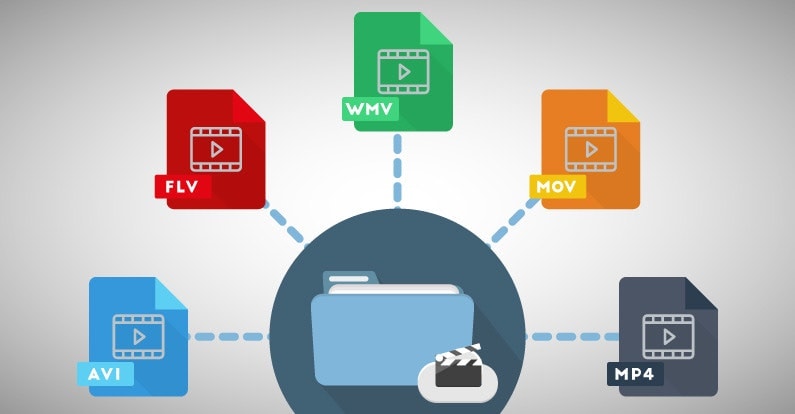
There are many other video formats as well, like MOV, WMV, and FLV. Each one is like a different type of lunch box that can hold different types of food.

What is Compression?

Now, let’s talk about something called compression. This is like when you take a big sandwich and squish it down so it can fit in your lunch box. Video files can be really big, and that can make them hard to share or store. So, compression is a way to make the file smaller without losing too much quality.

Codecs

Compression is done using something called a codec. A codec is like a special tool that knows how to squish your video file down. Just like you might use a knife to cut your sandwich, a codec can cut your video file down to size.
There are many different codecs, and some are better than others. For example, H.264 is a very popular codec because it can make your video file much smaller without losing too much quality.

Why do Formats Matter?

So, why does all of this matter? Well, different devices and websites can only play certain types of video formats. It’s like how some lunch boxes can only fit certain types of food.
If you have a video file in the wrong format, you might not be able to play it on your device or share it with your friends. That’s why it’s important to know what format your video is in, and to convert it to a different format if you need to.

Conclusion

So, that’s video formats in a nutshell! Remember, a video format is like a lunch box that holds your video file. Compression is like squishing your sandwich down so it fits in the lunch box, and codecs are like special tools that do the squishing.
It’s important to know what format your video file is in, and to convert it to a different format if you need to. And if you want to make your videos louder, you can try using a tool like mp4gain to boost the volume.

The History of Video Formats

Video formats have a long and fascinating history, dating back to the early days of video recording. Over the years, video formats have evolved and improved, becoming smaller, more efficient, and more versatile. In this section, we’ll take a closer look at the history of video formats, from the early days of analog recording to the latest digital formats.

Early Analog Formats

The first video recording devices used large, bulky tapes that could only hold a few minutes of footage. These analog tapes were cumbersome and difficult to work with, but they were the only option available at the time.
In the 1970s, the VHS format was introduced, which became the standard for home video recordings. Betamax tapes were also popular in Japan, but VHS ultimately won out due to its longer recording time and lower cost.

Digital Video Emerges

In the 1990s, digital video formats started to emerge, offering a more efficient and versatile way to record and store video. The first digital video format was called DV, which used small cassettes that could hold up to 60 minutes of footage.
Other digital formats soon followed, including MiniDV, Digital8, and HDV. These formats offered higher quality and greater flexibility than analog tapes, but they still had limitations when it came to sharing and distributing video content.

The Rise of Online Video

As the internet became more popular, new video formats were developed to make it easier to share videos online. In the early 2000s, the Flash Video format was introduced by Adobe, which made it possible to play videos on websites.
Other formats soon followed, including Windows Media Video (WMV), QuickTime, and RealVideo. However, these formats were often proprietary and could only be played on certain devices or platforms.

The Modern Era of Video Formats

Today, there are many different video formats available, each with its own advantages and disadvantages. MP4 has become one of the most popular formats, thanks to its versatility and ability to be played on many different devices.
Other popular formats include AVI, MOV, and WMV. There are also specialized formats for different types of video content, such as H.264 for high-definition video and HEVC for 4K and 8K content.

The Future of Video Formats

As technology continues to evolve, we can expect to see even more advanced video formats in the future, making it easier than ever to capture, share, and enjoy high-quality video content. Some of the emerging technologies in video formats include:
360-degree video formats, which allow viewers to experience video content in a fully immersive way
High Dynamic Range (HDR) formats, which offer a wider range of colors and contrast for more realistic and vibrant video
Virtual Reality (VR) formats, which allow viewers to experience video content in a completely immersive and interactive way
In conclusion, video formats have come a long way over the years, from the early days of analog recording to the latest digital and online formats. As technology continues to evolve, we can expect to see even more exciting developments in video formats, making it easier and more enjoyable than ever to capture and share high-quality video content.

Digital Video File Formats: Understanding Video Formats and Their Differences

Digital Video File Formats: Understanding Video Formats and Their Differences

Video formats
Video formats

When it comes to digital video, there are many different file formats to choose from. Each format has its own unique characteristics and is optimized for specific uses. Understanding the differences between these formats is important if you want to get the most out of your digital video content. In this article, we’ll take a closer look at digital video file formats and explore the top related keyword: digital video file formats.

Video Formats
Video Formats

What Are Digital Video File Formats?

Digital video file formats are a way of encoding and storing video data on a digital medium, such as a hard drive or flash drive. These file formats determine how the video is compressed, encoded, and played back. There are many different digital video file formats available, each with their own unique characteristics.

Why Are Video Formats Important?

Video formats are important because they determine how the video is encoded and compressed. This can affect the quality of the video, the file size, and the compatibility with different devices and software. Choosing the right video format is essential for creating high-quality video content that is optimized for your specific needs.

Popular Digital Video File Formats

There are many different digital video file formats to choose from, but some of the most popular ones include:

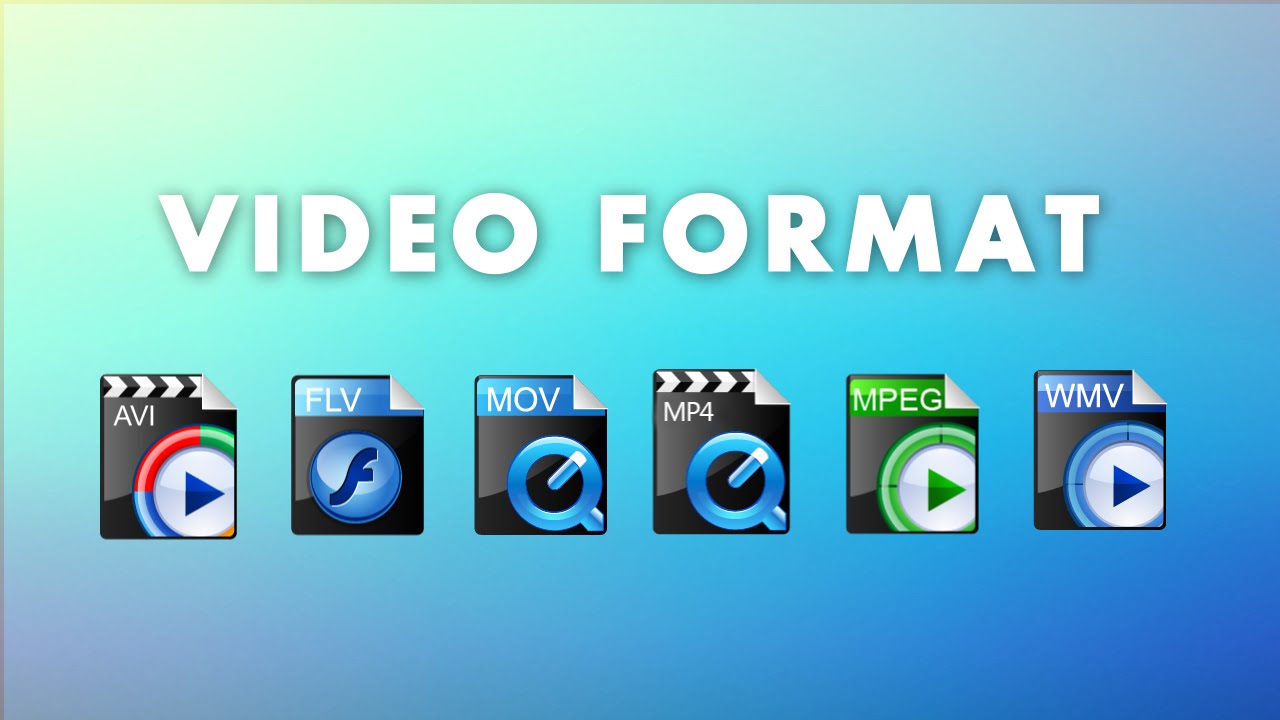
  • MP4: A highly versatile format that is compatible with most devices and software. It is a widely used format for web streaming and mobile devices.
  • AVI: A widely used format that is compatible with most devices and software. It is a popular format for video editing and video production.
  • WMV: A format developed by Microsoft that is optimized for Windows operating systems. It is a popular format for web streaming and video production.
  • MPEG: A format developed by the Motion Picture Experts Group that is optimized for high-quality video. It is a popular format for DVD and Blu-ray discs.

How to Choose the Right Video Format

Choosing the right video format depends on your specific needs. Some factors to consider when choosing a video format include:

  • Compatibility: Make sure the video format you choose is compatible with the devices and software you plan to use.
  • Quality: Choose a video format that delivers the quality you need for your specific application.
  • File Size: Consider the file size of the video format you choose, especially if you plan to share or distribute the video online.
  • Encoding Time: The time it takes to encode the video can be an important factor, especially for time-sensitive projects.

Conclusion

Digital video file formats are an important consideration when creating, editing, and sharing digital video content. Understanding the differences between the most popular digital video file formats is essential if you want to create high-quality video content that is optimized for your specific needs. In conclusion, if you want the best solution for your digital video file formats, we recommend using Mp4Gain. It is a powerful tool that can optimize your video files for maximum quality and compatibility.

How many types of video format do you know?

How many types of video format do you know?

If you are one of those who normally work with video files, you will have noticed that there are multiple formats of it. How many video formats do you know? Sure you are familiar names like MP4, H264, MOV, FLV, SWF … But let’s go by parts.

The first thing to note is that although they are different formats, they all have in common that they are made up of three elements or components:

The video and its corresponding codec. The latter is necessary for encoding and decoding the file, which allows tablets to compress the file. In this way, the weight of this is reduced.

The audio, that is sound. This will also have different formats: MP3, AIFF (barely without compression, which makes them very heavy), AAC (Advanced Audio Coding, usually used in Surround or surround sounds), Windows Media Audio (Windows format).

AVI is one of the first formats that was used. It was designed by Microsoft and still has a great presence.

ASF and WMV are another type of format that has the advantage of storing data on the acquisition of digital records.

MOV is a format developed by Apple for QuicTime. The MOV is usually seen in videos recorded by digital cameras or video cameras.

FLV (Flash Video) is the one developed by Flash and is more web-oriented.

MKV Surely on the Internet when you have gone to watch a series or movie you have found this format. It is a multimedia container that supports any type of content (movies, 3D animation, video games …). This is played on computers and televisions that have multimedia equipment.

MP4 or H.264 is the most widely used today, especially for its versatility. It can be seen both on mobile devices and on the computer. In addition, it allows you to encode the video in any type of resolution. And, especially if you are going to work with a video that has to work on different media, this is undoubtedly your H.264 format.

It is in this last format that we advise you to export your video projects. So you will not have any problem when viewing them.