Digital Video File Formats: Understanding Video Formats and Their Differences


Free Download Mp4Gain
picture

Digital Video File Formats: Understanding Video Formats and Their Differences

Video formats
Video formats

When it comes to digital video, there are many different file formats to choose from. Each format has its own unique characteristics and is optimized for specific uses. Understanding the differences between these formats is important if you want to get the most out of your digital video content. In this article, we’ll take a closer look at digital video file formats and explore the top related keyword: digital video file formats.
Video Formats
Video Formats

What Are Digital Video File Formats?

Digital video file formats are a way of encoding and storing video data on a digital medium, such as a hard drive or flash drive. These file formats determine how the video is compressed, encoded, and played back. There are many different digital video file formats available, each with their own unique characteristics.

Why Are Video Formats Important?

Video formats are important because they determine how the video is encoded and compressed. This can affect the quality of the video, the file size, and the compatibility with different devices and software. Choosing the right video format is essential for creating high-quality video content that is optimized for your specific needs.

Popular Digital Video File Formats

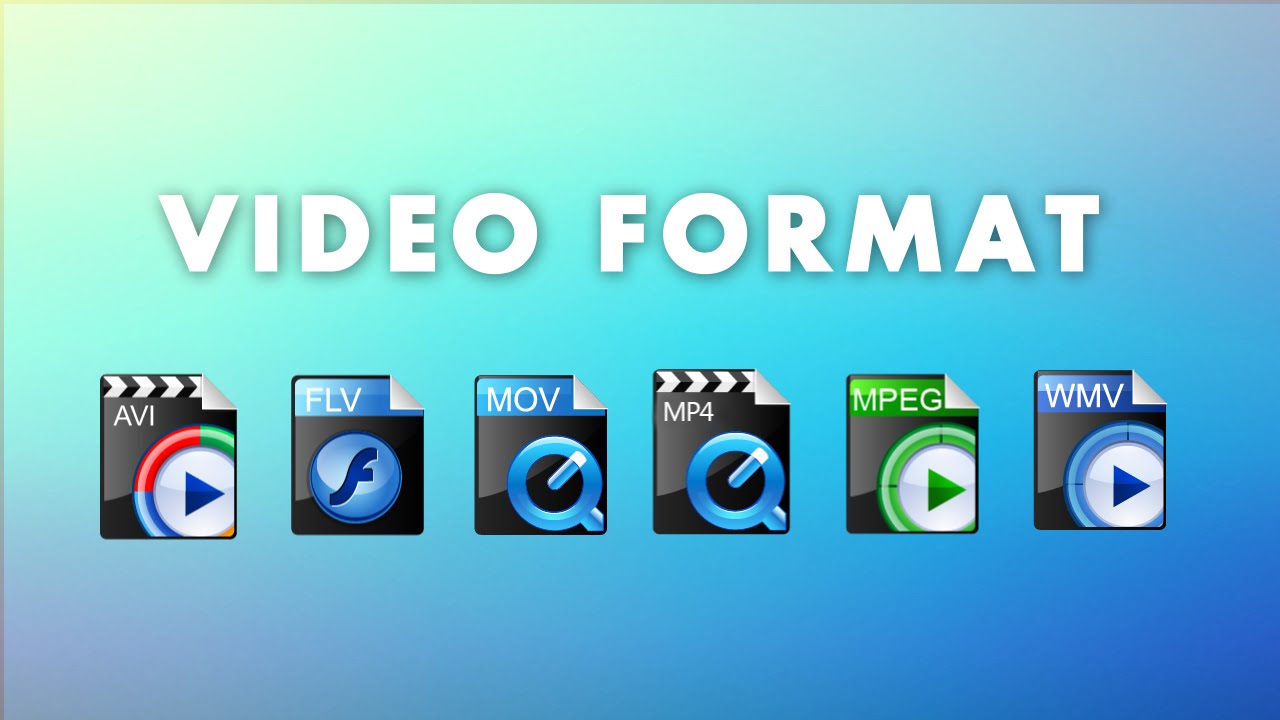
There are many different digital video file formats to choose from, but some of the most popular ones include:

  • MP4: A highly versatile format that is compatible with most devices and software. It is a widely used format for web streaming and mobile devices.
  • AVI: A widely used format that is compatible with most devices and software. It is a popular format for video editing and video production.
  • WMV: A format developed by Microsoft that is optimized for Windows operating systems. It is a popular format for web streaming and video production.
  • MPEG: A format developed by the Motion Picture Experts Group that is optimized for high-quality video. It is a popular format for DVD and Blu-ray discs.

How to Choose the Right Video Format

Choosing the right video format depends on your specific needs. Some factors to consider when choosing a video format include:

  • Compatibility: Make sure the video format you choose is compatible with the devices and software you plan to use.
  • Quality: Choose a video format that delivers the quality you need for your specific application.
  • File Size: Consider the file size of the video format you choose, especially if you plan to share or distribute the video online.
  • Encoding Time: The time it takes to encode the video can be an important factor, especially for time-sensitive projects.

Conclusion

Digital video file formats are an important consideration when creating, editing, and sharing digital video content. Understanding the differences between the most popular digital video file formats is essential if you want to create high-quality video content that is optimized for your specific needs. In conclusion, if you want the best solution for your digital video file formats, we recommend using Mp4Gain. It is a powerful tool that can optimize your video files for maximum quality and compatibility.


Free Download Mp4Gain
picture


Mp4Gain Main Window
picture


Mp4Gain Features
picture


Free Download Mp4Gain
picture

Files without compression, lossless and lossy formats

Files without compression, with compression but without loss and with compression and with loss … what does that mean?

There is currently a huge confusion in most people about audio formats and that is why we are going to give an explanation that is as simple and clear as possible so that most of the people who read can understand enough to be able to make decisions about it. .

We will not try to get into technicalities or knowledge What are for specialists or connoisseurs or programmers, such as those who developed the mp4gain, but rather we will talk about general concepts at the beginner level but that can allow a correct understanding of the matter.

So the first thing we must understand is that the quality of an audio file depends on the amount of details it contains and for it to contain many details, it takes up a lot of space on the hard disk.

We could say that there are three groups of audio file formats:

– audio formats that do not have compression such as WAV, AIFF, etc.

– formats that compress audio but do not have a loss of information. FLAC, MPEG-4 SSL, WAV PACK, etc.

– There are also the formats that the audio compresses but that do have a loss of information, for example MP3, Ogg, HERE, ETCÉTERA

Now let’s clarify what it means that some formats do have compression but do not have loss of information while others also have compression but do have loss of information.

The formats that are compressed but have no loss of information what they do is something very similar to zip the file. In other words, they simply compress.

The original information but they do not discard anything, therefore when unzipping the file the original file is obtained again that had all the details and therefore is of very high quality.

On the other hand there are files such as MP3 that are compressed but also to achieve greater compression what they do is that they get rid of some part of the information. For example, those frequencies that are not audible to the human ear also get rid of that information that is redundant and they also use the method called masking which part of the idea that a sound that is very loud and is very forward It will be able to mask other sounds and the human brain will not perceive those other sounds. Therefore, according to this theory, they can get rid of these sounds that have been masked and the file will sound more or less the same to the human ear.

This concept of sound masking was one of the great milestones that made MP3 become so popular because it could compress files a lot, at a time when disk space was not superfluous, and yet they sounded pretty good to that ear. era and those people.

Also the programs that made the normalization of the audio volume, achieved results that at that time sounded good, but at this time the listening ear as a has become much more demanding and sophisticated. And so we need much more modern normalizers with much more algorithms. more powerful like mp4gain.

Guide to fully understand lossless formats

They end with a period followed by three or four letters. It is what happens with absolutely all the files of a computer or a smartphone. These last letters represent the format in which said file is. Today we are going to focus on one type of format, the lossless format.

loseless formats

What is a lossless format?

Any element in a computer has to have some kind of format, or so to speak, some kind of structure that is known by that computer so that it can work with the file. In a parallel with the world of physical objects, the format would be something like the material with which the object is constructed.

Just as there are different materials with different properties, there are also different formats with different characteristics. Most of the files we use today have a compressed format, so they take up less space on our computer and are easier to send via the Internet, or upload to a social network. However, these formats are not the highest quality, since this position would be occupied by lossless formats. These formats retain the original quality of the file, and are the ones that offer the best results.

If we talk about images, the lossless formats are RAW, BMP and PNG, among others. Meanwhile, the compressed formats are JPG and GIF. However, there are certain differences with some of them. RAW, for example, stores all the light data captured by the camera’s sensor. It is a perfect format for photographers. But it would not even be for photographers who want to share a particular photograph on a social network. A RAW photo can easily occupy 25 MB, depending on the resolution of the camera. A high quality JPG photo would be a photograph that would occupy two or three megabytes, although it would have less quality.

loseless codecs

If we talk about audio, there are three main formats without loss: WAV, FLAC and ALAC. The latter is the one used by Apple in iTunes. They are formats that do not lose any quality with respect to the original audio. Yes we would be losing quality with MP3 and OGG.

And if we talk about video, there are few lossless formats that we can talk about. In fact, there is a problem, and storing videos without loss would be an impossible task for anyone who did not have a storage server nearby. That is why we usually opt for the MKV, WMV, and H.264 formats. Of course, the latter is much better, because the compression process is much more intelligent.

Compression, how does it work?

Now, what is this about compressed formats? As the name implies, we are talking about formats that reduce files, and we can rely on it to perfectly understand how these formats work. Surely we have all seen ourselves in the situation of having to pack a suitcase with just the right space, finish choosing all the clothes we are going to take on a trip, and finally have to decide what we can do without being able to close the suitcase, because we had too many clothes. For that is the compression of each of the formats. They remove items from that file, and thus make them weigh or occupy less.

Why are there different formats? Returning to the case of the suitcase, each person will make different decisions regarding those things that he can do without for his trip. It will vary from one person to another. The same goes for formats. The developers of these reduce the space occupied by a file, but each of the formats deletes data in a different way, so that a file compressed to JPG, can be different from one GIF, even if the two are compressed. Each of them has followed a different procedure to delete the data, and that the song, image, or video, continue to play almost the same as the original version.

When to convert from compression to lossless?

The question that heads this paragraph is especially important for all those who at some point have converted a file from a compressed format to a lossless format. And, in fact, it goes with a trap, because you should never convert a file from a compressed format to a file without loss. In reality, nothing happens if we do, but we will not improve the quality of that file, although it will now be available in a format in which the files are not compressed.

Of course, it is also not a good idea to convert a file into a compressed format, to a different compressed format. Let’s keep in mind that each compression process is different depending on the format chosen. That is, each format eliminates the data it deems appropriate to maintain image quality. If we have a file in a compressed format, that will mean that it no longer retains all data.