Digital Video File Formats: Understanding Video Formats and Their Differences


Free Download Mp4Gain
picture

Digital Video File Formats: Understanding Video Formats and Their Differences

Video formats
Video formats

When it comes to digital video, there are many different file formats to choose from. Each format has its own unique characteristics and is optimized for specific uses. Understanding the differences between these formats is important if you want to get the most out of your digital video content. In this article, we’ll take a closer look at digital video file formats and explore the top related keyword: digital video file formats.
Video Formats
Video Formats

What Are Digital Video File Formats?

Digital video file formats are a way of encoding and storing video data on a digital medium, such as a hard drive or flash drive. These file formats determine how the video is compressed, encoded, and played back. There are many different digital video file formats available, each with their own unique characteristics.

Why Are Video Formats Important?

Video formats are important because they determine how the video is encoded and compressed. This can affect the quality of the video, the file size, and the compatibility with different devices and software. Choosing the right video format is essential for creating high-quality video content that is optimized for your specific needs.

Popular Digital Video File Formats

There are many different digital video file formats to choose from, but some of the most popular ones include:

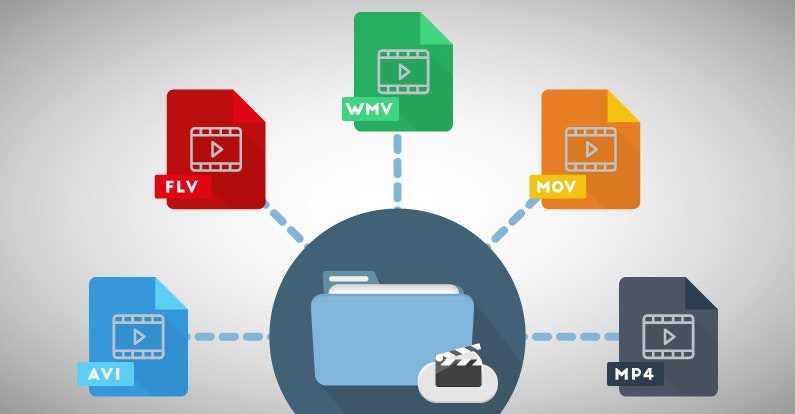
  • MP4: A highly versatile format that is compatible with most devices and software. It is a widely used format for web streaming and mobile devices.
  • AVI: A widely used format that is compatible with most devices and software. It is a popular format for video editing and video production.
  • WMV: A format developed by Microsoft that is optimized for Windows operating systems. It is a popular format for web streaming and video production.
  • MPEG: A format developed by the Motion Picture Experts Group that is optimized for high-quality video. It is a popular format for DVD and Blu-ray discs.

How to Choose the Right Video Format

Choosing the right video format depends on your specific needs. Some factors to consider when choosing a video format include:

  • Compatibility: Make sure the video format you choose is compatible with the devices and software you plan to use.
  • Quality: Choose a video format that delivers the quality you need for your specific application.
  • File Size: Consider the file size of the video format you choose, especially if you plan to share or distribute the video online.
  • Encoding Time: The time it takes to encode the video can be an important factor, especially for time-sensitive projects.

Conclusion

Digital video file formats are an important consideration when creating, editing, and sharing digital video content. Understanding the differences between the most popular digital video file formats is essential if you want to create high-quality video content that is optimized for your specific needs. In conclusion, if you want the best solution for your digital video file formats, we recommend using Mp4Gain. It is a powerful tool that can optimize your video files for maximum quality and compatibility.


Free Download Mp4Gain
picture


Mp4Gain Main Window
picture


Mp4Gain Features
picture


Free Download Mp4Gain
picture

Video file formats / formats Part 3

Video file formats / formats Part 3

Video File Formats

Incidentally, the existence of some half-finished frame rates is due to technical restrictions in the transition of television transmission from black and white to color.

Video Formats

In fact, for applications other than broadcasting, 30 fps and 60 fps are often used.

On some platforms, the upper limit of the frame rate of the videos that can be sent can be set to 30 fps, but higher frame rates are still progressing, such as the video recording function of smartphones and YouTube that supports 60 fps. Super Hi-Vision, which is being developed as a next-generation streaming standard, has an even higher value of 120 fps.

1-5. Field order (drawing method)
There are two main types of video drawing methods, “progressive” and “interlaced”.

The drawing method is often expressed as a set with the vertical size of the resolution or the frame rate (or the number of fields). For example, 1280 x 720 progressive is “720p”, 1920 x 1080 interlaced is “1080i”, 24fps progressive is expressed as “24p”, 60-field interlaced is expressed as “60i”, and so on.

The video is made up of a collection of many points, and the points are divided into a block of horizontal lines (this is called a scan line) and displayed according to the drawing method. There is a difference in how this scan line is displayed between progressive and interlaced.

Field order
Currently, most of the media like YouTube recommend the progressive format, so it is good to remember that you basically use the progressive format for WEB videos.

Therefore, in progressive, the scan line of an image is twice as large as that of interlaced, so that the moving image becomes clearer. In interlaced, the moving image is less sharp, but the moving image is smoother with less data. .Can be displayed in.

1-6. Bit rate
Bit rate is a unit that is also used in communication lines, etc., but in video, it is a value that indicates how many bits per second are used to represent video data and audio data, and the rate value of bits is ◯ bps., ◯ b / s, or ◯ bit / s.

If the bit rate value is large, the amount of data packed per second will be large, so the video and audio quality will naturally improve. On the other hand, if the bit rate value is small, the video and audio quality will be reduced, but the video capacity will be reduced.

The higher the resolution of the video, the more noticeable the detailed drawing will be, so higher resolution videos will require a higher bit rate.

Also, there are two main types of bit rates: constant bit rate (CBR) and variable bit rate (VBR). Constant bit rate (CBR) refers to a compression method with a constant bit rate and variable bit rate (VBR) refers to a compression method with a variable bit rate.

Since CBR always has a constant bit rate, it has the advantage that it is easy to predict the size of the video in advance, and it has the disadvantage of using many bit rates. On the other hand, VBR adjusts the bit rate according to the scene, so it can improve the image quality by file size, but it has the disadvantage that the file size cannot be predicted. Variable Bit Rate (VBR) is recommended for YouTube.

Also, in the VBR (file compression / encoding) encoding method, “1-pass encoding” is used to encode the content of the file without parsing, and an appropriate bit rate is assigned after analyzing the data before encoding. . There is something called “2 -pass encoding” for encoding. With 2-pass encoding, analysis is done in advance, so encoding takes more time, but can produce high-quality video.

Bit rate

2. Recommended format for each platform
With that in mind, let’s take a look at an overview of the recommended formats for each video platform.
* See official help for the latest and most detailed information.

2-1. Youtube
YouTube supports a wide range of file formats, but the help page has recommended encoding settings, so it’s a good idea to check that out.

Recommended encoding settings for uploaded videos – YouTube Help

2-2. Facebook / Instagram
Facebook also supports a wide range of file formats. AAC of 1080p or less is recommended for video and 128 kbps or more for MP4 audio. Consider the aspect ratio, such as screen occupancy.

Video file formats / formats Part 2

Video file formats / formats Part 2

VIDEO FORMAT

Files that are handled on a personal computer have an extension so you can see what kind of data they are.

Video Formats


For notepad it is “.txt”, for Excel it is “.xls” or “.xlsx” and for images it is “.jpg” or “.png”.

Video files have the same extensions, such as “.mp4”, “.mov”, “.avi” and “.mpg”.

For example, there are more than 10 types of video keys (= codecs) that correspond to the extension “.mov”. In other words, the extension in the video is just a guide to predict the content and keys.

Although it can be identified that it is a video file by looking at those extensions, the extension and the video file, and the video file and the key (= codec) are not one by one, so the extension is just a guide. . to show your identity Always makes it difficult to handle video files.

The main video files, extensions and codecs are summarized below. If you only know the extension and want to check the codec, you should use a software called codec checker like “MediaInfo” or “Vacuum Wave Lab SuperLite”.

Most of the major video players these days, like Windows Media Player for Windows and QuickTime Player for Mac, have a built-in key (= codec), and most of them can play videos with that software. However, keep in mind that some of them are not supported. You need to get that codec or get a player that includes that codec.

Video file format explanation Main extensions Main codecs
MP4 has a high compression rate and is very convenient, but it is difficult to determine the content because there are many codecs. The recommended format for YouTube is H264 mp4 format. .mp4 .m4v (Video) MPEG1 MPEG2 MPEG4 H.263 H.264 H.265 H.264 / AVC WMP9 (Audio) AAC-LC AC-3 MP3 HE-AAC VQ Apple Lossless
MOV A standard file for working with videos on Mac. It is based on MP4 and can also use the MPEG-4 video codec. .mov .qt (Video) MPEG-4 H.264 Motion JPEG (Audio) AAC MP3
MPEG-2 PS It is used as the recording format for DVD and the like. A standard based on the assumption that bit errors are small, created on the premise of storage media. .mpg .mpeg .mpe .m2p (Video) MPEG-1 MPEG-2 (Audio) MPEG1 Layer-II MPEG2 Layer-II LPCM AC-3
MPEG-2 TS The format used by many digital transmission standards around the world. Used in HDTV and Blu-ray recorders .mpg .mpeg .mp2 .m2p .m2t .mpt .m2ts .mts .ts .vob (Video) MPEG1 MPEG2 MPEG4 H.264 / AVC (Audio) MPEG1 Layer- II MPEG2 Layer-II MPEG4 AAC-LC LPCM AC-3 MP3
AVI Please note that the old format cannot be played if the file is incomplete and there are restrictions such as a maximum capacity limit of 2GB. There are a lot of codecs here too. .avi .divx (Video) MPEG1 MPEG2 MPEG4 Motion JPEG DivX 3-5 XviD (Audio) MPEG1 Layer-III MPEG2 Layer-III PCM AC-3
1-4. Frame rate
The frame rate is a value that indicates how many image frames (frames) are recorded per second, just like character reading, and the frame rate value is ◯ fps or ◯ f / s. I will describe it. In other words, if 30 images (frames) are recorded per second, the value will be 30 fps or 30 f / s.

The higher the frame rate value, the smoother the video will move, and the lower the frame rate value, the more choppy the video will be. In other words, the frame rate can be reformulated as a value that represents the smoothness of the moving image display.

The video on the right reproduces the difference in video depending on the frame rate.

The higher the frame rate, the better. A video with a large frame rate value will have a large number of recorded images, and of course the amount of data will also be large. In addition, there are limits on the human eye, the side of the screen that projects it, and the technical specifications on the middle side, so it is necessary to set it to a suitable value.

Typical frame rates currently used are 24 fps, which is used for filming and animation, 29.97 fps, which is used for television broadcasts in Japan, and recent consumer cameras. There are 59.94 fps conventional, etc. Furthermore, there are also 25fps mainly for Europe.

Video file formats / formats

Video file formats / formats

Video Formats

What you want to know before making a video

Video Formats

Just as images have resolutions and file formats, there are some fixed formats and specifications for videos. Naturally, moving images, moving images, have more elements to define in the specifications, and the mechanism is complicated.
In fact, people in charge of marketing and promotion, advertising agencies, etc., can often feel disgusted by observing the presentation rules of each company.
This time, to dispel the weaknesses of those people, I would like to present a few main points that need to be understood in the video specs and the optimal video specs on major platforms like YouTube and Facebook.

1. Six Points Defining Video Specifications
Now, I would like to explain the six main points in the video specs.

1-1. Resolution
Like still images, videos have resolution. Image resolution refers to “size” and “pixel density”, but for moving images, resolution refers to “horizontal x vertical pixel count”.

The resolutions of familiar things are 720 x 480 SD image quality for DVD, 1920 x 1080 full HD for Blu-ray and 1440 x 1080 for digital terrestrial broadcast (* The reason why the aspect ratio is different from other will describe later).

Typical resolutions include
Full HD (1920 x 1080) / HD (1280 x 720) / SD (720 x 480) / 4K UHD (3840 x 2160)
.

Video resolution
Cameras like the iPhone X support 4K video recording and major streaming services like Netflix and Amazon Prime Video support 4K distribution.

Recently, with the expansion of smartphones and the rise of vertical signage, videos with long vertical resolutions and square videos like Instagram have also appeared.

Some people have said that “Full HD resolution is enough”, but the screen has gotten bigger, the price of 4K TVs has dropped, the drawing power of the smartphone screen has improved, and 4K / 8K has been improved. it has been generalized mainly by the Ministry of the Interior. Issues and Communications: As various efforts are made in this regard, it is expected that further progress will be made on a higher resolution.

1-2. Pixel aspect ratio
The pixel aspect ratio, also called the pixel ratio, represents the ratio of the width to the height of the pixels that make up the video data, and you can set the expansion / contraction ratio of the video during playback. Be careful as it is easy to confuse with the old resolution (aspect ratio of the video itself).

In digital terrestrial broadcasting, due to the compatibility with the conventional SD format and the amount of data, data with a resolution of 1440 x 1080 (4: 3) and a pixel aspect ratio of 4: 3 is distributed and stretched on the side of the TV. When doing so, the appearance is 16: 9, but it’s okay if you think you are basically using square pixels (1: 1) in WEB video.

1-3. File format (container), codec
To understand the file format of a video, you need to understand what is called a “codec.”

Audio and video data are stored in a “video file”.
In addition, data is compressed and encoded (also called encoding) using a “codec” so that it can be processed more efficiently and more easily by personal computer software.

In other words, when a video is played, it cannot be played unless the data is decompressed using the same “codec” as the “codec” used when compressing.

Note that the codec cannot be identified by the file extension alone. When making a request to a production company, be sure to also specify the codec.

To make it easier to understand, we will use “codec” as “key” and “video / audio data” as “treasure box”.

There are two treasure chests in the video archive, each locked with a different key. That is, to open the treasure chest and play the video, the key (= codec) corresponding to each treasure chest is required.

If you lock with “Key A” when generating video data and “Key B” when generating audio data, the video will play normally if you don’t have “Key A” and “Key B” in your hand. You can’t do it and if you only have “Key A”, you won’t be able to play the audio.

What is the best video and movie quality? Part 5

What is the best video and movie quality? Part 5

Video Formats

What is the best video format?

video file formats

There are many different video file formats that allow you to store compressed video and audio information in a single file. Many people used to call the extension of the video file itself a video format, but in reality this extension is just a container in which videos of various formats can be stored. Some users may have faced such a situation that the downloaded video file with the familiar and familiar AVI extension did not want to be played on the computer, because a suitable codec was not found for playing.

Most of the video files distributed on the Internet are now created using the two most common containers, AVI and MKV. AVI container has been used for a long time and many different programs have been written to edit such video files, but with MKV things were quite different for a long time and users did not know how to cut an mkv file.

To play or create each video format, an appropriate codec must be installed on your computer. The most popular codecs can be counted on one hand, and we will consider some of their features below.

The XviD codec of the MPEG4 standard provides high definition images for dynamic scenes. It is distributed completely free of charge and is widely used by amateur video masters to encode any video.

DivX is still one of the most popular codecs and is compatible with all DVD players. By encoding, you get high-quality video with a high level of data compression, allowing you to get small video files. At the moment, the DivX codec is paid when used for encoding.

The H.264 codec has become very popular in recent years due to its higher compression efficiency. When encoding, a very high degree of image compression is obtained with no loss of quality. It has proven itself very well when it comes to encoding HD quality videos.

The MPEG2 codec is used to create DVD video discs and digital television.

What is the best video and movie quality? Part 4

What is the best video and movVideo File Formatsie quality? Part 4


Best quality video formats. Video resolution:
Mobile is a video created for mobile devices; Typically, the resolution is between 320 × 240 and 640 × 480 pixels.

Video Format

Standard Definition (SD): video standard

What is the best video format?

It is no secret that recently there have been very popular sites that distribute free files of movies, music, books, programs and much more. But how not to get confused with all the variety of distributions offered? What video format should you choose? Let’s deal with this. So:

What is the best video format?
One of the most common and good video formats is the avi format. It is small in size and does not lose much in image quality. But there is also an alternative to this format, which combines both an acceptable size and a high image resolution. These are files in mkv format.

And finally, I would like to point out that the highest video quality you can see on a computer is BluRay video. Versions of such files are generally scanned from BD discs. This format is so realistic and deep that it competes with analog tape in the cinema.

Surely, many have heard a term like “codecs”. This is a program that converts diverse information into digital. The essence of the program is that the codecs form a conditional folder for storing data, thanks to this process, the information becomes more convenient for storage. At the same time, the folder structure does not change, only the data transfer method changes.

Today, the most common codecs for saving videos are:

If you want to create your own video or movie presentation, you must decide which video codec to use. Let’s take a closer look at each of them.

XviD. A codec that supports the popular MPEG4 standard. If your movie’s plot contains a lot of movement, choose this particular codec. Dynamic scenes will be clear.

DivX. This codec is perhaps the most popular. If you convert folders with this codec, the video quality will be of the highest definition. Also, the video can be played on any DVD player due to the small size of the saved files.
H.264. This codec will require a separate installation on your computer. But it is difficult to dispute the effectiveness of his work. The quality is still excellent despite the higher compression ratio of the folders.
MPEG4. The most popular video standard. It is widely used in digital television. The standard allows high-speed transmission of any amount of information. This codec is also used to record DVD discs.
These are the characteristics of different types of codecs. Now you must decide what you want to create. For example, let’s say you decided to create a video presentation. To understand which video format to choose in this case, you need to answer the question: where will you broadcast your presentation? If you are going to publish the created video on some special video portal, then a codec like H.264 will suffice, because it allows you to maintain high quality, while significantly compressing the data.

What is the best video and movie quality? Part 3

What is the best video and movie quality? Part 3

video formats

To encode video, the best video formats MPEG-2, MPEG-4, H.264 or AVC (video compression standards (codecs) designed to achieve a high degree of video compression while maintaining high quality are currently used ).

Video Formats

Transmission of the HDTV video signal over a short distance (from the user’s tuner (receiver) to the monitor (TV)) is carried out in its original form (uncompressed) via HDMI and DVI-D digital cables. The use of digital interfaces (cables) completely avoids video compression and conversion and preserves the best possible image.

Digital video quality is a measure of signal-to-noise ratio. What is the best video and movie quality, and which can be downloaded from the Internet? Well, first of all, it must be said that the main requirement of Internet formats is compactness. It is clear that the DVD or HDTV format will not work. But almost any video recorded with a mobile phone or digital camera meets the requirements of the Internet. And the question arises, what is the most optimal and best video quality with maximum compression for the convenience of downloading from the Internet, and what are the designations of movie formats?

Better quality HDTV movies are confused by many Internet users with the HDTV-Rip video extraction method. HDTV-Rip is a video copy of a high definition video (movies) streaming source: HDTV. This can be done using a variety of codecs and compression methods. As a result, HDTV-Rip movies may not be of the highest HD quality. Rip video streams from an HDTV channel may come with the channel logo. Also, do not confuse HD video with HDTV high definition video.

What is the best video and movie quality? Part 2

What is the best video and movie quality? Part 2

Video Formats

What is the difference between 1080i and 1080p?

Video File Formats

Each of these video formats uses a different way to convert a series of still images into movies. In interlaced scanning (“i” symbol), a still image or “frame” is reproduced by scanning 2 sets of alternating lines or “fields” (half frames). With progressive scan (“p” symbol), a frame is created in a single pass (sweep). That is, if the image scanning in both video formats (“i” and “p”) is performed at the same speed, then an equal number of runs per second occurs, then the advantage of progressive scan (“p”) becomes obvious (image quality is better) as the entire image (frame) is scanned and not half of the image (field). This progressive (“p”) scan generates fewer dots and lines, but doubles the speed.

Bottom line: 1080i and 1080p video formats look best in different conditions. The 1080i video format is designed to reproduce fine image details with little movement or in frames and still images. This video format is much better suited for “spatial resolution”. The 1080i video format works fine as long as there is no frame movement. When objects begin to move, the path of movement between alternating fields (half frames) begins to change. This is called “motion artifacts,” that is, visible image noise or video distortion that resembles an uneven pattern. 1080i video quality is considered outdated.

1080p video quality takes priority in motion. It does not introduce visible distortions in the image, regardless of the speed of moving objects, so it has the best “temporal resolution”. However, still images will not look very clear when the image is frozen, because there are far fewer dots and lines in 1080p video compared to 1080i.

Long-distance transmission of HDTV video signal (satellite TV – S2, cable TV) is generally done using compression methods to reduce bandwidth requirements for data transmission (from 1.485 Gbps to 8-25 Mbps ), while the video quality is still good.

What is the best video and movie quality?

What is the best video and movie quality?

Video Formats

What video formats are there?

Video formats

Video (video – watch, watch) is the transformation of an image by a recording device into a sequence of electrical signals recorded in storage (storage).

In addition, video is a great variety of technologies for recording, processing, transferring, storing and reproducing visual or audiovisual material (cinema, films, video recordings, music, video, etc.). Video differs from film and cinematography only in that it uses any medium other than film for its reproduction and recording, although the modern development of digital technologies in filming and digital cinema projectors eventually blurs the line between the video, movies and cinema. The video format determines the structure of the video file, how the file will be stored on the storage medium (CD, DVD, Blu-ray Disc, flash memory cards, hard drives or communication channels).

The best highest quality video today is HDTV (High Definition Television in English): high definition television, high definition television. HD is a high definition video format, a modern format with a high definition of the image.

The most popular HD video formats are:
1) 720p – 1280 × 720 pixels (dots), progressive scan (progressive scan, all lines of each frame are displayed sequentially), 16: 9 aspect ratio, frequency – 24, 25, 30, 50 or 60 frames per second ;

2) 1080i – 1920 × 1080 pixels, interlaced (each frame is divided into two half frames, consisting of lines selected with a line separating, 2 times the frame rate compared to progressive), 16: 9 aspect ratio , frequency – 50 or 60 fields per second;

3) 1080p – 1920 × 1080 pixels, progressive scan, aspect ratio 16: 9, frequency – 24, 25 or 30 frames per second.

Types of videos

Types of videos

Video Formats

MPEG-1

Video formats

The MPEG-1 video compression format was developed by the Motion Picture Expert Group, an international organization that creates video compression standards. It supports a maximum frame resolution of 4095 x 4095 pixels at a frame rate of up to 60 times per second. However, a resolution of 352 x 288 is generally used, which corresponds to the quality of recording on a normal VHS cassette.

How is the information compressed in this format? Suppose we have the following scene: the car moves from point “A” to point “B”. The movement of the machine can be described by two parameters: the vector of movement from point “A” to point “B” and the angle of rotation around its axis. At the same time, the background remains unchanged or almost unchanged: the viewer is unlikely to pay attention to the vibrations of small branches near distant trees. So you can divide the frame into two components: the background, which is saved once and then replaced during all-frame playback, and the area where the car moves, will have to be recorded separately for each frame.

Digital video: an overview of formats

In MPEG-1 format, all frames in a movie are classified into three types: I, P, and B frames. The first type (I-frames, Intra Frames) includes anchor frames. Your images are saved in their entirety in JPEG format. For the predicted frames, only the differences from the previous i-frame are recorded, which requires much less disk space. For B-frames (bidirectionally interpolated frames), the differences with the previous and next I or P-frames are preserved (Fig. 2).

Digital video: an overview of formats

As a result, the compressed file size is approximately 1/35 of the original. This means that an hour and a half movie with the quality equivalent to an analog VHS cassette in MPEG-1 format will fit on two CDs. For transmission over the Internet or in satellite transmission networks, this standard, of course, is not suitable. But there have been many consumer video CD players that work in this format (and they are still being produced now, by the way).

MPEG-2

MPEG-2 is an additional extension of MPEG-1. The recommended frame size has been increased; it is now 1920 x x 1080 pixels, added support for six channel audio. However, playing video in this format requires more processing power from your computer.

It should be noted that work was underway to create the MPEG-3 standard (not to be confused with the now popular audio compression format: MPEG-1 Audio Layer 3). It was supposed to become the basis for HDTV digital television systems. But the work was interrupted, because the necessary requirements for HDTV were implemented in the form of small extensions of MPEG-2.

This format is now quite widespread in the West: it is used to transmit video through satellite channels and digital cable networks, in addition, all DVD video discs are recorded in this format.

MJPEG

In fact, MJPEG (Motion JPEG) is a transition format from compressing normal photos to compressing videos. Each frame is recorded in JPEG format and then placed in the footage. MJPEG is mainly used in video editing cards like Fast AV Master, MiroVideo DC50, etc. You can reduce the video stream from 30MBps to 6MBps. For use in home video players, this standard is not very suitable due to the low compression ratio (5: 1) and the lack of means to synchronize video and sound.

MPEG-4

The MPEG-1 and MPEG-2 formats did not provide a real possibility to transmit video over the Internet and create interactive television based on them: the file size was too large. To drastically reduce it, as well as implement other functions necessary for video transmission, work has begun on the specifications of a new format: MPEG-4. In fact, it does not focus so much on video compression as on the creation of so-called “multimedia content”: the fusion of interactive television, 3D graphics, text, and so on.

As for the video itself, the most important innovation was the further improvement of technologies for decomposing a scene into objects and algorithms for their effective compression. Thus, for example, when compressing a video recording of a tennis match, most of the frames can be conditionally decomposed into images of the stands (background) and the players.