What does MP3 bitrate mean?


Free Download Mp4Gain
picture

What does MP3 bitrate mean?

MP3 bitrate

Bit rate

mp3 bit rate

The rate at which a digital channel transmits digital signals is called the data transfer rate or bit rate.
The word bitrate has many translations, such as bitrate, etc., which indicates how many bits per second the encoded (compressed) audio data should be represented, and a bit is the smallest binary unit, either 0 or 0. 1. The relationship between bitrate and audio and video compression is simply that the higher the bitrate, the better the quality of the audio and video, but the larger the encoded file; if the bitrate is lower, the situation is reversed.

For example: encode audio and video at 500 Kbps.
where bps are bits 1K = 1010 = 1024
b is little
s is the second
p is for (for)
Therefore, encoding at 500 kbps means that the encoded audio and video data must be represented at 500 K bits per second.
In the baseband transmission system, the bit rate is used to represent the code rate of transmitted information.
The bit rate Rb refers to the unit of time
The number of binary bits transmitted within the unit, the unit is b/s. For example, the transmission speed of a computer serial port is up to 115200b/s.
The symbol rate or baud rate Rs refers to the number of modulation symbols transmitted per unit of time, that is, ternary and ternary
The information transmission rate of the multivariate digital code stream in the

In M-ary modulation, the relationship between the bit rate Rb and the baud rate Rs is:
Rb=Rslog2M
The sampling rate refers to the ratio of the sampling samples to the total number of samples, and the sampling rate refers to the number of samples per unit of time. If it is an instrument, the sampling rate is 40MSa/s, which indicates that the number of samples per second is 40M, but it cannot be represented by 40MHz.

The process of converting analog audio to digital audio is called sampling. In a nutshell, how much data is needed to record a 1 second duration of sound via waveform sampling. A sound with a sample rate of 44 KHz requires 44,000 data points to describe a 1-second sound waveform. In principle, the higher the sample rate, the better the sound quality.


Free Download Mp4Gain
picture


Mp4Gain Main Window
picture


Mp4Gain Features
picture


Free Download Mp4Gain
picture

What is bit rate? Knowledge of the MP3 audio format. Part 2

What is bit rate? Knowledge of the MP3 audio format. Part 2

mp3 bit rate

Bitrate is a benchmark indicator of the efficiency of digital music compression.

mp3 bitrate

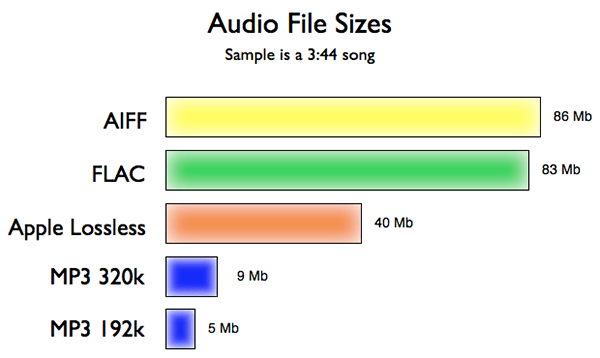
The bit rate represents the number of bits bps (bit per second, bits per second) transmitted per unit of time (1 second). We usually use kbps (in simple terms, it is per second) clock 1000 bits) as the unit. The bit rate of digital music on CD is 1411.2 kbps (ie recording 1 second of CD music requires 1411.2 × 1024 bits of data). The higher the bit rate of the music file, the more data (Bit) must be processed in a unit of time (1 second), and the better the sound quality of the music file. However, when the bit rate is high, the file size increases, which will occupy a large amount of storage capacity. 8 to 320 kbps.

1. WMA (Windows Media Audio, Windows Media Audio)

As a Microsoft media compression method, it is a part of the technology that compresses only audio data in Windows Media Technologies. The sound quality is similar to MP3 and can be compressed with half the technology of MP3. It has the copyrighted Windows Media Rights Manager, which can be played by installing in WMP (Windows Media Player, Windows Media Player). Due to the strong influence of Microsoft and Windows, as well as major copyright reasons, the major American record companies EMI and BMG have officially confirmed that they use the WMA method developed and produced by Microsoft. It is believed that this advanced method will become even more popular in the future.

2. MP3 (CBR, VBR, ABR)

MP3 is currently the most widely used and widely used lossy compressed digital audio format, which has been explained above and will not be repeated here.

CBR (constant bit rate)

CBR is the oldest and simplest MP3 encoding (compression) method. When this method is used for encoding, the bit rate of the entire file is the same, in other words, the bit rate used by the MP3 file per second is the same. Although the music file has sections of varying complexity, the encoder always keeps the bit rate constant, unless you use the highest sound quality, otherwise the sound quality of the different sections of the MP3 file will vary. The more complex the passage, the worse the sound quality. Its biggest advantage is that the file size is fixed, which is convenient for calculating storage space.

What is bit rate? Knowledge of the MP3 audio format.

What is bit rate? Knowledge of the MP3 audio format.

mp3 bit rate

Digital audio formats are audio signals that are recorded, processed, and reproduced in digital form.

Mp3 bit rate

The emergence of digital audio formats is to meet the needs of high-fidelity playback, storage and transmission. Simply put, early analog audio formats had issues with playback distortion and glitches due to media wear. Since the advent of CD discs, audio files in digital format have become popular, but another problem has arisen: the limitation of storage volume and the phenomenon of CD disc wear is still present. Saving to a hard drive (in connection with longer storage time) is also not a good solution when storage media (mainly hard drives) are still expensive at the time. The rise of the Internet has created a requirement for long-distance file transmission. Under the restriction of bandwidth, the demand to reduce file size has become more intense. All this has led to the generation of lossy compressed digital audio formats from external factors!

In terms of internal factors, with the improvement of computing and coding capabilities, the progress of various acoustic psychological models has promoted the emergence of various lossy compressed digital audio formats. Some of the most commonly used audio formats in MP3 players are briefly introduced below: MP3 (CBR, VBR, ABR), WMA, WAV, ADPCM, and the emerging audio formats AAC, ASF, and OGG.

Before introducing various digital audio formats, let’s clarify one concept: bitrate.

In the field of computing, all information is digitized. Bit is the smallest unit of data in a computer, it refers to a number of 0 or 1, which is a mathematical binary number, a “0” or “1” , is a bit. For example, when we say a 2-digit number, it means that it is a two-digit binary number, and there are 4 combinations of “00”, “01”, “10” and “11”, which represent 0, “11” in decimal respectively. 1, 2 and 3 are four numbers.

Bitrate or Kilobytes per second (kbps)


What corresponds to talk now is about the quality of these paintings. Let’s take a frame and see its quality and weight in kb … This is called bitrate or kbps which means KiloBytes per Second or Kilobytes per second, and is the measure used to determine the image quality, the higher the bitrate, the image quality will be better, but the weight of the file will be greater too. There are standards and limits for bitrate, this for the MPEG format. For a DVD, which is an MPEG2 video format, the limitation is more than 1500 and less than 8000 kbps, for VCD it is exactly 1150 kbps, and for example a MiniDV tape of a handycam uses a bitrate of over 30000, this is a lot of quality and when you go to hard disk you see the large file size. For the other formats it depends on the codec and its configuration, being able to compare in quality an MPEG2 format with 3000 kbps with an AVI with Xvid codec at 1500 kbps, this difference is given by the way in which the video is compressed, the Xvid codec It does better than the MPEG2 format.

Now, bitrate can be constant throughout the video or it can be adjusted to changing needs, this is Constant Bitrate (CBR) and Variable Bitrate (VBR), when we use Constant Bitrate all video always uses the same amount of information to show Each frame, whether you need it or not, this can make the video heavier than it could be or that it does not have the right quality in certain parts or has plenty of information where it is not needed.

Let’s see the following example, where a small video clip is shown where it requires a lot of bitrate or kbps and another part where it does not need so much, encoded in MPEG CBR and VBR. We see the difference in the weight of the files and their comparison with an Avi with DivX codec with a lower bitrate. In minute 2 another video is shown where very little bitrate is needed and as when coding in VBR or CBR it does not greatly affect the final result.

analog recording

When we use Bitrate Variable we can define the maximum and minimum to use and let the coding program scan the video and adjust the amount of information as necessary, for this you can use one or two passes (usually no more than two are used), that is, the program goes through the video once, calculates and in the next pass applies the bitrate correctly. It can also be done in a single pass, but the calculation can be wrong, this because to make the necessary bitrate changes makes use of something called keyframes or keyframes. In addition there are programs that detect scene changes and there apply keyframes to change the amount of bitrate occupied, this may be in one pass, but it may also not be as accurate as two passes.

To prevent the file from being excessively complex and heavy to process, when encoding an amount of information is allocated for video blocks, these blocks are defined by the keyframes, for example, there may be 90 frames between each keyframe, and if the video run at 30 frames per second, then the bitrate can change only every 3 seconds of video (3 seconds x
30 frames = 90 frames), and if there is a change of scene, for example, from a dark and slow shot to a scene with light and moving, if we are in the middle of a block between keyframes we will notice that the scene in motion is seen bad, with large video blocks and little definition, this can happen when the coding is done in a single pass using Bitrate Variable, so it is preferred to use 2 passes, in this way the program is responsible for detecting the change of scenes where there is need to adjust the bitrate, and accommodate the keyframes of
correct way, so that in each change the quality of the video is adjusted and seen
all right. And what happens when we have a whole video with movement, well, the bitrate remains high for most of the time, this will make a video that is heavier than another of the same duration but where the content is more static while maintaining good quality . If we use Constant Bitrate for both videos, one with a lot of movement, and another with more static content, the result will be very similar, it will only change the quality of the content, unless we use a very high bitrate to give quality to the video with movement, which it would be excessive for a video of more static scenes, which would generate a heavy file without any need. Therefore, we have videos that can be heavier than others, and videos with different qualities. This is where we need to know what should be adjusted when encoding a video and how automatic adjustments do not always give the same results, this because each video may have different coding needs.

What is bitrate? Bitrate video, audio, internet and more

HomeAudio Y VideoWhat is Bitrate? Bitrate video, audio, internet and more …
What is bitrate? Bitrate video, audio, internet and more …

Surely we have heard the word bitrate countless times when an expert user refers to a video or audio in digital format, and we have come to know that it is the element that defines the flow of data. But what exactly is bitrate? The question arises because not only in these fields is this parameter used.

Like the resolution and the final format of the digital video or audio, another determining factor to obtain excellent quality in an image or sound is, without a doubt, bitrate, a parameter that perhaps is not always taken into account and that not only applies to the field of audio or video. That is why in this article we will find a lot of information to perfectly understand what bitrate is.

Bitrate: Why it is so important in our digital life

Electronic devices have reached unthinkable operating speeds just a few years ago, and that is why today we hope that our device, be it a smartphone or a tablet, a computer or a hard disk, will respond to us at the moment and without hesitation. In this they have to see many and varied factors, but one of the most important is the bit rate at which it can exchange or process information.

The term bit rate, used in computing and telecommunications systems, basically refers to the amount of bits that can be transmitted in a given unit of time through a transmission system or between two digital devices. Depending on the context in which the term is used, the bit rate, or bitrate in English, is measured in Kbit / s or Mbps, kilobits per second or megabits per second, respectively.

Regardless of the unit of measurement for defining bitrate, higher numbers always mean better and higher quality values, although we must not forget that low bit rate values ​​can also mean less signal processing by the hardware, very convenient in equipment such as smartphones, tablets or netbooks.

Bit rate on the Internet

In the case of the bit rate applicable to the Internet, the higher bit rate is better, since the content we receive from the network arrives faster. In other words, the higher the bitrate we get from our ISP, the better the connection and we can work much more comfortably.

A higher bitrate in an Internet connection means streaming movies and video in high definition, playing online with no delay and downloading really large files without problems and in a few seconds.

In the event that we want to know exactly what the bitrate of our connection is, we can do so easily and comfortably by accessing with our browser a site that is responsible for performing this test. One of the best in the market is speedtest.net.

Bit rate in audio and video

If we talk about audio and video, the meaning of the term bit rate differs a bit from what we use for the Internet. In this context, the bit rate refers to the amount of data stored for every second of data that they reproduce. To take an example, an MP3 file of a 320 kbps song offers a much higher quality than the same 128 kbps encoded file, obviously as long as both files have been created from the same source.

But we must always remember that if the source from which we obtained the files was of poor quality, then the copy will also be of poor quality, it has been encoded at 128 kbps or 320 kbps.

This also happens with videos, a much higher bit rate will offer a much better viewing quality than a video with the same resolution but at a lower bit rate.

The bit rate could be expected to increase each time the resolution grows as a larger amount of data is being processed. This means that while high bitrate rates can offer excellent display quality, they also require much more effort to process part of the hardware, forcing it, especially in modest and older hardware, to produce pauses and cuts.

Another aspect that we must also take into account since it is very important, is that video file formats use different sets of compression algorithms, which could also offer high quality with a more discrete bit rate. However, the extra process load for these types of videos can also complicate the processor and the systems involved in decoding.