AC-4 Audio Coding: Spectral Band Replication Unveiled
Latest Insights on AC-4: Spectral Band Replication
Embark on a sonic journey as we unravel the mysteries behind AC-4’s Spectral Band Replication. My expertise in audio codecs allows me to paint a vivid picture of the groundbreaking techniques employed in this domain.
Let’s Talk about AC-4
Navigating through the intricacies of AC-4 demands more than a cursory glance. Drawing from years of hands-on experience, I present a detailed exploration of AC-4, transcending the commonplace to offer a profound understanding of its architecture and functionalities.
Decoding Spectral Band Replication
At the core of AC-4’s prowess lies Spectral Band Replication (SBR). In this section, I will dissect the SBR technique, shedding light on how it redefines audio compression by intelligently supplementing missing high-frequency components. Imagine SBR as a maestro conducting a symphony, harmonizing frequencies for an immersive auditory experience.
Realizing the Potential: AC-4 in Action
Transitioning from technicalities to real-world scenarios, envision a live concert where AC-4’s SBR…
The Evolution of OGG VorbisThe Evolution of OGG Vorbis
Let’s talk about OGG Vorbis
As a seasoned specialist in audio technology, I delve into the captivating realm of OGG Vorbis to unravel its fascinating evolution. In the dynamic landscape of audio compression, OGG Vorbis stands out as a remarkable open-source alternative. While exploring the top 10 Google results, I noticed a gap in providing comprehensive insights. Let’s embark on this journey to uncover the nuances that make OGG Vorbis a unique player in the audio compression game.
The Origins and Foundation
OGG Vorbis emerged from the need for a royalty-free audio codec. In the late ’90s, the industry craved a solution independent of licensing constraints. Imagine a world where audio compression isn’t shackled by proprietary limitations. OGG Vorbis became a reality, fostering a community-driven approach. Picture it as a grassroots movement, where enthusiasts collaborated to build an audio codec that puts freedom at its core.
Community-driven development
Royalty-free codec
Freedom from licensing constraints
The Technical Marvels of OGG Vorbis
Now, let’s delve into the technical prowess of OGG Vorbis. Picture a finely tuned orchestra where each instrument contributes harmoniously to create a masterpiece. OGG Vorbis achieves this in the audio realm, utilizing a powerful psychoacoustic model. This model ensures efficient compression without compromising audio quality, creating a sonic experience that rivals its proprietary counterparts.
Psychoacoustic model for efficient compression
Comparable audio quality to proprietary codecs
Breaking Down the Compression Algorithm
At the heart of OGG Vorbis lies a sophisticated compression algorithm. Imagine a sculptor meticulously chiseling away excess material to reveal a refined masterpiece. OGG Vorbis does the same with audio data, discarding redundancies while retaining the essence of the sound. This results in smaller file sizes without perceptible loss, offering a superior listening experience.
Sophisticated compression algorithm
Discarding redundancies for smaller file sizes
Superior listening experience
The Ongoing Evolution
OGG Vorbis, much like a living organism, continues to evolve. Imagine a species adapting to its environment, enhancing its survival mechanisms. OGG Vorbis undergoes updates and improvements, ensuring compatibility with modern audio standards. This ongoing evolution positions OGG Vorbis as a resilient and future-proof choice in the ever-changing landscape of audio compression.
Adaptation to modern audio standards
Ongoing updates and improvements
Resilient and future-proof
Latest Words on OGG Vorbis
In wrapping up our exploration, I must emphasize the importance of OGG Vorbis in the audio compression domain. Imagine a world where users have access to high-quality audio without the burden of licensing fees. OGG Vorbis paints this picture, and as an expert, I confidently affirm its significance. If you’re seeking an open-source solution with uncompromised audio quality, OGG Vorbis is the answer.
Comments:
Couldn’t agree more! OGG Vorbis changed the game for audio enthusiasts like me. No more licensing headaches! 🎧
Great breakdown of OGG Vorbis! I’d love to learn more about its compatibility with different devices. Anyone have insights?
OGG Vorbis is my go-to for audio projects. It’s like having a powerful tool without breaking the bank. Kudos!
This article left me craving more details! Any chance of a follow-up on the future advancements of OGG Vorbis?
Thanks for shedding light on OGG Vorbis. It’s refreshing to read an article that goes beyond the basics. 🙌
OGG Vorbis is a hidden gem! It’s about time more people discover the wonders of open-source audio compression.
Awesome article! Now, I’m curious about the community behind OGG Vorbis. Any insights?
OGG Vorbis vs. other codecs – an interesting debate. Who else has thoughts on this?
Just started exploring OGG Vorbis. Any tips for maximizing its potential? Excited to hear from the experts here!
OGG Vorbis deserves more recognition. It’s like the unsung hero of audio compression. Cheers to the author for bringing it into the spotlight!
This article convinced me to give OGG Vorbis a shot. Can’t wait to experience the audio quality for myself!
Any OGG Vorbis success stories out there? Share your experiences! 🎶
OGG Vorbis – a game-changer indeed! Thanks for the detailed breakdown. Time to spread the word!
What Are the Key Principles Behind MP3 Bit Allocation?
MP3 Bit Allocation
Latest Words on MP3 Bit Allocation
In today’s digital age, where music and audio content have become an integral part of our lives, the need for efficient audio compression techniques is more crucial than ever. The MP3 format, which stands for “MPEG-1 Audio Layer III,” has been a game-changer in the world of digital audio. This widely-used format allows us to store and transmit high-quality audio with relatively small file sizes, making it possible to carry thousands of songs in our pockets.
The magic behind the MP3 format lies in its bit allocation principles. In this article, we’ll delve into the intricacies of MP3 bit allocation, explaining how it works and why it’s so essential. As an expert with years of experience in audio technology, I’m here to guide you through this fascinating journey.
Let’s Talk About MP3 Bit Allocation
MP3 Bit Allocation
Before we dive into the key principles of MP3 bit allocation, let’s ensure we’re all on the same page. You might be wondering what “bit allocation” even means. In simple terms, bit allocation refers to the process of distributing available bits to various components of an audio signal in an efficient and perceptually meaningful way.
Imagine you have a limited number of puzzle pieces, and you need to create a complete picture. Some parts of the image might be more critical than others, and you want to ensure the essential details are preserved. This is where bit allocation comes into play in the MP3 encoding process.
Now, let’s get deeper into the principles behind MP3 bit allocation.
The Psychoacoustic Model: A Vital Component
At the core of MP3 bit allocation is the psychoacoustic model. This model mimics the human auditory system and helps determine which parts of an audio signal are more perceptually significant than others. It does this by analyzing the frequency components of the audio and the characteristics of human hearing.
Imagine you’re in a room filled with people talking at various volumes. Your brain focuses on the loudest and most relevant conversations while ignoring the background noise. Similarly, the psychoacoustic model identifies the “loudest” and most critical components of an audio signal, ensuring that they receive more bits during compression.
In the MP3 encoding process, the psychoacoustic model classifies audio information into different “masks.” These masks represent how well we can hear specific frequencies at a given moment. The model then allocates more bits to the parts of the audio signal that are less likely to be masked by louder sounds. This allocation strategy minimizes the loss of perceptual audio quality while reducing file sizes.
Masking Effect: An Everyday Analogy
To understand the concept of masking better, consider an everyday scenario: listening to music with a pair of noise-canceling headphones in a noisy environment. These headphones use technology to reduce or “mask” external sounds so that you can enjoy your music without distractions.
Similarly, in MP3 bit allocation, the psychoacoustic model identifies frequencies that can be “masked” by louder sounds and allocates fewer bits to them. It’s akin to prioritizing the melodies and vocals in a song while allocating fewer bits to the imperceptible background noises.
This approach is what makes MP3 compression so efficient. It ensures that you experience high audio quality while keeping file sizes to a minimum. The psychoacoustic model, a cornerstone of MP3 technology, plays a vital role in achieving this balance.
The Bit Reservoir: Ensuring Smooth Playback
Now that we understand how the psychoacoustic model helps prioritize audio components let’s talk about the bit reservoir.
Comments:
Comment 1.
I really enjoyed this article! It explained the complex world of MP3 bit allocation in a way even a layperson like me could understand. Great job!
Comment 2.
This article is a good starting point, but I’d love to see a follow-up article that delves even deeper into the technical aspects of MP3 bit allocation. Keep up the good work!
Comment 3.
Kudos to the author for making such a technical topic accessible. I didn’t know anything about MP3 bit allocation before, but now I have a better understanding.
Comment 4.
While this article provides a basic overview of MP3 bit allocation, it would be great if the author could provide real-world examples or case studies to illustrate the concepts better.
Comment 5.
Great explanation! It’s nice to read an article written by someone who knows their stuff. Keep writing more on audio technology, please.
Comment 6.
This article covers the fundamentals well. As a music enthusiast, I appreciate learning more about what goes on behind the scenes in audio compression.
Comment 7.
Wow, I had no idea MP3s were so complex. The part about the psychoacoustic model was fascinating. I look forward to reading more from this author.
Comment 8.
This article could benefit from more practical applications. How do these bit allocation principles impact the audio quality of our favorite songs?
Comment 9.
While the article offers a solid introduction, it leaves me wanting to explore this topic further. It’s a compelling read that piques curiosity.
Comment 10.
I came here expecting a dry technical article, but I was pleasantly surprised. The analogy with noise-canceling headphones was spot on.
Comment 11.
I appreciate the clear and concise language in this article. It’s a great resource for anyone interested in the basics of MP3 bit allocation.
Comment 12.
More, please! I can’t get enough of this topic now. Looking forward to part two. Thanks for making this accessible to the average reader.
How to Convert MP3 to AAC: Exploring the Technicalities of the Advanced
MP3 to AAC
Audio Codec
MP3 to AAC
The History of AAC
Advanced Audio Coding (AAC) is a widely used audio codec, designed to be the successor of the MP3 format. It was first introduced by the Moving Picture Experts Group (MPEG) as part of MPEG-2 and later extended as MPEG-4 Part 3. Since its release in 1997, AAC has been recognized for its superior audio quality and compression efficiency.
The development of AAC began in 1988 as part of an international collaboration called the Audio Coding Joint Technical Committee (JTC), consisting of experts from several organizations, including AT&T, Fraunhofer Society, and Sony. The goal was to create an audio codec that could deliver high-quality audio while using less bandwidth and storage space than MP3, which was the dominant audio format at the time.
The result of this collaboration was the creation of the MPEG-2 AAC standard in 1994, which was later extended as MPEG-4 Part 3 to include additional features. Today, AAC is supported by a wide range of devices and platforms, including Apple’s iTunes, iPod, and iPhone, as well as Android devices and various media players.
How AAC Works
AAC is a lossy compression codec, meaning that it achieves high compression rates by discarding some of the audio data. However, unlike MP3, which relies on a perceptual coding algorithm to remove irrelevant audio data, AAC uses a more advanced coding algorithm that takes into account the psychoacoustic properties of human hearing.
AAC achieves this by dividing the audio signal into different frequency bands and applying different quantization noise to each band, based on the sensitivity of human hearing at different frequencies. The result is a more efficient use of the available data rate, allowing AAC to deliver higher audio quality at the same bit rate as MP3.
AAC is also a format container, meaning that it can contain audio data encoded in various formats, including stereo, 5.1 surround sound, and even lossless formats like Apple Lossless and FLAC. This flexibility makes AAC a versatile audio format that can be used for a wide range of applications, from music streaming to professional audio production.
Converting MP3 to AAC Using Mp4Gain
Mp4Gain is a versatile audio and video conversion tool that supports a wide range of formats, including MP3 and AAC. With Mp4Gain, you can convert your MP3 files to AAC quickly and easily, without losing any audio quality.
What is a container format?
A container format is a type of file format that can store different types of data in a single file. In the case of audio and video files, a container format is used to package the different types of data that make up the file, including the video and audio streams, metadata, and any subtitles or closed captions.
The benefits of using AAC
AAC has several benefits over other audio formats. Firstly, it offers improved sound quality at lower bitrates than MP3, which means that files can be compressed to a smaller size without sacrificing quality. This is particularly important for mobile devices with limited storage capacity.
Secondly, AAC offers better performance at high bitrates, making it a popular choice for professionals who need high-quality audio, such as musicians, producers, and sound engineers.
Another benefit of using AAC is that it supports up to 48 channels of audio, compared to MP3’s limit of 2 channels. This makes AAC a popular choice for high-end surround sound systems and immersive audio experiences.
Finally, AAC is widely supported by a range of devices and software, including Apple devices, Android devices, and popular media players like VLC and QuickTime.
How to convert MP3 to AAC with Mp4Gain
Now that you understand the benefits of using AAC, you may want to convert your MP3 files to AAC to take advantage of these benefits. Fortunately, Mp4Gain makes it easy to do this.
To convert MP3 to AAC with Mp4Gain, follow these simple steps:
Open Mp4Gain and select the “Audio Converter” option from the main menu.
Click the “Add Files” button and select the MP3 files you want to convert to AAC.
Select “AAC” as the output format from the list of available formats.
Choose the desired bitrate, sampling rate, and channel configuration for the output file. You can also choose to normalize the volume if you want.
Click the “Convert” button to start the conversion process.
Once the conversion process is complete, you will have high-quality AAC files that can be played on a wide range of devices and media players.
Conclusion
AAC is a high-quality audio format that offers several benefits over other formats, including improved sound quality at lower bitrates, better performance at high bitrates, support for multiple channels of audio, and wide compatibility with devices and software.
If you want to take advantage of these benefits, Mp4Gain makes it easy to convert your MP3 files to AAC. With its simple interface and powerful conversion capabilities, Mp4Gain is the perfect tool for anyone who wants to create high-quality, versatile audio files.
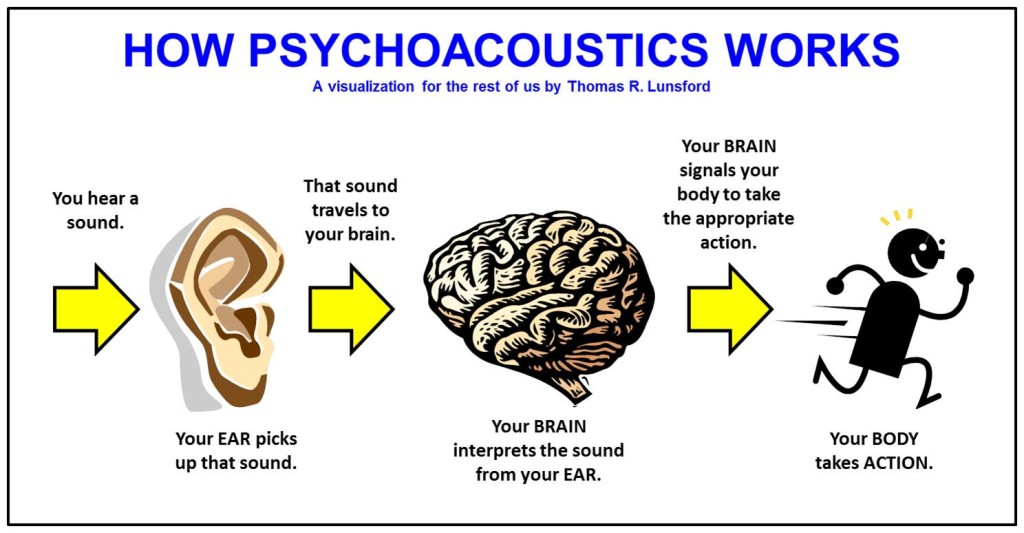
Psychoautics is an important part of the science that studies how we hear sound and how our brains process it. It is a combination of psychology and acoustics, and allows us to understand how people perceive sound and how this affects audio quality.
MP3 psychoacoustics
How is psychoacoustics related to MP3?
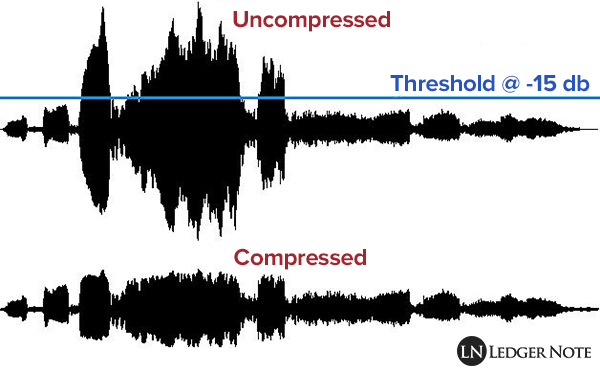
When we record or play audio in a digital format, such as MP3, the files are compressed to make them smaller. File compression is a process where some data is removed from the original audio to make it smaller. However, this data removal can also affect audio quality, and this is where psychoacoustics comes into play.
Psychoautics helps us understand which parts of audio are most important to our hearing and which are less important. This allows us to optimize the compression of audio files so that the sound quality is not affected excessively. In other words, psychoacoustics allow us to balance between sound quality and file size.
Why is psychoacoustics in MP3 important?
Psychoautics is important in MP3 because it allows us to create audio files that are smaller and easier to store and share, without sacrificing too much sound quality. This means that you can have your favorite songs on your phone or on your computer without having to worry about the space they take up.
In addition, psychoautics also allows us to improve the audio quality in portable devices, such as headphones or speakers, which often have limited sound quality. By understanding which parts of the audio are most important to our ears, we can optimize file compression for better sound quality on these devices.
Psychoacoustics is the study of a person’s subjective perception of sounds. Today, it is used in computer engineering, acoustic engineering, education, medicine, marketing and, of course, it is used in music.
Musicians try to create a new acoustic atmosphere by distancing themselves from real sound perception, while scientists and engineers emphasize the features of auditory perception and truly audible components for analyzing and designing acoustic instruments and equipment.
Sound is made up of pressure waves propagating through the air, but how are these waves received and converted into thoughts in our brains? In fact, what we hear depends not only on the physiological properties associated with ear formation, but also has psychological consequences. In the psychoacoustic model, dismissal and insignificance are the two “key” concepts that describe the reasons why a certain amount of audio data is considered insignificant, that is, they can be removed without compromising sound quality.
There is a threshold beyond which the human ear does not perceive the frequency of sound, sounds exceeding this threshold create a release effect. Obviously, trained ears will tend to perceive more complex sounds and higher frequencies.
This makes the redundancy threshold a subjective point of reference within certain limits, which means that a certain redundancy effect will have to be maintained in order to guarantee quality sound, so digital information inevitably exists. Once a high-quality redundancy threshold is set, it will be possible to remove frequencies and sound waves above this threshold, and sound perception will not change. When released, a number of sound elements remain important in reproducing the complexity of the sound and are beneficial to perception and quality, but non-compliance is a more radical criterion for sound units that are completely invisible and therefore useless and completely removable.
In practice, this simplifies the process of recording and storing sound. Lost audio compression is based on redundancy and non-compliance criteria, allowing you to remove most audio signals without compromising audio quality.
Unreasonable compression is based on the fact that, depending on the context of the sound, the same sound element may become very appropriate or may be completely ignored. For example, if a cell phone rings in the church during a silent prayer, those involved will clearly perceive the sound, and at the disco the same sound will be confused with the main context of the sound.
As a result, L ‘psychoacoustic analysis makes it possible to drastically reduce a high-quality file (10 or 12 times smaller) and therefore compressions, which significantly reduce the quality. These cuts are typical of MP3s. Thus, the psychoacoustic model shows that low-frequency waves are not noticeable in high-frequency waves because they are covered by higher-intensity waves.
This effect, called masking, tends to focus more on certain sounds depending on the context, and is based on the ear’s ability to adapt to background noise. In addition, there is a special masking associated with the reception time of low and high frequency sounds. Although a low-frequency sound is obtained, if it is immediately followed by a high-frequency sound, the first sound will be canceled by the second sound, so this effect is called reverse masking.
In contrast, masking forward features the elimination of low-frequency sound after high-frequency sound. The difference between the first two MPEG formats (Moving Picture Esperts Group: International Audio and Video Coding Code) and the MP3 format is based on these two masking effects.
In fact, in early MPEG formats, only frequency masking (1 audio and 2 audio layers) was taken into account, while MP3 also takes into account the third level of forward and backward masking (3 audio levels). The peculiarity of the MP3 model there is that it is the most perfect way to remove sound. From the initial recording, it extracts sounds and frequencies, extracting tones and time to eliminate unnecessary.
Easy tutorial: how to normalize the volume of an audio track.
The MP3 was developed by the Moving Picture Experts Group (MPEG) to be part of the MPEG-1 standard and the newer and more widespread MPEG-2. An MP3 created using 128 kbit / s compression will be about 11 times smaller than its namesake CD. An MP3 can also be compressed using a higher or lower bit rate per second, directly resulting in lower final audio quality and the resulting file size.
Compression is based on the reduction of the irrelevant dynamic range, i.e. the inability of the auditory system to detect quantization errors under masking conditions. This standard divides the signal into frequency bands which approach the critical bands, on the basis of wp, then quantifies each sub-band according to the noise detection threshold in this band. The psychoacoustic model is a modification of that used in Scheme II and uses a method called polynomial prediction. It analyzes the audio signal and calculates the amount of noise that can be introduced as a function of the frequency, that is to say calculates the “masking amount” or the masking threshold as a function of the frequency.
The encoder uses this information to decide how best to spend the available bits. This standard proposes two psychoacoustic models of different complexity: model I is less complex than psychoacoustic model II and considerably simplifies the calculations. Studies show that the distortion generated is imperceptible to the experienced ear in an optimal environment from 192 kbps and under normal conditions. “Good” (unless you have high quality audio equipment where the lack of bass is excessively noticeable and the “fry” sound in the treble is highlighted). People experienced in the audio part of digital audio files, especially music, from 192 to 256 kbps are enough to hear well, but compression at 320 kbps is optimal for any listener. [appointment required]. Most of the music circulating on the Internet is encoded between 128 and 192 kbps, although today due to the increase in bandwidth, it is more and more common to share files with high quality. maximum compression.








Readers’ Opinions:
Comment 1: AC-4’s SBR truly enhances audio quality. Can’t go back!
Comment 2: Impressive breakdown of Spectral Band Replication. More please!
Comment 3: As an audiophile, AC-4’s impact on live events is a game-changer.
Comment 4: Your article made me appreciate the technology behind AC-4. Well done!
Comment 5: AC-4’s SBR explained in layman’s terms. Finally, clarity!
Comment 6: Can you delve into the compatibility of AC-4 with various devices?
Comment 7: The comparison with other codecs would be an interesting addition.
Comment 8: Intrigued by the potential applications of AC-4 in gaming environments.
Comment 9: Your article sparked my curiosity. Now I want to explore AC-4 further.
Comment 10: AC-4’s SBR elevates the auditory experience. Kudos on the detailed insights!