Why MP3 is so Popular


Free Download Mp4Gain
picture

Why MP3 is so Popular

Mp3 is so popular
Mp3 is so popular

The MP3 file format has been around since the early 90s and is still the most popular audio format of choice for music, podcasts, and audio books. MP3 is a digital audio encoding format that compresses audio files so that they can be stored and transferred easier. It is an ideal format for those who want to listen to music on their computer, portable device, or car stereo.

Mp3 is so popular
Mp3 is so popular

The popularity of MP3 is due to its convenience, compatibility, and ease of use. Since MP3 files are small in size, they can easily be transferred from one device to another without taking up too much space. This makes it easy to store music, podcasts, and audio books on a computer, phone, or other device.

MP3 files are compatible with almost any device. This means that you can listen to MP3s on your computer, smartphone, car stereo, or any other device that supports the format. This makes it incredibly easy to access your music, podcasts, and audio books wherever you go.

The MP3 format is also incredibly easy to use. All you need to do is download the file, open it with a media player, and you’re ready to go. It’s a simple process that anyone can do.

The Benefits of MP3s

MP3s offer many benefits over other audio formats. Since they are compressed, they take up less space than other formats such as WAV or AIFF. This makes them easier to share and store on your computer or other device.

MP3s also have better sound quality than other formats. They can be encoded at higher bitrates, which means that the sound is more detailed and clear. This makes them ideal for listening to music, podcasts, and audio books.

Finally, MP3s are widely supported by most devices. This makes them ideal for sharing music, podcasts, and audio books with friends and family.

Why MP3s are so Popular

The popularity of MP3s is due to their convenience, compatibility, and ease of use. They are small in size, making them easy to share and store on a device. They are also compatible with most devices, making them easy to access wherever you go. And finally, they are incredibly easy to use, making them ideal for those who are new to digital audio.

Conclusion

The MP3 file format is popular due to its convenience, compatibility, and ease of use. It is the go-to format for music, podcasts, and audio books, and is supported by almost any device. It is also incredibly easy to use, making it ideal for those who are new to digital audio. In conclusion, MP3 is the ideal format for those looking to listen to music, podcasts, and audio books on the go. For the best MP3 audio experience, Mp4Gain is the best solution.



Free Download Mp4Gain
picture


Mp4Gain Main Window
picture


Mp4Gain Features
picture


Free Download Mp4Gain
picture

Mp3 Normalize Volume

Mp3 Normalize Volume

Mp3 Normalize Volume

MP3 audio files are popular among music and audio fans because of their small file size and high-quality sound. But sometimes, the volume of these audio files may be too low or too loud. Normalizing the audio volume ensures that all your audio files have the same volume level, so you can enjoy your music or audio files without adjusting the volume manually.

Mp3 Normalize Volume

What is Volume Normalization?

Volume normalization is the process of adjusting the volume of an audio file to a predetermined level. It ensures that all of your audio files are played back at the same volume level. This is especially useful if you have audio files from multiple sources, as some of them may be louder or quieter than others. By normalizing the audio files, you can enjoy them without having to manually adjust the volume.

Why Should You Normalize Volume?

Normalizing the volume of your audio files has several benefits. For one, it helps you maintain a consistent volume level throughout your playlist. This is especially useful if you have a large collection of audio files from different sources. Additionally, it prevents you from having to manually adjust the volume level every time you play a new song or audio file. Finally, it helps keep your audio files safe from distortion or clipping, which can occur when the audio is too loud.

How to Normalize Volume of MP3 Audio Files

Normalizing the volume of your MP3 audio files is a simple process. All you need is an audio editor that supports MP3 files. Many popular audio editors, such as Audacity, support this feature. Once you have an audio editor that supports MP3 files, you can follow these steps to normalize the volume of your audio files:

  • Open your audio editor and import the MP3 audio file.
  • Select the entire audio file by pressing “Ctrl+A”.
  • Go to the “Effects” menu and select “Normalize”.
  • Adjust the “Normalize to” value and click “OK”.
  • Save the file by going to “File” > “Save As”.

After you have followed these steps, your audio file will be normalized to the volume level you specified. You can repeat the process for all your MP3 files to normalize their volume.

Alternatives to Normalizing MP3 Volume

In addition to normalizing the volume of your MP3 files manually, there are several other methods you can use. For example, you can use a dedicated audio normalization software such as Mp4Gain to normalize the volume of multiple files at once. Additionally, many streaming services offer a built-in normalization feature that automatically adjusts the volume of your audio files to a consistent level.

Conclusion

Normalizing the volume of your MP3 audio files is a simple process that helps you maintain a consistent volume level throughout your playlist. There are several methods you can use to normalize the volume of your audio files, including manually using an audio editor and using a dedicated audio normalization software such as Mp4Gain. With the right tools and techniques, you can easily normalize the volume of your audio files for an enjoyable listening experience.

What is MP3 Normalization?

What is MP3 Normalization?

MP3 Normalization
MP3 Normalization

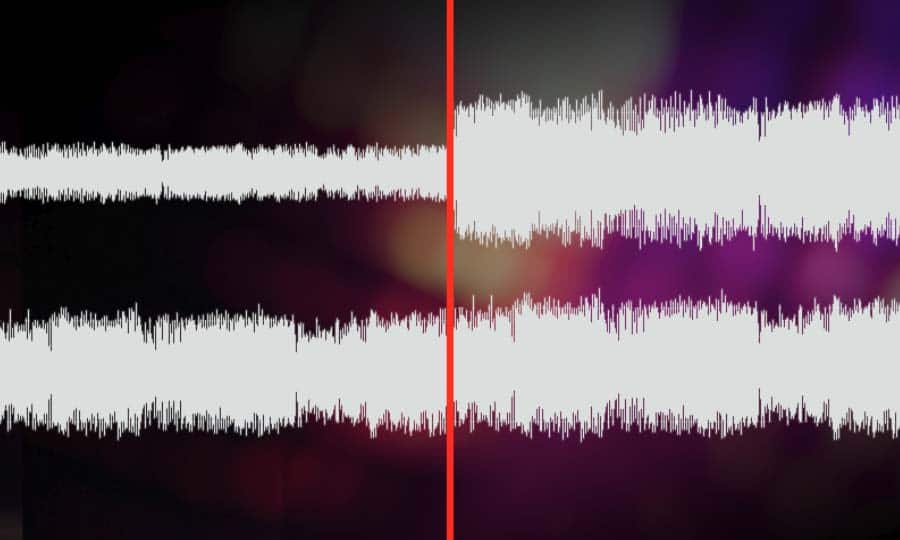
MP3 normalization is the process of making sure that all audio files are of equal volume. The goal is to ensure that all audio is of the same loudness when played back, making it easier to listen to the audio without having to adjust the volume settings. Normalizing audio is especially important when playing back audio files from different sources, such as a CD or a download, to ensure that all audio is heard at the same level.

MP3 Normalization
MP3 Normalization

Benefits of Normalizing Audio

Normalizing audio has several benefits, including making sure that all audio is heard at the same volume level and making it easier to listen to multiple audio files at once. Normalizing audio can also help to reduce distortion and improve the overall sound quality of a recording. Normalization can be used to make sure that all audio is heard at the same volume level, regardless of the source.

How to Normalize Audio Files

Normalizing audio files is a relatively simple process, and can be done using a variety of software programs. Some audio editing programs,  include tools for normalizing audio. These tools allow users to select a target loudness level and adjust the audio accordingly. In addition, there are also a number of dedicated audio normalization programs available for download, such as Mp4Gain.

Tips for Normalizing Audio

When normalizing audio, it is important to make sure that the target loudness level is not too loud or too quiet. If the target level is too loud, the audio may be distorted, resulting in a poor listening experience. It is also important to make sure that all audio files are normalized to the same loudness level. If audio files are normalized to different levels, they may sound unbalanced when played back together.

Conclusion

Normalizing audio is an important process for making sure that audio files are heard at the same volume level. It is important to make sure that the target loudness level is not too loud or too quiet, and that all audio files are normalized to the same level. For the best results, it is recommended to use a dedicated audio normalization program, such as Mp4Gain.

Mp3 normalize volume

Mp3 normalize volume

Mp3 normalize volume

MP3 Normalization: What it is and How to Do it

mp3 normalize volume

MP3 normalization is the process of adjusting the volume level of an MP3 audio file so that it plays at a consistent volume across different devices and playback systems. This is important because MP3 files can have varying levels of volume due to the way they were recorded or encoded.

There are several ways to normalize the volume of an MP3 file. One popular method is to use a software program such as MP3Gain or AIMP. These programs analyze the audio data in an MP3 file and adjust the volume level accordingly. They also provide a “normalize” or “gain” function that can be used to bring the volume level up to a desired level.

Another method for normalizing MP3 volume is to use an online service such as mp3Doctor or AudioNormalizer. These services allow you to upload your MP3 file and then adjust the volume level using a web-based interface. The advantage of using an online service is that you don’t need to download or install any software on your computer.

When normalizing the volume of an MP3 file, it’s important to be careful not to overdo it. If the volume level is too high, it can cause distortion and damage your hearing. It’s also important to keep in mind that some devices and playback systems have a limited dynamic range, so it may not be possible to bring the volume level up to the maximum level without causing distortion.

In conclusion, normalizing the volume of MP3 files is a simple process that can help ensure that your music is heard at the same volume level across different devices and playback systems. Whether you use a software program or an online service, it’s important to be mindful of the volume level and not to overdo it. With the right tools, you can make sure that your music sounds great no matter where or how you listen to it.

mp3 audio normalizer

mp3 audio normalizer


An mp3 audio normalizer is a tool to avoid differences in volume level in 2 or more audio files.

audio volume normalizer

There are various ways to do this, but the most common is to use software that can normalize the levels of the files automatically. This can be done with an audio editor, or with a dedicated mp3 normalizer program.

audio volume normalizer

Normalizing an audio file is checking each frame and adjusting it to be sure that each one is optimized to get the best possible volume without distortion.

An audio file can be normalized in two ways:

1. Peak Normalization:

This is where the audio file is analyzed and the highest peak is identified. The volume of the entire file is then increased or decreased so that this peak is at the maximum possible level without distortion.

2. RMS Normalization:

This is where the audio file is analyzed and the average volume level is identified. The volume of the entire file is then increased or decreased so that this average level is at the maximum possible level without distortion.

This behavior is similar to the compressor that keep the volume range of noisy and lower passages of the audio to keep both in a range that can sound fine.

The main difference is that the goal of an audio normalizer is not to change the sound of the audio, but to make sure that the volume levels of all the files are the same.

The most common format that is normalized is MP3, but other formats such as WAV can also be normalized.

In this times even video files can be normalized too.,

There are many reasons why you might want to normalize your audio files.

For example, if you have a number of files that were recorded at different levels, you may want to normalize them so that they all have the same volume level.

This can be useful if you want to create a playlist of files that are all the same volume, or if you want to make sure that all the files in a particular folder have the same volume level.

Another reason to normalize your audio files is if you want to make sure that they sound their best when played back on different devices.

For example, if you have an MP3 file that sounds great on your computer, but sounds terrible on your phone, you may want to normalize it so that it sounds its best on both devices.

Normalizing your audio files can also be useful if you want to make sure that they are suitable for use in different situations.

For example, if you have an MP3 file that you want to use as background music for a video, you may want to normalize it so that it is not too loud or too quiet.

Normalizing your audio files can also be useful if you want to make sure that they sound their best when played back at different speeds.

For example, if you have an MP3 file that sounds great when played back at normal speed, but sounds terrible when played back at double speed, you may want to normalize it so that it sounds its best at both speeds.

Normalizing your audio files can also be useful if you want to make sure that they sound their best when played back at different volumes.

For example, if you have an MP3 file that sounds great when played back at a low volume, but sounds terrible when played back at a high volume, you may want to normalize it so that it sounds its best at both volumes.

Normalizing your audio files can also be useful if you want to make sure that they are suitable for use in different environments.

For example, if you have an MP3 file that you want to use as background music for a party, you may want to normalize it so that it is not too loud or too quiet.

Normalizing your audio files can also be useful if you want to make sure that they are suitable for use in different places.

For example, if you have an MP3 file that you want to use as background music for a restaurant, you may want to normalize it so that it is not too loud or too quiet.

Normalizing your audio files can also be useful if you want to make sure that they are suitable for use at different times of the day.

For example, if you have an MP3 file that you want to use as background music for a morning show, you may want to normalize it so that it is.

What is a loudness normalizer or an audio volume normalizer?

What is a loudness normalizer or an audio volume normalizer?

audio volume normalizer

A volume normalizer is used to make sure that audio files play at the best possible volume without clipping and also that all audio files play at a similar volume.

audio volume normalizer

A volume normalizer analyzes an audio file and then adjusts it to sound at a specific volume level. This is often done with audio files that are uploaded to file sharing sites, so that all users can listen to the audio at a similar volume.

It is quite common to find volume differences in the files that are downloaded from the internet, since these have been created from a wav but different sampling and bit frequencies have been used to create them.

A volume normalizer can analyze an audio file and then apply gain or attenuation to adjust the volume of the file to a specified level. This is useful if you want to ensure that all audio files played on your website or in your application sound at a similar volume.

Because it’s frustrating to have a collection of audio or even video files and find that when you play them they play at different volumes.

For this reason, it is necessary to use a volume normalizer, with which you can make sure that all audio and video files are heard at a similar volume.

It is important to ask yourself if the bit rate is important for the quality of an audio or video file, the same for the sample rate.

The answer is no, not always.

Bit rate and sample rate refer to the amount of information that can be stored in an audio or video file.


The higher the bit rate, the higher the quality of the audio or video file.


However, sometimes a low-quality video or audio file can sound better than a high-quality file.


This is because the bit rate and sample rate are not always indicative of the quality of the audio or video file.


There are many factors that can affect the quality of an audio or video file, such as the encoder used to encode the file, the quality of the microphone used to record the file, the quality of the equipment used to play the file, etc.


In summary, the bit rate and the sample rate are not always indicative of the quality of the audio or video file.

Want to increase the volume of your mp3s?

How to increase, decrease or normalize the volume of mp3 songs?

volume increase

It often happens that you hear a song on your computer and listen to it more than well, then you will be disappointed when you listen to it on your mp3 player or set it on your mobile phone as a ringtone.

In less than a minute, you can increase the volume of one or more songs at the same time and be able to test each time the decibel increases so as not to compromise the quality of your song and create distortions.

Increase volume

In addition, Mp4Gain allows normalization of the volume of multiple songs, that is, to level the volume of all mp3s, this feature was very useful in the car, on long trips when listening to many mp3s with different volumes, and as I should be time to adjust the volume, which affects my concentration behind the wheel.

Mp4Gain also allows other very useful customizations, such as various effects including fade at the beginning or end of the song, useful when we add an audio base to the video we create, or maybe we want to download on Youtube to prevent a song from starting immediately with maximum volume or it ends abruptly

In my opinion, Mp4Gain is the best for its interface, simplicity and ease of use. In addition to changing the volume of your songs, it offers a variety of other useful and user-friendly features.
So I remind you that once installed, it works on your mp3 or audio and / or video files of the most popular formats, and once it has the desired result, you only need to enjoy the normalization of the volume that Mp4Gain performed.

Does bitrate influence? A 320 kbps Mp3 sounds better than a 128 kbps one?

Much has been speculated about the bitrate. Most people do not understand clearly what it is. A few understand, but almost nobody knows if a file with 320 kbps really sounds different or better than the same file but with 128 kbps.

The easiest way is to test:

The first is at 128 kbps

Now let’s hear the 320 kbps option

Notice the difference? In case the note is because it was encoded using the Mp4Gain.
Normally it is almost impercentible, but using a good encoder you get to notice some subtle difference.

It should be taken into account that at higher kbps, if there is a higher quality – although it is not always noticeable – and will always use more disk space.

Therefore it is not the best option to say “all my mp3s will be 320 kbps”, unless the space does not mean any problem at all.

Audio quality: Bitrate in MP3 files

In many cases, the term Bitrate is used, which is the bit rate per second that a multimedia file (Audio or Video) has. Currently the MP3 music format is one of the most widespread (Although there are currently other more current formats such as OGG Vorbis, AAC, Flac, Monkey Audio, …) however the audio quality is variable, this is due to the characteristics with which the MP3 in question has been compressed, including:

Mode: It can be of two types mainly:

Mono: With a single channel (The right and left channel go together, not separated which gives worse audio quality).

Stereo: Two channels (Right and Left, improve audio quality).

Sampling frequency:

Audio CDs use 44,100 Hz (22,050 Hz per channel), although there are higher frequencies such as 48,000 Hz used in DVDs and lower, the higher the frequency, the higher the quality.
Bits: Audio CDs have 16 Bits (Although MP3 can be compressed at a lower quality such as 8 Bits).
Bitrate (Bit Rate per second): Audio CDs have about 1,400 Kbps (44100 Hz * 16 Bits * 2 channels), meaning that an Audio CD would have a bitrate of 1,400 Kbps (In MP3 format the maximum Bitrate is 320 Kbps, however, it is assumed that an MP3 with a 128 Kbps Bitrate has a quality similar to CD, although in many cases to achieve a quality similar to CD it is necessary to use a Bitrate of 192 Kbps, and to obtain CD quality it is necessary use 256 Kbps or 320 Kbps).

Some of the most common Bitrates are:

8 Kbps Mono: Telephone Sound.
16 Kbps Mono: Better quality than shortwave.
32 Kbps Mono: Better quality than AM.
64 Kbps Stereo: Better quality than FM.
112 – 128 Kbps: Quality close to CD.
160 Kbps: Quality closer to CD.
192 Kbps: Virtually CD quality.
256 Kbps: Quality CD practically undisputed from an original CD.
320 Kbps: CD quality.

Coding method: It can be of two types:

VBR (Variable Bit Rate, Bit Rate Variable): Encodes the file in MP3 with a variable Bitrate.
CBR (Constant Bit Rate, Constant Bit Rate): Encodes the MP3 file with a fixed Bitrate.

In addition, another factor that influences the encoding of the MP3 file is the CODEC (Encoder-Decoder) used, one of the most common and the best result is LAME (Lame Ain’t an MP3 Encoder) which is also free.

One point to keep in mind is that if we recompress an MP3 file that originally has a 128 Kbps bitrate and convert them to 192 Kbps for example, audio quality is not really gained because the MP3 format has some quality loss (MP3 is a loss algorithm, also called lossy). which has occurred when converting the original file (Ex: CD Audio or a 320 Kbps MP3 to a 128 Kbps MP3) so this recompression does not make much sense since we will not gain in audio quality (As they say where there is no one can not get) and the only thing we will achieve in any case is to increase the initial size of the file.

The opposite case (Recompress a 320 Kbps MP3 file for example at 192 Kbps) if it makes some sense because in this case although we lose some audio quality we reduce the weight (Kilobytes or Megabytes) of each MP3 file somewhat.


In conclusion, it can be said that if we need to encode / compress an MP3 file with good quality, the “ideal” would be to do so:

To be able to start from an Audio CD, although an MP3 at 320 or 256 Kbps could also be valid for a recompression of the file.
In stereo mode (With two channels, right and left).
With at least 44100 Khz sampling rate and 16 Bits.
With a minimum bitrate of 192 Kbps or at most 256 Kbps (Using 320 Kbps would give higher quality but also increase the file size considerably).
Use the LAME Codec (Lame Ain’t an MP3 Encoder).

Audio normalization

Audio normalization

audio normalization

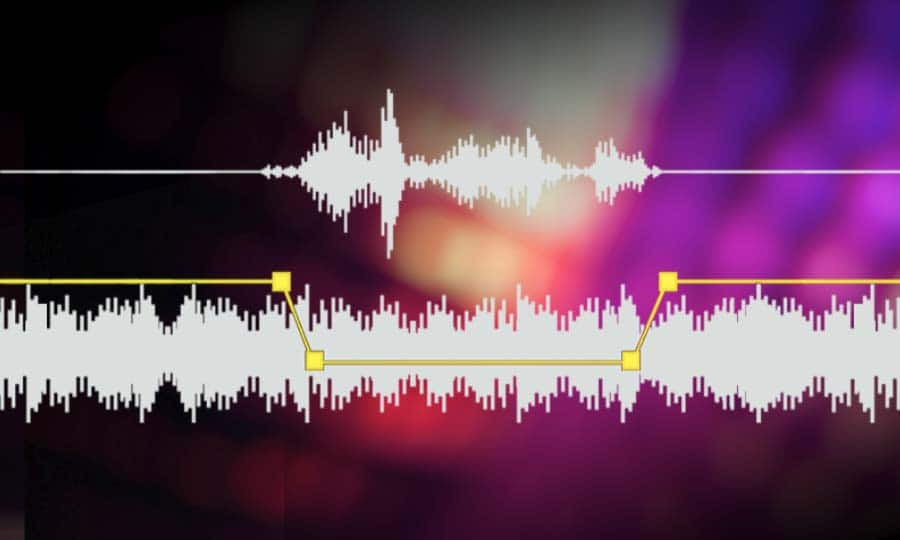
The normalization of the audio level is something that is achieved by applying a constant and maintained amount of gain, in volume, to an audio recording to bring the average peak amplitude to a desired level that has been previously defined. To which the same amount of gain is applied to the entire range, the signal-to-noise ratio generally does not change. Normalization differs from dynamic range compression, which applies different levels of gain to a recording so that the amplitude is within a minimum and maximum range. Standardization is one of the most common functions provided by a digital audio workstation.

Peak normalization

One type of normalization is peak normalization, in which the gain is changed to bring the highest PCM value or the highest peak of an analog signal to a given level.1

Since it only searches for the highest level, it does not take into account the apparent volume of the content. As such, peak normalization is generally used to change the volume in such a way as to ensure optimum use of the distribution medium in the mastering stage of a recording. loudness normalization.

Normalization of loudness

Another type of normalization is based on a loudness measure, in which the gain is changed to bring the average amplitude to an objective level. This average may be a simple measurement of average power, such as the RMS value, or it may be a measure of the loudness perceived by humans, such as that offered by ReplayGain.

Depending on the dynamic range of the content and the target level, the normalization of the loudness can lead to peaks that exceed the limits of the recording medium. Some software has the option of using dynamic range compression to avoid saturation when this happens. In this situation, the signal-to-noise ratio is altered.

volume booster

Modern Audio Normalization

Currently Mp4Gain uses an audio normalizationn that is more similar to that used in modern recording studios or live music group recitals.

It is a normalization of volume focused from a new perspective.

Under this new paradigm, not only does it achieve that all songs have the gain of loudness at the best possible level, but it also achieves that each instrument and / or voice obtains a level of gain that makes it audible. Achieve an optimized level of volume gain normalization.

There is no other normalizer in the market that obtains this level of result. People with training in hearing listening can easily notice the difference., very similar to that obtained with expensive hardware in radio stations or in recording studios or in recital consoles, combining limiters, modern compressors and other processors.
All these results that offer expensive hardware equipment, Mp4Gain does for a few dollars.

In fact, the opposite result is achieved than that achieved with masking, because with masking, which is a method used to compress music, you can no longer perceive some sounds that are behind a more audible sound, that is what is called masking, which leads to the loss of audio quality.

Mp4Gain manages to highlight hidden instruments and sounds, performing an audio normalization by frequency bands to achieve this.

That is why we say that Mp4Gain achieves the same results as those obtained through a series of hardware equipment (limiters, compressors, normalizers, etc.) that are very expensive, while Mp4Gain costs only a few dollars.