Improving MP3 Sound


Free Download Mp4Gain
picture

How to Enhance the Sound Quality of an MP3 File

Improving MP3 Sound
Improving MP3 Sound
Improving MP3 Sound
Improving MP3 Sound

Tips for Improving MP3 Sound

Improving the sound quality of an MP3 file can be a tricky task, but it is definitely possible with the right tools and techniques. As a music enthusiast, I have spent countless hours trying to find the best practices for enhancing the sound quality of my mp3 files. In this article, I will share with you some of the tips and techniques that I have found to be the most effective.

MP3 Sound Improvement

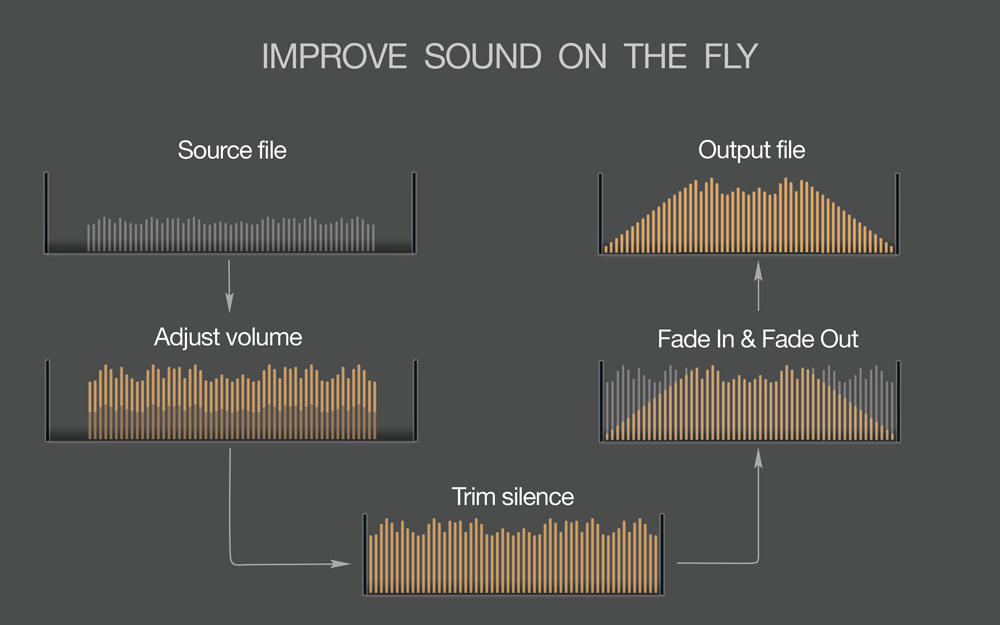
One of the most effective ways to improve the sound quality of an mp3 file is to use a high-quality audio editor like mp4gain. This software allows you to adjust the levels of your mp3 file and normalize the volume to ensure that it sounds great on any device. Additionally, mp4gain can convert your mp3 file to other popular audio formats like WAV, FLAC, and OGG, which can further improve the sound quality.

Another way to improve the sound quality of your mp3 files is to use a high-quality audio player. A good audio player will allow you to adjust the sound settings to your liking, including bass and treble levels, as well as any other sound enhancements that you prefer.

Mp3 Sound Editing

If you want to take your mp3 sound editing to the next level, consider using an equalizer. An equalizer allows you to adjust the levels of specific frequencies in your mp3 file, which can have a dramatic impact on the overall sound quality. With an equalizer, you can boost the bass or treble, or make any other adjustments that you feel are necessary.

Another important aspect of mp3 sound editing is to remove any unwanted noise or distortion from the file. This can be done using various noise reduction tools that are available in most audio editing software. By removing any unwanted noise or distortion, you can greatly improve the overall sound quality of your mp3 file.

Best Practices for Improving MP3 Sound

In addition to the tips and techniques outlined above, there are some best practices that you should keep in mind when trying to improve the sound quality of your mp3 files. Firstly, make sure that you are using high-quality source files. If your original source file is of poor quality, no amount of editing or processing will be able to fix it.

Secondly, always listen to your mp3 file on multiple devices to ensure that it sounds good across different platforms. What sounds great on your computer may not sound as good on your phone or portable music player.

Lastly, don’t be afraid to experiment with different settings and techniques to find what works best for you. Improving the sound quality of your mp3 files is an ongoing process, but with the right tools and techniques, you can achieve great results.

Final Words

Improving the sound quality of your mp3 files may seem like a daunting task, but it is definitely worth the effort. With the tips and techniques outlined in this article, you can take your mp3 sound editing to the next level and enjoy your music to the fullest.

Keywords: mp3 file sound improvement, enhance mp3 sound quality, best mp3 sound editing tools, mp3 sound optimization, how to improve sound quality of mp3 files, mp3 sound correction, mp3 file sound enhancement, mp3 sound equalization, mp3 sound mastering, mp3 sound normalization, mp3 sound effects,


Free Download Mp4Gain
picture


Mp4Gain Main Window
picture


Mp4Gain Features
picture


Free Download Mp4Gain
picture

How to Optimize MP3 Quality

How to Optimize MP3 Quality

How to Optimize MP3 Quality

MP3 is one of the most popular digital audio formats worldwide. Its widespread use is due to its small file size, which makes it easy to store and share music. However, this compression also reduces the quality of the audio file. To get the most out of your MP3s, you need to optimize them for the best possible quality. Here is a comprehensive guide on how to optimize your MP3 quality.

How to Optimize MP3 Quality

Understanding MP3 Compression

MP3 is a lossy audio compression format that reduces the file size of an audio track by discarding some of the audio data. This process is called compression. The amount of data discarded depends on the compression rate used when the MP3 was created. Higher compression rates result in smaller file sizes but also reduce the quality of the audio. The compression rate is measured in kilobits per second (kbps). A higher kbps rate means better sound quality but larger file sizes.

Choosing the Right Bitrate

The most important factor that affects the quality of an MP3 file is the bitrate. The bitrate determines the amount of data that is used to represent one second of audio. The higher the bitrate, the more data is used to represent the audio, resulting in better sound quality. However, higher bitrates also mean larger file sizes.

The recommended bitrate for MP3 files is 320 kbps. This provides excellent sound quality, but the file size is relatively large. If you’re short on storage space or want to upload your music to a streaming service, you may need to use a lower bitrate.

For most listeners, a bitrate of 128 kbps is sufficient for casual listening. This produces a relatively small file size and decent sound quality. However, if you have a good set of headphones or speakers, you may want to use a higher bitrate to get the most out of your music.

Using Variable Bitrate Encoding

Variable Bitrate (VBR) encoding is an MP3 encoding method that uses a different bitrate for different parts of the audio file. This allows the encoder to use a higher bitrate for complex parts of the music and a lower bitrate for simpler parts, resulting in a better overall sound quality.

VBR encoding produces smaller file sizes than constant bitrate encoding while maintaining similar sound quality. This makes it a good option if you want to save space without sacrificing too much sound quality.

Avoiding Transcoding

Transcoding is the process of converting an audio file from one format to another. For example, converting a WAV file to an MP3. Transcoding can reduce the quality of the audio file, especially if you’re converting from a lossy format like MP3 to another format. Each time you transcode an audio file, you lose some of the audio data, resulting in a lower quality sound. Therefore, it’s best to avoid transcoding MP3 files whenever possible.

Normalization

Normalization is a process that adjusts the volume of an audio file to a standard level. It ensures that all tracks have the same perceived loudness, making it easier to listen to music without constantly adjusting the volume. Normalization can also help prevent distortion, which can occur when the volume is too high.

There are many software tools available that can normalize MP3 files, including MP4Gain. However, it’s important to note that normalization can sometimes reduce the dynamic range of the music, resulting in a less natural sound.

Conclusion

Optimizing MP3 quality requires a careful balance between file size and audio fidelity. By following the tips and techniques discussed in this article, you can enhance the sound quality of your MP3 files without significantly increasing their size.

To summarize, start by selecting a high-quality source file, such as a CD or a lossless audio format. When converting to MP3, choose a high bitrate and use a variable bitrate setting for maximum efficiency. Use a low-pass filter to remove high-frequency noise, and avoid using equalization unless necessary. Lastly, consider using software like MP4Gain to further enhance the volume and overall sound quality of your MP3 files.

By taking these steps, you can create MP3 files that sound great and take up less space on your device or online storage. Whether you’re a music enthusiast, a podcast creator, or just someone looking to optimize their audio collection, these tips will help you achieve the best possible sound quality for your MP3 files.

Improving MP3 Quality: Tips and Tricks

Improving MP3 Quality: Tips and Tricks

Improving MP3 Quality

MP3 is one of the most popular audio formats in the world, but the quality of the files can vary greatly depending on the original recording and the settings used to convert it to MP3. If you’re not happy with the sound quality of your MP3s, there are a few things you can do to improve it.

Improving MP3 Quality

Use a High Bitrate

One of the most important factors in the quality of an MP3 is the bitrate, which is the amount of data used to represent each second of audio. A higher bitrate means more data and a better quality sound, but it also means a larger file size. A good rule of thumb is to use a bitrate of at least 128 kbps for music and 64 kbps for spoken word.

Remove Noise and Hiss

Another common problem with MP3s is background noise and hiss, which can be caused by a variety of factors such as poor recording conditions or low-quality equipment. To remove this noise, you can use a noise reduction tool, which is available in most audio editing software. These tools work by analyzing the audio and identifying the noise patterns, then removing or reducing them to improve the overall sound quality.

Use a Lossless Format

If you’re really serious about sound quality, you may want to consider using a lossless audio format such as FLAC or ALAC. These formats store the audio data without any compression, resulting in a higher quality sound than MP3. However, the files are much larger, so you’ll need a lot of storage space and a fast internet connection to stream them.

Invest in High-Quality Equipment

Finally, the quality of the equipment you use to play your MP3s can have a big impact on the overall sound. Investing in high-quality speakers, headphones, or an audio system can make a big difference in the quality of the sound you hear. Additionally, you can use an equalizer to adjust the levels of different frequencies in the audio to achieve the desired sound.

Conclusion

In conclusion, there are several ways to improve the sound quality of your MP3s, from using a high bitrate to removing background noise and investing in high-quality equipment. One of the best solutions for improving the quality of your MP3s is MP4Gain. It’s a software that optimizes the audio of your files, making them sound better than ever before.

Enhance MP3 Volume

Enhance MP3 Volume with the Right Tools

Enhance MP3 Volume
Enhance MP3 Volume

MP3 audio files are among the most popular audio formats around the world. They’re easy to share, lightweight, and relatively small in size, making them the preferred option for many digital music fans. Despite their popularity, however, MP3 files have one major drawback: they often lack dynamic range. That is, they don’t have enough volume to be heard clearly over other audio sources in the same space.

Enhance MP3 Volume
Enhance MP3 Volume

This can be a real problem if you’re trying to listen to an MP3 file in a noisy environment. Fortunately, there are a few ways to enhance MP3 volume and make your music more audible. In this article, we’ll look at some of the best tools and techniques for boosting MP3 volume and improving your listening experience.

Using Equalizers to Enhance MP3 Volume

An equalizer (or EQ) is a sound processing tool that adjusts the frequency response of an audio signal. Equalizers are commonly used to boost the bass and treble frequencies of a signal, but they can also be used to boost the overall volume of an audio signal. Depending on the EQ settings you choose, you can use an equalizer to boost the volume of an MP3 file without making it sound distorted or over-compressed.

Most audio editing software, like Audacity, comes with an equalizer that you can use to tweak the volume of your MP3 files. All you need to do is open the equalizer and adjust the levels until you’re happy with the sound. It’s also worth noting that you can use an equalizer if you’re streaming music online. Many streaming services, such as Spotify and Pandora, have their own built-in equalizers that you can use to boost the volume of your music.

Using Audio Enhancers to Enhance MP3 Volume

Another way to boost the volume of an MP3 file is to use an audio enhancer. Audio enhancers are specialized software programs that can boost the volume of audio signals without making them sound distorted or over-compressed. Many audio enhancers also come with their own set of sound-shaping tools, such as EQs, compressors, and limiters, that you can use to further tweak the sound of your MP3 files.

Conclusion

Enhancing the volume of MP3 files doesn’t have to be a complicated process. With the right tools and techniques, you can easily boost the volume of your music without making it sound distorted or over-compressed. For the best results, we recommend using Mp4Gain, a powerful audio enhancer that can help you get the most out of your MP3 files.

Mp4 for Mp3

Mp4 for Mp3. Convert MP4 to MP3: What you need to know

Mp4 for Mp3
Mp4 for Mp3

In the digital age, converting between audio and video formats is a common task. If you want to convert from an MP4 format to an MP3 format, there are several options available. This guide covers the steps to convert MP4 to MP3.

Mp4 for Mp3
Mp4 for Mp3

What do I need to convert MP4 to MP3?

To convert MP4 to MP3, the main thing you need is proper software. This means a program that is compatible with the MP4 format and at the same time is capable of exporting files in MP3 format. The most popular program for this task is MP4Gain.

In addition to suitable software, you will need access to the original MP4 files. This means you have to store them somewhere, like on your computer or a cloud storage drive. Once you have the MP4 files, you can start the conversion process.

Make sure you have the MP4 files

Before converting MP4 to MP3, make sure you have the necessary MP4 files in the right place. If you downloaded them from a website, make sure they are complete. If you got them from a videotape or DVD, make sure they were copied correctly. This is essential to ensure that the resulting files are of the highest quality.

Use the right software

Once you have found the MP4 files, you need to choose the right software to convert them to MP3. As mentioned above, MP4Gain is an excellent option, as it supports a wide range of audio and video formats. Plus, it’s compatible with Windows, Mac, and Linux, making it ideal for a variety of users.

Start conversion

Once you’ve chosen the right software, you can begin the conversion process. In most cases, this process is fairly straightforward. First, open the software and load the MP4 files. Then select MP3 as the output format. Finally, click the “Convert” button and wait for the process to complete.

In some programs, it is possible to adjust the output parameters. This allows you to control the quality of the resulting file, adjust the bitrate, or change the file size. These options are available in most MP4 to MP3 converter programs.

Final Steps

Once the MP4 file has been converted to MP3, you can use it to play music, watch online videos, or anything else you want. If you want to share the file with others, please note that MP3 format is a compressed audio format, so the original MP4 file will be larger.

We hope this guide has helped explain the steps to convert MP4 to MP3. If you would like more information about audio and video formats, there are a variety of resources available online. Good luck with the conversion!

  • MP3 – a compressed audio format
  • MP4 – a video and audio format
  • MP4Gain – an MP4 to MP3 converter software

What is MP3 Normalization?

What is MP3 Normalization?

MP3 Normalization
MP3 Normalization

MP3 normalization is the process of making sure that all audio files are of equal volume. The goal is to ensure that all audio is of the same loudness when played back, making it easier to listen to the audio without having to adjust the volume settings. Normalizing audio is especially important when playing back audio files from different sources, such as a CD or a download, to ensure that all audio is heard at the same level.

MP3 Normalization
MP3 Normalization

Benefits of Normalizing Audio

Normalizing audio has several benefits, including making sure that all audio is heard at the same volume level and making it easier to listen to multiple audio files at once. Normalizing audio can also help to reduce distortion and improve the overall sound quality of a recording. Normalization can be used to make sure that all audio is heard at the same volume level, regardless of the source.

How to Normalize Audio Files

Normalizing audio files is a relatively simple process, and can be done using a variety of software programs. Some audio editing programs,  include tools for normalizing audio. These tools allow users to select a target loudness level and adjust the audio accordingly. In addition, there are also a number of dedicated audio normalization programs available for download, such as Mp4Gain.

Tips for Normalizing Audio

When normalizing audio, it is important to make sure that the target loudness level is not too loud or too quiet. If the target level is too loud, the audio may be distorted, resulting in a poor listening experience. It is also important to make sure that all audio files are normalized to the same loudness level. If audio files are normalized to different levels, they may sound unbalanced when played back together.

Conclusion

Normalizing audio is an important process for making sure that audio files are heard at the same volume level. It is important to make sure that the target loudness level is not too loud or too quiet, and that all audio files are normalized to the same level. For the best results, it is recommended to use a dedicated audio normalization program, such as Mp4Gain.

Audio Basics Explained PART 2

Audio Basics Explained PART 2

Decibels

Sample Bits (sample bits, aka sample precision, quantization level, sample size, quantized data bits): The range of data that each sample point can represent.

Decibels

The number of sampling bits is usually 8 or 16. The larger the number of sampling bits, the more delicate the change of sound that can be recorded, and the larger the corresponding amount of data. 8 bit word length quantization (low quality) and 16 bit word length quantization (high quality), 16 bits is the most common sampling precision.

“Sample rate” and “sample bits” are the two most basic elements of sound digitization, which are equivalent to screen size
(for example, 800*600) and the color resolution (for example, 24 bits) in the video.

Number of channels (or number of channels): The number of channels refers to the number of speakers that support different sounds, it is one of the important indicators to measure audio equipment.

The number of channels for mono is 1 channel; the number of channels for channels
dual is 2 channels; the number of channels for
stereo channels is 2 channels by default; the number of channels for
stereo channels (4 channels) for 4 channels.

Frame (Frame): A frame records a sound unit whose duration is the product of the sample duration (number of samples) and the number of channels.

Period (Period Size): The number of frames required for an audio device to process at one time. Data access and audio data storage of the audio device are based on this unit. The hardware buffered transfer unit, which completes the transfer of so many sample frames, will return an interrupt.

insert image description here
Periods: How many hardware transfer interrupts it takes for the transfer to complete one application buffer.

Buffer Bytes: The number of bytes in an application buffer, the size of the DMA buffer.

Because the buffer size is set by the application, it can be large or small. If it is too large, the transmission delay will be too large, so it is fragmented and the concept of a period is proposed. Overflow, when recording, the data is full and the application does not have time to grab it; underflow, you need data to play and the application does not have time to write the data

Interleaved Mode: The way digital audio signals are stored. The data is stored in consecutive frames, that is, the left channel and right channel samples of frame 1 are recorded first, and then the recording of frame 2 is started…

Non-interlaced mode: The left channel samples of all frames in a cycle are recorded first, then all the right channel samples are recorded.

Quantization: The process of representing the amplitude of the discrete signal after sampling with binary numbers is called quantization. (Quantification in daily life is to set a range or interval, and then look at the acquired data collected within this condition.)

PCM: PCM (Pulse Code Modulation), that is, pulse code modulation, sound sampling and quantization without any encoding and compression processing.

PCM data is the most primitive lossless audio data, so although PCM data has excellent sound quality, it is bulky.
To solve this problem, a series of audio formats have been successively born. These audio formats use different methods to
compress audio data Compression (ALAC, APE, FLAC) and lossy compression (MP3, AAC, OGG, WMA) are available.

Encoding: The sampled and quantized signal is not yet a digital signal, it must be converted into a digitally encoded pulse, a process called encoding. The digital audio signal is the binary sequence formed after sampling, quantizing, and encoding the analog audio.

Bit rate: (also known as bit rate, bit rate) refers to the amount of information that can pass through a data stream per second, which represents the quality of compression. For example, common MP3 bit rates are 128 kbit/s, 160 kbit/s, 320 kbit/s, etc. The higher the rate, the better the sound quality. Data in MP3 consists of ID3 and audio data. ID3 is used to store common information such as song title, singer, album and track.

Audio Basics Explained

Audio Basics Explained

Decibels (dB)

Audio and video basics

Decibel

1. Introduction
In real life, the sounds we hear are continuous in time, and we call this type of signal . Analog signals must be digitized before they can be used in a computer.

At present, we need to rely on audio files for audio playback on the computer. The process of generating audio files is the process of combining sound information and generated digital signals. The sound that the human ear can hear has the lowest frequency of 20Hz to the highest frequency of 20KHZ, so the maximum bandwidth of the audio file format is 20KHZ. . According to the theory, only when the sampling frequency is greater than twice the highest frequency of the sound signal, the sound represented by the digital signal can be restored to the original sound, so the sampling frequency of the file audio is generally 40~50KHZ. , such as the most common CD quality sampling rate 44.1KHZ.

2. Audio Basics
Sampling: the wave is infinitely smooth. The sampling process consists of extracting the frequency value from some points of the wave, which consists of digitizing the analog signal. Like shown in the next figure:
insert image description here
blue represents the analog audio signal and red represents the quantized value obtained by sampling

Sample Rate: The number of times the analog signal is sampled per unit of time, expressed in Hertz (Hz). The higher the sample rate, the more realistic and natural the sound restoration will be, and of course, the larger the amount of data. The sampling frequency is generally divided into three levels: 22.05 KHz, 44.1 KHz, and 48 KHz. 8 KHz: the sampling frequency used by phones, is enough for human speech, 22.05 KHz can only achieve the sound quality of FM radio (suitable for medium quality voice and music), 44.1 KHz is the most common sampling rate standard, theoretically quality limit CD sound, 48KHz is more accurate (for the sampling rate above 48KHz, the human ear cannot distinguish it, so it has little use value in the computer).

Quick tip: one
5 kHz sampling rate is as good as people’s speech.
A sample rate of 11 kHz is the minimum standard for reproducing small pieces of sound, a quarter of CD quality.
The 22 kHz sample rate can achieve half the quality of a CD, and most websites now use this sample rate.
44kHz sampling rate is standard CD quality, which can achieve good listening effect.

Resampling: It is mainly divided into upsampling and downsampling. In the sampling process, it is necessary to pay attention to the sampling rate problem. It is not possible to change the size of the sample rate at will. According to the sampling theorem: in the analog/digital signal process During the conversion process, when the sampling frequency is greater than 2 times the highest frequency of the signal, the digital signal after sampling completely retains the information of the original signal. , in practical applications, the sampling frequency is guaranteed to be 5 to 10 times the highest frequency of the signal. The sampling theorem is also known as the Nyquist theorem.

Upsampling: In the sampling process, it is generally divided into upsampling and downsampling, and the basis for the distinction is the comparison of the new sampling rate and the original sampling rate when resampling, if it is greater than the original signal, becomes a Oversampling, if smaller than the original signal, is called undersampling. The essence of upsampling is interpolation or interpolation.
Downsampling: The size of the new sample rate is smaller than the size of the original sample rate.
Methods: When resampling, there are mainly three methods: the nearest neighbor method, the bilinear interpolation method, and the cubic convolution interpolation method. There are also deconvolutions, subpixel convolutions, etc. in convolutional networks.

Mp3Gain Windows 10

Mp3Gain Windows 10

MP3Gain Windows 10

People are still wondering if there was a version of Mp3Gain for windows 10 and now there is Mp4Gain.

MP3 Gain Windows 10

This new software offers the same functionality as Mp3Gain, but it is not limited to mps but normalizes the volume of the most popular audio formats.

Mp3Gain Windows 10 for video?

Mp4Gain is capable of normalizing the loudness of the most used video formats.

Of course you can use the Replay Gain if you wish, although Mp4Gain offers other methods that are more up-to-date and in accordance with THE DEVICES IN WHICH TODAY BOTH MUSIC AND VIDEO ARE REPRODUCED.

It can also extract the audio from a video by converting it to any audio format. That way if you have a video clip and you only want to have an mp3, flac, ogg, aac, etc. it is perfectly possible.

And of course it is perfectly compatible with Windows 10 and Windows 11 and with previous versions, especially Windows 7.