Improving MP3 Sound


Free Download Mp4Gain
picture

How to Enhance the Sound Quality of an MP3 File

Improving MP3 Sound
Improving MP3 Sound
Improving MP3 Sound
Improving MP3 Sound

Tips for Improving MP3 Sound

Improving the sound quality of an MP3 file can be a tricky task, but it is definitely possible with the right tools and techniques. As a music enthusiast, I have spent countless hours trying to find the best practices for enhancing the sound quality of my mp3 files. In this article, I will share with you some of the tips and techniques that I have found to be the most effective.

MP3 Sound Improvement

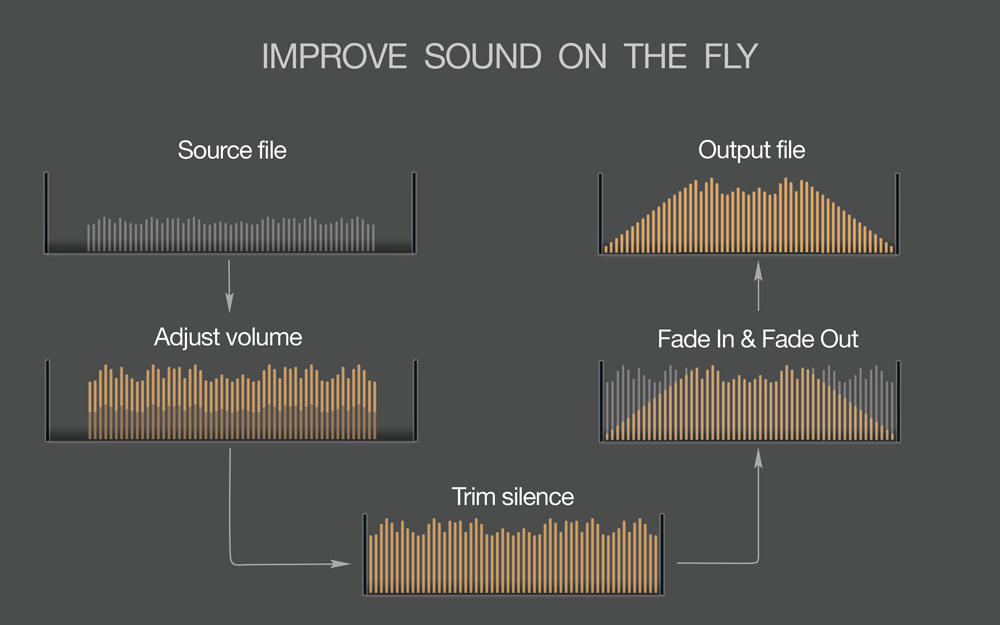
One of the most effective ways to improve the sound quality of an mp3 file is to use a high-quality audio editor like mp4gain. This software allows you to adjust the levels of your mp3 file and normalize the volume to ensure that it sounds great on any device. Additionally, mp4gain can convert your mp3 file to other popular audio formats like WAV, FLAC, and OGG, which can further improve the sound quality.

Another way to improve the sound quality of your mp3 files is to use a high-quality audio player. A good audio player will allow you to adjust the sound settings to your liking, including bass and treble levels, as well as any other sound enhancements that you prefer.

Mp3 Sound Editing

If you want to take your mp3 sound editing to the next level, consider using an equalizer. An equalizer allows you to adjust the levels of specific frequencies in your mp3 file, which can have a dramatic impact on the overall sound quality. With an equalizer, you can boost the bass or treble, or make any other adjustments that you feel are necessary.

Another important aspect of mp3 sound editing is to remove any unwanted noise or distortion from the file. This can be done using various noise reduction tools that are available in most audio editing software. By removing any unwanted noise or distortion, you can greatly improve the overall sound quality of your mp3 file.

Best Practices for Improving MP3 Sound

In addition to the tips and techniques outlined above, there are some best practices that you should keep in mind when trying to improve the sound quality of your mp3 files. Firstly, make sure that you are using high-quality source files. If your original source file is of poor quality, no amount of editing or processing will be able to fix it.

Secondly, always listen to your mp3 file on multiple devices to ensure that it sounds good across different platforms. What sounds great on your computer may not sound as good on your phone or portable music player.

Lastly, don’t be afraid to experiment with different settings and techniques to find what works best for you. Improving the sound quality of your mp3 files is an ongoing process, but with the right tools and techniques, you can achieve great results.

Final Words

Improving the sound quality of your mp3 files may seem like a daunting task, but it is definitely worth the effort. With the tips and techniques outlined in this article, you can take your mp3 sound editing to the next level and enjoy your music to the fullest.

Keywords: mp3 file sound improvement, enhance mp3 sound quality, best mp3 sound editing tools, mp3 sound optimization, how to improve sound quality of mp3 files, mp3 sound correction, mp3 file sound enhancement, mp3 sound equalization, mp3 sound mastering, mp3 sound normalization, mp3 sound effects,


Free Download Mp4Gain
picture


Mp4Gain Main Window
picture


Mp4Gain Features
picture


Free Download Mp4Gain
picture

How to Optimize MP3 Quality

How to Optimize MP3 Quality

How to Optimize MP3 Quality

MP3 is one of the most popular digital audio formats worldwide. Its widespread use is due to its small file size, which makes it easy to store and share music. However, this compression also reduces the quality of the audio file. To get the most out of your MP3s, you need to optimize them for the best possible quality. Here is a comprehensive guide on how to optimize your MP3 quality.

How to Optimize MP3 Quality

Understanding MP3 Compression

MP3 is a lossy audio compression format that reduces the file size of an audio track by discarding some of the audio data. This process is called compression. The amount of data discarded depends on the compression rate used when the MP3 was created. Higher compression rates result in smaller file sizes but also reduce the quality of the audio. The compression rate is measured in kilobits per second (kbps). A higher kbps rate means better sound quality but larger file sizes.

Choosing the Right Bitrate

The most important factor that affects the quality of an MP3 file is the bitrate. The bitrate determines the amount of data that is used to represent one second of audio. The higher the bitrate, the more data is used to represent the audio, resulting in better sound quality. However, higher bitrates also mean larger file sizes.

The recommended bitrate for MP3 files is 320 kbps. This provides excellent sound quality, but the file size is relatively large. If you’re short on storage space or want to upload your music to a streaming service, you may need to use a lower bitrate.

For most listeners, a bitrate of 128 kbps is sufficient for casual listening. This produces a relatively small file size and decent sound quality. However, if you have a good set of headphones or speakers, you may want to use a higher bitrate to get the most out of your music.

Using Variable Bitrate Encoding

Variable Bitrate (VBR) encoding is an MP3 encoding method that uses a different bitrate for different parts of the audio file. This allows the encoder to use a higher bitrate for complex parts of the music and a lower bitrate for simpler parts, resulting in a better overall sound quality.

VBR encoding produces smaller file sizes than constant bitrate encoding while maintaining similar sound quality. This makes it a good option if you want to save space without sacrificing too much sound quality.

Avoiding Transcoding

Transcoding is the process of converting an audio file from one format to another. For example, converting a WAV file to an MP3. Transcoding can reduce the quality of the audio file, especially if you’re converting from a lossy format like MP3 to another format. Each time you transcode an audio file, you lose some of the audio data, resulting in a lower quality sound. Therefore, it’s best to avoid transcoding MP3 files whenever possible.

Normalization

Normalization is a process that adjusts the volume of an audio file to a standard level. It ensures that all tracks have the same perceived loudness, making it easier to listen to music without constantly adjusting the volume. Normalization can also help prevent distortion, which can occur when the volume is too high.

There are many software tools available that can normalize MP3 files, including MP4Gain. However, it’s important to note that normalization can sometimes reduce the dynamic range of the music, resulting in a less natural sound.

Conclusion

Optimizing MP3 quality requires a careful balance between file size and audio fidelity. By following the tips and techniques discussed in this article, you can enhance the sound quality of your MP3 files without significantly increasing their size.

To summarize, start by selecting a high-quality source file, such as a CD or a lossless audio format. When converting to MP3, choose a high bitrate and use a variable bitrate setting for maximum efficiency. Use a low-pass filter to remove high-frequency noise, and avoid using equalization unless necessary. Lastly, consider using software like MP4Gain to further enhance the volume and overall sound quality of your MP3 files.

By taking these steps, you can create MP3 files that sound great and take up less space on your device or online storage. Whether you’re a music enthusiast, a podcast creator, or just someone looking to optimize their audio collection, these tips will help you achieve the best possible sound quality for your MP3 files.

The Evolution of MP3 Technology: Past, Present, and Future

The Evolution of MP3 Technology: Past, Present, and Future

mp3 and artificial inteligence

Mp3 and Artificial Inteligence

Mp3 and Artificial Inteligence

MP3 technology has revolutionized the way we consume music. From its inception in the late 1980s, it has come a long way, transforming the music industry and changing the way we experience and listen to music. In this article, we will take an in-depth look at the evolution of MP3 technology, from its humble beginnings to its present state, and what the future holds for this remarkable technology.

The Past: Birth and Early Days of MP3

The MP3 format was first introduced in 1993, although the technology that led to its development had been around for much longer. The primary objective of creating the MP3 format was to reduce the size of audio files, without compromising the sound quality. The development of the MP3 format was a significant breakthrough, as it allowed music to be distributed digitally, over the internet, and in a compressed format.

The Rise of the MP3 Format

The MP3 format gained popularity in the late 1990s, with the rise of peer-to-peer (P2P) file sharing platforms, such as Napster, which allowed users to share music files with each other. This led to a significant decline in CD sales, as users began to consume and share music digitally.

The Early Days of MP3 Players

The early MP3 players were bulky and expensive, and the storage capacity was limited. The first commercially successful MP3 player was the Diamond Rio PMP300, which was released in 1998. The Rio PMP300 had a storage capacity of 32 MB, and it could hold up to 12 songs.

The Present: MP3 Today

The MP3 format has come a long way since its inception. Today, it is the most popular digital audio format in the world, with over 75% of all digital music downloads in the United States being in the MP3 format. The MP3 format has also undergone significant improvements in terms of sound quality, with the introduction of high-resolution audio.

The Emergence of High-Resolution Audio

High-resolution audio, also known as hi-res audio, is a term used to describe audio formats that provide higher sound quality than MP3. These formats are capable of reproducing more detail and nuances in sound, resulting in a more natural and immersive listening experience. Some examples of hi-res audio formats include FLAC, WAV, and DSD.

The Popularity of Streaming Services

Streaming services, such as Spotify and Apple Music, have become the primary method of consuming music in recent years. These services allow users to stream music on-demand, from a vast catalog of songs. Most streaming services use compressed audio formats, such as MP3 and AAC, to reduce bandwidth usage.

The Future: What’s Next for MP3 Technology?

The future of MP3 technology looks promising, with continued advancements in sound quality and new innovations in music delivery. One of the most significant developments is the emergence of artificial intelligence (AI) and machine learning in music production and delivery.

The Role of AI in Music Production

AI and machine learning can be used to enhance the production of music by automating repetitive tasks, such as beat creation, and identifying and removing unwanted noise from recordings. AI can also be used to analyze and categorize music, making it easier for users to discover new artists and genres.

The Role of AI in Music Delivery

Artificial Intelligence (AI) has played a significant role in music delivery, and this trend is likely to continue in the future. One of the primary ways AI is used in music delivery is through music recommendation systems. These systems use algorithms to analyze a user’s listening history and suggest new music that the user is likely to enjoy.

Additionally, AI is also used in music production. With the advancements in machine learning, AI can now generate music and even remix existing tracks. AI algorithms can analyze the characteristics of a song and create a new version with changes in tempo, pitch, and other elements.

The Future of MP3 Technology

The future of MP3 technology is exciting, with many advancements and improvements in the pipeline. One area where we can expect significant progress is in the quality of compressed audio. As the storage capacity of devices increases, it is becoming possible to store and stream high-quality, lossless audio formats such as FLAC and ALAC.

Another area of potential development is in the integration of MP3 technology with other emerging technologies such as augmented reality (AR) and virtual reality (VR). As these technologies become more prevalent, there is an opportunity to create immersive audio experiences that take advantage of MP3 compression and streaming.

Conclusion

MP3 technology has come a long way since its inception in the late 1980s. It has revolutionized the way we consume and share music, and it continues to be a dominant format in the music industry. The advancements in compression algorithms, digital signal processing, and AI have led to significant improvements in sound quality, accessibility, and convenience.

As we look to the future, we can expect even more exciting developments in the world of MP3 technology. Whether it’s higher quality compression, immersive audio experiences, or new ways of sharing and discovering music, MP3 technology is sure to continue to play a vital role in the music industry. And for those looking for a simple yet powerful tool to improve the sound quality of their MP3 files, Mp4Gain is an excellent option to consider.

Say Goodbye to Quiet MP3s with MP4Gain

Say Goodbye to Quiet MP3s with MP4Gain

Quiet MP3s

If you love listening to music on your computer, you may have noticed that some songs are too quiet while others are too loud. This can be very annoying and can ruin your listening experience. Luckily, there is a solution to this problem: MP4Gain.

Quiet Mp3s

What is MP4Gain?

MP4Gain is a software program that helps you normalize the volume of your MP3 files. This means that it makes all the songs in your collection have the same volume level, so you don’t have to constantly adjust the volume while listening to different songs.

Why Do MP3 Files Have Different Volume Levels?

There are many reasons why MP3 files have different volume levels. Some songs may have been recorded at a lower volume, while others may have been mastered to sound louder. The result is a collection of songs with varying volume levels, which can be very frustrating.

How Does MP4Gain Work?

MP4Gain analyzes the volume of your MP3 files and adjusts it to a consistent level. It does this by using a process called normalization, which makes sure that all the songs in your collection have the same volume level. This way, you can listen to your music without having to constantly adjust the volume on your computer.

What are the benefits of using MP4Gain?

There are many benefits to using MP4Gain. First and foremost, it makes your MP3 collection sound better. With all the songs having the same volume level, you can enjoy your music without having to constantly adjust the volume. This makes your listening experience much more enjoyable.

In addition, MP4Gain can also help you save space on your computer. When you normalize the volume of your MP3 files, you can reduce the file size of your collection. This means that you can store more music on your computer without having to worry about running out of space.

How to use MP4Gain

Using MP4Gain is easy. Simply download the software to your computer and follow the instructions to install it. Once you have it installed, you can start normalizing the volume of your MP3 files. You can do this by selecting the songs you want to normalize and clicking a button. MP4Gain will then analyze the volume of the songs and adjust it to a consistent level.

Conclusion

If you’re tired of dealing with quiet MP3 files, MP4Gain is the solution you’ve been looking for. With its easy-to-use interface and powerful normalization technology, MP4Gain will help you get the most out of your music collection. So, say goodbye to quiet MP3s and hello to a better listening experience with MP4Gain.

Note: MP4Gain is the best solution for normalizing the volume of your MP3 files, offering a wide range of benefits that will enhance your listening experience. It is a software program that is specifically designed to help you get the most out of your music collection.

What’s behind the MP3 Audio Format?

What’s behind the MP3 Audio Format?

MP3 Audio Format
MP3 Audio Format

When most people hear the word MP3, they usually think of songs, podcasts, and other compressed audio files. While it’s worth acknowledging the role these uncompressed files have played in the world of music, the goal of this guide is to explain in detail what’s behind these files, how they work, and what makes them so popular. Through this understanding guide, we hope to cover the core concepts behind the MP3 audio format, such as bitrate and samplerate, as well as offer some tips and tricks to ensure you’re getting the best audio quality from your MP3 files.

MP3 Audio Format
MP3 Audio Format

What is MP3 Format?

MP3 is a digital audio format used to compress audio files without losing quality. This is made possible by an audio compression algorithm called MPEG-1 Audio Layer 3, also known as MP3. Compression technology involves reducing the amount of data without losing the fundamental attributes of the original audio. Compressed data can be saved as a higher quality audio file in a much smaller size. This means MP3 files are easier to stream and share online.

MP3 files can be compressed at different bit rates depending on the user. Bitrate is generally in kilobits per second. For example, a 128 kbps (kilobits per second) MP3 file uses 128,000 bits to encode the audio every second. While bitrate is an important factor in determining the quality of an audio file, there are other factors as well, such as samplerate. The samplerate is the number of audio samples taken every second. An audio file recorded at a sample rate of 44.1 kHz (kilohertz) means that 44,100 audio samples were taken every second. The higher the samplerate, the better the audio quality.

The magic behind the MP3 format lies in its ability to shed unnecessary data without compromising audio quality. This is accomplished by removing inaudible components from the audio. These inaudible components are called high and low frequencies. MP3 is a lossy audio compression codec, which means that deleted data cannot be recovered. This is why an MP3 file encoded at a small size cannot recover the audio quality of a file encoded at a larger size. MP3 is an extremely popular audio format, as it allows you to compress audio files without losing quality.

How You Can Improve the Quality of MP3 Audio Files

How can you improve the quality of audio files in MP3 format? The answer to this is to use an audio conversion program like MP3gain to adjust the volume of your audio files. MP3Gain is a free and open source tool that you can use to normalize the volume of your audio and video files. This tool is not only useful for improving audio quality, but also for saving space on your hard drive, as MP3 files encoded at lower sample rate and bitrate are smaller in size.

Of course, there is a downside to MP3 audio compression. As with any type of compression, there is a chance that the audio may become distorted or lose quality. While MP3 files encoded at a small size will have lower audio quality than those encoded at a larger size, if the proper bitrate and samplerate are selected, the audio will not be excessively distorted. The key is to find the balance between file size and sound quality.

Conclusion

We hope this guide has provided you with a clear and simple explanation of the concepts behind the MP3 audio format. While this article has mainly focused on the basics and technology behind MP3 audio files, we hope we’ve also provided some helpful tips on how to get the best audio quality out of your MP3 files. Finally, it is also important to mention the importance of using an audio conversion program like MP4Gain to normalize the volume of all audio and video files.