Mp3 from mp4

Mp3 from mp4

Mp3 from mp4
Mp3 from mp4

Extract an mp3 from an mp4

Mp3 from mp4
Mp3 from mp4

Today it is relatively easy to find almost any song in its original version, with good audio quality on sites like YouTube.

But we know they are in mp4 format if we manage to get this video.
How to convert it into an mp3?
How to extract an mp3 from an mp4?

Mp4Gain is a volume normalizer that has many other functions, among them is a converter that can -among other things- convert a video format of a popular format to an audio music file in another popular format.

Mp4 to mp3, avi to mp3, mp4 to flac, etc.

And all this will generate an audio format that also has a normalized volume level and high audio quality, remember that you can choose a bitrate that has high quality.

Mp4 volume booster

You can do Mp4 volume booster and also make volume booster for the most common audio and video formats, using the most modern and updated algorithm using Mp4Gain.

Video volume increaser

If you need to make video volume increaser in any video or audio format or even extract the audio from a video and convert it to an audio file, use Mp4Gain. It is by far the best option.
So you can convert it to an mp3 or other popular audio format.

So recapitulating we will see that what you need is to get a video for example an mp4 or any other popular video format to be able to extract the audio track and convert them into an MP3 file or some other popular audio format and also at the same time achieve It is up to you that the audio is normalized so that the volume is optimized to sound at its best.

Mp4Gain is the necessary tool for this.

Mp3 is still the best audio format

Mp3 is still the best audio format


Mp3 Audio
Mp3 Audio

Does this phrase remind you of the fear of being dominated by “storage space” in those years?

Mp3 Audio
Mp3 Audio

This also shows from the side that in the years when storage technology was underdeveloped, MP3, which could compress the file size, was like a “black technology” for users at that time.

But after MP3 became popular, controversy also followed. Since MP3 allows anyone to rip CDs, make, copy and distribute music files to anyone, to a certain extent, it can be said that MP3’s dominance of the “global music format” is based on rampant pirated music. . However, from another perspective, these problems that MP3 brings with it are also forcing the music industry to start thinking about legalizing digital music.


What is the origin of the AAC?

AAC (Advanced Audio Coding) and MP3 are lossy compressed audio data formats. In 1997, it was jointly developed by Fraunhofer IIS, Dolby Laboratories, AT&T, Sony, and other companies to replace the MP3 format.

AAC is much younger than MP3, and the technology it was born into has far surpassed MP3. According to public information, AAC uses a new algorithm for encoding, which is more efficient and has a higher “cost performance”. As Fraunhofer IIS says, AAC looks better than MP3 in every way.

Although AAC is better than MP3, but MP3’s market share is too high. It is almost impossible for AAC to change the “MP3 inertia” of the user.

Fortunately, not everyone refuses to support AAC. Apple is one of the supporters of AAC. It started to provide AAC format for users to download as soon as possible. Li Chujie, founder of MOZIK music player, said:

In 2006, I bought my first iPod from Apple and it supported AAC files. All MP3 formats that I download from the Internet are converted to AAC files. It was also through this that I noticed the difference in sound quality and byte size between MP3 and AAC.


In the early days, apart from Apple, there were devices like Sony Walkman (NWZ-A, NWZ-S, NWZ-E, NWZ-X series), Nintendo NDSi, and Meizu that supported AAC. Later, as more and more music lovers paid attention to AAC, users gradually recognized its advantages. Both the number and category of hardware devices that support AAC have grown rapidly.

Mp3 is still the best audio format

Mp3 is still the best audio format

Mp3 Audio
Mp3 Audio

MP3, the king of music formats, has retired from the stage of history and been replaced by AAC. What is the origin?

Mp3 Audio
Mp3 Audio

Even someone who knows nothing about audio encoding may not have listened to MP3.

This audio format emerged in the 1990s. For most post-80s and post-90s generations, having an MP3 player capable of playing this audio format is one of the best childhood memories.


But now it’s time to say goodbye to MP3s. Recently Fraunhofer IIS, which invented this audio format, announced that it had rescinded some patents related to MP3 and officially took it off the stage of history.

Furthermore, Matthias Rose, director of the institute, said:

The Advanced Audio Coding (AAC) format has become the standard for mobile music and video downloads. This format is more efficient, more functional, and has a lower bit rate than MP3, and is used in both broadcast TV and radio to deliver high-quality audio.

This means that Fraunhofer IIS wants to replace MP3 with the AAC format below.

How did MP3 become the king of music formats?
There are generally two main types of audio file formats, one is a lossless compressed data format and the other is a lossy compressed data format.

MP3 is the most popular digital audio encoding and lossy compression format, and is supported by almost all terminals and software.

The birth of MP3, but also for 30 years. In 1987, Fraunhofer IIS in Germany began the development of the music compression format. They spent 4 years to improve the algorithm and sound quality, and finally developed this very advanced lossy compression audio format in 1993 and determined the extension .mp3.


The purpose of developing this audio compression technology is to greatly reduce the amount of audio data. Knowing that hard drives at the time were relatively small (like 500 MB), compressing all compressible data was essential for any computer user.

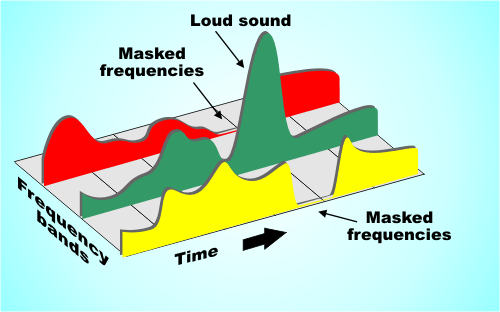
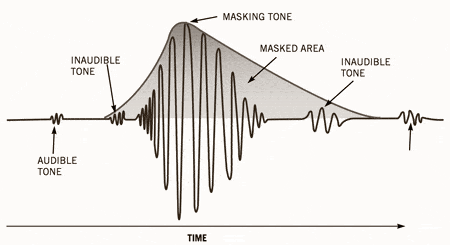
How does Fraunhofer IIS do it? During the invention of MP3, developers studied psychoacoustics and determined that some of the audio data is not important to the human ear. MP3 achieves the purpose of compressing the file size by discarding this part of the data, and can successfully compress the audio file to 1/10 of the original size.

After that, from the first half of 1995 to the end of the 1990s, MP3 began to flourish on the Internet. The “much smaller file but also good sounding” MP3 began its era of dominating audio formats. There were even many people at the time who believed that all digital music files were MP3s.

MP3: complete analysis of the audio format

MP3: complete analysis of the audio format

Mp3 Audio Format
Mp3 Audio Format

WMA: WMA is the file format encoded by Windows Media Audio, developed by Microsoft.

Mp3 Audio Format
Mp3 Audio Format

WMA is not aimed at the independent market, but at the network! The competitor is the well-known Real Networks in the online media market. Microsoft claims that at a bit rate of just 64 kbps, WMA can achieve sound quality close to CD. Unlike the previous encoding, WMA supports the anti-copy function. Supports adding protection via Windows Media Rights Manager, which can limit playback time, number of playback times, and even playback machine, etc. WMA supports streaming technology, that is, play while reading, so WMA can easily realize online streaming. Because it is a Microsoft masterpiece, Microsoft has added support for WMA in Windows. WMA has excellent technical characteristics. With vigorous promotion, this format has been accepted by more and more people.

WAV: This is an old audio file format developed by Microsoft. WAV is a file format that complies with the PIFF Resource Interchange File Format specification. All WAVs have a file header, the encoding parameters of this file header audio stream. WAV does not have a strict regulation on the encoding of audio streams. In addition to PCM, almost all encodings that support the ACM specification can encode WAV audio streams. Many friends do not have this concept. Let’s take AVI as an example, because AVI and WAV are very similar in file structure, but AVI has one more video stream. There are many types of AVIs we have come into contact with, so we often need to install some decoders to watch some AVIs. DivX, which we have come into contact with a lot, is a type of video encoding. AVI can use DivX encoding to compress video streams, and of course we can also use other code compression. Similarly, WAV can also use a variety of audio codecs to compress its audio stream, but we commonly use WAV whose audio stream is processed by PCM encoding, but this does not mean that WAV can only use PCM codec, it is also you can use MP3 codec. in WAV Just like AVI, as long as the corresponding Decode is installed, you can enjoy these WAVs. On the Windows platform, WAV based on PCM encoding is the best supported audio format. All audio software can support it perfectly. Because it can meet higher sound quality requirements, WAV is also the preferred format for music creation and editing. Suitable for storing musical material. Therefore, WAV based on PCM encoding is used as an intermediate format and is often used in the conversion of other encodings, such as MP3 to WMA.

Ogg Vorbis: The so-called MP3 killer! What is the origin of Ogg Vorbis? OGG is the project name of a large multimedia development program, which will involve coding development in aspects such as video and audio. The whole purpose of the OGG project plan is to provide a completely free media encoding solution for anyone! OGG’s belief is: OPEN! FREE! The word Vorbis is the name of a “playboy” character in the fantasy novel “Small Gods” by Terry Platjat. This term became the official name for audio encoding in the OGG project. At present, Vorbis has been successfully developed and an encoder has been developed. Ogg Vorbis is a high quality audio coding scheme. Official data shows that Ogg Vorbis can achieve better sound quality than MP3 at relatively low data rates. This Ogg Vorbis encoding is also much more advanced than MP3, which was successfully developed in the 1990s. It can support multiple channels. What does this mean? This means that Ogg Vorbis can encode all channels with the support of SACD, DTSCD, DVD AUDIO ripping software (currently there is no such software), instead of MP3 it can only encode 2 channels. The rise of multi-channel music has brought revolutionary changes in music appreciation, especially when appreciating the symphony, it will bring more sense of presence. This revolutionary change cannot be adapted to MP3. Like MP3, Ogg Vorbis is a flexible and open audio codec that allows for significant sound quality adjustments and further algorithm improvements once the codec has been fixed. Therefore, its sound quality will be better and better. Just like MP3.

MP3 vs. MP4 | Difference between MP3 and MP4

MP3 vs. MP4 | Difference between MP3 and MP4

MP3 vs. MP4
MP3 vs. MP4

MP3 vs. MP4

MP3 vs. MP4
MP3 vs. MP4

MP3 vs. MP4 | What is the MP4 file format?
As mentioned earlier in this MP3 vs MP4 review, MP3 is an audio file format and MP4 can store both audio and video. Also, even some other data like subtitles can be stored in MP4 files.

It just means that if you see a filename with an .mp4 extension, you won’t know if it’s audio or video without playing it. And just as MP3 is short for MPEG-1 Audio Layer 3, MP4 is also short for MPEG-4 Part 14.

MP4 is a container, so it’s up to you to decide which audio codec to use for your audio data. Typically, the Advanced Audio Coding (AAC) codec is used. AAC is the latest compression technology.

Also, for MP4 files, ALAC can also be selected. ALAC can keep all the data on a vinyl record or CD, but still compress the original size to a smaller size. If you need to archive music, this is a good option for you.

Difference between MP3 and MP4
Now that you have a basic understanding of exactly what MP3 and MP4 are, you will have no trouble understanding the difference between the two. Below I have listed the most important and important differences for you to quickly understand:

MP3 is an audio file format. This means that it cannot handle video files. MP4, on the other hand, can handle audio, video, and even subtitles.
MP3 is both a codec and a file format. And on the other hand, MP4 is a container.
Compared to MP3, MP4 better preserves the nuances and details of the music in the file.
MP3 is a short form of MPEG-1 Audio Layer 3. MP4, on the other hand, is a short form of MPEG-4 Part 14.
The options for ALAC are for MP4, but not for MP3.
Not all music players support MP4. However, on the other hand, almost all types of music players available today can easily support the MP3 format.
MP3 came out in 1994 and MP4 was released in 2003.
MP4 files take up more space than MP3 files.
ISO developed the MP4 format. Also, MP3 was developed by Fraunhofer, IRT, and some engineers at Society & Phillips.
MP3 files have the extension .mp3. MP4 files can come with various types of file extensions.
If you compress MP3 files, you will lose quality. On the other hand, in the case of compressing MP4 audio files, lossless compression occurs.
Which is better: MP3 or MP4?

In this review of MP3 vs. MP4, MP4/AAC far outperforms similarly sized MP3s in terms of quality. That’s because AAC is the latest compression technology (as mentioned above). Also, audio or music files archived in MP4 using ALAC is much better than MP3.

The reason is that ALAC can preserve all the details of a vinyl record or CD (as described above) while reducing the original size of the data. Also, said MP4 can be converted to MP3 anytime you need. But in the case of MP3, it is never possible to convert it back to MP4.

Also, if you want to know how to convert h264 to mp4, this guide is just for you.

MP3 vs. MP4 | Difference between MP3 and MP4

MP3 vs. MP4 | Difference between MP3 and MP4

MP3 vs. MP4
MP3 vs. MP4

MP3 vs. MP4

MP3 vs. MP4
MP3 vs. MP4

Anyone who likes to listen to music knows the MP3 file format very well. This is a format that is over 4 years old and has now been superseded by MP4.

However, the numbers in the format name (3 and 4) are simply different, which may indicate that MP4 is the next generation of MP3. Yes, that’s true, but actually, that’s not the only difference.

Currently, MP3 and MP4 formats are available. So what is the difference between MP3 and MP4? Which is better and which should I use?

In this article, I have explained the topic of MP3 vs MP4 in detail. So keep reading until the end.

Before moving on to understand the difference between MP3 and MP4, it is recommended to first understand what exactly MP3 and MP4 mean. Once you understand their difference, it will be easy to understand the difference between them as well.

MP3 vs. MP4 | Difference between MP3 and MP4
MP3 vs. MP4
Anyone who likes to listen to music knows the MP3 file format very well. This is a format that is over 4 years old and has now been superseded by MP4.

However, the numbers in the format name (3 and 4) are simply different, which may indicate that MP4 is the next generation of MP3. Yes, that’s true, but actually, that’s not the only difference.

Currently, MP3 and MP4 formats are available. So what is the difference between MP3 and MP4? Which is better and which should I use?

In this article, I have explained the topic of MP3 vs MP4 in detail. So keep reading until the end.

Before moving on to understand the difference between MP3 and MP4, it is recommended to first understand what exactly MP3 and MP4 mean. Once you understand their difference, it will be easy to understand the difference between them as well.

MP3 sample rate and bit rate

When creating MP3 files from CDs or vinyl records, two main parameters need to be determined. The two parameters are the sample rate and the bit rate. Also, these parameters will determine the file size and quality of the MP3 that will be created.

For the sample rate, a value of 44.1 kHz is generally used. But the bit rate can take values ​​in the range of 8 kbps to 320 kbps. 320 kbps will create the lowest quality file. On the other hand, 320 kbps will create the highest quality. At 3 kbps, the quality will be so high that you won’t notice the difference between the created MP3 and the original CD.

Also, the higher the bitrate, the larger the file size. So if you don’t want very large files, it’s best not to use too high a bitrate. But also keep quality in mind, 128 kbps is the minimum recommended bitrate.

This is because, below 128 kbps, anyone can easily notice a deterioration in sound quality. Therefore, you must use a bit rate of at least 128 kbps or even higher.

Mp3 (an audio encoding method) Part 3

Mp3 (an audio encoding method) Part 3

MP3 ENCODING

To generate bit-compliant (Layer 1.Layer 2.Layer 3) MPEGAudio files, ISO MPEG Audio committee members developed reference simulation software in C called ISO 11172-5.

MP3 ENCODING

It can demonstrate the first real-time DSP-based hardware decoding of compressed audio on some non-real-time operating systems. Various other MPEG audio was developed in real time for digital broadcasting (DAB radio and DVB TV) for consumer receivers and set-top boxes.
Later on July 7, 1994, Fraunhofer-Gesellschaft released the first MP3 encoder called l3enc.
The Fraunhofer development team selected the .mp3 extension on July 14, 1995 (previously the extension was .bit). Using Winplay3 (released September 9, 1995), the first real-time software MP3 player, many people were able to encode and play MP3 files on their own personal computers. Since hard drives at the time were relatively small (such as 500MB), this technology was essential for storing entertainment music on computers.
MP2, MP3 and Internet
In October 1993, MP2 (MPEG-1 Audio Layer 2) files appeared on the Internet and were often played by Xing MPEG Audio Player and later MAPlay developed by Tobias Bading for Unix. MAPplay was first released on February 22, 1994 and ported to the Microsoft Windows platform.
The only MP2 encoder products at first were Xing Encoder and CDDA2WAV, a CD ripper that converts audio tracks from CDs to WAV format.
Often considered the father of the online music revolution, the Internet Underground Music Archive (IUMA) was the first hi-fi music site on the Internet, with thousands of licensed MP2 recordings before MP3 and the web became popular. .
From the first half of 1995 to the end of the 1990s, MP3 began to flourish on the Internet. MP3’s popularity is largely due to the success of companies and software packages such as Winamp released by Nullsoft in 1997 and Napster released by Napster in 1999, and they are mutually reinforcing. These programs make it easy for normal users to play, create, share and collect MP3 files.
The debate about sharing MP3 files between peers has spread rapidly in recent years, mainly because compression makes file sharing possible, uncompressed files are too large to share. Since MP3 files are widely spread over the Internet, Napster has been sued by some of the major record labels to protect their copyright (see Copyright).
Commercial online music distribution services, such as the iTunes Music Store, often choose other proprietary or DRM-enabled music file formats to control and limit the use of digital music. Formats that support DRM are used to protect copyrighted material from copyright infringement, but most protection mechanisms can be broken in some way. Computer experts can use these methods to generate unlocked files that can be freely copied. One notable exception is Microsoft’s Windows Media Audio 10 format, which has yet to be cracked. If a compressed audio file is desired, the recorded audio stream must be compressed and the sound quality will be degraded.
streaming audio quality
Because MP3 is a lossy compression format, it offers a variety of options for different “bit rates,” that is, the number of encoded data bits needed to represent the audio per second. Typical speeds are between 128 kbps and 320 kbps (kbit/s). In contrast, the uncompressed audio bitrate on a CD is 1411.2 kbps (16 bits/sample × 44100 samples/sec × 2 channels).
MP3 files encoded with lower bit rates generally play at a lower quality. If you use too low a bitrate, “compression artifact” (sounds not present in the original recording) will appear during playback. A good example of compression noise is the sound of compressed cheering; due to its randomness and sharp changes, encoder errors are more pronounced and sound like echoes.

Mp3 (an audio encoding method) Part 2

Mp3 (an audio encoding method) Part 2

mp3 3ncoding

MPEG-1 Audio Layer 2 encoding began as a digital audio broadcast (DAB) managed by Egon Meier-Engelen at the German Deutsche Forschungs- und Versuchsanstalt für Luft- und Raumfahrt (later known as Deutsches Zentrum für Luft- und Raumfahrt, German Space Center). )draft.

mp3 encoding

This project is funded by the European Union as a EUREKA research project, and its name is commonly known as EU-147. The study period for EU-147 was from 1987 to 1994.
2. By 1991, two proposals had emerged: Musicam (called Layer 2) and ASPEC (Adaptive Spectrum Sensing Entropy Coding). The Musicam method proposed by Philips of the Netherlands, CCETT of France, and the Institut für Rundfunktechnik of Germany was chosen due to its simplicity, error robustness, and lower computational effort in high-quality compression. The Musicam format based on subband coding is a key factor in determining the MPEG audio compression format (sample rate, frame structure, header, sample points per frame). This technology and its design philosophy are fully integrated into the definition of ISO MPEG Audio Layer I, II and later Layer III (MP3) formats. The standard was developed by Leon van de Kerkhof (Layer I) and Gerhard Stoll (Layer II) under the auspices of Prof. Mussmann (University of Hannover).
3. A working group consisting of Leon Van de Kerkhof from the Netherlands, Gerhard Stoll from Germany, Yves-François Dehery from France and Karlheinz Brandenburg from Germany absorbed design ideas from Musicam and ASPEC and added their own design ideas to develop an MP3. MP3 can achieve MP2 sound quality from 192 kbit/s to 128 kbit/s.
4. All of these algorithms eventually became part of the first group of MPEG standards, MPEG-1, in 1992, resulting in the international standard ISO/IEC 11172-3 published in 1993. Further work on MPEG audio was eventually became part of the MPEG-2 standard, a second group of MPEG standards developed in 1994, officially known as ISO/IEC 13818-3, first published in 1995.
5. The compression efficiency of the encoder is generally defined by the bit rate, because the compression rate depends on the number of bits (: in: bit depth) and the sampling rate of the input signal. However, there are often products that use CD parameters (44.1 kHz, two channels, 16 bits per channel, or 2×16 bits) as the compression ratio reference, and the compression ratio using this reference is usually higher, which which also shows that the compression ratio is very important for lossy compression problems.
6. Karlheinz Brandenburg used Suzanne Vega’s song Tom’s Diner on CD to test MP3 compression algorithms. This song is used because the song’s smooth and simple melody makes it easier to hear glitches in the compressed format during playback. Some jokingly refer to Suzanne Vega as “the mother of MP3”. Some more serious and critical audio extracts (glockenspiel, triangle, accordion…) from the EBU V3/SQAM reference CD are used by professional audio engineers to assess the subjective perceived quality of the MPEG audio format.