mp3 audio format, the most popular


Free Download Mp4Gain
picture

mp3 audio format, the most popular

mp3 audio format, the most popular

With the rapid development of file compression technology, MP3 has become the most popular music format today.

mp3 audio format, the most popular

MP3 File Format Analysis MP3 file data is made up of multiple frames, and the frame is the smallest unit of the MP3 file. Each frame consists of a frame header, additional information, and sound data. The playback time of each frame is 0.026 seconds, and its duration varies with the bit rate. Some MP3 files have extra bytes at the end to store description information for non-audio data. The structure of the MP3 file is shown in Figure 2. 3.1 Frame header format The frame header is 4 bytes long. For fixed bitrate MP3 files, the frame header format of all frames is the same. The data structure is as follows: typedef FrameHeader{ unsigned int sync:11;//Sync information unsigned int version:2 ;//version unsigned int layer:2;//layer unsigned int protection:1;//CRC check unsigned int bitrate:4;//unsigned bitrate int frequency:2;//unsigned frequency int padding:1;//unsigned frame length setting int private:1;//unsigned reserved word int mode:2; //unsigned channel mode int mode extension:2;//unsigned extended mode int copyright:1;//unsigned copyright int original:1 ;//unsigned original logo int emphasis:2;//emphasis mode }HEADER, *LPHEADER; See Table 1 for a description of the 4 byte frame header. Table 1 Explanation of the use of MP3 frame header bytes Name Length (bits) Description Synchronization information 11 All bits in the 1st and 2nd byte are 1, and the 1st byte is always FF. Version 200-MPEG 2. 5 01-undefined 10-MPEG 2 11-MPEG 1 layer 2 00-undefined 01-Layer 3 10-Layer 2 11-Layer 1 CRC check 1 0-check 1-no check Bit rate 4 The third bit Tuple sampling rate, the unit is kbps, such as MPEG-1 Layer 3, 64 kbps, the value is 0101. Frequency 2 Sampling frequency, for MPEG-1: 00-44.1 kHz 01-48 kHz 10 -32 kHz 11-setting frame length undefined 1 is used to set the length of the file header, 0-no setting, 1-setting, the specific setting calculation method see below. Reserved word 1 is not used. Channel Mode 2 The fourth byte indicates the channel, 00-Stereo 01-Joint Stereo 10-Dual Channel 11-Mono Expansion Mode 2 Only used when the channel mode is 01. Copyright 1 Whether the file is legal or not, 0-Illegal 1-Original logo legal 1 If original, 0-Not original 1-Original emphasis method 2 Used for classification of sound compensation after noise reduction and compression, which is rarely used and is it may not work in the future. 00-Undefined 01-50/15ms 10-Reserved 11-CCITT J.17 MP3 frame length depends on bit rate and frequency, the calculation formula is: frame length = 144×bit rate∕ frequency+padding For example: bit rate is 64kbps, frequency is 44.1kHz, when padding is 1, frame length is 210 bytes. After the table header there is additional information of variable length. For standard MP3 files, their length is 32 bytes, followed by compressed audio data, which will be decoded when the decoder reads here. For Constant Bit Rate (CBR) MP3 files, not all frames are the same length, and some frames may be one or more bytes longer. There is also Variable Bitrate (VBR) MP3, to minimize the length of MP3 file and ensure sound quality, compared to CBR file, except for the first frame, the rest is the same. The first frame of VBR does not contain audio data and its length is 156 bytes, which is used to store information such as standard audio frame header (4 bytes), VBR file identifier, frame number, number file byte, etc. See table 2 for the description of the structure. Table 2 Description of the first byte of the frame structure of the VBR 1-4 file The same standard sound frame header as CBR 5-40 Store the logo of the VBR file “Xing” (58 69 6E 67), the specific position of this logo depends on the adopted MPEG standard and the sound depends on the channel mode.



Free Download Mp4Gain
picture


Mp4Gain Main Window
picture


Mp4Gain Features
picture


Free Download Mp4Gain
picture

mp3 audio format, the most popular

mp3 audio format, the most popular

mp3 audio format, the most popular

With the rapid development of file compression technology, MP3 has become the most popular music format today.

mp3 audio format, the most popular

The encoder transforms the original sound into the frequency domain through a hybrid filter bank. Using a psychoacoustic model, it is estimated that it may be sufficient to be The perceived noise level is then quantized and converted to Huffman coding to form an MP3 bitstream. The decoder is much simpler and its task is to extract the sound signal from the encoded spectral line components through inverse quantization and inverse transformation.
2.4 Modified Discrete Cosine Transform Modified Discrete Cosine Transform (MDCT) refers to converting a set of time-domain data to frequency-domain data for time-domain variation. MDCT is an enhancement of the DCT algorithm. The first fast algorithm is the Fast Fourier Transform (FFT), but FFT has operations on complex numbers and MDCT are all operations on real numbers, which is convenient for programming. When compressing audio data, first divide the original audio data into fixed blocks, and then perform forward MDCT (Forward MDCT) to convert the value of each block into MDCT 512 coefficients. When decompressing, the reverse MDCT (Reverse MDCT) The 512 coefficients are restored to the original sound data, and the original sound data before and after are inconsistent, because redundant and irrelevant data are removed during the compression process. The FMDCT transformation formula is: k=0, 1,…, N/2-1 where N is the length of the transformation window, that is, the number of sample points per block, N=8, 16 ,… ., 1024, 2048. n0=(N/2+1)/2, X(n) is the value in the time domain, X(k) is the value in the frequency domain. If N takes 1024 points, it will become 512 frequency domain values. The IMDCT transformation formula is: 4 Modified Discrete Cosine Transform Modified Discrete Cosine Transform (MDCT) refers to converting a set of time-domain data to frequency-domain data to learn the changes in the domain. weather. MDCT is an enhancement of the DCT algorithm. The first fast algorithm is the Fast Fourier Transform (FFT), but FFT has operations on complex numbers and MDCT are all operations on real numbers, which is convenient for programming. When compressing audio data, first divide the original audio data into fixed blocks, and then perform forward MDCT (Forward MDCT) to convert the value of each block into MDCT 512 coefficients. When decompressing, the reverse MDCT (Reverse MDCT) The 512 coefficients are restored to the original sound data, and the original sound data before and after are inconsistent, because redundant and irrelevant data are removed during the compression process. The FMDCT transformation formula is: k=0, 1,…, N/2-1 where N is the length of the transformation window, that is, the number of sample points per block, N=8, 16 ,… ., 1024, 2048. n0=(N/2+1)/2, X(n) is the value in the time domain, X(k) is the value in the frequency domain. If N takes 1024 points, it will become 512 frequency domain values. The IMDCT transformation formula is: 4 Modified Discrete Cosine Transform Modified Discrete Cosine Transform (MDCT) refers to converting a set of time-domain data to frequency-domain data to learn the changes in the domain. weather. MDCT is an enhancement of the DCT algorithm. The first fast algorithm is the Fast Fourier Transform (FFT), but FFT has operations on complex numbers and MDCT are all operations on real numbers, which is convenient for programming. When compressing audio data, first divide the original audio data into fixed blocks, and then perform forward MDCT (Forward MDCT) to convert the value of each block into MDCT 512 coefficients. When decompressing, the reverse MDCT (Reverse MDCT) The 512 coefficients are restored to the original sound data, and the original sound data before and after are inconsistent, because redundant and irrelevant data are removed during the compression process. The FMDCT transformation formula is: k=0, 1,…, N/2-1 where N is the length of the transformation window, that is, the number of sample points per block, N=8, 16 ,… ., 1024, 2048. n0=(N/2+1)/2, X(n) is the value in the time domain, X(k) is the value in the frequency domain.

mp3 audio format, the most popular

mp3 audio format, the most popular

mp3 audio format
mp3 audio format

With the rapid development of file compression technology, MP3 has become the most popular music format today.

mp3 audio format
mp3 audio format

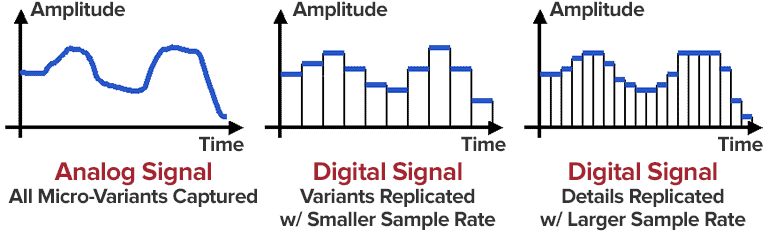
High-quality music quickly spreads to all parts of the world with the arrangement of 0 and 1, shaking people’s hearts. What is MP3? The full name of MP3 is MPEG Audio Layer 3. It is an efficient computer audio coding scheme. It converts audio files into smaller files with .MP3 extension with a higher compression ratio and basically maintains the sound quality of the file. original. MP3 is part of the ISO/MPEG standard. The ISO/MPEG standard describes audio compression using a high-performance perceptual coding scheme. This standard has been continuously updated to meet the pursuit of “high quality and small quantity”, and now has formed MPEG Layer 1, Layer 2. Layer 3 three audio encoding and decoding schemes. The compression rate of MPEG Layer 3 can reach from 1:10 to 1:12. A 1M MP3 file can be played for 1 minute, while a 1 minute CD-quality WAV file (44100Hz, 16bit, 2ch, 60sec) occupies 10M of space, so Calculated, the time The playback time of a 650M MP3 disc should be more than 10 hours, while the playback time of a CD with the same capacity is about 70 minutes. The advantages of MP3 are unmatched by CD. 2 Analysis of the principle of MP3 2.1 MPEG audio standard MPEG (Moving Picture Experts Group) is a moving picture expert group under ISO, and the MPEG standard formulated by it is widely used in various multimedia. MPEG standards include video and audio standards, among which MPEG-1, MPEG-2, MPEG-2 AAC, and MPEG-4 audio standards have been developed. The MPEG-1 and MPEG-2 standards use the same family of audio codecs: Layer 1, 2 and 3. A new feature of MPEG-2 is the use of low sample rate expansion kits to reduce data traffic , and another feature is the multi-channel expansion kit, which increases the number of main channels to five. Fraunhofer IIS and AT&T released the MPEG-2 AAC (MPEG-2 Advanced Audio Coding) standard in 1997 to significantly reduce data traffic. The MDCT (Modified Discrete Cosine Transform) algorithm adopted by MPEG-2 AAC, The sampling frequency can be between 8 KHz and 96 KHz, and the number of channels can be between 1 and 48. MPEG Audio Layer 1, 2 and 3 use the same filter bank, bitstream structure, and header information, and the sample rate is either 32 KHz, 44.1 KHz, or 48 KHz. Layer 1 is designed for DCC (digital compact cassette) digital compression tape, the data rate is 384 kbps, and layer 2 has made a compromise between complexity and performance, and the data rate has been reduced to 256 kbps- 192kbps. Layer 3 was designed for low data rate from the beginning, and the data rate is 128Kbps-112Kbps. Layer 3 adds MDCT transform, which makes its frequency resolution 18 times higher than that of Layer 2. Layer 3 also uses information averaging similar to MPEG video entropy coding to reduce redundant information. The vast majority of MP3 uses the MPEG-1 standard. 2.2 The purpose of audio compression The MP3 format began in the mid-1980s, and the Fraunhofer Institute in Erlangen, Germany, was committed to high-quality, low-data-rate audio coding. Let’s look at an example: You want to sample a song you like that is about 4 minutes long, store it on a disc, and sample it in CD-quality WAV format at a sample rate of 44.1 kHz, which means receiving 44100 per second. , stereo, each sample data is 16 bits (2 bytes), so the space occupied by this song is: 44100×2 channels x2 bytes x60 seconds x4 minutes=40.4MB If you download this song from the Internet, assume the transmission speed is of 56kbps, the download time is: 40.4x106x8/56x103x60=96 minutes. Even a 1M broadband network takes more than 5 minutes. It can be seen that audio compression is especially important to reduce the storage space of audio data. 2.3 MP3 encoding and decoding MP3 audio compression involves encoding and decoding in two parts. Encoding is turning the data in a WAV file into a highly compressed bitstream, and decoding is taking the bitstream and reconstructing it into a WAV file. MP3 uses a distortion algorithm called Perceptual Audio Coding. The frequency range of sound perceived by the human ear is from 20 Hz to 20 kHz. MP3 cuts out a lot of redundant and irrelevant signals.

MP3 encoder

MP3 encoder

Mp3 Encoder
Mp3 Encoder

1. MP3 Encoder FAQ

Mp3 Encoder
Mp3 Encoder

: what is an MP3 encoder?
An MP3 encoder is a piece of software that uses the MP3 codec algorithm (compression/decompression) to create mp3 files. Most encoders only convert
a WAV file to an MP3 file, although many can convert other formats such as WMA, Real Audio, Ogg, etc.

There are only a few standalone encoders, and a lot of software also only uses 4 main encoding engines, largely due to
to Fraunhofer Gesellschaft patents and various companies helping with ISO sources. Although no company owns the license, the
Developers must pay expensive license fees no matter what proprietary MP3 encoder they use. Major MP3 encoding engines include: LAME (
non-ISO source), BladeEnc, Fraunhofer, and Real Networks’ Xing encoder.

– How does the MP3 encoder work?
The core technology under MPEG-Layer 3 is included in the MP3 encoder. The decoding process uses a series of algorithms and rules to compress audio.
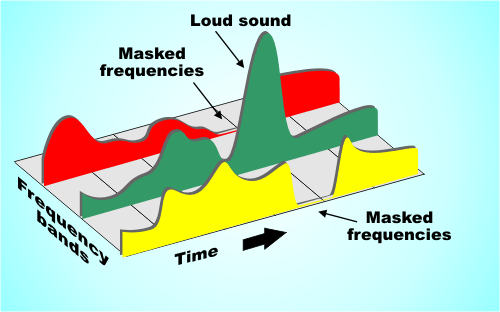
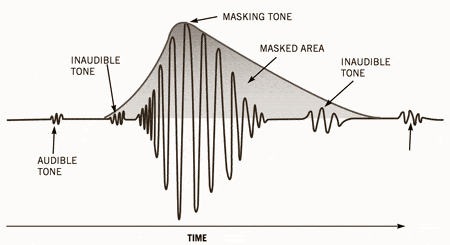
The encoder also detect sounds that occur at the same time
and they try to rule out any that might be “masked” or “inaudible” by other sounds.

– What is a good MP3 encoder?
Xing is the fastest encoder in terms of speed, but the worst in quality. For smaller file sizes, Fraunhofer FastEnc
offers the best quality. LAME is a very good encoder, and one version is faster than the previous one, BladeEnc
it is the best quality for large files, but very slow.

2. Dissection of MP3 files
In addition to proficiency in using the basic features of the MP3 encoder, ordinary users do not need to know how the internal structure of the MP3 file is encoded, just like the situation when
face JPEG or DOC files. Out of morbid curiosity, here’s an X-ray view of an MP3 file:

– Box header
As mentioned above, MP3 files are made up of thousands of “frame frames”, each frame containing a part (second part) of valuable audio data.
for the decoder to reconstruct the audio data. The first part above is the box header. (Frame Header), which consists of 32-bit metadata related to the
later data, see the figure below. The MP3 header begins with an 11-bit “sync timing” block, which allows the player to seek and lock the first
legal framework available, which is useful in MP3 streaming, which can quickly move or jump ID3 from the playback source block to a normal one.
position . However, simply detecting synchronized blocks is theoretically not enough, so it is necessary to check the header.

– transmission lock
MP3 was originally designed for broadcast, and as a result it became important that the MP3 receiver could be synchronized with the signal at any part of the broadcast,
so the frame header is placed at the beginning of any frame transmission, so when an MP3 receiver “tunes” to a data stream, it picks up the
signal instantly and you can play it immediately. Interestingly, this fact makes it possible to cut MPEG files into small segments, each of which can be played independently. But unfortunately
not possible in 3-layer (MP3) files, where frames often depend on other frames, so you can’t just
Edit .

– Frames per second
Just as the movie industry has a standard for the number of frames per second in film to ensure proper viewing on any projector,
A similar standard is used in the MP3 standard, regardless of the file’s bitrate, MPEG-1 A frame in the file is 26 ms, approximately 38 fps frames per second. If the bit rate
is , the frame size is correspondingly larger, and vice versa. Also, the number of samples contained in an MP3 frame is constant, 1152 samples per frame.

The total size of any given frame can be calculated with the following formula:

FrameSize = 144 * BitRate / (SampleRate + Padding).

Mp3 (an audio encoding method) Part 3

Mp3 (an audio encoding method) Part 3

MP3 ENCODING

To generate bit-compliant (Layer 1.Layer 2.Layer 3) MPEGAudio files, ISO MPEG Audio committee members developed reference simulation software in C called ISO 11172-5.

MP3 ENCODING

It can demonstrate the first real-time DSP-based hardware decoding of compressed audio on some non-real-time operating systems. Various other MPEG audio was developed in real time for digital broadcasting (DAB radio and DVB TV) for consumer receivers and set-top boxes.
Later on July 7, 1994, Fraunhofer-Gesellschaft released the first MP3 encoder called l3enc.
The Fraunhofer development team selected the .mp3 extension on July 14, 1995 (previously the extension was .bit). Using Winplay3 (released September 9, 1995), the first real-time software MP3 player, many people were able to encode and play MP3 files on their own personal computers. Since hard drives at the time were relatively small (such as 500MB), this technology was essential for storing entertainment music on computers.
MP2, MP3 and Internet
In October 1993, MP2 (MPEG-1 Audio Layer 2) files appeared on the Internet and were often played by Xing MPEG Audio Player and later MAPlay developed by Tobias Bading for Unix. MAPplay was first released on February 22, 1994 and ported to the Microsoft Windows platform.
The only MP2 encoder products at first were Xing Encoder and CDDA2WAV, a CD ripper that converts audio tracks from CDs to WAV format.
Often considered the father of the online music revolution, the Internet Underground Music Archive (IUMA) was the first hi-fi music site on the Internet, with thousands of licensed MP2 recordings before MP3 and the web became popular. .
From the first half of 1995 to the end of the 1990s, MP3 began to flourish on the Internet. MP3’s popularity is largely due to the success of companies and software packages such as Winamp released by Nullsoft in 1997 and Napster released by Napster in 1999, and they are mutually reinforcing. These programs make it easy for normal users to play, create, share and collect MP3 files.
The debate about sharing MP3 files between peers has spread rapidly in recent years, mainly because compression makes file sharing possible, uncompressed files are too large to share. Since MP3 files are widely spread over the Internet, Napster has been sued by some of the major record labels to protect their copyright (see Copyright).
Commercial online music distribution services, such as the iTunes Music Store, often choose other proprietary or DRM-enabled music file formats to control and limit the use of digital music. Formats that support DRM are used to protect copyrighted material from copyright infringement, but most protection mechanisms can be broken in some way. Computer experts can use these methods to generate unlocked files that can be freely copied. One notable exception is Microsoft’s Windows Media Audio 10 format, which has yet to be cracked. If a compressed audio file is desired, the recorded audio stream must be compressed and the sound quality will be degraded.
streaming audio quality
Because MP3 is a lossy compression format, it offers a variety of options for different “bit rates,” that is, the number of encoded data bits needed to represent the audio per second. Typical speeds are between 128 kbps and 320 kbps (kbit/s). In contrast, the uncompressed audio bitrate on a CD is 1411.2 kbps (16 bits/sample × 44100 samples/sec × 2 channels).
MP3 files encoded with lower bit rates generally play at a lower quality. If you use too low a bitrate, “compression artifact” (sounds not present in the original recording) will appear during playback. A good example of compression noise is the sound of compressed cheering; due to its randomness and sharp changes, encoder errors are more pronounced and sound like echoes.

Mp3 (an audio encoding method) Part 2

Mp3 (an audio encoding method) Part 2

mp3 3ncoding

MPEG-1 Audio Layer 2 encoding began as a digital audio broadcast (DAB) managed by Egon Meier-Engelen at the German Deutsche Forschungs- und Versuchsanstalt für Luft- und Raumfahrt (later known as Deutsches Zentrum für Luft- und Raumfahrt, German Space Center). )draft.

mp3 encoding

This project is funded by the European Union as a EUREKA research project, and its name is commonly known as EU-147. The study period for EU-147 was from 1987 to 1994.
2. By 1991, two proposals had emerged: Musicam (called Layer 2) and ASPEC (Adaptive Spectrum Sensing Entropy Coding). The Musicam method proposed by Philips of the Netherlands, CCETT of France, and the Institut für Rundfunktechnik of Germany was chosen due to its simplicity, error robustness, and lower computational effort in high-quality compression. The Musicam format based on subband coding is a key factor in determining the MPEG audio compression format (sample rate, frame structure, header, sample points per frame). This technology and its design philosophy are fully integrated into the definition of ISO MPEG Audio Layer I, II and later Layer III (MP3) formats. The standard was developed by Leon van de Kerkhof (Layer I) and Gerhard Stoll (Layer II) under the auspices of Prof. Mussmann (University of Hannover).
3. A working group consisting of Leon Van de Kerkhof from the Netherlands, Gerhard Stoll from Germany, Yves-François Dehery from France and Karlheinz Brandenburg from Germany absorbed design ideas from Musicam and ASPEC and added their own design ideas to develop an MP3. MP3 can achieve MP2 sound quality from 192 kbit/s to 128 kbit/s.
4. All of these algorithms eventually became part of the first group of MPEG standards, MPEG-1, in 1992, resulting in the international standard ISO/IEC 11172-3 published in 1993. Further work on MPEG audio was eventually became part of the MPEG-2 standard, a second group of MPEG standards developed in 1994, officially known as ISO/IEC 13818-3, first published in 1995.
5. The compression efficiency of the encoder is generally defined by the bit rate, because the compression rate depends on the number of bits (: in: bit depth) and the sampling rate of the input signal. However, there are often products that use CD parameters (44.1 kHz, two channels, 16 bits per channel, or 2×16 bits) as the compression ratio reference, and the compression ratio using this reference is usually higher, which which also shows that the compression ratio is very important for lossy compression problems.
6. Karlheinz Brandenburg used Suzanne Vega’s song Tom’s Diner on CD to test MP3 compression algorithms. This song is used because the song’s smooth and simple melody makes it easier to hear glitches in the compressed format during playback. Some jokingly refer to Suzanne Vega as “the mother of MP3”. Some more serious and critical audio extracts (glockenspiel, triangle, accordion…) from the EBU V3/SQAM reference CD are used by professional audio engineers to assess the subjective perceived quality of the MPEG audio format.

Mp3 (an audio encoding method)

Mp3 (an audio encoding method)

Mp3 encxoding

MP3 is an audio compression technology, its full name is Moving Picture Experts Group Audio Layer III, called MP3.

mp3 encoding

It is designed to drastically reduce the amount of audio data. Using MPEG Audio Layer 3 technology, music is compressed into a smaller capacity file with a compression ratio of 1:10 or even 1:12, and for most users, playback quality is not as good as the original uncompressed. audio Significant decrease. It was invented and standardized in 1991 by a group of engineers at the Fraunhofer-Gesellschaft research organization in Erlangen, Germany. Music stored in the form of MP3 is called MP3 music, and a machine that can play MP3 music is called an MP3 player.

Motion Picture Expert Compression Standard Audio Layer 3 foreign name Moving Picture Expert Group Audio Layer III research organization Fraunhofer-Gesellschaft type audio coding advantage Drastically reduce the amount of audio data defect sound quality loss
content
1 Features
2 story
▪ origin
▪ go to the masses
3 audio quality
4 patent issues
transmission characteristics
MP3 converts the time-domain waveform signal to a frequency-domain signal by taking advantage of the human ear’s insensitivity to high-frequency sound signals and splits it into multiple frequency bands, using different compression rates. for different frequency bands and increasing the compression ratio for high frequencies (even ignoring the signal) Use a small compression ratio for low frequency signals to ensure that the signal is not distorted. In this way, it is equivalent to discarding the high-frequency sound that is basically inaudible to the human ear [1], keeping only the audible low-frequency part, thus compressing the sound with a compression ratio of 1:10 or even 1: 12. Because the full name of this compression method is called MPEG Audio Player3, people call it MP3 for short.
According to the MPEG specification, AAC (Advanced Audio Coding) in MPEG-4 will be the next generation of the MP3 format.
Compared to CD, FLAC and APE lossless compression formats, the sound quality of the highest parameter MP3 (320 Kbps) is not much different.
MP3 players are dying
When they first came out, MP3 players were at the forefront of the digital revolution. However, sales of iPods and other MP3 players in the UK fell sharply in 2012 as consumers turned to other digital products such as smartphones.
In 2012, sales of MP3 players in the UK market were £110m ($178m), just 29% of the £381m in 2011, according to market research firm Mintel. Mintel expects total MP3 player sales in the UK market to halve by 2017. In the worst case scenario, total MP3 player sales in the UK market will be just 25 million dollars five years later. [23]
1. MP3 is a data compression format;
2. Discards pulse code modulation (PCM) audio data that is not important to the human ear (similar to JPEG is a lossy image compression), resulting in a much smaller file size;
3. MP3 audio can be compressed according to different bit rates, providing a variety of trade-offs between data size and sound quality. The MP3 format uses a mixed conversion mechanism to convert audio domain signals. time in frequency domain signals;
4. 32 band polyphase integral filter (PQF);
Modified discrete cosine filter (MDCT) of 5, 36 or 12 taps; each subband size can be independently selected between 0…1 and 2…31;
6. MP3 not only has extensive client software support, but also has a lot of hardware support, such as portable media players (referring to MP3 players), DVD and CD players, outgoing calls

Encode MP3 correctly

Encode MP3 correctly

encode mp3

If the audio files are saved in MP3 format, signals inaudible to humans are cut off. We will tell you how to encode MP3 correctly to achieve the best possible quality.

ENCODE MP3

What is MP3

To optimally encode an MP3, it is important to have an idea of ​​how MP3 works:
MP3 is an audio codec developed by the Fraunhofer Institute, in particular Karlheinz Brandenburg, for the MPEG I standard.
MP3 is a compression method that Psychoakustig uses: The audio signal is divided into narrow frequency bands. Spectral components that humans hear partially or completely are stored with less precision.
The lower the specified bit rate, the more inaccurate the mapping, and the more likely frequencies above the masking threshold are also stored imprecisely.

Encodes MP3 optimally

Depending on whether you extract music from a CD, voice recordings, or analog media recordings, those records would be encoded, they are partly different settings. Others always make sense. You can do all the settings, for example, in XMedia Recode, which CHIP Online offers for free.
In general, it makes sense to keep the sample rate of the file to be encoded. With audio CD, this is 44100Hz. For recordings on discs or cassettes, 32000Hz is sufficient, speech is still clearly understandable even at 22050Hz.
For pure voice recordings, mono is sufficient; for music, joint stereo is usually more efficient than single stereo, as some bits can be saved losslessly through mid-side encoding.
As a bit rate mode, VBR-ABR (Variable Bit Rate – Average Bit Rate) is always the method of choice: in regions where frequency ranges are clearly masked or where there is absolute silence, an extremely large amount of data is saved that makes sense elsewhere. It can be used. Depending on the type of signal, an MP3 with an average VBA-ABR bit rate of 128 kbps can be significantly more accurate than a constant bit rate (kBR) file of 160 kbps. In any case, with the same file size, it is always at least as good as a KBR file with the same bitrate.
To take advantage of this potential, you should set the VBR quality to the maximum, the minimum bit rate to 32 kbps, and the maximum to 224.
Depending on the nuances of your music, an average bit rate of 128 to 192 kbps is usually ideal. Of course, mono files only need half the bit rate. For speech, 32 to 48 are sufficient for comprehension, up to 64 kbps for slightly clearer sound. Here you can also use a high pass of about 90 Hz.
Of course, you will get the best quality if you set the quality to “high”. Encoding takes a bit longer, but with current processor performance this is not significant.
It is completely useless to encode an MP3 with better quality later or to save a mono file in stereo.