Audio Psychoacoustics


Free Download Mp4Gain
picture

Audio Psychoacoustics: Understanding How We Hear
Audio Psychoacoustics

Introduction to Psychoacoustics

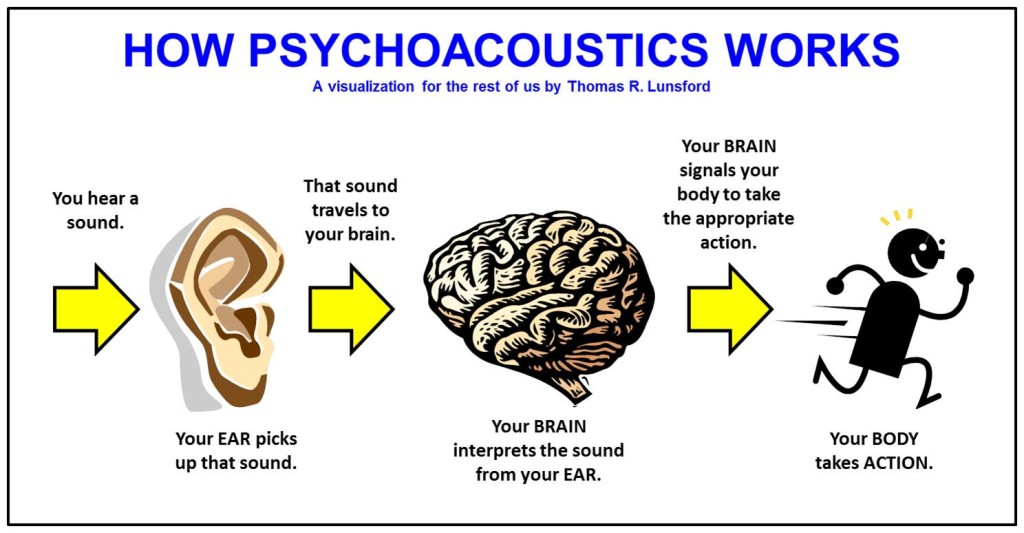
Audio psychoacoustics is the study of how humans perceive and process sound. This includes the physiological and psychological aspects of hearing, as well as the cognitive and emotional responses that result from it. As an expert in this field, I will provide a detailed explanation of the topic, including the various theories and principles that underpin it.

The Physiology of Hearing

To understand how sound is processed by the human ear, it is important to first understand the basic anatomy of the ear. The ear is made up of three main parts: the outer ear, middle ear, and inner ear. The outer ear consists of the pinna, ear canal, and eardrum, which work together to capture and transmit sound waves to the middle ear. The middle ear contains the three smallest bones in the human body, the malleus, incus, and stapes, which amplify and transmit the sound waves to the inner ear. The inner ear is made up of the cochlea, which contains tiny hair cells that convert the sound waves into electrical impulses that are sent to the brain for processing.

Psychoacoustic Principles

Psychoacoustics is concerned with how the human brain processes sound signals. One of the key principles of psychoacoustics is the concept of loudness, which refers to the perceived volume of a sound. The human ear is capable of detecting a wide range of sound levels, from the faintest whisper to the loudest explosion. Another important principle is pitch, which refers to the perceived frequency of a sound. The human ear can detect frequencies ranging from around 20 Hz to 20,000 Hz.

Masking and Perception

Masking is a psychoacoustic phenomenon where the presence of one sound makes it more difficult to perceive another sound. This can occur when two sounds are played at the same time, or when one sound is played immediately after another. Masking can occur in both the frequency domain (when two sounds have overlapping frequencies) and the temporal domain (when one sound occurs immediately before or after another). Understanding masking is important in fields such as audio engineering and sound design, where it is necessary to minimize the impact of masking on the listener’s perception of sound.

Audio Compression and Psychoacoustics

Audio compression is the process of reducing the size of an audio file by removing redundant or irrelevant data. One of the most common forms of audio compression is lossy compression, which works by removing data that is not perceived by the human ear. This is achieved by taking advantage of psychoacoustic principles such as masking and frequency masking. By removing sounds that are masked by other sounds, lossy compression algorithms can significantly reduce the size of an audio file without perceptible loss in quality.

Applications of Psychoacoustics

Psychoacoustics has a wide range of applications in fields such as audio engineering, music production, and sound design. By understanding how humans perceive and process sound, audio professionals can create more effective and engaging audio experiences for listeners. For example, understanding masking can help audio engineers to design more effective soundtracks for films and video games. Similarly, understanding how humans perceive loudness and pitch can help music producers to create more impactful and emotionally engaging music.

FAQ

Q: What is binaural audio?

Binaural audio is a type of audio recording that is designed to be listened to with headphones. It is created using two microphones that are placed inside a simulated head, with each microphone positioned at the location of one of the ears.

This creates a stereo image that closely replicates the way humans perceive sound in real life, allowing for a more immersive and realistic listening experience. Binaural audio is often used in virtual reality and video game audio, where a sense of spatial awareness is important.

Q: How does psychoacoustics relate to audio engineering?

Psychoacoustics plays an important role in audio engineering, as it provides a framework for understanding how humans perceive and process sound. This understanding can be used to create more effective and engaging audio experiences for listeners. For example, by understanding the principles of loudness and masking, audio engineers can design soundtracks that effectively communicate the intended emotional impact of a scene.

Q: How does audio compression affect sound quality?

Audio compression can affect sound quality by removing data that is perceived as irrelevant or redundant by the human ear. Lossy compression algorithms can reduce the size of an audio file by removing sounds that are masked by other sounds, without a perceptible loss in quality. However, if too much data is removed, the resulting file can sound noticeably compressed or distorted. For this reason, it is important to strike a balance between file size and sound quality when compressing audio.

Q: Can psychoacoustics be used to improve hearing aid technology?

Yes, psychoacoustics can be used to improve hearing aid technology by providing a better understanding of how humans perceive and process sound. This understanding can be used to design hearing aids that better replicate the natural hearing process, resulting in a more natural and effective listening experience for the wearer.

Q: What is the importance of psychoacoustics in sound design?

Psychoacoustics is important in sound design because it provides a framework for understanding how humans perceive and respond to sound. This understanding can be used to create more effective and engaging soundscapes that effectively communicate the intended emotional impact of a scene. For example, understanding the principles of masking can help sound designers to create more immersive and detailed soundscapes for films and video games.

Q: How can understanding psychoacoustics help with audio editing?

Understanding psychoacoustics can help with audio editing by providing a better understanding of how humans perceive and respond to sound. This understanding can be used to make more effective and impactful edits that effectively communicate the intended emotional impact of a scene. For example, understanding the principles of loudness can help audio editors to make more effective cuts and transitions in a soundtrack.

Q: How does the environment affect psychoacoustics?

The environment can have a significant impact on psychoacoustics, as it can affect the way that sound waves are transmitted and perceived. For example, the acoustics of a room can affect the way that sounds are reflected and absorbed, leading to changes in loudness and perceived pitch. Understanding the environmental factors that affect psychoacoustics is important in fields such as audio engineering and sound design, where it is necessary to create audio experiences that are effective in a wide range of environments.

Q: How does masking affect speech intelligibility?

Masking can affect speech intelligibility by making it more difficult to distinguish individual sounds and words in a sentence. This can occur when a speech signal is masked by other sounds that have overlapping frequencies, making it more difficult for the brain to isolate and process the speech signal. Understanding masking is important in fields such as audio engineering and sound design, where it is necessary to ensure that speech is clear and intelligible in a wide range of environments.



Free Download Mp4Gain
picture


Mp4Gain Main Window
picture


Mp4Gain Features
picture


Free Download Mp4Gain
picture

Audio Extraction

The Ultimate Guide to Audio Extraction: How to Get the Most Out of Your Audio Files


Audio Extraction
Audio Extraction
Audio Extraction
Audio Extraction


Introduction to Audio Extraction

Have you ever wanted to extract audio from a video or a song, but didn’t know how to do it? Audio extraction is the process of separating the audio track from a video file, music video or even a DVD. This can be useful for a variety of reasons, such as creating a music playlist, removing background music or sound effects from a video, or simply enjoying the audio on its own.

In this guide, we will discuss everything you need to know about audio extraction, including what it is, how it works, and the best tools to use for extracting audio from various sources.

What is Audio Extraction?

Audio extraction is the process of isolating the audio from a multimedia file, such as a video or a DVD, and saving it as a separate audio file. This can be done using specialized software or online tools, and it can be used for a variety of purposes, such as creating a music playlist or removing unwanted audio from a video.

How Does Audio Extraction Work?

Audio extraction works by separating the audio track from the video or DVD file. This can be done using software that is specifically designed for audio extraction, such as VLC Media Player or Audacity. These tools allow you to import the video or DVD file, and then select the audio track that you want to extract.

Once you have selected the audio track, you can then save it as a separate audio file in a variety of formats, such as MP3, WAV, or AAC. The resulting audio file will contain only the audio from the original video or DVD file.

Best Tools for Audio Extraction:

There are a variety of tools that you can use for audio extraction, depending on your needs and preferences. Here are some of the best tools for audio extraction:

  1. VLC Media Player: VLC is a popular media player that also has built-in audio extraction capabilities. Simply open the video or DVD file in VLC, select the audio track that you want to extract, and save it as a separate audio file.
  2. Audacity: Audacity is a free, open-source audio editing tool that can also be used for audio extraction. Import the video or DVD file into Audacity, select the audio track, and then export it as a separate audio file.
  3. Any Audio Converter: Any Audio Converter is a free tool that allows you to extract audio from a variety of sources, including videos and DVDs. Simply import the video or DVD file, select the audio track, and then save it as a separate audio file.

FAQs:

1. Is it legal to extract audio from a video or DVD?

The legality of audio extraction depends on the copyright laws in your country. In some cases, it may be legal to extract audio for personal use, but illegal to distribute or share the extracted audio. It’s always best to consult a legal professional if you have any doubts.

2. Can I extract audio from streaming services like Netflix or Amazon Prime Video?

Extracting audio from streaming services is often prohibited by the terms of service for these services. It is best to check the terms of service before attempting to extract audio from any streaming service.

3. What formats can I save the extracted audio in?

The formats you can save the extracted audio in will depend on the software or tool you are using for audio extraction. However, common formats include MP3, WAV, and AAC.

4. Can I extract audio from a video with multiple audio tracks?

Yes, you can extract audio from a video with multiple audio tracks. Most audio extraction tools will allow you to select the specific audio track you want to extract.

5. What can I do with extracted audio?

There are many things you can do with extracted audio, including creating a music playlist, removing background music or sound effects from a video, or simply enjoying the audio on its own.

Conclusion:

Audio extraction is a useful process that allows you to isolate and save audio from a multimedia file. With the right tools, you can extract audio from videos, music videos, and even DVDs. Whether you want to create a music playlist or remove unwanted audio from a video, audio extraction is a valuable tool to have in your arsenal.

We hope this guide has helped you understand what audio extraction is, how it works, and the best tools to use for audio extraction. Remember to always check the copyright laws in your country before extracting audio from any multimedia file.

What is Audio Conversion?

What is Audio Conversion?

What is Audio Conversion?

Audio conversion is when you take a sound or music file and change it to a different type of file. It’s like changing a picture from a square shape to a circle shape, but for sounds!


Why Do People Convert Audio Files?

There are a few reasons why people might want to convert audio files. One reason is to make them smaller so they take up less space on your computer or phone. Another reason is to change the file type so it can be played on different devices or programs. For example, if you have a music file that can only be played on iTunes, you might want to convert it to an MP3 so you can play it on other music players.

How Does Audio Conversion Work?

Audio conversion works by taking the original sound file and changing its format. This can be done in a few different ways, but the most common method is called “transcoding”. Transcoding involves taking the original file and using software to convert it to a different format.

For example, let’s say you have a music file that is in WAV format (which is a big file size), but you want to convert it to an MP3 format (which is smaller and more widely compatible). You would use a software program to do this. The program would take the original WAV file and “transcode” it into an MP3 file. This process involves analyzing the original file and re-encoding it into a new format that is smaller and more compatible.

What Are Some Common Audio Formats?

  • WAV
  • MP3
  • FLAC
  • AAC
  • OGG

These are just a few of the most common audio formats. Each format has its own advantages and disadvantages. For example, WAV files are very high quality, but they take up a lot of space. MP3 files are smaller, but they lose some quality in the compression process. FLAC files are high quality and also compress well, but they’re not as widely supported as MP3s. AAC and OGG are also compressed formats that are used for streaming and mobile devices.

Why Do Audio Files Lose Quality When They’re Converted?

When an audio file is converted from one format to another, it has to be compressed in some way to make it smaller or to change its format. Compression involves removing some of the data from the original file, which can result in a loss of quality.

Think of it like taking a big picture and shrinking it down to a smaller size. Some of the details will be lost or blurry because there’s just not enough room to keep all the information. The same thing happens with audio files when they’re compressed.

What is mp4gain?

mp4gain is a software program that can help you adjust the volume of your audio files. Sometimes, when you convert a file from one format to another, the volume level can change. mp4gain can help you fix this problem by analyzing your audio files and adjusting the volume levels so they’re consistent across all your files. This can be really helpful if you have a lot of different music files that were recorded at different volumes.

Conclusion

So, there you have it! Audio conversion is when you change a sound or music file from one format to another. People do this for different reasons, like making files smaller or more compatible with different devices or programs. Audio conversion works by “transcoding” the original file using software, which can result in some loss of quality due to compression. There are many different audio formats to choose from, each with their own advantages and disadvantages. If you need to adjust the volume levels of your audio files after converting them, you can use a program like mp4gain to do so.

The Ultimate Guide to High-Quality Audio and Video

The Ultimate Guide to High-Quality Audio and Video: Benefits and Technical Insights

High-Quality Audio and Video

Introduction

High-Quality Audio and Video

High-quality audio and video are becoming increasingly important in today’s world, especially for professionals and geeks who appreciate a premium experience. In this guide, we will explore the benefits of high-quality audio and video and delve into the technical aspects that make it possible. From bitrate and samplerate to resolution and codecs, we’ll cover everything you need to know to get the most out of your audio and video content.

Audio Quality

Definition of Audio Quality

Audio quality refers to the fidelity of sound reproduction. It is affected by various factors, such as the bitrate, samplerate, and audio format. Higher-quality audio has a higher bitrate, which means more data is transmitted per second. A higher samplerate means that more samples of the audio signal are captured per second, resulting in a more accurate representation of the original sound.

Lossy vs. Lossless Audio Formats

Lossy audio formats, such as MP3, compress the audio signal to reduce file size. This compression results in some loss of audio quality. Lossless audio formats, such as FLAC, retain all the original audio data, resulting in better sound quality. However, lossless audio files are larger in size than lossy files.

Optimizing Audio Quality

Optimizing audio quality depends on the purpose of the content. For music production, a higher-quality audio format is recommended, such as WAV or AIFF. For video production, a high-quality compressed audio format, such as AAC, is suitable. Streaming services usually use lossy audio formats, such as MP3 or AAC, to reduce bandwidth usage. However, lossless formats are recommended for critical listening applications, such as audiophile music playback.

Examples of High-Quality Audio and Their Benefits

Some examples of high-quality audio include studio master recordings, high-resolution audio files, and audiophile-grade equipment. High-quality audio provides better sound clarity, dynamics, and realism, resulting in a more immersive listening experience.

Video Quality

Definition of Video Quality

Video quality refers to the resolution, framerate, codec, and other technical factors that affect the visual fidelity of a video. Higher-quality video has a higher resolution, which means more pixels are displayed on the screen. A higher framerate means that more frames are displayed per second, resulting in smoother motion. A better codec means that the video signal is compressed more efficiently, resulting in a smaller file size without loss of quality.

Compressed vs. Uncompressed Video Formats

Compressed video formats, such as H.264 or HEVC, use a codec to reduce the size of the video file. Uncompressed video formats, such as RAW, retain all the original video data, resulting in better visual quality. However, uncompressed video files are larger in size than compressed files.

Optimizing Video Quality

Optimizing video quality depends on the intended use of the content. For streaming services, a compressed video format, such as H.264 or VP9, is recommended to reduce bandwidth usage. For video editing and post-production, an uncompressed or lightly compressed format, such as ProRes or DNxHR, is suitable. High-resolution video is recommended for critical viewing applications, such as film production or gaming.

Examples of High-Quality Video and Their Benefits

Some examples of high-quality video include 4K Ultra HD, HDR (High Dynamic Range), and high frame rate (HFR) video. High-quality video provides better visual clarity, color accuracy, and motion detail, resulting in a more immersive viewing experience.

Benefits of High-Quality Audio and Video

Improved User Experience

High-quality audio and video provide a more immersive and engaging experience for the user. The higher fidelity and realism result in a more enjoyable and satisfying experience.

Increased Brand Value

High-quality audio and video can increase the perceived value of a brand. Companies that prioritize high-quality content demonstrate a commitment to excellence and attention to detail, which can enhance their reputation and brand loyalty.

Better Communication

Clear and high-quality audio and video are essential for effective communication. High-quality video conferencing, for example, can improve the productivity and effectiveness of remote meetings, allowing participants to communicate more clearly and efficiently.

Technical Insights

Understanding the technical aspects of high-quality audio and video can help professionals and enthusiasts optimize their content and equipment. Knowing the optimal bitrate, samplerate, resolution, and codec for different applications can result in better quality and efficiency.

Conclusion

High-quality audio and video are essential components of modern content creation and consumption. Understanding the technical aspects of audio and video quality can help professionals and enthusiasts optimize their content and equipment, resulting in better quality and efficiency. Whether for music production, video editing, or critical listening and viewing, high-quality audio and video provide numerous benefits and enhance the user experience.

Which format has the best sound quality for music?

Which format has the best sound quality for music?

Music Format
Music Format


PCM, the highest level in audio files, is the ancestor of all digital audio (not including analog), with the highest fidelity and high volume.

Music Format
Music Format

Common formats include pcm and cda, which are primarily used to burn records as CD files. CD is not a format, it is a standard, please refer to the official red book published by SONY (Sony) for details. It could be on a common CD-ROM, which was later modified) and cannot be saved as format.
Therefore, it must be said that PCM format has the best sound quality, but its volume is extremely large, so it generally uses WAV as the original file to save audio files, the quality is also quite high, the loss is almost quite small, but the volume is relatively large. This is a format developed and illustrated by Microsoft, which is suitable for Windows operating systems and can also be used on the latest MAC systems. Extension: .wav
is the original audio format dedicated to the MAC system, it is AIFF, the extension is Aiff, which was independently developed by Apple and is very common on Mac. That said, this is the best format (except PCM) on a Mac.
On Unix and Java platforms (which mostly refer to SUN platforms), the corresponding format is AU and the extension is au. It is currently the standard audio format under Unix and Java.
The above formats are all original file formats, which are usually huge in size. In order to facilitate transmission on computers, people have developed compression formats. Compression is divided into lossy compression and lossless compression. Obviously, lossy compression has a higher compression rate, but it requires The problem to be solved is how to solve the sound quality problem. The usual practice is to sacrifice the part that the human ear cannot hear, but the human ear is very different, so it is difficult to care for all people. Among the song formats, the best ones are flac (lossless, flac extension), Monkey’s Audio (lossless, ape extension), DTS (multichannel, mainly used with DVD, dtc/wav extension), AC3 (released by Dolby, multichannel surround , realistic sense of presence, extension ac3), AAC (loaded, good sound quality, extension Aac or mp4), WMV (this is also a video format, an improved version of wma and asf, quality is comparable High, extension wmv), as well as MusePack (mpc extension, completely free) and MP3Pro (mp3 extension) are also quite good, these formats are quite high in sound quality, even for users who require not bad sound. Also, the most popular formats are mp3 and ogg, as well as SONY’s special ATRAC/ATRAC3 format, which is dedicated to MD. These effects are also good and are more common on the Internet, but the effect is obviously not as good as the formats mentioned above.
As for rm and wma, because the compression is too high, the sound quality is really unflattering, especially those that circulate on the Internet, which are lost and cannot be lost anymore, so it is highly discouraged.

What music format has the best sound quality?

What music format has the best sound quality?

Music Format
Music Format

When I want to download songs, I always feel that the sound quality is not so pure, it seems a bit muddy, what format is good to listen to?

Music Format
Music Format

There are three lossless music quality formats: ape, wav and flac.

APE is one of the popular lossless compression formats for digital music. Due to its early appearance, it has a wide user base all over the world, especially in mainland China. Lossless compression formats such as APE use a more refined recording method to reduce volume, and the restored data is the same as the original file, ensuring file integrity.

WAV is a sound file format developed by Microsoft. It complies with the RIF file specification and is used to store audio information resources on the Windows platform. It is widely compatible with the Windows platform and its applications. This format supports a variety of compression types. algorithms and supports multiple WAV file with standard format is the same as CD format, with 44.1K sampling frequency and 16-bit quantization number, so the sound file quality is almost the Same as CD.

Chinese translation FLAC is a lossless audio compression coding. FLAC is a well-known free audio compression codec, which is characterized by lossless compression. Unlike other lossy compression codes such as MP3 and AAC, it does not destroy any original audio data, so it can restore the sound quality of music discs. It has been compatible with many software and hardware audio products (such as CDs, etc.) since 2012.