What is the difference between MP3 and lossless sound quality?


Free Download Mp4Gain
picture

What is the difference between MP3 and lossless sound quality?
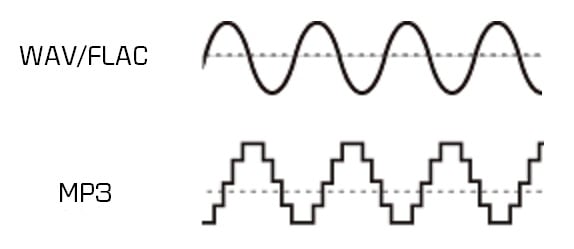
MP3 LOSSLESS
MP3 LOSSLESS


Is it possible to distinguish Mp3 quality from CD Quality?
 

mp3 lossless
mp3 lossless


Although the sound quality of a CD does not reach the true hearing limit of the human ear, it is impossible for most people to tell the difference between a CD and a higher sampling rate, so everyone assumes that the CD sound quality is 44.1 kHz can be converted to lossless sound quality.

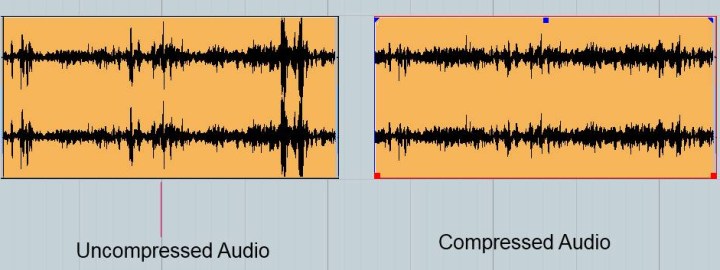
In the past, the capacity of storage media was not large. To store more music and make it easier to stream, we used to compress large CD audio files. High frequency and low volume sounds are removed to achieve the purpose of reducing file size. Similar formats include 3GP, M4A, AA3, WMA, etc.

With the development of the Internet and storage media, the size of audio files is no longer important, so lossless compression has gradually become popular. Common formats are APE, FLAC, etc., which are similar to the beginning of ZIP compressed files, compress audio files AND packed, the final file size is basically only half of the original CD file. Here it is emphasized that the WAV format we often say is a waveform record file, which uses uncompressed PCM encoding, which is also a relatively large WAV file. 44.1 kHz 16-bit WAV audio can also be considered uncompressed. Lossless sound quality.

Since different devices support different audio compression formats, we often need to transcode, and each transcode will cause some loss in audio. For example: If you convert MP3 to lossless format, you can only achieve the sound quality of the original MP3 file. This lossless can also be called false lossless. This is the case for most lossless music provided by music portals.

I have been recording for many years and have used speakers ranging from tens of thousands to millions of dollars. Why do I rarely use speakers under 10,000 yuan? Because speakers under 10,000 yuan cannot be used as monitors. I advise everyone not to charge money for listening to music on music portals for lossless sound quality. Untrained ears will not be able to hear the difference between true and false without loss. For normal ears, MP3 with a bit rate of 320 kbps is already the best.


Free Download Mp4Gain
picture


Mp4Gain Main Window
picture


Mp4Gain Features
picture


Free Download Mp4Gain
picture

What is the difference between MP3 and lossless sound quality?

What is the difference between MP3 and lossless sound quality?

Mp3 Lossless
Mp3 Lossless

Now, many people think that it is impossible to listen to MP3, so they search for lossless music everywhere on the Internet.

Mp3 Lossless
Mp3 Lossless

So what is the difference between lossless music and MP3? What about the various lossless music formats?

A few days ago, a friend of mine bought a Porsche sports car and then came to ask me for lossless sound quality music. I told him there was no need to play MP3s, but people weren’t happy. The sound in the car was fine. Playing MP3 is a loss of audio.

Now there are many music websites that give lossless to the myth, but do you know what lossless is? What is the difference between lossless music and ordinary MP3? Today I come to talk to you about those things that have no losses.

I remember when Apple held the Iphone4 conference, it came up with a definition: retina display. In short, it has been replaced by a high resolution screen with pixels that exceed the recognition limit of the human eye since the Iphone4. I must say that Mr. Qiao’s trick is very good, he defines a word that everyone can accept and makes Apple mobile phones sell all over the world.

However, the same concept is much older in the world of acoustics. Sound is a type of energy wave. After the experimental research of countless generations of ancestors, it is believed that 40 kHz is a value that can well restore the sound heard by the human ear. Later, for various commercial reasons, some record companies defined the sample rate of CDs at 44.1 kHz, which they considered to be the “retina display” that the ears could hear. Later, 44.1 kHz brought innumerable problems to subsequent generations, because it is not an integer and cannot be divided and multiplied simply by performing SRC sampling, so early Inter defined the output sample rate of the sound card as 48 kHz to save problem. , which creates a sample rate conversion problem that all sound engineers hate

How MP3 Players Work

How MP3 Players Work

mp3 player

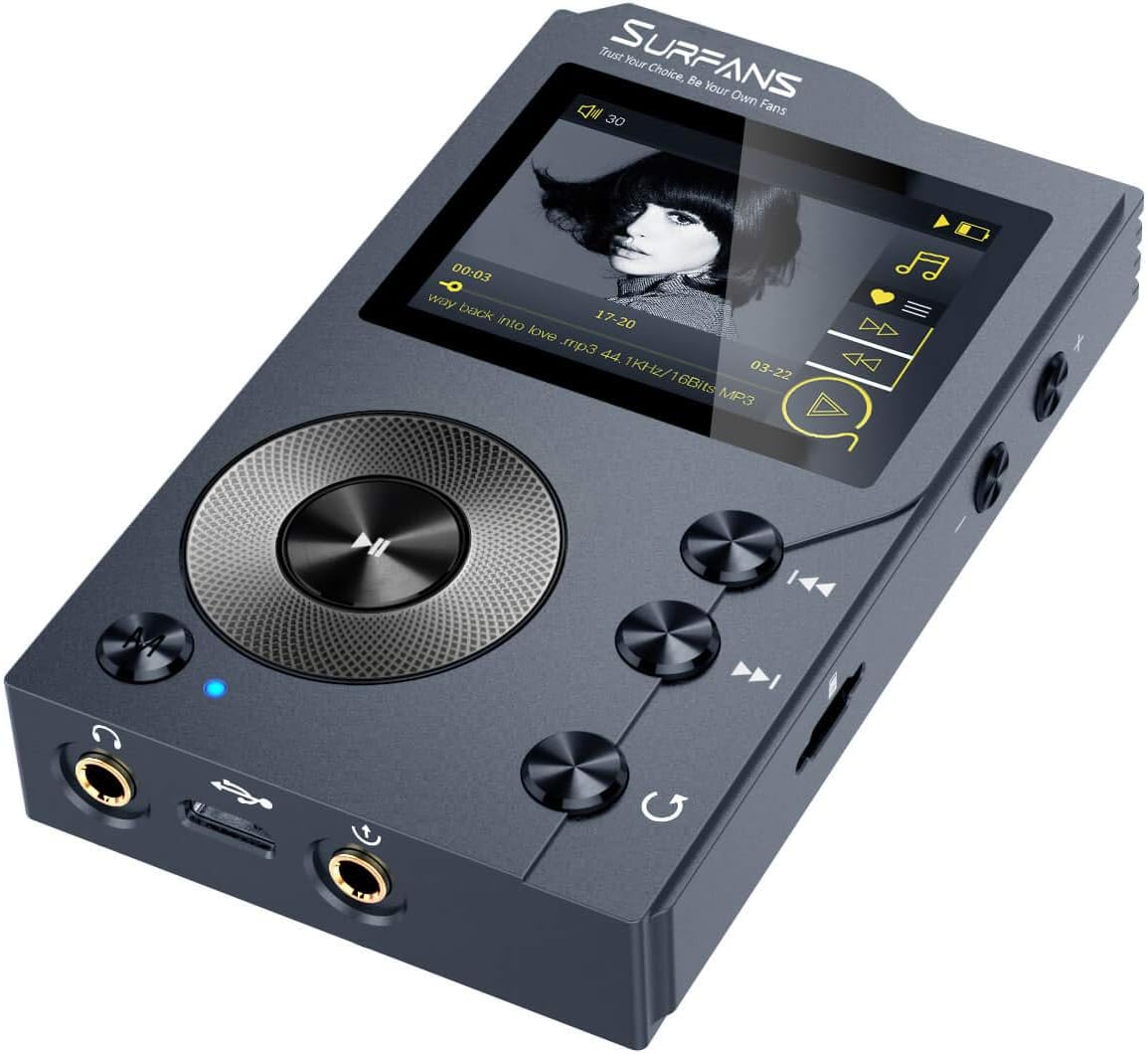
The MP3 player is the latest in the evolution of music formats that help consumers enjoy music.

Mp3 Player

Records, eight-track tapes, cassettes, and CDs – none of these music formats provided the convenience and control that MP3 players did before. With an MP3 player in their hand or pocket, consumers can create personalized playlists and take thousands of songs with them.

they go.

All the stored music and the MP3 player itself can fit in a single device that, in some cases, weighs less than an ounce. Portability is a major factor in the popularity of MP3 CD players and CD storage cases. In addition, some devices offer additional technology, such as video and photo viewing, alarm and calendar functions, and even cell phone and Internet services.

In this article, you will learn more about the technology behind MP3 players and the different types of players available. You can also find out how to get the melodies and how to use the accessories for your player. Get started by learning the MP3 file format on the next page.

content
The MP3 file format
this technology
Types of MP3 Players
fill your playlist
Accessories Your MP3 Player
The MP3 file format

The MP3 file format for music made its debut in the late 1990s, a file-sharing service, and the first portable MP3 players. MP3, or MPEG Audio Layer III, is a method of compressing audio files. MPEG is an acronym for Moving Picture Experts Group, which develops video data compression systems, including those used in DVD movies, television broadcasts, and digital satellite systems.

Using the MP3 compression system reduces the number of MP3 bytes in a song, while preserving CD-like quality sound. Every time you compress a song, its quality is degraded in order to carry more music files on a smaller storage system. A smaller file size also allows songs to download from the Internet faster.

Consider that the average song is about four minutes long. On a CD, that song uses about 40 megabytes (MB), but it uses only 4 MB if compressed into MP3 format. On average, 64 MB of storage is equivalent to an hour of music. A music listener who has an MP3 player with 1 GB (about 1000 MB) of storage space can carry about 240 songs or the equivalent of about 20 CDs. Songs stored on traditional CDs are already uncompressed, so more discs are needed to store the same number of songs. (Some CDs support MP3 files.)