How does an MP3 player work?


Free Download Mp4Gain
picture

How does an MP3 player work?

Mp3 Player

MP3 player

Mp3 Player

The full name of MP3 is MPEG Audio Layer 3. The MPEG compression format is a set of standards for images and sounds formulated by the Motion Picture Experts Group.

MP3 is an audio format designed to compress sound signals. Signal compression format standard. The sampling frequency of the CD is 44.1MHz, 16bit, and the data volume is 1.4Mbps, while the corresponding MP3 data volume is only 112kbps or 128kbps, which is 1/12 of the original data volume.

That is to say, there is a very important variation in the bitrate between a CD and an mp3. With a ratio of 1/12, which is more or less the ratio between its size. However, as is well known, hate does not perceive that difference as long as the mp3 uses a bitrate of 128 kbps or higher.

A traditional CD can now store 10 times or more the capacity of music, but in the human ear, the effect of music is no different.

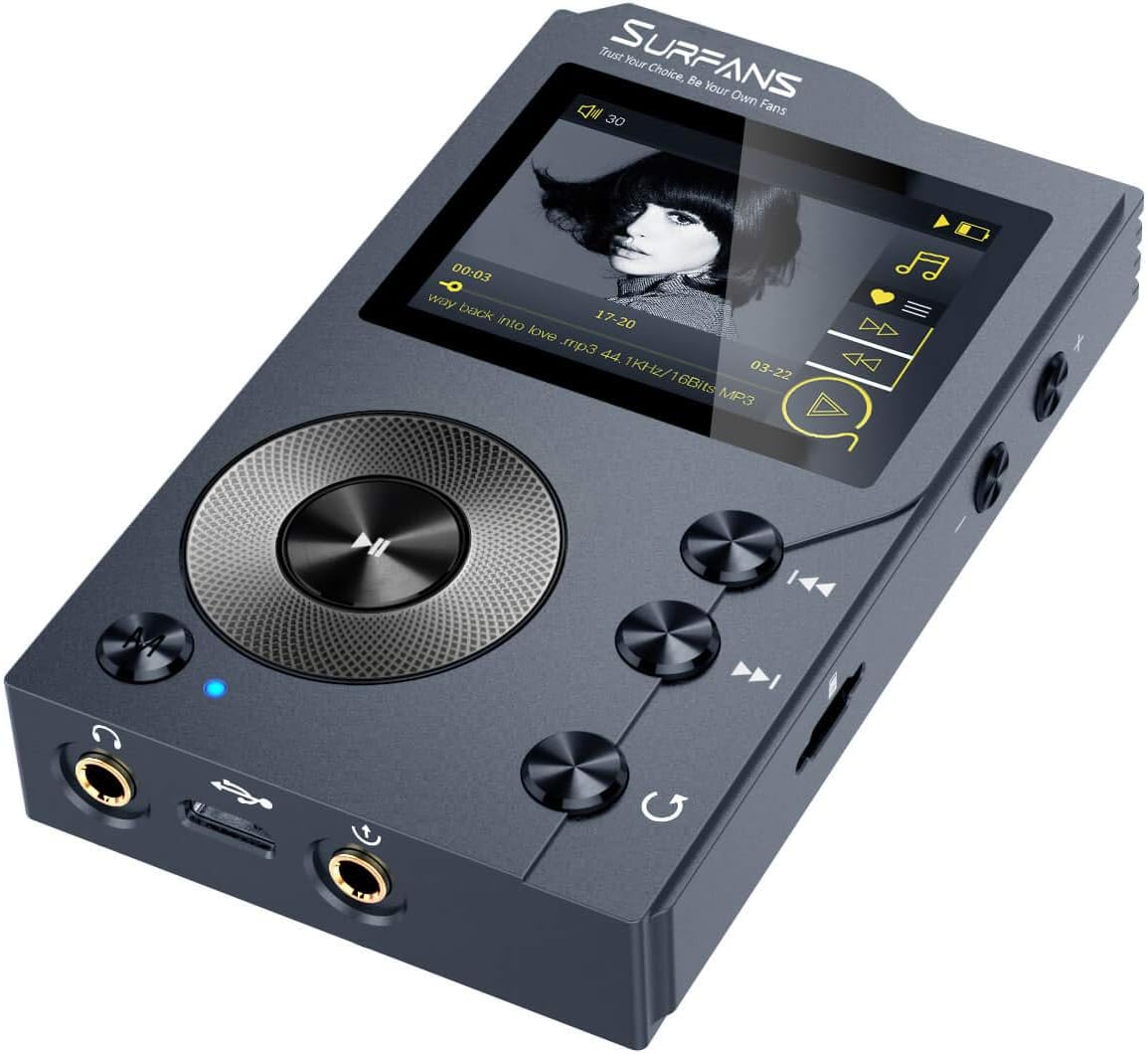
The working principle of MP3 Walkman is really very simple. It uses the control chip (CPU) to control the decoder chip and LCD screen, and the decoder chip decodes the MP3 file or WMA format file in the built-in flash memory or the external flash memory card. Then through the digital to analog conversion, and finally the output from the headphones.
MP3 players use the digital signal processor DSP (Digital Signal Processor) to complete the task of streaming processing and decoding of MP3 files. DSP is in charge of Walkman data transmission, device interface control, file decoding and playback, and other activities. The DSP can complete a variety of processing tasks in a very short time and this process consumes very little power (this is also a distinguishing feature of its suitability for portable players).
First, extract the MP3 song file from memory and read the signal in memory → decode the signal in the decoding chip → convert the decoded digital signal into an analog signal through the digital to analog converter → and then amplify the converted analog audio signal → After low-pass filtering, it goes to the headphone output and the output is the music we listen to.


Free Download Mp4Gain
picture


Mp4Gain Main Window
picture


Mp4Gain Features
picture


Free Download Mp4Gain
picture

How MP3 Players Work Part 2

How MP3 Players Work Part 2

MP3 Player

While MP3 is perhaps the most popular file format, there are other formats that can be played on MP3 players.

MP3 Player


While most MP3 players can support multiple formats, not all players support the same formats. Here are some of the file formats that can be played on different players:

WMA – Windows Media Audio
WAV – Waveform Audio
MIDI – Musical Instrument Digital Interface.
AAC Format – Advanced Audio Coding
Ogg Vorbis – free, open, patent-free music format
ADPCM – Adaptive Differential Pulse Code Modulation
ASF – Advanced Transmission Format
VQF – Vector Quantization Format
ATRAC – Sony Adaptive Transform Acoustic Coding
In the next section, we’ll cover the technology behind the player that allows you to listen to music.

this technology

Unlike early music players that required moving parts to read the data encoded on tape, MP3 players used solid-state memory. An MP3 player is nothing more than a data storage device with built-in software that can transfer MP3 files to the player. MP3 players also include tools for duplicating music from radio, CDs, radios, or websites, as well as the ability to organize and create custom playlists in the order you want to listen to them. This playlist is called a playlist.

MP3 players are a fusion of many technologies. Taken individually, none of its components is revolutionary, but together they create a consumer product never seen before.

The exact parts may vary, but the following are the basic parts of a typical MP3 player:

data port
RAM
microprocessor
Digital Signal Processor (DSP)
Show
playback control
audio port
amplifier
electricity supply
“width =
Connect the player to your computer with a USB port, FireWire port or parallel port to transfer data. USB-based players transfer data many times faster than those using parallel ports. MP3 files are saved in the player’s memory.

Memory types include:

internal flash memory
compact flash card
Brand SmartMedia
Memory card
internal micro hard drive
Except for the last one, everything else is solid state memory. The advantage of solid state memory is that there are no moving parts, which means higher reliability and no musical skipping. MP3 players contain tiny hard drives with 10 to 150 times the storage capacity of flash memory devices.

The microprocessor is the brain of the player. It can monitor user input via a DSP chip that displays information on the current song’s playback controls, LCD panel, and send address, telling you exactly how to process the audio.

“width =
In addition to storing music, MP3 players must also play music and allow the user to listen to the song that is being played. To do this, the player:

Get the song out of your memory.
Decompress MP3 encoding, by DPS, by algorithm or formula.
Convert the uncompressed bytes into sound waves through a digital-to-analog converter.
It amplifies the analog signal so that the song can be heard.
All portable MP3 players are battery powered. Most rechargeable lithium batteries are used indoors and last between 10 and 28 hours on a single charge. Many players also have AC adapters so they can be plugged into regular power outlets, and some even offer DC adapters for use in cars.

In the next section, we will learn about the different types of MP3 players.

Types of MP3 Players
Apple iPhones have 4GB or 8GB of flash memory. “width =
Apple iPhones have 4GB or 8GB flash memory.
COMPLIMENTARY CONSUMER GUIDE PRODUCTS
MP3 players as a variation of the people who buy them. The choice is based on several factors, including how you plan to use it, how much music you want to take with your MP3 player, and how much you’re willing to pay. Let’s take a look at the four basic types of MP3 players.

How MP3 Players Work

How MP3 Players Work

mp3 player

The MP3 player is the latest in the evolution of music formats that help consumers enjoy music.

Mp3 Player

Records, eight-track tapes, cassettes, and CDs – none of these music formats provided the convenience and control that MP3 players did before. With an MP3 player in their hand or pocket, consumers can create personalized playlists and take thousands of songs with them.

they go.

All the stored music and the MP3 player itself can fit in a single device that, in some cases, weighs less than an ounce. Portability is a major factor in the popularity of MP3 CD players and CD storage cases. In addition, some devices offer additional technology, such as video and photo viewing, alarm and calendar functions, and even cell phone and Internet services.

In this article, you will learn more about the technology behind MP3 players and the different types of players available. You can also find out how to get the melodies and how to use the accessories for your player. Get started by learning the MP3 file format on the next page.

content
The MP3 file format
this technology
Types of MP3 Players
fill your playlist
Accessories Your MP3 Player
The MP3 file format

The MP3 file format for music made its debut in the late 1990s, a file-sharing service, and the first portable MP3 players. MP3, or MPEG Audio Layer III, is a method of compressing audio files. MPEG is an acronym for Moving Picture Experts Group, which develops video data compression systems, including those used in DVD movies, television broadcasts, and digital satellite systems.

Using the MP3 compression system reduces the number of MP3 bytes in a song, while preserving CD-like quality sound. Every time you compress a song, its quality is degraded in order to carry more music files on a smaller storage system. A smaller file size also allows songs to download from the Internet faster.

Consider that the average song is about four minutes long. On a CD, that song uses about 40 megabytes (MB), but it uses only 4 MB if compressed into MP3 format. On average, 64 MB of storage is equivalent to an hour of music. A music listener who has an MP3 player with 1 GB (about 1000 MB) of storage space can carry about 240 songs or the equivalent of about 20 CDs. Songs stored on traditional CDs are already uncompressed, so more discs are needed to store the same number of songs. (Some CDs support MP3 files.)