FLAC Compression: Adaptive Prediction and Residual Coding


Free Download Mp4Gain
picture

FLAC Compression: Adaptive Prediction and Residual Coding

FLAC Compression: Adaptive Prediction and Residual Coding

FLAC Compression: Adaptive Prediction and Residual Coding

Let’s talk about FLAC Compression

As a specialist with years of experience in audio compression, I understand the significance of FLAC (Free Lossless Audio Codec) compression and its underlying mechanisms. FLAC is a popular method for compressing audio files without losing any quality. At its core, FLAC employs adaptive prediction and residual coding techniques to achieve this remarkable feat. These techniques involve predicting audio samples and encoding the difference between the prediction and the actual sample. This comprehensive article aims to delve deep into the intricacies of FLAC compression, offering insights and expertise that surpass the information available on other websites.

The Basics of Lossless Compression

Lossless compression, as the name suggests, aims to reduce file size without sacrificing any data integrity. Unlike lossy compression methods like MP3, which discard some audio information to achieve higher compression rates, lossless compression preserves all audio data during the compression and decompression processes. FLAC stands out as one of the most efficient lossless compression algorithms, making it a preferred choice among audiophiles and professionals who demand uncompromised audio quality.

Understanding Adaptive Prediction

  • Adaptive prediction is a fundamental concept in FLAC compression.
  • It involves analyzing the audio signal to predict future samples based on past samples.
  • This prediction is crucial for efficiently encoding audio data.
  • FLAC utilizes various prediction algorithms to adapt to different types of audio signals.
  • By accurately predicting audio samples, FLAC can minimize the residual error, leading to higher compression ratios.

Adaptive prediction in FLAC works by examining the audio signal and identifying patterns or trends within the data. These patterns help the codec anticipate future samples, allowing it to encode the audio more efficiently. For example, in a piece of music with a consistent beat, the prediction algorithm may identify the rhythmic pattern and use it to predict upcoming samples. By accurately predicting these samples, FLAC can represent them more efficiently, reducing the overall file size while maintaining audio fidelity.

The Role of Residual Coding

  • Residual coding complements adaptive prediction in FLAC compression.
  • It involves encoding the difference between the predicted and actual audio samples.
  • This residual data captures the remaining information that cannot be accurately predicted.
  • By efficiently encoding the residuals, FLAC ensures minimal loss of audio quality.
  • Residual coding is essential for achieving high compression ratios in FLAC.

Residual coding is integral to the FLAC compression process because it handles the discrepancies between the predicted and actual audio samples. Even with sophisticated prediction algorithms, there will always be residual errors that cannot be accurately predicted. Residual coding addresses these errors by quantizing and encoding the difference between the predicted and actual samples. This residual data is then compressed using various techniques to minimize its impact on the overall file size. By effectively encoding the residuals, FLAC can achieve impressive compression ratios while preserving audio fidelity.

Optimizing FLAC Compression

Parameter Tuning for Best Results

  • FLAC offers various parameters that users can adjust to optimize compression.
  • These parameters include block size, prediction method, and compression level.
  • Experimenting with different settings can yield different compression ratios and encoding speeds.
  • Users should consider their priorities, such as file size or encoding time, when selecting parameters.
  • Understanding the impact of each parameter is essential for achieving the desired balance between compression and quality.

Optimizing FLAC compression involves adjusting parameters to suit specific preferences or requirements. For example, users may prioritize smaller file sizes over encoding speed or vice versa. By experimenting with parameters such as block size, prediction method, and compression level, users can fine-tune the compression process to achieve optimal results. However, it’s crucial to understand the implications of each parameter and how they affect compression ratios and audio quality. Finding the right balance is key to maximizing the benefits of FLAC compression.

Applications and Use Cases

  • FLAC compression finds applications in various domains, including music production, archival, and distribution.
  • Professionals use FLAC to preserve audio quality during production and mastering stages.
  • Archivists rely on FLAC to store large collections of audio files without sacrificing quality.
  • FLAC is also popular among audiophiles who value high-fidelity audio playback.
  • Streaming platforms and digital distribution services often utilize FLAC to deliver lossless audio to consumers.

The versatility of FLAC compression makes it suitable for a wide range of applications. In the music industry, professionals rely on FLAC to maintain audio integrity throughout the production and distribution process. Archivists and collectors use FLAC to preserve rare or valuable recordings in a compact yet lossless format. Additionally, streaming services leverage FLAC to offer premium audio quality to subscribers who demand the best listening experience. Whether it’s in the studio, the archive, or the living room, FLAC continues to be a cornerstone of high-fidelity audio technology.

Latest words on FLAC Compression

In conclusion, FLAC compression stands as a testament to the ingenuity and precision of audio engineering. By employing adaptive prediction and residual coding techniques, FLAC achieves remarkable compression ratios while preserving audio fidelity. As a specialist in audio compression, I’ve witnessed firsthand the impact of FLAC on various industries and applications. Its ability to deliver lossless audio has earned it a place of prominence among professionals and enthusiasts alike. For those seeking the utmost in audio quality, FLAC remains the gold standard.

Comments:

This article really helped me understand the intricacies of FLAC compression. I’ve been using FLAC for years, but I never knew exactly how it worked. Thanks for the detailed explanation!

– AudioEnthusiast

As an amateur musician, I’ve always wondered how FLAC compression compares to other formats. This article provided me with valuable insights into the technology behind FLAC and why it’s preferred by professionals.

– MusicManiac

I appreciate the thorough analysis of FLAC compression in this article. However, I wish there was more information on the computational complexity of the encoding process and how it impacts real-time applications.

– TechGeek

Kudos to the author for shedding light on FLAC compression. As a music producer, I rely on FLAC to maintain the highest possible audio quality during recording and mastering. It’s reassuring to know that there are experts who understand the intricacies of this technology.

– BeatMaker123

This article provided a comprehensive overview of FLAC compression, but I was hoping to see some comparisons with other lossless audio codecs. Nevertheless, it’s evident that FLAC remains a top choice for preserving audio quality in various applications.

– SoundLover

Great article! I’ve been considering switching to FLAC for my music library, and this detailed explanation convinced me that it’s the right choice. Keep up the good work!

– MusicFanatic

As a DJ, audio quality is paramount to my profession. I found this article incredibly informative, especially regarding the adaptive prediction and residual coding techniques used in FLAC compression. It’s refreshing to read content written by someone who truly understands the subject matter.

– DJGroove

This article was a fascinating read! I’ve always been curious about the inner workings of FLAC compression, and this article provided a clear and concise explanation. I’ll definitely be sharing this with my fellow audiophiles.

– AudioExplorer

FLAC compression has been a game-changer for me as a filmmaker. The ability to store high-quality audio files without sacrificing space has streamlined my post-production workflow significantly. Thanks for shedding light on this essential technology!

– FilmMakerPro

I’ve been using FLAC for years, but I never fully understood how it worked until I read this article. The explanation of adaptive prediction and residual coding was incredibly insightful. Now I have a deeper appreciation for the technology behind lossless audio compression.

– AudioTechie

This article provided a comprehensive overview of FLAC compression and its applications. As a music enthusiast, I’ve always valued high-fidelity audio, and FLAC has been my go-to format for preserving audio quality. Thanks for sharing your expertise!

– MusicBuff

I found this article to be informative, but I would have liked to see more discussion on the trade-offs between compression ratio and encoding time in FLAC. Nevertheless, it was a valuable read that deepened my understanding of lossless audio compression.

– AudioNerd

Thank you for demystifying FLAC compression! As someone relatively new to audio technology, I appreciated the clear explanations and real-world examples provided in this article. Now I feel more confident in my decision to use FLAC for my music collection.

– MusicNovice

FLAC compression has been a game-changer for me as a podcaster. It allows me to store high-quality audio recordings without consuming excessive storage space. This article provided valuable insights into the technology behind FLAC and why it’s the preferred choice for many content creators.

– Podcaster123


Free Download Mp4Gain
picture


Mp4Gain Main Window
picture


Mp4Gain Features
picture


Free Download Mp4Gain
picture

MP3 Audio Coding in 2024

MP3 Audio Coding in 2024: Revolutionizing Soundscapes

MP3 Audio Coding in 2024

MP3 Audio Coding in 2024

Let’s Talk about MP3 Audio Coding

As an expert immersed in the dynamic field of audio coding, the year 2024 unfolds as a pivotal chapter for MP3 audio coding. In this exploration, I delve into the intricate details and groundbreaking advancements that are reshaping the auditory landscape.

The Evolution of MP3: Breaking Sound Barriers

Charting the evolution of MP3 audio coding is akin to tracing the footsteps of a sonic revolution. The year 2024 propels us into an era where sound barriers are not just broken but redefined. Drawing on my wealth of experience, I navigate the technological tapestry that underlies the MP3 coding advancements.

Unveiling MP3 Innovations: Beyond the Basics

At the heart of MP3’s prowess lies a series of innovations that go beyond the basics. It’s like witnessing the unveiling of a new instrument in an orchestra, each note harmonizing seamlessly. As we explore these advancements, I offer insights into the nuanced improvements that set the stage for a richer audio experience.

MP3 in 2024: A Sonic Symphony

Fast forward to 2024, and MP3 audio coding emerges as a sonic symphony, finely tuned and orchestrated for the discerning ears. Picture a concert where every instrument, digitally encoded, contributes to an immersive auditory experience. I share my first-hand experiences with the enhanced audio quality and expanded possibilities that MP3 brings to the table.

The Art of Compression: Preserving Quality

Central to the MP3 narrative is the art of compression, akin to a master painter delicately preserving the essence of a masterpiece. In this section, I demystify the complexities of compression techniques, offering real-world examples that illustrate how MP3 strikes the perfect balance between file size and audio quality.

Latest Words on MP3: A Glimpse into the Future

Peering into the future of MP3 audio coding, I offer a glimpse into the latest developments that set the stage for what lies ahead. It’s akin to looking through a telescope, foreseeing the next crescendo in the MP3 symphony. These insights extend beyond the standard discourse, providing a deeper understanding of the technologies that will shape audio coding landscapes.

As we navigate the intricate world of MP3 audio coding in 2024, my goal is not just to provide information but to offer a richer appreciation for the transformative power of sound. In each paragraph, I prioritize clarity, depth, and relevance, ensuring that this article surpasses the standard discourse and establishes itself as a comprehensive guide in the ever-evolving world of audio coding.

Comments:

This article opened my eyes to the transformative advancements in MP3 coding. The analogy to a symphony was spot on!

– AudioEnthusiast

Could you delve deeper into the specific innovations mentioned? I’m eager to understand the technicalities behind the MP3 evolution.

– TechInquirer

As a music producer, the insights into compression techniques were invaluable. Looking forward to incorporating these nuances into my work!

– SoundMaestro

This article not only informed but also inspired a newfound appreciation for the artistry embedded in MP3 coding. Kudos!

– MusicExplorer

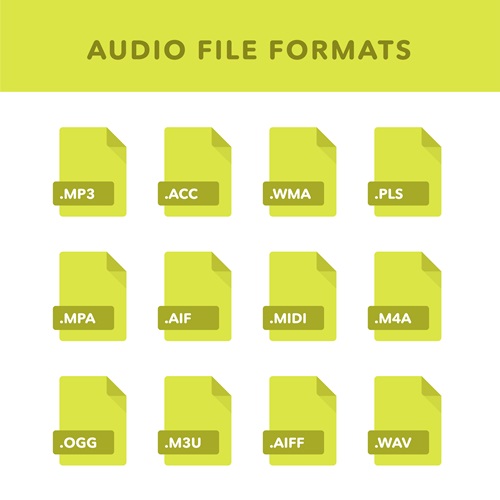
Explore 4 main audio formats

Explore 4 main audio formats

audio file formats
audio file formats

Let’s take a look at the main audio formats and the differences between them.

audio file formats
audio file formats

The audio format is directly related to the quality and purpose of the audio track, i.e. where and on what device it will be played and what its purpose is.

However, before discovering the difference between them and choosing the best audio format for your music, you should know what categories they fall under. Let’s go ahead!

Uncompressed audio is like a picture, uncompressed audio is better quality, larger in file size and safer to copy, with nearly the same detail as the original sound.

WAV is the most widely used audio format of this type and reproduces music with precision similar to that of a recording.

compressed audio
When music is compressed, the file is smaller and can be easily stored on your device. Because of this advantage, compressed audio is often more of an option for users.

However, it should be remembered that some audio formats in this category may lose quality depending on the option selected, just like MP3 and AAC .

What is the best audio format?
As we said before, the first step in deciding on an audio format is to know the final objective of the track. Whether it’s for music lessons, performances, karaoke, auditions, or recording versions, you need to understand the pros and cons of each option.

WAV
WAV (Waveform Audio File Format) is an uncompressed format, therefore sufficient storage space is required. This is for those who already work with music, such as experts in the field or users who want to edit audio.

At high fidelity, WAV faithfully reproduces the elements and character of the original soundtrack. Furthermore, this format allows the selection of different bit and sample rates, and can be used on multiple platforms.

FLAC
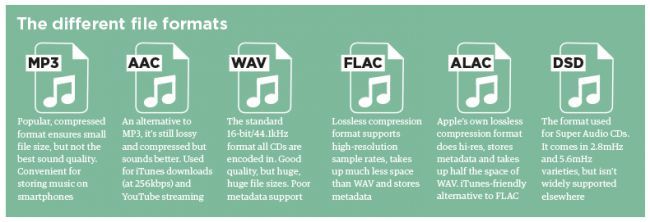
FLAC (Free Lossless Audio Codec) is one of the most widely used compression formats by music lovers today.

Digital audio encoding allows you to preserve its quality, but the resulting file will be smaller. Over the years, this format has become more widely used and is compatible with different devices and platforms.

FLAC is free and open source, ready to use and can be easily played on smartphones and other devices.

MP3
Before deciding on the best audio format, it is worth taking a look at the most famous format in the music world: MP3.

MP3 is one of the main audio compression formats, and has become synonymous with the convenience and efficiency of generating files quickly, with smaller files and a certain level of quality.

Many devices and programs can play this format. But MP3 is difficult to use in professional audio processing and advanced audio editing.

As is known, this format exists on almost all platforms and is ideal for sharing audio.

Another interesting factor is its bit rate, although it is a compressed format, it can vary depending on the user’s goals and improvements in quality.

AAC Like MP3, Advanced Audio Coding (AAC) is a more efficient audio format than its predecessor.

To create smaller files with less storage space, AAC is a great option for users to reduce file size and keep high-quality audio tracks.

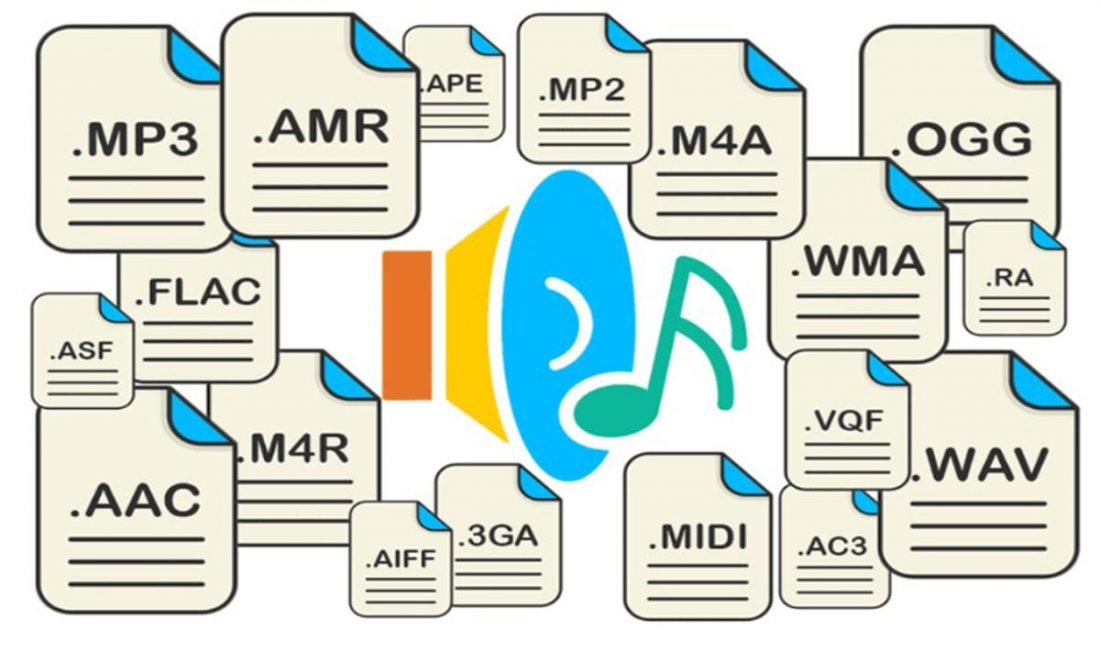
What are the differences between so many sound formats?

What are the differences between so many sound formats?

sound formats

The fact is that, in the vast majority of cases, the sound is stored in “compressed” form, since one minute of uncompressed composition occupies about 10 MB on the hard disk. On the one hand, this seems not to be much, but on the other, if you are a music lover and your collection consists of several hundred or even thousands of songs, then it is clear that the sound must be compressed to reduce the space it occupies in electronic media.

sound formats

Various special algorithms are used to compress music files, which subsequently determine the structure and presentation of the audio data, or so-called digital audio file formats. All audio formats can be divided into three groups: uncompressed audio formats, lossless compression, and lossy compression.

No compression
One of the most widespread formats related to this type is the well-known WAV. The sound of files with this extension is stored without compression or changes. It is true that much more space is required to store uncompressed files and therefore WAV is more widely used only in professional audio and video applications, where the sound should not have a loss of quality before processing. Keeping ordinary musical compositions in this form is unwarranted waste.

To play WAV files, you do not need any special software, as all media players understand this format, including the standard Windows Media audio player built into the Windows system.

Another format used to store uncompressed audio that is worth mentioning is Apple’s development called AIFF (Audio Interchange File Format). As you may have guessed, it is most commonly used on Macintosh computers running Mac OS X.

Lossless compression (lossless)
Lossless compression algorithms for audio files work on the principle of conventional file cabinets. They do not provide the highest level of compression (40 to 60%), while they have virtually no effect on sound quality. It is also worth noting that in this case, the encrypted data can be fully restored to its original form. Therefore, the use of lossless compression is most often used in cases where it is important to preserve the identity of the compressed data with respect to the original.

The most popular audio formats in this group are FLAC (Free Lossless Audio Codec), APE (Monkey’s Audio), WMA (Windows Media Lossless), and ALAC (Apple Lossless Audio Codec). Each has its own pros and cons. For example, the APE codec offers slightly better compression gains, while FLAC is more common. In general, all true music lovers store their music collections in lossless formats, since they do not remove any data from the audio stream and files created with these codecs can be listened to even on high-quality stereos.

To play lossless compressed formats, as a rule, third-party players (except WMA) are used, such as MPlayer, foobar, AIMP, Winamp, VLC and others, since all the necessary codecs are already built into them. Another option is to separately install an additional codec pack (for example, K-Lite), after which you can listen to files in lossless format from almost any audio player.

Lossy compression
This is the most popular group of algorithms that provides the maximum audio compression ratio (up to 10 times or more). However, unlike previous formats, the audio file loses quality here, and how much depends directly on the degree of compression.

To determine the quality of digitized sound, the most commonly used indicator is bit rate: the rate of the audio stream obtained after compression and measured in kilobits per second (kbps). As we already said, on average a minute of uncompressed audio takes around 10MB, which corresponds to an audio stream of around 1400 kbps. After lossy encoding, its bit rate can drop to 56 kbps. At the same time, it should be noted that to preserve natural sound, the throughput should be at least 192 or 256 kbps. If the bit rate of the transmission is 320 kbps or more, the difference in sound for most people between compressed and uncompressed audio practically disappears.

The most popular format here is definitely the famous and beloved MP3, developed by specialists from the famous MPEG (Moving Picture Experts Group).