Sampling Rate in Digital Audio


Free Download Mp4Gain
picture

Digital Audio: What is the Sampling Rate in Digital Audio?

Sampling Rate in Digital Audio

Introduction

As an audio enthusiast, I have always been interested in the technical aspects of digital audio. One of the most important factors that affect the quality of digital audio is the sampling rate. In this article, we will discuss what the sampling rate is in digital audio and how it affects the quality of the audio signal.

What is Sampling Rate?

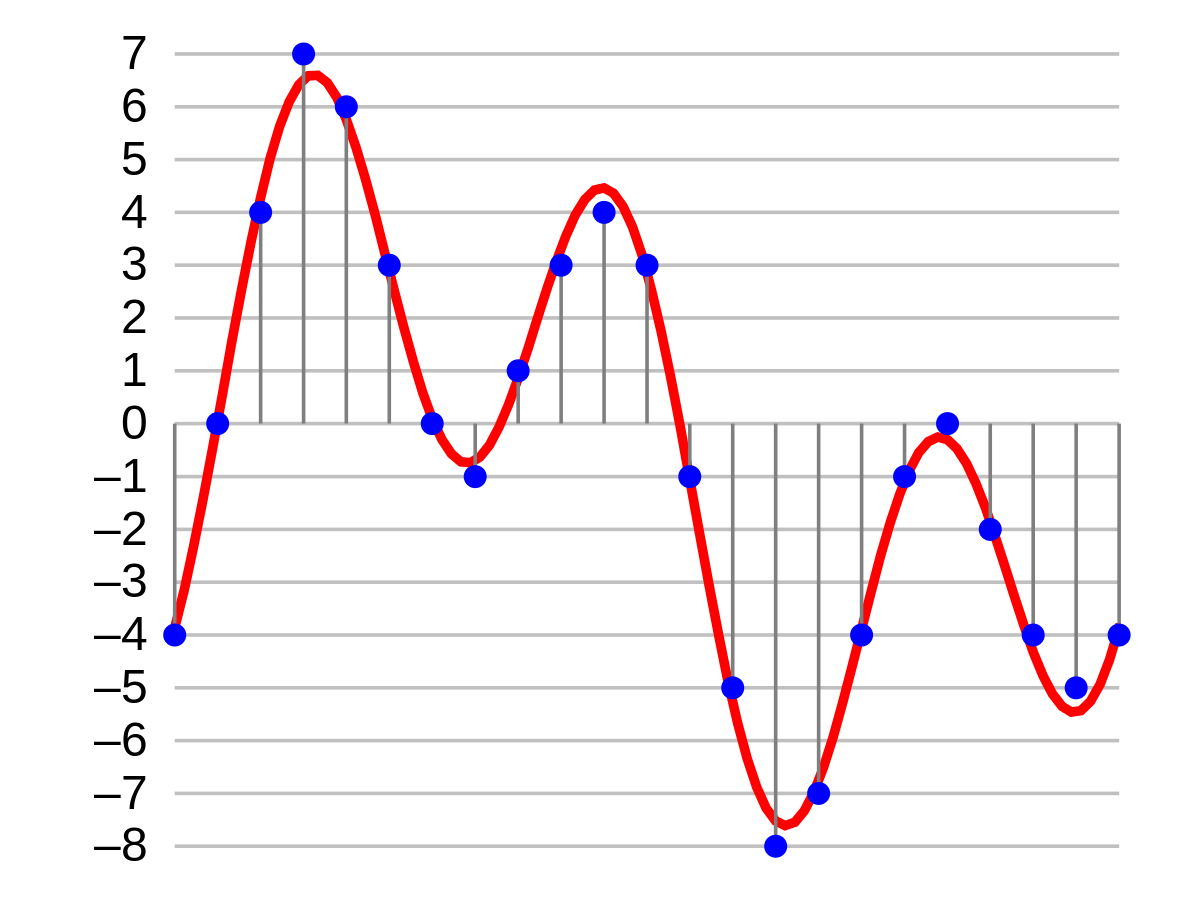
Sampling rate is the number of times per second that a digital audio signal is measured or sampled. It is measured in Hertz (Hz) and is also known as the sampling frequency. The higher the sampling rate, the more accurately the audio signal is represented in the digital domain.

Audio Quality and Sampling Rate

The sampling rate has a direct impact on the quality of the digital audio signal. A higher sampling rate means that more samples are taken per second, resulting in a more accurate representation of the original analog audio signal. This leads to a higher audio resolution and a more natural and detailed sound.
On the other hand, a lower sampling rate can result in a loss of audio quality, especially in the high-frequency range. This can lead to a loss of detail and clarity in the audio signal, resulting in a less natural and less enjoyable listening experience.

Sampling Rate and Audio Processing

The sampling rate also affects the way that digital audio is processed. For example, when audio is compressed using lossy compression algorithms such as MP3, the sampling rate can affect the quality of the compressed audio. A lower sampling rate can result in a higher degree of compression, which can lead to a loss of audio quality.
In addition, the sampling rate can also affect the way that audio is processed in digital audio workstations (DAWs) and other audio software. A higher sampling rate can result in more accurate processing and mixing of audio, leading to a better final mix.

Final Words

In conclusion, the sampling rate is an important factor that affects the quality of digital audio. A higher sampling rate can result in a more accurate representation of the original analog audio signal, leading to a higher audio resolution and a more natural and detailed sound. On the other hand, a lower sampling rate can result in a loss of audio quality, especially in the high-frequency range. It is important to consider the sampling rate when working with digital audio, and to choose a sampling rate that is appropriate for the specific application.
As the famous musician Bob Dylan once said, “The times they are a-changin’.” And with the advancements in digital audio technology, we can enjoy high-quality audio like never before.
Digital audio, sampling rate, audio quality, audio resolution, audio frequency, audio signal, audio processing, audio technology, Hertz, analog audio, lossy compression, MP3, audio compression, audio software, digital audio workstations, DAWs, mixing, final mix, high-frequency range, natural sound, detailed sound, listening experience, accuracy, representation, technical aspects, sound quality, music production, audio engineering, audio enthusiasts, audio equipment, audio gear, audio formats, audio codecs, audio standards, audio specifications, audio performance, audio fidelity, audio reproduction, audio artifacts, audio distortion, audio mastering, audio mixing,


Free Download Mp4Gain
picture


Mp4Gain Main Window
picture


Mp4Gain Features
picture


Free Download Mp4Gain
picture

The bit rate directly affects the sound quality.

The bit rate directly affects the sound quality.

audio bit rate
audio bit rate

High bitrate is good and low bitrate is bad.

audio bit rate
audio bit rate

The code rate is the number of data bits transmitted per unit of time during data transmission. Generally, the unit we use is kbps, that is, kilobits per second.

The popular understanding is the sampling rate. The higher the sampling rate per unit time, the higher the precision, and the processed file is closer to the original file, but the file size is proportional to the sampling rate, so almost all encoding formats pay attention. It’s about how to use the lowest code rate to achieve the least distortion. The cbr (fixed code rate) and vbr (variable code rate) derived from this core are all articles in this regard, but things are not absolute, in terms of audio, the higher the bit rate, the lower the compressed ratio, the smaller the sound quality loss and the closer it is to the sound quality of the audio source.
The information in the computer is represented by binary 0 and 1, and each 0 or 1 is called a bit, which is represented by lowercase b, that is, bit (bit); uppercase B represents byte, ie byte, one byte = Eight bits, ie 1B=8b; the capital K in front stands for thousand, that is, thousand bits (Kb) or kilobytes (KB). Indicates the size of the file, usually using bytes (KB) to indicate the size of the file.

Kbps: The first thing to understand is that ps refers to /s, which is every second. Kbps refers to the speed of the network, that is, how many thousands of bits of information are transmitted per second (K means thousands of bits, Kb means how many thousands of bits), it is expressed in kb (kilobit), and in the case KBps means how many kilobytes are transferred per second. 1KBps = 8Kbps. The Internet speed of ADSL is 512 Kbps. If converted to bytes, it is 512/8 = 64 KBps (that is, 64 kilobytes per second).

A frame is a still image, and continuous frames form an animation, like a television image.
We normally say the number of frames. Simply put, it is the number of image frames transmitted in 1 second. It can also be understood that the graphics processor can update several times per second, usually expressed in fps (Frames Per Second). Each frame is a still image, and showing frames in rapid succession creates the illusion of movement. Higher frame rates result in smoother, more realistic animations. The more frames per second (fps), the smoother the motion is displayed.

What is the bitrate of the music?
It can also be called bit rate, which is nothing more than the amount of data reproduced per second by a type of music, the unit is expressed in bits, that is, binary bits. bps is the bit rate. b is bit, s is second, p is per, and one byte is equal to 8 binary bits. That is, the file size of a 4-minute song at 128bps is calculated as (128/8)*4*60=3840kB=3.8MB, which means that the same song with the same bit rate (bps) will not no matter what format (such as mp3 wma) The capacity is basically the same, which can only represent a transmission rate, not the sound quality. Due to different compression engines, the sound quality of different formats varies a lot. However, for the same format, the higher the bitrate, the larger the file and the better the sound quality.

What is the sample rate of the music?
Sampling rate refers to the number of samples per unit of time. The sampling rate is 44KHz, which means the number of samples per second is 44K, which means that 44,000 pieces of data are used to describe the sound waveform in 1 second. That is, the higher the sample rate, the better the sound quality. But he and bitrate are two completely different concepts.