Audio Clipping in MP3 Compression


Free Download Mp4Gain
picture

Audio Clipping in MP3 Compression
Audio Clipping in MP3 Compression

Let’s talk about audio clipping in MP3 compression

Audio clipping in MP3 compression is an issue that can make or break the quality of the music or sound you’re listening to. When sound is compressed to save storage or bandwidth, sometimes the peaks in the audio are cut off, or “clipped,” which can lead to a harsh, distorted listening experience. MP3 compression, which reduces file size by eliminating parts of the audio that are less likely to be noticed, can sometimes cause clipping if the original audio file has loud, sharp peaks. In this article, I’ll explain why audio clipping happens, what causes it, and how to recognize and prevent it to ensure high-quality audio.

Understanding audio clipping and how it impacts sound quality

Clipping occurs when an audio signal’s amplitude exceeds the maximum limit, creating distortion because the signal has nowhere to go but flat out. Imagine if you shouted directly into a microphone so loudly that it couldn’t capture all the sound; the result would be a rough, chopped-off noise rather than the clear, full sound of your voice. In audio terms, clipping means that the sound wave gets “cut off” at the peaks, which in digital audio becomes a harsh, unpleasant distortion. This type of distortion is particularly noticeable in compressed formats like MP3, as they’re designed to strip away data considered unnecessary.

How MP3 compression can lead to audio clipping

MP3 compression works by removing frequencies that human ears may not pick up as easily. However, if the original audio has intense peaks, the compression process can cut them off rather than preserve the quality. This happens because MP3 algorithms prioritize reducing file size over maintaining the original audio’s peak structure, which can result in clipping on louder sections. I’ve noticed that high-energy tracks with many peaks are particularly susceptible, as MP3 compression forces the audio into a smaller file while trying to preserve most of its integrity.

Factors contributing to clipping in MP3 compression

Various elements can contribute to clipping in MP3 compression, including the bit rate, loudness, and dynamics of the original track. Here are some major contributing factors:

  • High volume levels in the original file
  • Low bit rates used during compression
  • Complex or dynamic sound profiles
  • Poor quality or outdated compression algorithms

If you’ve ever tried converting a loud or heavily produced track to a lower bit rate, you might have noticed that the audio becomes scratchy or distorted. This is the result of inadequate data to capture the full detail of the sound peaks, leading to clipping.

Recognizing audio clipping in MP3 files

Knowing what clipping sounds like can help you recognize it quickly in your MP3 files. Typically, clipped audio will sound “crunchy” or “harsh” during peak moments in a song or recording. Imagine playing a song with loud drums or powerful vocals and hearing an unpleasant buzzing or crackling – that’s often a sign of clipping. Some listeners describe it as a “cut-off” effect, where the sound seems abruptly stopped or truncated.

How clipping affects listening experience and music enjoyment

Clipping can ruin an otherwise perfect listening experience. For instance, if you’re listening to a high-energy rock song, those clipped peaks can reduce the impact of the drums or make the vocals sound strained. As a music enthusiast, it’s frustrating because the song loses the richness and fullness intended by the artist. If you’re serious about sound quality, even subtle clipping can feel like a loss of detail, turning what should be immersive into a hollow experience.

Preventing clipping in MP3 compression

Avoiding clipping while compressing audio requires a balanced approach. First, selecting the right bit rate plays a huge role. Higher bit rates like 256 kbps or 320 kbps retain more audio data and reduce the chance of clipping. Choosing quality compression algorithms is also essential, as they are designed to handle dynamic ranges better. In my experience, I found that adjusting the volume of the original file before compressing can reduce clipping, as this allows more headroom for peaks without flattening them.

Testing for clipping in MP3 files

One way to check for clipping is by listening carefully to high-energy sections of a track. I typically pay attention to parts where the volume peaks, such as crescendos or intense vocal moments, to spot any unwanted distortion. Alternatively, audio analysis software can visually display clipping, showing waveforms that flatline at the top. Personally, I rely on both methods to ensure that my MP3s don’t suffer from clipping, especially when preparing tracks for live sound or digital releases.

Audio clipping vs. other audio distortions

Clipping isn’t the only type of distortion you might encounter, but it is among the most disruptive. Unlike hiss or background noise, which can sometimes be ignored, clipping is a glaring error that cuts into the core quality of a track. Clipping is unique because it specifically affects high peaks, while other distortions may impact a broader range of frequencies. Knowing the difference helps because if you’re hearing distortion only on the loudest parts, it’s likely due to clipping.

Latest words on audio clipping in MP3 compression

To sum up, audio clipping in MP3 compression can seriously affect the quality of your music or audio files. By understanding the causes and symptoms of clipping, you can take steps to prevent it, ensuring a clear and enjoyable listening experience. While MP3 compression has many benefits, being aware of its limitations and taking the proper steps, like adjusting bit rates or monitoring the original track’s levels, can go a long way toward preserving audio quality. For those looking to fine-tune their audio files, Mp4Gain offers an effective solution to prevent clipping and enhance your sound quality without sacrificing file size.

Comments:

Great article! I’ve been having issues with clipping in some of my favorite songs after converting them to MP3. Now I understand why it happens and how I can prevent it. Thanks!

This explains a lot! I always wondered why some songs sound distorted on certain devices. Didn’t know about the impact of bit rate on clipping. Really useful info!

Been struggling with this for a while. I produce music, and clipping has been a nightmare. Maybe I need to look at bit rates more closely. Thanks for the tips!

I love high-quality audio, and clipping ruins it for me every time. Wish more streaming services would be upfront about bit rates and clipping issues. Appreciate the insights here.

Very insightful. I never realized how much clipping affects my listening experience, especially with MP3s. This is a must-read for any audio lover.

Well written. Some parts of my old MP3 collection have this exact problem. Now I know what’s going on, thanks to your easy-to-understand breakdown.

I’m new to audio production, and this article gave me some solid guidance on preventing clipping. Still learning, but this was super helpful!

Thank you for explaining the details! I’m definitely going to try Mp4Gain to fix some of my old files with clipping issues.

Man, I hate when my favorite songs have that crunch sound from clipping. Nice to see some good advice on avoiding it.

I was skeptical, but I learned a lot! I didn’t realize MP3 bit rate had such an impact on clipping. I’ll try higher bit rates from now on.

This is the article I’ve been looking for! I had no idea clipping was such a common issue in MP3s. Thanks for the info.

Pretty good breakdown of clipping. I’ve had trouble understanding it before, but this makes sense now. Great job!


Free Download Mp4Gain
picture


Mp4Gain Main Window
picture


Mp4Gain Features
picture


Free Download Mp4Gain
picture

The higher the bitrate, the higher the sound quality and the larger the file size.

The higher the bitrate, the higher the sound quality and the larger the file size.

audio bit rate
audio bit rate

but the quality of the source file determines the final quality.

audio bit rate
audio bit rate

From highest to lowest, the sound quality will be worse, but from lowest to highest, the sound quality will remain unchanged at most, but the file will be larger.Many

General mp3 are good with bit rate around 128, and also 3-4 BM in size.

The bitrate, choosing it, directly affects the size of your mp3 file and the listening experience. High compression ratio has high distortion, and low compression ratio has low distortion, but how do we find a balance point that we can accept on both counts? This requires careful exploration in the experiment. Considering that the sound quality of low bitrate files is not suitable for playing music, the minimum set is 128kbps, and four fixed bitrate files of 128, 192, 256 and 320 are used for comparison. and try.

The compression ratio of 128 kbps is still relatively rough, and the high-frequency part is highly distorted after compression. It sounds hollow, wrinkled, rough, and there are often flickering sounds. Misunderstanding, the compressed volume of a 3 minute 39 piece of music is 3414 Kb. Although the volume is not large, the sound is not satisfactory, and there are relatively large defects.

192kbps bit rate compression effect is much better than 128. First of all, the sound is solid, at least there is no empty feeling, the high-frequency distortion is also much less, the sound is compact, the noise is small and clean, and achieve relatively ideal listening The sound effect, just because the compression is still relatively strong, the detail performance is still not very good, the texture of musical instruments, especially instruments of wind, it is still very hard, unreal and lacks musicality. The compressed size is 5123kb, and I think the compression ratio is 128~ It is better to use it in a mp3 player with a capacity of ~256m, which can not only satisfy the basic sense of hearing, but also is suitable in size.128m can store about 95 minutes of music, and 256m can double to 190 minutes of music.

The 256 kbps compression rate is naturally a step higher than 192 in terms of sound quality. Take the first 10 seconds of the track, the low frequency of the cello is obviously less grainy, and the sound is more smooth and natural, with texture and texture. It is also clearer, with much more detail, the rendering of the atmosphere is more prominent, the rotation of parts in the following songs is also more expressive, the clarity of large and small signals is also improved, and the sound is more detailed and lasting. But at the same time, the file size has also increased to 6831kb, which is still affordable for a 256m mp3 player. It is not difficult to know by calculation. According to the bit rate of 256, about 135 minutes of music can be stored. Generally speaking, it is enough, 128m is a bit less and can only support a little over an hour, so it is recommended to use 192 bitrate for 128m.

320 kbps is the maximum bitrate that lame can provide. The final file generated is 8592kb which is about 8.4M. Compared to the 37M of the wav file the compression ratio is basically 4.5:1 but the generated mp3 file sounds very distorted Now on Compared with other 320 bit rate, the natural advantage is obvious, the tone, details, etc. are very delicate, basically achieve the sound quality of the original CD copy, especially in the CD player with playback function from mp3, the basic No difference, but I use relatively high-end earplugs with high resolution, plus my experience and skill with music and equipment, I can still hear a lot of differences compared to wav files, first Instead, the compressed mp3 sounds a bit The crunch feeling is relatively dry on the whole. Without the wav file, it sounds fresh and dynamic. In terms of final details, nuances and sense of space, the separation is not as high as the quality of the wav file, but it is quite close in terms of timbre, but the performance is poor and the digital flavor is relatively strong. So if you are using a miniature hard drive player like an iPod, I recommend you use 320kbps compression ratio, which can get the best listening experience. Of course listening to wav directly is the best~

The bit rate directly affects the sound quality.

The bit rate directly affects the sound quality.

audio bit rate
audio bit rate

High bitrate is good and low bitrate is bad.

audio bit rate
audio bit rate

The code rate is the number of data bits transmitted per unit of time during data transmission. Generally, the unit we use is kbps, that is, kilobits per second.

The popular understanding is the sampling rate. The higher the sampling rate per unit time, the higher the precision, and the processed file is closer to the original file, but the file size is proportional to the sampling rate, so almost all encoding formats pay attention. It’s about how to use the lowest code rate to achieve the least distortion. The cbr (fixed code rate) and vbr (variable code rate) derived from this core are all articles in this regard, but things are not absolute, in terms of audio, the higher the bit rate, the lower the compressed ratio, the smaller the sound quality loss and the closer it is to the sound quality of the audio source.
The information in the computer is represented by binary 0 and 1, and each 0 or 1 is called a bit, which is represented by lowercase b, that is, bit (bit); uppercase B represents byte, ie byte, one byte = Eight bits, ie 1B=8b; the capital K in front stands for thousand, that is, thousand bits (Kb) or kilobytes (KB). Indicates the size of the file, usually using bytes (KB) to indicate the size of the file.

Kbps: The first thing to understand is that ps refers to /s, which is every second. Kbps refers to the speed of the network, that is, how many thousands of bits of information are transmitted per second (K means thousands of bits, Kb means how many thousands of bits), it is expressed in kb (kilobit), and in the case KBps means how many kilobytes are transferred per second. 1KBps = 8Kbps. The Internet speed of ADSL is 512 Kbps. If converted to bytes, it is 512/8 = 64 KBps (that is, 64 kilobytes per second).

A frame is a still image, and continuous frames form an animation, like a television image.
We normally say the number of frames. Simply put, it is the number of image frames transmitted in 1 second. It can also be understood that the graphics processor can update several times per second, usually expressed in fps (Frames Per Second). Each frame is a still image, and showing frames in rapid succession creates the illusion of movement. Higher frame rates result in smoother, more realistic animations. The more frames per second (fps), the smoother the motion is displayed.

What is the bitrate of the music?
It can also be called bit rate, which is nothing more than the amount of data reproduced per second by a type of music, the unit is expressed in bits, that is, binary bits. bps is the bit rate. b is bit, s is second, p is per, and one byte is equal to 8 binary bits. That is, the file size of a 4-minute song at 128bps is calculated as (128/8)*4*60=3840kB=3.8MB, which means that the same song with the same bit rate (bps) will not no matter what format (such as mp3 wma) The capacity is basically the same, which can only represent a transmission rate, not the sound quality. Due to different compression engines, the sound quality of different formats varies a lot. However, for the same format, the higher the bitrate, the larger the file and the better the sound quality.

What is the sample rate of the music?
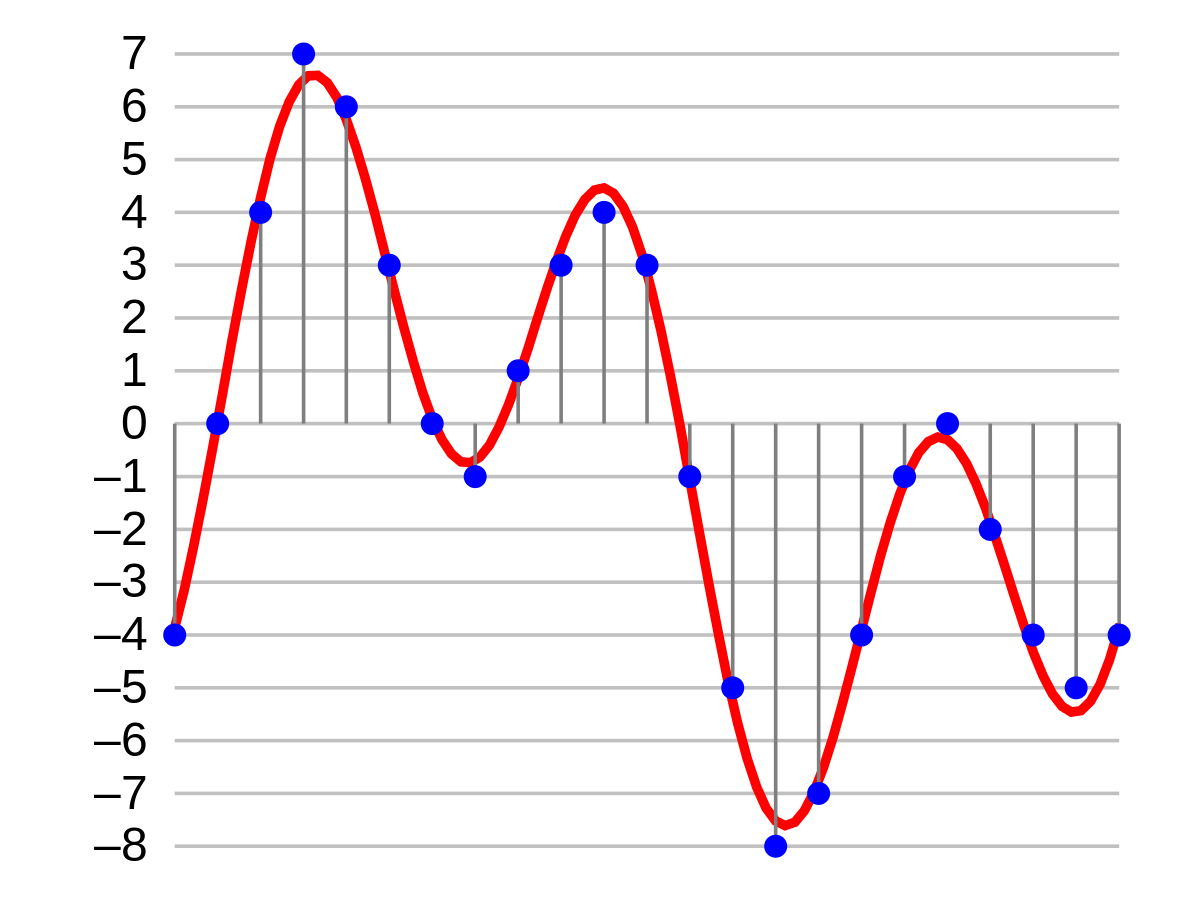
Sampling rate refers to the number of samples per unit of time. The sampling rate is 44KHz, which means the number of samples per second is 44K, which means that 44,000 pieces of data are used to describe the sound waveform in 1 second. That is, the higher the sample rate, the better the sound quality. But he and bitrate are two completely different concepts.