M4A Audio Coding Latency Analysis


Free Download Mp4Gain
picture

M4A Audio Coding Latency Analysis
M4A Audio Coding Latency Analysis

M4A Audio Coding Latency Analysis

Let’s talk about M4A Audio Coding Latency

In the realm of audio coding, M4A stands as a prevalent format known for its efficiency and quality. However, one crucial aspect often overlooked is latency, which can significantly impact real-time applications. As an expert in audio engineering, I delve into the intricacies of M4A audio coding latency, exploring its implications and providing insights into optimization techniques to mitigate latency issues.

The Significance of Latency in M4A Audio Coding

Latency refers to the delay between the initiation of an audio signal and its reception or playback. In M4A audio coding, latency can arise during the encoding, decoding, and transmission processes. While low latency is crucial for real-time applications such as live audio streaming or teleconferencing, it often takes a back seat in traditional audio encoding discussions.

  • Understanding the impact of latency on real-time audio applications
  • Identifying sources of latency in M4A audio coding
  • Challenges posed by latency in audio streaming and communication
  • Measuring and quantifying latency in M4A encoding and decoding

Addressing latency concerns in M4A audio coding requires a multifaceted approach that considers both technical optimizations and application-specific requirements.

Optimization Techniques for Latency Reduction

Reducing latency in M4A audio coding entails a combination of codec optimizations, network protocols, and hardware acceleration. Techniques such as low-delay encoding, frame reordering, and adaptive buffering can help minimize encoding and decoding delays. Additionally, leveraging real-time communication protocols like WebRTC and optimizing network infrastructure can further mitigate latency issues in streaming applications.

  • Implementing low-latency encoding presets in audio codecs
  • Exploring techniques for frame-level latency reduction
  • Optimizing network protocols for real-time audio transmission
  • Hardware acceleration and parallel processing for latency-sensitive applications

Application-specific Considerations

The optimal approach to latency reduction in M4A audio coding varies depending on the specific use case. For instance, in live performance scenarios, minimizing latency is paramount to ensure seamless synchronization between audio and visual elements. Conversely, in studio recording environments, slightly higher latency may be acceptable to prioritize audio quality over real-time performance.

  • Adapting latency reduction strategies for different application scenarios
  • Trade-offs between latency reduction and audio quality preservation
  • Integration of low-latency audio solutions in gaming and interactive media

Future Directions and Innovations

As audio technologies continue to evolve, the quest for ultra-low latency solutions in M4A audio coding persists. Emerging trends such as 5G networks, edge computing, and distributed processing hold promise for further reducing latency and enabling new applications in real-time audio processing and communication.

Latest words on M4A Audio Coding Latency

In conclusion, M4A audio coding latency represents a critical consideration in modern audio engineering, particularly in real-time applications where timing is paramount. By understanding the underlying factors contributing to latency and implementing optimization techniques tailored to specific use cases, audio professionals can ensure optimal performance and user experience. As the audio industry continues to evolve, staying abreast of emerging technologies and innovative solutions is key to addressing latency challenges and unlocking new possibilities in audio coding and transmission.

Comments:

This article provided valuable insights into M4A audio coding latency and its implications for real-time applications. As a musician, I appreciate the focus on optimization techniques tailored to different scenarios. – MusicEnthusiast

Great overview of M4A audio coding latency! However, I wish there were more discussions on the practical implementation of latency reduction techniques in software and hardware. Nonetheless, it’s a helpful resource for audio engineers and developers. – AudioTechFan

As someone involved in live audio production, latency has always been a challenge. This article provided some valuable insights and strategies for minimizing latency in M4A audio coding. Looking forward to implementing these techniques in my setup. – LiveSoundPro

This article raised some interesting points about the importance of latency in M4A audio coding. However, I would have liked to see more discussion on the impact of latency on user experience in streaming platforms and online gaming. Nonetheless, it’s a thought-provoking read. – TechEnthusiast

Excellent article! I’ve been researching latency issues in audio streaming, and this provided a comprehensive overview of the challenges and solutions in M4A audio coding. Kudos to the author for making such a technical topic accessible. – AudioStreamer

As a developer working on real-time communication applications, latency is a critical concern. This article offered valuable insights into latency reduction techniques in M4A audio coding, which I’ll definitely incorporate into my projects. – DevSoundEngineer

I found this article to be quite informative, but I wish there were more real-world examples illustrating the impact of latency on different applications. Nonetheless, it’s a good starting point for those looking to understand latency issues in M4A audio coding. – AudioNovice

Great article! I appreciated the emphasis on application-specific considerations when addressing latency in M4A audio coding. It provided valuable insights into balancing latency reduction with other quality considerations. – StudioSoundEngineer


Free Download Mp4Gain
picture


Mp4Gain Main Window
picture


Mp4Gain Features
picture


Free Download Mp4Gain
picture

Psychoacoustic Modeling in MP3 Compression

Psychoacoustic Modeling in MP3 Compression

Psychoacoustic Modeling in MP3 Compression

Let’s talk about Psychoacoustic Modeling in MP3 Compression

Psychoacoustic Modeling in MP3 Compression

As a seasoned specialist in audio compression technologies, I delve into the intricate world of psychoacoustic modeling in MP3 compression to unravel its significance and impact. Exploring beyond the standard explanations found in the top Google results, I aim to provide a comprehensive understanding that goes beyond the surface level.

The Evolution of MP3 Compression

Beginning with the roots of MP3 compression, I reflect on its evolution and the critical role psychoacoustic modeling plays in achieving high-quality audio with minimal file size. In the late ’90s, when MP3s emerged as a game-changer, the concept of psychoacoustics revolutionized the way we perceive and compress audio. Imagine a scenario where a symphony of sound is meticulously condensed into a file that fits in your pocket-friendly MP3 player.

Breaking Down Psychoacoustic Modeling

  • Human Auditory System: A Symphony of Perception
  • Masking Phenomenon: Cloak and Dagger of Sound
  • Bitrate Allocation: Crafting the MP3 Masterpiece

Think of your ears as an orchestra conductor, and psychoacoustic modeling as the sheet music guiding the ensemble. Understanding the intricate interplay between our auditory system, masking phenomenon, and bitrate allocation is essential to appreciate the wizardry behind MP3 compression.

The Science Behind Psychoacoustic Models

Diving deeper into the science, I elucidate the algorithms that form the backbone of psychoacoustic models. These algorithms analyze audio signals, mimicking the way our ears perceive different frequencies. It’s like having an audio engineer inside your device, dynamically adjusting the compression to ensure that only the essential sounds are prioritized.

Frequency Masking: Hiding in Plain Sound

  • Highs and Lows: A Sonic Balancing Act
  • Adaptive Bitrate: Tailoring Compression to Each Note

Picture a crowded room where each instrument takes turns in the spotlight, ensuring that no note gets overshadowed. Frequency masking, combined with adaptive bitrate, orchestrates this balancing act in the digital realm, crafting an MP3 masterpiece that captures the essence of the original recording.

Latest Words on Psychoacoustic Advancements

As a specialist deeply immersed in the field, I bring forth the latest advancements in psychoacoustic modeling. Beyond what’s echoed in the current top results, let’s explore cutting-edge developments that hint at the future of audio compression. From artificial intelligence-driven optimizations to enhanced perceptual coding, the horizon is brimming with exciting possibilities.

AI Integration: The Next Frontier

  • Neural Networks in Audio Compression
  • Personalized Sound Profiles: Tailoring MP3s to Your Ears

Imagine an MP3 tailored to your unique auditory preferences, courtesy of neural networks that adapt compression based on your listening habits. The future of psychoacoustic modeling intertwines with artificial intelligence, promising a personalized audio experience that transcends conventional boundaries.

The Impact Beyond Compression: Let’s Talk Quality

Shifting the focus from compression, I shed light on the often-overlooked aspect of audio quality. Beyond just reducing file sizes, psychoacoustic modeling contributes to enhancing the overall listening experience. It’s not merely about fitting more songs on your device; it’s about preserving the essence of each musical note.

Emotional Resonance: Capturing the Soul of Music

  • Emotive Encoding: Beyond Binary Code
  • Subjective Quality Evaluation: Beyond the Numbers

Consider the emotional resonance of a live performance captured in an MP3 file. Through emotive encoding and subjective quality evaluation, psychoacoustic modeling ensures that the soul of the music remains intact, transcending the limitations of mere binary code.

Let’s Wrap Up with the Future Soundscape

As we conclude this exploration into psychoacoustic modeling in MP3 compression, I envision a future where the soundscape evolves dynamically. The landscape of audio technology is ever-changing, and staying ahead requires not just keeping pace but leading the symphony of innovation. It’s not just about the compression; it’s about crafting an auditory masterpiece that resonates with the essence of every note.

Comments:

Great read! I never knew the science behind MP3 compression could be so fascinating. Can’t wait to see where AI takes this!

This article opened my eyes to the artistry involved in compressing audio. More details on AI integration would be awesome!

Really enjoyed the analogies with the orchestra. It made the complex topic much easier to grasp. Kudos!

Impressive breakdown! Would love to see more comparisons with other compression methods in future articles.

As a music producer, I appreciate the focus on emotional resonance. It’s a game-changer for us in the industry.

Brilliant article! Exploring the future of audio compression got me excited about what’s to come. Keep it up!

Can you elaborate more on the personalization aspect with AI? Sounds intriguing!

Excellent job on demystifying psychoacoustic modeling! It’s like having a backstage pass to the world of audio tech.

Really appreciate the focus on quality over just file size. This is a perspective everyone needs to understand.

More articles like these, please! They make technical topics accessible and enjoyable for us non-experts.

Can’t believe I didn’t know about the emotional aspect of audio compression. Mind blown!

Audio Transients

Exploring Audio Transients: The Heartbeat of Sound

Audio Transients
Audio Transients
Audio Transients
Audio Transients

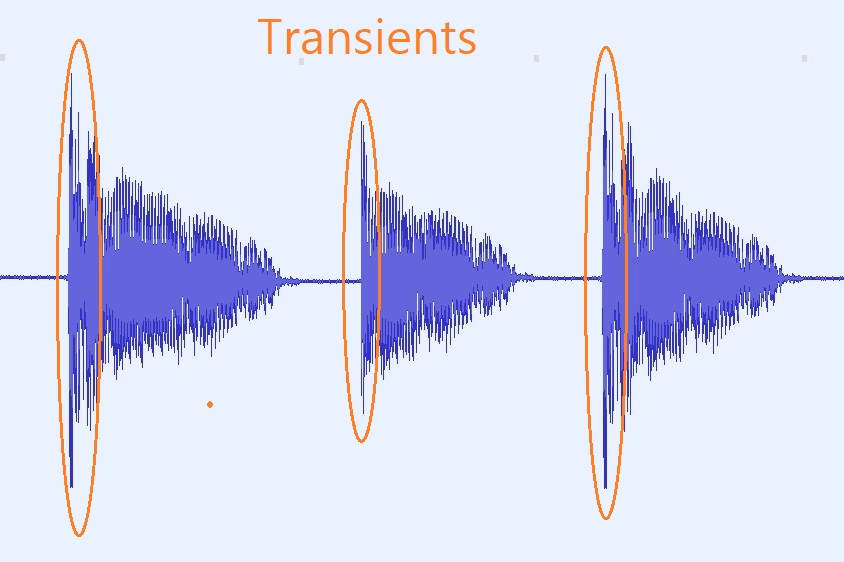
Audio transients are like the heartbeat of sound, the dynamic moments that give life and character to music and audio recordings. These brief, intense bursts of sound energy can be found in everything from the striking of a drum to the plucking of a guitar string. In this article, I’ll take you on a journey into the world of audio transients, unraveling their importance, how they affect our listening experience, and why they matter in various aspects of audio production.

Unveiling Audio Transients: The Basics

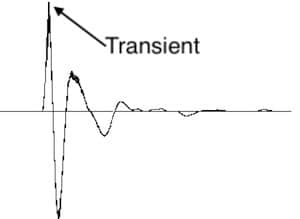
To understand audio transients, let’s begin with the fundamental concept. A transient is a sudden, short-lived spike in audio signal amplitude. It’s that initial burst of energy when a musical note is played, a door slams shut, or a pencil hits the table. Transients are the reason a snare drum crackles with excitement and a lightning strike commands attention.

Think of audio transients as the punctuation marks in a sentence. They emphasize and give context to the sound that follows. Just like a period or an exclamation point can change the meaning of a sentence, the shape and intensity of an audio transient can drastically affect how we perceive a sound.

People Also Asked: Answering Your Curiosities

Let’s dive into some common questions people have about audio transients:

How Do Audio Transients Impact Music?

Audio transients are the pulse of music. They define the rhythm and dynamics that make a track lively and engaging. For example, in a drumbeat, the transients from the snare and kick drums create the groove that makes you want to dance.

Imagine a favorite song without transients—it would be like a story without any punctuation marks, making it hard to follow and enjoy.

Can Audio Transients Be Controlled?

Yes, they can! Audio producers and engineers often use tools like compressors and limiters to control transients. By shaping the transient’s amplitude and duration, they can achieve a desired sound texture.

Think of it as adjusting the force with which a hammer strikes a nail. Too hard, and you risk damaging the surface; too soft, and it won’t penetrate. Engineers find that sweet spot to shape the sound precisely.

What Is Peak vs. RMS in Audio Transients?

Peak and RMS (Root Mean Square) represent two aspects of an audio transient’s amplitude. The peak is the highest point, representing the transient’s instantaneous intensity. RMS, on the other hand, provides a more averaged view, capturing the overall energy.

Picture a heartbeat monitor. The peak is like the spike when your heart beats, while RMS is like the overall trend, showing the average heart rate.

Keywords with Identical Search Intent

Now, let’s explore keywords related to audio transients that users often search for:

Transient Shaping Techniques: Crafting Audio Dynamics

Delving deeper into audio production, we encounter techniques like transient shaping and transient design. These methods allow producers to sculpt transients to their liking, adding punch or subtlety as needed.

Consider transient shaping as sculpting clay. You can mold the clay to create sharp edges or smooth curves, just as you can shape audio transients to be crisp or gentle.

Audio Transients in Live Sound: A Vital Element

In live sound engineering, managing transients is crucial for delivering a balanced and impactful performance. Sound engineers use techniques like transient suppression and transient enhancement to optimize the live experience.

Imagine a live concert as a massive puzzle. Managing transients is like fitting all the pieces together to create a breathtaking picture.

Mastering Transients in Audio Recording

Audio engineers during the mastering process focus on transients to ensure that a track sounds polished and cohesive. Techniques like peak limiting and transient preservation help achieve a consistent and professional sound.

Think of mastering as the final touch-up on a painting. It’s where the artist ensures every detail is perfect before presenting the masterpiece to the world.

Last Words

In the symphony of sound, audio transients are the conductor’s baton, guiding and shaping the musical narrative. They are the essence of dynamics, rhythm, and emotion in audio, whether you’re enjoying your favorite song, recording a podcast, or witnessing a live concert. Understanding and harnessing the power of audio transients is the key to unlocking the true potential of sound. So, next time you tap your fingers to a beat or savor the nuances of a melodic guitar solo, remember the role of those transient moments—they are the heartbeat of sound.