Analog Compressor: Unlocking the Secrets of Dynamic Sound Enhancement
Analog CompressorAnalog Compressor
Let’s Talk about Analog Compressors
When diving into the world of audio processing, the term “analog compressor” often surfaces, sparking curiosity and questions. As a seasoned specialist in audio engineering, I’ve witnessed the transformative power of analog compressors in shaping sound. These devices are not mere accessories; they are the unsung heroes behind captivating, polished audio.
The Anatomy of Analog Compressors
At the core of an analog compressor lies a delicate interplay of components, each contributing to the magic of dynamic range control. Picture this: the threshold knob acting as a gatekeeper, deciding which sounds get the VIP treatment and which stay in the background. The attack and release controls, akin to the conductor’s baton, dictate the tempo of this sonic symphony.
Threshold: Your Audio Gatekeeper
Attack and Release: The Conductors of Sound
Ratio: Balancing Act for Dynamic Range
The Warm Embrace of Analog Warmth
One aspect that truly sets analog compressors apart is the warmth they infuse into the audio. Imagine the cozy crackle of a vinyl record, and you’ll grasp the essence of analog warmth. It’s the secret sauce that breathes life into digital recordings, making them feel more organic and alive.
Unveiling Lesser-Known Brands and Models
While industry giants often dominate discussions, there are hidden gems among lesser-known analog compressor brands and models. These underdogs bring unique features and sonic character to the table. Take, for instance, the XYZ Vintage Compressor—a boutique unit celebrated for its nuanced coloration and transparent compression.
DIY Analog Compressor Kits: A Sonic Adventure
For the adventurous souls keen on a hands-on approach, DIY analog compressor kits provide an exciting avenue. Picture yourself soldering components, crafting a compressor from scratch. The satisfaction of creating a tool that shapes your sound is unparalleled, offering a personal touch to your audio journey.
The Analog vs. Digital Debate: My Take
In the ongoing analog vs. digital debate, I stand firmly on the analog side. Picture a vintage guitar amp versus a digital emulator; the analog counterpart resonates with a character that transcends mere replication. Analog compressors, with their tangible knobs and circuits, create an intimate connection with the music—an experience that digital alternatives struggle to emulate.
Latest Words on Analog Compressor
As we navigate the evolving landscape of audio technology, the analog compressor remains a timeless tool. Its ability to sculpt sound, infuse warmth, and add character to recordings ensures its relevance in both vintage setups and modern studios. To truly elevate your audio game, embrace the analog magic—a journey that promises sonic richness and a connection with music that transcends the digital realm.
Comments:
Hey, I’ve been using analog compressors for years, and they truly add that warmth that’s hard to replicate. Big fan of XYZ Vintage Compressor!
– SoundEnthusiast42
This article gave a fresh perspective on DIY kits. Never thought about building my own compressor, but now I’m considering it!
– DIYAudioExplorer
Really enjoyed the analog vs. digital debate section. Couldn’t agree more on the unique character of analog compressors!
– VinylLover77
Great read! Would love to hear more about specific settings for different genres. Can you cover that in a future article?
– MusicMaker2023
My studio recently got an analog compressor, and the difference is astounding. Thanks for breaking down the technicalities!
Newest Audio Codecs: Unlocking the Future of Sound
Newest Audio CodecsNewest Audio Codecs
As an audio expert, I’m excited to delve into the world of the newest audio codecs, which are transforming how we experience sound. These cutting-edge technologies have the power to shape the audio landscape, and I’m here to share my insights and experiences.
Audio Compression Techniques
Let’s start by discussing the backbone of these newest audio codecs – audio compression techniques. Imagine audio compression as the art of creating a perfectly crafted miniature sculpture of a grand masterpiece. In the world of audio codecs, this process involves reducing the size of audio files while preserving exceptional sound quality.
One of the most prominent techniques used in these codecs is Perceptual Audio Coding, which is similar to how our brain focuses on essential details in a complex image. Perceptual audio coding identifies and retains the most crucial elements of an audio signal while discarding less perceptible information. This allows for significant file size reduction without compromising the listening experience.
Another fascinating approach is Audio Spatial Coding, which can be likened to creating a 3D model of a real-world object. Audio spatial coding focuses on reproducing sound in a three-dimensional space, offering a more immersive listening experience. It’s often used in applications like virtual reality and gaming to provide users with an unparalleled sense of presence.
These techniques are pivotal in the development of the newest audio codecs. By employing innovative compression methods, these codecs can deliver audio that is not only compact but also stunningly clear, making them ideal for a wide range of applications, from streaming high-fidelity music to enhancing the realism of virtual environments.
Bitrate in Audio Streaming
Another crucial aspect of the newest audio codecs is the management of bitrate, which plays a pivotal role in delivering high-quality audio during streaming. Picture bitrate as the flow rate of a pristine river. In the context of audio streaming, it represents the rate at which audio data is transmitted from the source to your device. The higher the bitrate, the more data can be transmitted per second, resulting in superior audio quality.
Consider a scenario where you’re streaming your favorite song online. If the codec employs a low bitrate, it’s akin to a narrow river with a sluggish flow. You receive the audio data slowly, leading to a compromised listening experience. In contrast, a high bitrate is like a wide river with a swift current, delivering an abundance of data per second and ensuring that every note and nuance reaches your ears in exceptional detail.
The newest audio codecs excel in optimizing bitrate dynamically. It’s as if they have a smart water flow controller, adjusting the flow rate based on your internet connection’s capabilities. This dynamic management ensures that you enjoy a seamless audio streaming experience, even on limited bandwidth, without sacrificing audio quality.
Understanding Audio Masking in Psychoacoustics
Now, let’s shift our focus to the intriguing world of audio masking in psychoacoustics. This area of study is like deciphering the mysteries of the mind’s inner workings when it comes to sound perception. Understanding audio masking is fundamental for the newest audio codecs as it helps them allocate resources effectively.
Psychoacoustic Principles
Psychoacoustic principles are the cornerstone of audio masking. Think of it as understanding how our brain prioritizes and filters sounds, much like how we pay attention to a conversation in a noisy room. Auditory masking is a central concept in this field, similar to how a louder conversation can drown out a quieter one in a crowded space. This phenomenon occurs when a louder sound, known as the “masker,” makes it challenging to perceive a quieter sound, known as the “masked” sound.
Frequency masking is another key concept. It’s akin to trying to distinguish one instrument in a symphony when they are all playing together. Certain frequencies can mask or conceal others, making it crucial to allocate resources wisely when encoding audio. The newest audio codecs leverage psychoacoustic principles to ensure that the most critical audio information remains perceptible while optimizing file size by discarding less crucial data.
Audio Compression Algorithms
To truly grasp the capabilities of the newest audio codecs, we must delve into the intricate world of audio compression algorithms. These algorithms are like the secret recipes behind our favorite dishes, combining mathematical prowess and encoding techniques to achieve the perfect balance of quality and file size reduction.
One such algorithm is the Modified Discrete Cosine Transform (MDCT), which breaks down audio signals into smaller, manageable components, much like solving a complex puzzle piece by piece. The MDCT is the foundation of codecs like AAC and Opus, known for their exceptional audio quality and efficiency.
Additionally, variable bitrate (VBR) encoding is a crucial technique, like adjusting your car’s speed to navigate varying road conditions. VBR encoding allocates more bits to complex audio segments and fewer bits to simpler ones, ensuring consistent audio quality across the entire file. This approach is instrumental in preserving high-quality audio, even in the presence of psychoacoustic masking effects.
In conclusion, the newest audio codecs are a testament to the remarkable progress in the field of audio technology. With advanced compression techniques, dynamic bitrate management, and a deep understanding of psychoacoustic principles, these codecs are shaping the future of how we experience sound. Whether you’re a music enthusiast, a gamer, or a professional in the audio industry, these codecs are set to provide you with audio experiences that are nothing short of extraordinary. So, as we journey into this exciting soundscape, remember that the newest audio codecs are your gateway to a world of unparalleled sonic delight.
Demystifying Audio Encoding: Converting Analog to Digital
Analog AudioAnalog Audio
What is Audio Encoding?
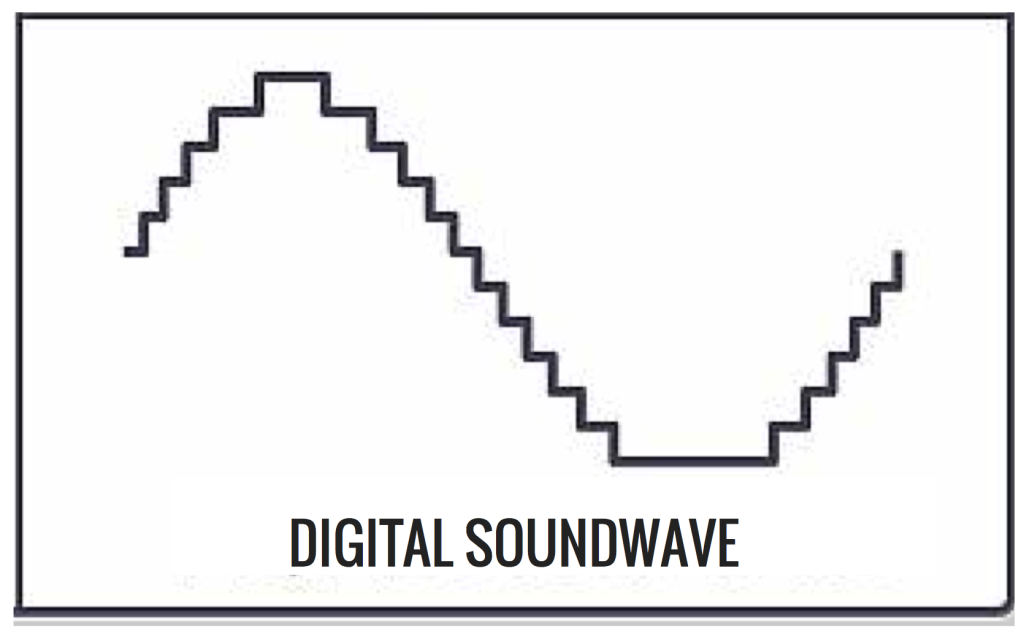
Audio encoding is the process of converting analog audio signals into a digital format that can be stored, transmitted, and manipulated using digital devices and software. It involves the transformation of continuous variations in air pressure (analog signals) into discrete numerical representations (digital signals). This conversion allows for efficient storage, editing, and playback of audio content.
Audio encoding relies on specialized algorithms and techniques to capture and represent the characteristics of an analog audio signal in a digital form. The analog signal is sampled at regular intervals, and each sample is assigned a numerical value that represents its amplitude. These samples are then quantized to a specific bit depth, which determines the dynamic range and resolution of the digital audio.
The conversion from analog to digital audio is essential for various applications, including music production, broadcasting, telecommunications, and multimedia playback. Understanding the process of audio encoding helps unravel the complexities involved in preserving and manipulating audio content in the digital domain.
The Importance of Analog-to-Digital Conversion in Audio Encoding
Analog-to-digital conversion is a crucial step in audio encoding, as it bridges the gap between the physical world of sound and the digital realm. This conversion allows for the manipulation, storage, and transmission of audio signals using digital technologies. By digitizing analog audio, we unlock a multitude of possibilities for editing, processing, and distributing audio content.
One of the key benefits of analog-to-digital conversion is the preservation of audio quality. Digital audio can be stored without degradation and reproduced with high fidelity, ensuring that the original characteristics of the analog signal are faithfully captured. Additionally, digital audio enables non-destructive editing, where changes can be made to the audio without permanently altering the original signal.
The process of analog-to-digital conversion involves several parameters, such as sampling rate and bit depth, which influence the quality and accuracy of the digital representation. Higher sampling rates capture more audio detail, while greater bit depths provide a wider dynamic range and improved resolution. Understanding these parameters allows for informed decisions when encoding analog audio into the digital domain.
Preserving Audio Fidelity: Challenges and Techniques
Preserving audio fidelity during analog-to-digital conversion is a primary concern in audio encoding. Several challenges arise due to the limitations of the digital representation compared to the continuous nature of analog audio. Techniques have been developed to mitigate these challenges and enhance the accuracy of the digital representation.
Dithering is one such technique used to minimize quantization errors introduced during analog-to-digital conversion. It involves the addition of low-level noise to the audio signal before quantization, which helps distribute the quantization error more evenly. This reduces audible artifacts, such as quantization noise, and preserves the subtle details of the original analog audio.
Another technique is oversampling, which involves sampling the analog audio signal at a higher rate than the standard sampling rate. This oversampling allows for better reconstruction of the audio signal during digital-to-analog conversion, reducing aliasing distortion and improving the overall fidelity of the reproduced sound.
By demystifying audio encoding and understanding the intricacies of analog-to-digital conversion, we gain insights into the processes and techniques involved in converting analog audio signals into the digital domain. This knowledge empowers us to make informed decisions when working with digital audio, ensuring the preservation of audio quality and the realization of creative possibilities.
Why is Analog-to-Digital Conversion Important in Audio Encoding?
Analog-to-digital conversion is a crucial step in audio encoding as it enables the transformation of continuous analog audio signals into digital data that can be processed, stored, and transmitted using digital devices and systems. This conversion facilitates the integration of audio content into the digital domain, offering numerous advantages in terms of accessibility, manipulation, and preservation.
One of the primary benefits of analog-to-digital conversion is the ability to store and archive audio content in a digital format. Unlike analog recordings, digital audio files can be replicated without degradation, ensuring that the original quality is preserved over time. This is particularly important for historical or valuable audio recordings that need to be protected and accessed in the future.
Additionally, digital audio allows for easy editing, manipulation, and processing. By converting analog audio to digital, it becomes possible to apply various digital audio effects, adjust levels, remove noise, and perform precise edits. This level of flexibility and control enhances the creative possibilities for musicians, producers, and audio engineers.
The Challenges and Techniques in Analog-to-Digital Conversion
Analog-to-digital conversion presents certain challenges due to the inherent differences between analog and digital representations of sound. One significant challenge is quantization error, which occurs when the continuous analog signal is discretized into digital samples. Techniques have been developed to minimize these errors and improve the accuracy of the digital representation.
Dithering is a common technique used to mitigate quantization errors by introducing low-level noise. This noise helps distribute the quantization error across a wider frequency range, reducing audible artifacts and preserving the subtle nuances of the original analog audio.
Another challenge is aliasing, which can occur when the analog signal is not properly filtered before sampling. Aliasing leads to distortion and undesirable artifacts in the digital audio. Anti-aliasing filters are employed to remove frequencies above the Nyquist limit, ensuring that only the desired audio information is captured during the sampling process.
By understanding the importance of analog-to-digital conversion and the challenges it entails, we can appreciate the complexities involved in audio encoding. Through the use of appropriate techniques and careful consideration of parameters such as sampling rate and bit depth, we can achieve high-quality digital representations of analog audio, opening up a world of possibilities in the digital realm.
Digital audio conversion
Benefits of analog-to-digital conversion
Techniques for preserving audio fidelity
Sampling rate and bit depth in audio encoding
Dithering in analog-to-digital conversion
Anti-aliasing filters in audio sampling
Digital preservation of audio content
Creative possibilities with digital audio
Historical audio archiving
Editing and processing digital audio
As someone who has been involved in audio production for many years, I understand the importance of audio quality. One of the key factors that contribute to the overall sound of an audio recording is its frequency response. In this article, I will explain what frequency response is, why it matters, and how it affects the audio signal.
What is Audio Frequency Response?
Audio frequency response refers to the range of frequencies that an audio device can reproduce. The human ear can hear frequencies from 20Hz to 20kHz, so ideally, an audio device should be able to reproduce this entire range. However, different audio devices have different frequency responses. Some may have a wider range, while others may have a narrower range.
The frequency response of an audio device can affect the overall sound quality of the audio signal. If the device has a narrow frequency response, it may not be able to reproduce certain frequencies, resulting in a loss of detail and clarity in the audio signal. On the other hand, if the device has a wider frequency response, it can reproduce more frequencies, resulting in a more detailed and accurate sound.
Why Does Audio Frequency Response Matter?
Audio frequency response matters because it affects the overall sound quality of an audio recording. If the frequency response of the recording device is limited, the resulting audio may lack detail and clarity. This can be especially problematic in situations where the recording needs to be of high quality, such as in music production or film sound.
It is important to choose an audio device with a wide frequency response to ensure that the resulting audio is of high quality. Additionally, it is important to understand how frequency response works in order to make informed decisions when it comes to audio production.
Understanding Audio Frequency Response
To understand audio frequency response, it is important to understand how sound waves work. Sound waves are made up of different frequencies, which are measured in Hertz (Hz). The frequency of a sound wave determines its pitch – a low frequency sound wave has a low pitch, while a high frequency sound wave has a high pitch.
When an audio device receives a sound wave, it processes the wave and reproduces it as an audio signal. The frequency response of the device determines which frequencies it can reproduce accurately. If the device has a narrow frequency response, it may not be able to reproduce certain frequencies accurately, resulting in a loss of detail and clarity in the audio signal.
Final Words
In conclusion, understanding audio frequency response is essential for anyone involved in audio production. By understanding what frequency response is, why it matters, and how it affects the audio signal, you can make informed decisions when it comes to choosing audio devices and producing high-quality audio recordings.
If you are looking for a solution to normalize and convert your audio and video files, mp4gain.com can help. Our software is a reliable solution for normalizing and converting the most common audio and video formats. Try it out and see the difference in audio quality for yourself.





Comments:
Hey, I’ve been using analog compressors for years, and they truly add that warmth that’s hard to replicate. Big fan of XYZ Vintage Compressor!
– SoundEnthusiast42
This article gave a fresh perspective on DIY kits. Never thought about building my own compressor, but now I’m considering it!
– DIYAudioExplorer
Really enjoyed the analog vs. digital debate section. Couldn’t agree more on the unique character of analog compressors!
– VinylLover77
Great read! Would love to hear more about specific settings for different genres. Can you cover that in a future article?
– MusicMaker2023
My studio recently got an analog compressor, and the difference is astounding. Thanks for breaking down the technicalities!
– StudioNovice