Parameters that affect the quality of digital audio. (Part 3)

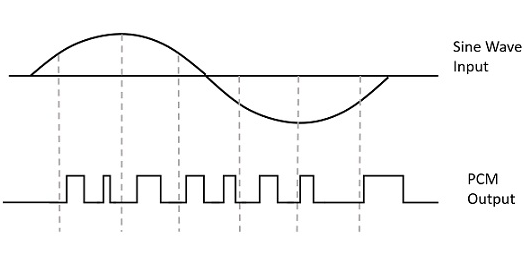
The quality of the digital sound obtained depends on the number of measurements of the sound volume level per unit of time, that is, the sampling frequency.
Audio sample rate is the number of audio volume measurements in one second.
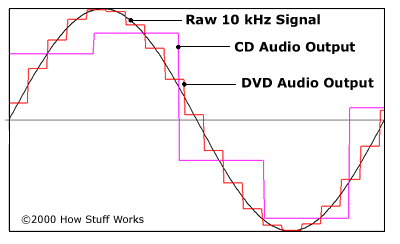
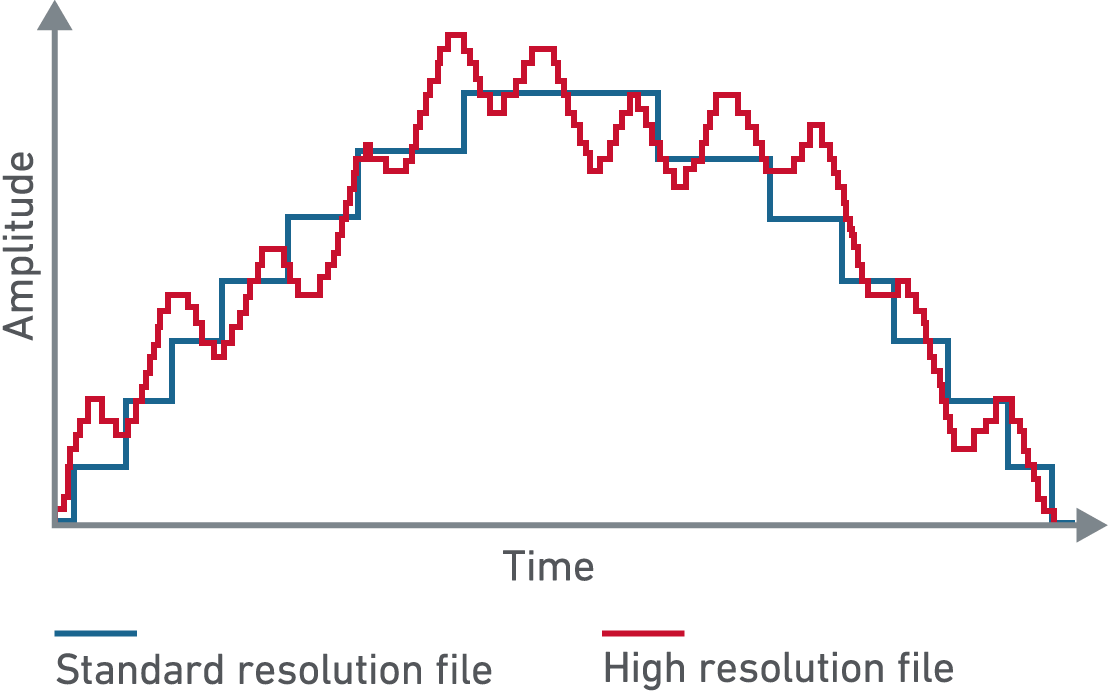
The more measurements that are made in one second (the higher the sampling frequency), the more accurately the “ladder” of the digital audio signal repeats the curve of the analog signal.
Each “step” of the graph is assigned a certain value for the sound volume level. Loudness levels can be thought of as a set of possible N states (gradations), which require a certain amount of I information to encode, which is called audio encoding depth.
Audio encoding depth is the amount of information required to encode the discrete volume levels of digital audio.
If the known encoding depth, the number of digital audio volume levels can be calculated by the general formula N = 2 I.
For example, if the audio encoding depth is 16-bit, then the number of audio volume levels is:
N = 2 I = 2 16 = 65 536.
During the encoding process, each sound volume level is assigned its own 16-bit binary code, the lowest sound level will correspond to the code 0000000000000000 and the highest – 1111111111111111.
Digitized audio quality
Therefore, the higher the sample rate and depth of audio encoding, the better the digitized sound will sound and the better you can bring the digitized sound closer to the original sound.
The highest quality of digitized sound, corresponding to the quality of an audio CD, is achieved with a sampling rate of 48,000 times per second, a sampling rate of 16 bits and the recording of two audio tracks (stereo mode) .
It should be remembered that the higher the quality of the digital sound, the greater the volume of information in the audio file.
You can easily estimate the volume of information in a digital stereo sound file with a duration of 1 second with an average sound quality (16 bits, 24,000 measurements per second). To do this, the encoding depth must be multiplied by the number of measurements per second and multiplied by 2 channels (stereo sound):
16 bits × 24,000 × 2 = 768,000 bits = 96,000 bytes = 93.75 KB.
There are three main types of audio digits:
format – no compression;
format (lossy) – lossy compression;
format (lossless): lossless compression.
Lossy compression: technology in which there is a significant reduction of the encoded file compared to the original, due to the removal of information that is not perceived by the human ear.
The downside of this technology is the fact that the compressed file will never be identical to the original.
List of the most common lossy formats:
AAC (.m4a, .mp4, .m4p, .aac): advanced audio encoding (often in MPEG-4 container)
MP2 (MPEG Layer 2)
MP3 (MPEG Layer 3)
MPC (known as Musepack, previously called MPEGplus or MP +)
Ogg Vorbis
WMA (Windows Media Audio)
Lossless – Lossless compressed audio formats, including:
FLAC (Free Lossless Audio Codec)
APE (mono audio)
WV (WavPack)
These formats are capable of converting CD to digital format while maintaining quality. As an example, you can take a CD, convert it to WAV, then WAV to FLAC, then go back from FLAC to WAV, and then burn it to a blank CD and you have an absolutely identical copy of your source.
What format does the music sound with the best quality?
The most popular is the lossless FLAC format, and one of the most widely used CD to FLAC conversion programs is EAC (Exact Audio Copy).
Of all the parameters of digital audio, it is necessary to pay attention primarily to the following indicators:
sampling rate (precision of digitizing an analog signal in time),
bit rate (amount of information contained in a file in terms of one second).
The sample rate is the frequency at which digital audio is processed. The most common sample rate for quality audio formats is 44.1 kHz.
It is generally accepted that a high bit rate guarantees the best quality; this is true, but only if the source file is of good quality. A high quality MP3 should have a bit rate of 320 kbps, but a high quality FLAC format generally has a bit rate of 900 kbps and higher.
What is the best quality music format?
In addition to the audio formats themselves, for high-quality music sound, high-quality reproduction equipment is also needed: speakers, amplifiers, headphones.