What is bitrate?

Bitrate

Bit rate: the number of bits of information used to store or transfer one second of data transmission: video and / or audio recordings, including compressed ones.
Bit rate is expressed in bits per second (bit / s, bps), as well as derived values: kilo (kbps, kbps), mega (Mbps, Mbps), etc.
For streaming video and audio formats (such as MPEG and MP3) that use lossy compression]], the bit rate expresses the degree of compression of the stream. Most of the time, the video and audio bit rate is measured in megabits per second.
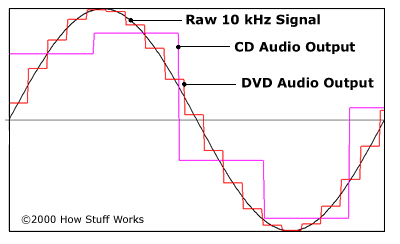
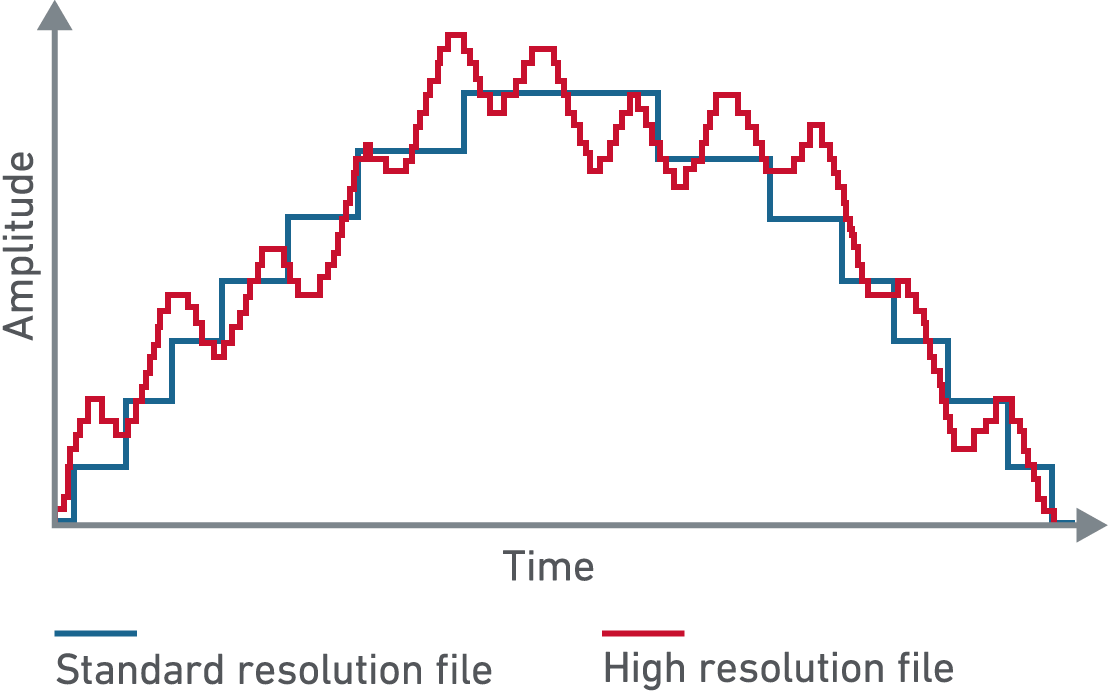
Increasing the bitrate provides a significant increase in video recording quality, which is especially noticeable when shooting dynamic scenes and small details.
Encoding modes
There are three compression modes for data transmission:
CBR (constant bit rate): with constant bit rate;
VBR (variable bit rate): with variable bit rate;
ABR (Average Bit Rate): with an average bit rate.
Constant bit rate
Constant Bit Rate, CBR – A variant of streaming data encoding, in which the required bit rate is initially set, which does not change throughout the file.
Its main advantage is the ability to predict the size of the final file fairly accurately.
However, the constant bitrate option is not very suitable for video or audio content, the dynamics of which change over time, as it does not provide an optimal size / quality ratio.
Variable bit rate
With a variable bit rate, the VBR codec selects the value of the bit rate based on the parameters (the level of the desired quality), and during the encoded segment, the bit rate may change.
This method provides the best quality / size ratio for the output file, but its exact size turns out to be very unpredictable. Depending on the nature of the sound (or image, in the case of video encoding), the size of the resulting file may differ several times.
Average bit rate
Average bit rate, ABR is a hybrid of constant and variable bit rates: the value in Mbps is set by the user and the program varies it within certain limits. However, unlike VBR, the codec is careful to use the maximum and minimum possible values, without risking going beyond the average specified by the user. This method allows the most flexible setting of the processing speed and with much higher precision (compared to VBR) in predicting the output file size.