MP3, AAC, WAV, FLAC: we talk about all audio file formats


Free Download Mp4Gain
picture

MP3, AAC, WAV, FLAC: we talk about all audio file formats
Audio Formats

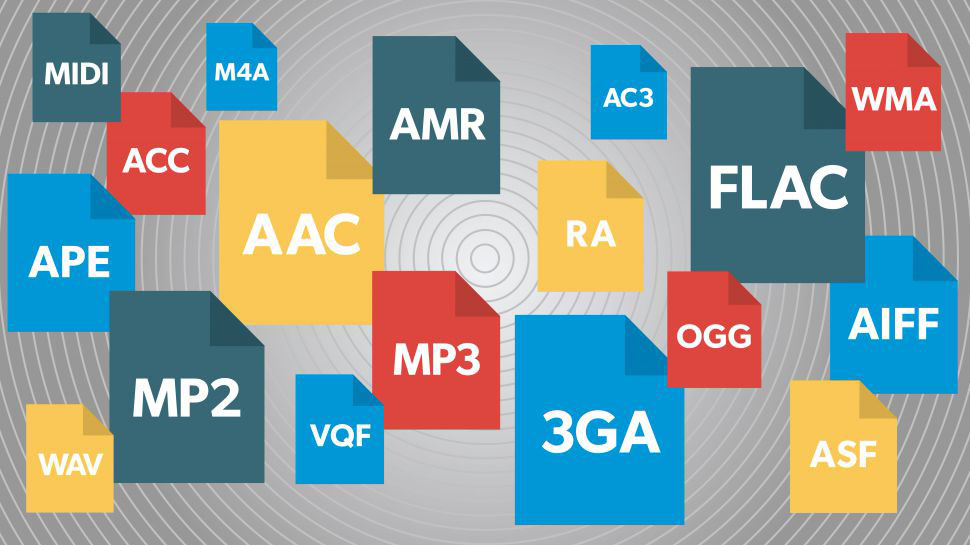
As you organize your digital music collection, you can dive into a variety of audio file formats. Almost everyone has heard of MP3, but what is OGG, AIFF, or MQA?
audio file formats

If, after reading the list, you have the suspicion that all these formats for obtaining such chic abbreviations were studied in different universities, we will help to dispel it. This material will clarify the essence of some popular music formats, the difference between them and why it is important to know them.

Regardless of what you’re listening to, low-bitrate MP3, slightly better tracks in AAC, or high-resolution audio in FLAC or WAV, it’s time to find out exactly what you get in each case and how to choose the optimal format.

Let’s evaluate the pros and cons of each.

A quick overview of file formats and codecs

In order not to beat around the bush, we’ll provide a quick guide to all file formats and the differences between them at first. If you want to know more, here is a more detailed description of the differences in size, sound quality and compatibility.

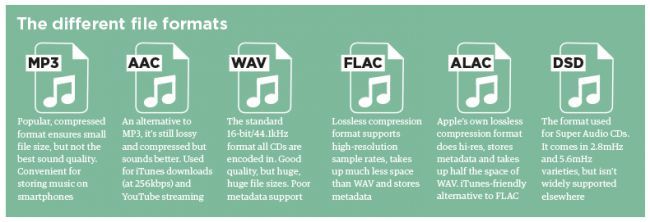
–AAC (not high resolution audio format). Apple’s popular alternative to MP3. Compressed and lossy, but with higher sound quality. Used to download from iTunes and stream from Apple Music.

–AIFF (high resolution). Apple’s alternative to WAV with more complete metadata. It is not an uncompressed and lossy format very popular with large files.

–DSD (high resolution). One-bit format used in Super Audio CD. Available in 2.8 MHz, 5.6 MHz and 11.2 MHz sample rates. Due to the use of a high quality codec, it is not currently used for transmission. Uncompressed format.

–FLAC (high resolution). Lossless compression format supporting high-resolution supporting sample rates and metadata storage; the file size is half that of WAV. Due to the absence of royalties, it is considered the best format for downloading and storing albums in high resolution audio. Its main drawback is the lack of support for Apple devices (and therefore the incompatibility with iTunes).

–MP3 (not high resolution audio format). Popular compression and lossy format with small file size and far from the highest sound quality. Convenient for storing music on smartphones and iPods.

–MQA (high resolution). Compressed format for storing high resolution files in an easier way to transmit. Used by the Tidal Masters service for high resolution audio streaming.

–OGG (not high resolution audio format). He is sometimes known as his full name: Ogg Vorbis. An open source alternative to MP3 and AAC that is not covered by patents. This 320 kbps format is used in Spotify broadcasts.

–WAV (high resolution). The standard format in which all CDs are recorded. Great sound quality, but large files due to lack of compression. Weak support for metadata (versions, song titles and artists).

–WMA Lossless (high resolution). An uncompressed version of Windows Media Audio, the compatibility of which is not often found on smartphones and tablets.

Compressed and uncompressed audio files

Let’s start by looking at three categories into which all audio file formats can be grouped. They are determined by the degree of data compression and the associated loss of sound quality.

If a special algorithm (or codec) was not used to compress the audio in your file, this will lead to a double result: first, there will be no loss of sound quality, and second, your space will soon be exhausted. HDD.

In essence, the uncompressed recording corresponds completely to the original audio file, in which real sound signals are recorded in digital representation.

WAV, AIFF or FLAC: uncompressed formats

WAV and AIFF are the most popular uncompressed audio file formats. Both are based on PCM (Pulse Code Modulation), a known mechanism for directly converting audio to digital format. WAV and AIFF use similar technologies, but the storage methods are slightly different. In these formats, you can record CD-quality files with higher resolution.

The WAV format was developed by Microsoft and IBM, and is therefore used on Windows-based platforms; it is the standard CD recording format.

The AIFF format was created by Apple as an alternative to WAV; And while AIFF files are less common, they provide more comprehensive metadata support, allowing you to store album art, song titles, and the like.

These fortmats take up a lot of space.


Free Download Mp4Gain
picture


Mp4Gain Main Window
picture


Mp4Gain Features
picture


Free Download Mp4Gain
picture

About audio formats

About audio formats

audio formats

Installations
Installation first. There is no perfect format. Different types of audio require different approaches.

Audio Formats

Second installation. It is impossible to do something good with poor quality.

Third installation. There are three approaches to comparing quality: the discriminating edge (heavyweights), the comforting edge (consumer audio), and the intelligibility edge.

Fourth installation. Disputes in a weight category are useless and are called “holivars”. The arguments in different weight classes are meaningless: “heavy is heavier than light” and “light is lighter than heavy.” Disputes (especially between heavyweights) can only take place with the support of the “blind method”.

A brief introduction
Bit rate is one of the most important metrics for measuring digital audio recordings. It is measured in kilobits per second (for short: kbps, just kilobits, kbps, kbps, kbps, etc.).

On the fingers: answer the question “how much memory occupies a second of audio”.

All kinds of transformations are already underway: there are eight bits in a byte, 1024 bits in a kilobit, 60 seconds in a minute, 60 minutes in an hour, and we arrive at the following empirical data:

bit rate 1400 = 1 hour takes 615 megabytes on disk
320 bitrate = 1 hour takes 141 megabytes on disk
bit rate 192 = 1 hour takes 84 megabytes on disk
bit rate 24 = 1 hour takes 11 megabytes on disk
Naturally, we all want to use disk space sparingly. This is where the format war begins. 11 MB is sixty times cheaper than 615 MB. Megabytes is the cost of storing audio recordings.

The price of storage can also be expressed in bills, dividing the cost of the disk by its capacity. For an archive of audio recordings, the storage price is far from being as critical as for an archive of video recordings.

Furthermore, the storage price can be conditionally expressed in man-hours, if the playback device has a much smaller capacity than your general archive of audio recordings. It takes time to regularly download new tracks to the device.

The storage price can also be expressed in square meters of work area. 500 audio CDs will take up a lot of space and require furniture solutions, but a small external hard drive fits in your pocket.

If there is a different price, then the question of quality arises: then we assume that the lowest bitrate has the lowest quality. So we come to the main question: where is the limit of reason, where is the ideal “price / quality” ratio.

The most approximate division of audio formats in descending order of average bitrate:

uncompressed audio
lossless compression
lossy compression

Uncompressed audio is the pure signal without conversion, “as is”, the equivalent of WAV or audio CD. Classic parameters: 1411 kbps, 44100 kHz sample rate, 16-bit audio.

Codec is an abbreviation of the words (KO der and DEC oder). An encoder is a program that packages a pure audio signal in the desired special format. A decoder is a program that converts a special format into a pure audio signal. In modern English, the two terms were transformed a bit: below code and below code, which corresponds to the direct Russian counterparts for coding and racing coding. And do not confuse encryption and encryption: these are two very different processes, although externally there is a lot of similarity.

For an ordinary person, only a player that can work with this format is required (that is, it has a decoder). The “encoder” itself is only required to “create” such files.

Lossless compression – Typically used for collectible audio material. It is generally believed that this format can be converted exactly to Audio CD.

Better is this compression:

Save disk space by about half
The file format assumes the storage of additional information (artist, album, track number, track name, etc.)
The compression formats themselves differ:

format openness and compression algorithms
player support
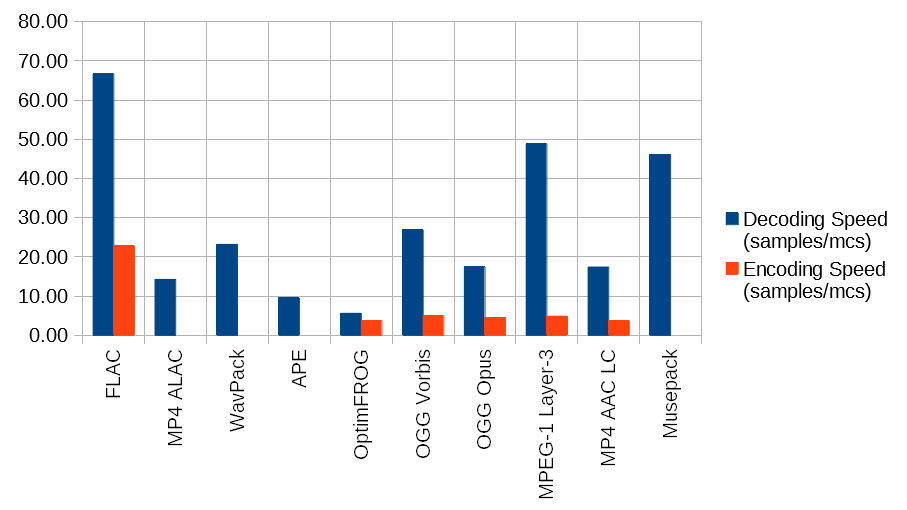
overhead encoding, decoding costs
compression ratio
The overhead costs are negligible for the average person and the compression ratio of the codecs differs slightly. Main actors: FLAC, APE, WAVPACK, ALAC.

Lossy Compression – Provides a much higher compression ratio by discarding unimportant audio details. The smaller the size of the file we are trying to compress, the more details we will need to discard. In addition to the disappearing details, technical artifacts also appear.

What audio formats are there and how are they different?

What audio formats are there and how are they different?

Audio formats

When recording sound, the question arises which audio format to choose for disk storage. Almost all of today’s recording programs offer a multitude of options here, from highly compressed MP3 to uncompressed WAV files.

However, it’s easy to lose track in the jungle of different formats. We clarify what audio formats are available and what are the differences between the formats. FROM MP3 TO WAV, EVERYTHING YOU NEED TO KNOW ABOUT AUDIO FORMATS When you save your audio recordings digitally, they are in a specific format.

Audio Formats

Describes the structure of the file and contains all the audio signals. A distinction is generally made between two variants: uncompressed audio formats, which contain all the data, and compressed. With these, certain information is cut from the file. Compressed music formats can also be divided into lossless and lossy.

Uncompressed formats include the following: PCM (Raw Data) AIFF (Audio Interchange File Format) WAV CDDA (Compact Disc Digital Audio) The main compressed formats are: MP3 WMA (Windows Media Audio) / Lossless WMA AAC (Advanced Audio Coding) FLAC (Free Lossless Audio Codec)

This is what defines lossless formats. Uncompressed audio formats store all data in an audio file, including what the human ear cannot or can barely hear. This takes up a lot of storage space on the data carrier, but the sound quality is excellent. Lossless files are compressed to a certain extent to reduce file size.

However, this is done in such a way that no noticeable loss of quality can be detected. All original data is preserved, only the layout of the data is changed. These are lossy formats. One of the most popular lossy formats is the MP3 music format. Parts of the original file are removed to reduce storage space. Ideally, only information from the file that is not perceptible to humans is removed.

The higher the compression level, the smaller the file, but the quality also suffers with each further reduction. PROCESS YOUR AUDIO FILES EVEN MORE – SAVE STORAGE SPACE AND COMPRESS The most common uncompressed music formats are WAV and AIFF. If you record audio files on a digital audio workstation, you typically export them in one of these two formats and then process them.

If you want to save the data without any loss, but the original data must be preserved, first compress the files with an appropriate audio program in a lossless format, for example as a FLAC file. This takes up less space on the data carrier, so you can save a lot on external media and transmit the data.

Since all the information is still contained in the file and is simply unzipped when you open it, you can process these music files optimally: cutting, adding additional effects or soundtracks, or splitting the file, and all without the quality of the sound is affected. If you want to share your music and audio files, upload them to the network, send them by e-mail or if you want to save many files on a data medium, compression is essential.

You can also do this by using a corresponding audio program, some of which you can download for free from the Internet. Compression reduces the file size to a greater or lesser extent depending on the degree. At the same time, the audio file information that cannot be restored is lost. Be careful when compressing. Bit rates – this is what determines the quality of an audio file

Bit rate describes the amount of data that is processed in the music file per second. The higher the value, the higher the quality of the file. Uncompressed files typically have a bit rate of 1411 kilobytes. For example, if you convert a WAV file to MP3 format, you can set the bit rate, for example, to 192 or 320 Kb per second. THE DIFFERENT AUDIO FORMATS AT A GLANCE

What music format is suitable for what purpose and what are the sound differences?

Here you can find out when you should ideally use which format. Uncompressed formats: PCM, WAV PCM describes the raw data of an audio file. The format allows very high bit rates and therefore very high quality. The data is in the original and the sound corresponds to that of an audio CD. However, the PCM format consumes a lot of memory and cannot be played with all common audio programs that are designed for the MP3 format, for example. Therefore, you need a special program to process the flat file.

MP3? No thanks! Everything you need to know about audio files

WAV Format

In order to get your music with recordJet to all major stores, your audio files must meet some general requirements to be accepted by stores. Here we explain everything about MP3 and other file formats, as well as the requirements that stores have on audio files.

You have probably already noticed that you cannot load tracks as MP3 files into recordJet, but only in a certain WAV format. What seems annoying to some at first, however, has two important reasons: the sound quality and the avoidance of problems.

Audio Formats

WAV is actually just a container format in which audio data can be stored. The most popular are uncompressed WAV (E) files, which contain so-called PCM raw data and were created with a 16-bit sample size and a 44.1 kHz sample rate. When talking about WAV files (as is also here in this article), we usually mean exactly this variant, the so-called CD quality.

Uncompressed music files have the advantage that all the information in digital files is still available. This means that the music will sound almost as good when played back as the original recording. But at least as good as on a CD.

With a codec like FLAC (Free Lossless Audio Codec), audio files can be losslessly compressed and reduced to about half their original file size without loss of quality. This works in a similar way to packing files in zip format, only the process is specially designed for music.

MP3 (actually MPEG-1 Audio Layer III), on the other hand, is a method for lossy compression of music files. You don’t need to be a professional to hear the quality differences between WAV and highly compressed MP3 without problems. In the case of lossy compression, the file information that is as “insignificant” as possible is removed, so the file size is naturally reduced as well. For example, an audio file can be reduced from 35-60 MB to 3-8 MB by such compression.

Unfortunately, the more a sound file is compressed, the worse the sound quality, as more information is removed from the file. The amount of information from the original file that is still available can normally be read at the so-called bit rate: a song with 320 kbit / s (= kilobits per second) is less compressed and has better sound quality than a song with 192 kbit / s. With MP3 with 320 kbit / s bit rate, even a professional can hardly hear any difference in CD quality.

So why doesn’t recordJet accept MP3 files at high bit rate?
It’s simple: all stores want to receive music in a different file format. The most widespread are the WAV or FLAC formats. But MP3 at various levels of compression are also required. One of the reasons for our decision to trust WAV is that we always want to offer the highest quality possible. If we were to convert your MP3s again, more information from the file would be lost. Even if you hardly hear a difference in quality in the original MP3 compared to the uncompressed version, this may become audible after a new conversion. Also, there is not just one MP3 codec with one parameter. Different codecs produce different results. Therefore, the sound quality may vary despite the same bit rate.

And why then exactly PCM with a bit rate of 1411 kbit / s, a sample size of 16 bits and a sample rate of 44100 Hz?
As already mentioned, this specification is the standard for CD quality. No store has yet demanded higher quality levels, which are entirely possible. In addition, everyone who participates in music production knows this format. For these reasons, and to avoid misunderstandings and problems, we have defined this format as our standard. Also, due to good internet connections, files of this size are rarely a problem for uploading these days. This can certainly take a bit longer, but it should still be within an acceptable range.

Why is it not necessary, or worse yet, to add metadata or tags to the uploaded files?
Unfortunately, the metadata and tags are not 100% clearly defined in WAV files or are used differently by different audio programs. We always provide stores with high quality metadata and possibly tag the audio files, according to their standards.

The 4 most popular audio formats

Each audio file format has its individual strengths and weaknesses. Find out which one is best for certain tasks or situations; This will save you time and avoid unnecessary mistakes. Next, we will look at the five most common types of audio files and some of their distinctive characteristics and differences.

Audio Formats

1. The M4A audio file format

M4A is a file extension for an audio file in the mpeg-4 format. This is a compressed audio file format used in modern environments. The reason for this is the higher quality standards that result from the use of cloud storage and more local hard drive space on modern computers. Especially for users who have to listen to pronounced sounds in audio files, the high quality of M4A ensures that the format remains relevant compared to other common file types.

Audio format

.M4A files are compressed audio formats used in Apple iTunes.
Music download software, such as Apple iTunes, uses the M4A format instead of MP3 because it is smaller and of higher quality. There are limitations in terms of compatibility, as many software programs cannot recognize the M4A format. This makes it ideal for a single selected user type.

2. The FLAC audio file format

The abbreviation FLAC stands for Free Lossless Audio Codec, which aptly describes files in the FLAC audio format. These are audio files that have been compressed and are smaller than the original file. The sophisticated file type is rarely used as an audio format. Because although it has its advantages, it often requires special downloads to make it work.

If you also consider that audio files are often streamed, this can be associated with considerable inconvenience for any new user receiving such a file.

A .FLAC file is a lossless audio format.

The most important aspect of FLAC is that lossless compression saves size and makes it easy to publish an audio file while maintaining the original quality. Compared to the original audio file, the .flac file requires only sixty percent of storage space. This saves a lot of hard drive space and time to upload and download.

3. The MP3 audio file format

The .mp3 file extension indicates audio files that use the MPEG-Audio Layer 3 format. The most important feature of MP3 files is their compression, which saves valuable storage space while maintaining the sound quality of the original almost flawless. Compression makes the MP3 audio format extremely popular with all portable audio players, especially the Apple iPod.

Due to its high quality and small file size, the .MP3 format also keeps up with newer types of audio files.
Today’s digital landscape is indispensable without MP3, as it is compatible with almost any device that can read types of audio files. Due to its compact size, the MP3 file format is especially suitable for exchanging a large number of audio files. It also works well for websites that host audio files. The popularity of the MP3 format relies heavily on its overall sound quality. Although this is not the highest quality level, MP3 offers enough other advantages to outweigh it.

4. The MP4 audio file format

The MP4 audio format is often mistakenly viewed as an evolution of the MP3 file. But that is a fallacy. Both types of audio files are fundamentally different; the supposed similarities result only from their names, not from their functionality. So, among other things, you should be aware that .mp4 files are sometimes called video files, not audio files. This is not an error because, in fact, the format refers to both audio and video files.

There are many differences between the .MP4 and .MP3 file formats.
The .mp4 audio file type is a full multimedia file extension that can contain audio, video, and other media. In MP4 format, the data is stored in the file, not in the code. This must be taken into account as MP4 files require different codecs to artificially implement the code so that it can be read.

Comparison of audio formats

What is the best audio format for what purpose?

Comparison of audio formats

All radio and podcast producers are faced with the question: What audio format is best for my shows and contributions? There is usually no simple answer. Each file format and each codec has advantages and disadvantages.

Audio Formats Comparison

Before converting / converting, you need to be clear about what you plan to do with your audio file: Should it be published to the NRWision media library? Is the program designed to broadcast on the Internet or for the home audio system? Should the file be edited again if necessary? Only then can you weigh which audio format and which properties make the most sense.

Audio File Formats comparision

Compress without loss?

You must decide whether you want the best possible sound quality or the smallest possible file size. With some audio codecs, sound is retained at its full bandwidth and without loss. Other codecs compress the file so that it takes up less space or is faster to transfer online. At best, it can still be played on many different devices and players. Depending on the strength of the compression, the sound of music or voice recording may also be audibly affected.

In the case of audio files, information such as sample rate and bit rate always play a role.

The sample rate indicates how often the level is saved per second. CDs, for example, have a sample rate of 44,100 Hz. 44,100 values ​​are stored for one second of music.

Bit transfer rate

Bit rate defines the amount of data that is processed per second. It can be constant or variable and therefore also influences the sound quality.
Important: When converting audio files to other formats, the quality cannot be improved, it only deteriorates or is preserved. With each compression, some of the audio data is lost, although it is not necessarily audible.

Next we present the audio formats and their properties.

MP3

File extension: .mp3

MP3 is probably the most popular and widely used audio format in the world. It became the standard for music files on the Internet more than 20 years ago and has been freely available since 2017. By the way, MP3 was developed by the Fraunhofer Institute in Germany, among others. Raw audio is highly compressed when converted to MP3 files to save storage space. Only what humans can hear should be preserved. You can set the degree of compression, the so-called bit rate. 192 kBit / s (kilobits per second) roughly corresponds to CD quality. At higher bit rates, MP3 files sound lossless to most people. Lower bit rates are used, for example, in Internet radios.

Advantage:
widely used, compatible with many playback devices, high compression

Disadvantage:
possibly loss of audible quality, especially at low bit rates

Wav

File extension: .wav

WAV files are not compressed and therefore take up a lot of storage space. But they can be used well for audio editing and can be easily edited in almost any software.

WAV files were developed for Windows computers in 1991. However, they can also be reproduced and used on other operating systems.

Advantage:
no need to encode / decode when editing

Disadvantage:
very large files

WMA

File extension: .wma

Originally, the WMA (Windows Media Audio) format was supposed to compete with MP3, but it could not be established equally. Audio data is also compressed here, if possible without audible loss.

Some versions of WMA files may contain a certificate key to prevent piracy.

Advantage:
good compression with high sound quality

Disadvantages:
not very widespread, only supported by a few players

AAC (advanced audio coding)

File extension: .aac

This audio format is considered the successor to the MP3 format. With the AAC format, developers have managed to further reduce memory size while maintaining the best possible sound quality.

The AAC process is being used with increasing frequency on music websites, Internet radio stations, and as a soundtrack format for video files.

Advantage:
very good compression, small files with high audio quality

Disadvantage:
not yet compatible with all programs and devices

Ogg

File extension: .ogg

In Ogg files, there is actually a container format. In addition to compressed audio, it can also contain video and text data. Also, Ogg files can be used well as an online stream. Even so, the format never prevailed against MP3 among home users.

Advantage:
small file size with good sound quality, no license

Disadvantage:
not compatible with many programs, must be converted for audio processing

FLAC (Free Lossless Audio Codec)

File extension: .flac

The name already gives it away: the FLAC codec is freely available and compresses audio files without loss of quality. The format is mainly used for music that can be faithfully reproduced thanks to FLAC. More and more players support FLAC files, sometimes just with the help of a plugin.

The FLAC codec makes audio files 30 to 60 percent smaller. This makes them much larger than MP3 files. To do this, you can decode it and thus restore the original data without loss.

Advantage:
no loss, no license

Disadvantage:
relatively large files, not natively supported by all players

Opus

File extension: .opus

The latest file format from our overview should become the Internet audio standard. Opus is developed openly and has several advantages. The audio codec significantly reduces the bit rate again. The quality of music and language is preserved as best as possible. Additionally, Opus files can be streamed and contain metadata.

Opus plays practically no role (yet) in audio processing. We are curious to see if and how the format will prevail for years to come.

Mp3, the winner

In the era of broadband connections, fiber optics and HD videos on YouTube, MP3 remains the reference format for audio files. We are now so used to listening to music in compressed formats, and often through poor quality playback systems, that it is difficult for us to remember what listening to music really means. The recent evolution from download to hit-and-run streaming has only made the situation worse by further devaluing the value of music. When was the last time you listened to a record from start to finish without interruption, spending those 30-40 minutes on “simple” listening activity?

Audio formats

Premise: This post is not a crusade against Spotify because I use it myself for new releases or to have some background music at work, it is not even an analog vs. digital (or vinyl vs. CD vs. MP3) post because on this topic en Much has already been said. My goal is to make you understand what you are missing, in qualitative terms, if you listen to music in compressed formats.

Audio formats

Sampling and theoretical aspects.

Audio recording on a computer or digital medium assumes that the signal passes through an analog> digital (AD) converter, so that the continuous electrical signal generated by microphones or musical instruments is transformed into a digital signal (series of 0 and 1) This process is called sampling. The final quality of the recording depends on several factors: converter quality, sample rate, and bit depth.

To make an easily understandable comparison: When shooting a movie, the “analog” reality perceived by our eye is stored in a movie that takes 24 frames per second. If we consider the standard of the audio CD (44.1 kHz, 16 bits), for every second of music 44100 pictures are taken from the computer to the continuous electrical signal. If with the sampling frequency we have simply established how many times in a second the waveform will be analyzed, with the bit depth we assign to each sample a numerical value: 2 ^ 16 = 65,536 possible values.

If you wonder how it got to 44,100, I refer you to the Nyquist-Shannon sampling theorem.

When we press the record button on our computer, through the PCM (pulse code modulation) sampling process described above, the files are saved in uncompressed WAV or AIFF format.

Lossless files and lossy files

PCM files take up a lot of space on our hard drives because, as we have seen, there is the data necessary to describe the analog waveform in as much detail as possible. Indicatively, a WAV or AIFF file as audio CD will occupy 10 MB for every minute of music.

To overcome this problem, remember that in the early 2000s storage space cost around $ 10 / GB, while today the price is around $ 0.03 / GB (source): Audio formats have been introduced that , through an algorithm encodes and decodes information, reduces the size of the file. These codecs fall into two categories: formats with lossless compression and formats with lossy compression.

As the name implies, lossless compression indicates a reduction in file weight (usually around 50%) without loss of information. Leaving the world of audio aside for a second, ZIP and RAR files are clear examples of this type of compression: at any time we can “unzip” such a file and have access to the original information again without this no way has changed.

The most common file formats are: FLAC (Free Lossless Audio Codec) and ALAC (Apple Lossless Audio Codec).

Lossy compression, on the other hand, implies that some of the original audio information is somehow removed to obtain a file that weighs even 90% less than the PCM.

By what criteria is information removed without “compromising” the original audio too much? Since our hearing is an imperfect instrument, codecs exploit two principles of psychoacoustics: the minimum threshold of audibility (the human ear does not perceive all frequencies in the range between 20Hz and 20kHZ equally) and masking (a weaker sound). is masked, making it inaudible, by a louder sound.)

Compression algorithms, however advanced, introduce a number of artifacts into audio files that, if played back in discrete quality audio systems, can be easily recognized or at least noticed even by an inexperienced ear. Several studies have shown that an untrained ear does not distinguish the difference between an uncompressed file and an MP3 with a bit rate equal to 256kb / s or more.

The most common lossy formats are: MP3, OGG Vorbis, AAC.

The victory of MP3

Since its introduction in the mid-1990s, MP3 has established itself as the industry-standard consumer format fueled by file-sharing through peer-to-peer channels, where, with slow connections, the heaviest file was the one it was downloaded, the longer it took to obtain it, and since the market introduction of MP3 players in which we tried to store as much music as possible and, therefore, we resorted to very compressed files.

In the transition from the era of downloading to that of small transmission files, they ensure smoother and smoother data transmission.

Despite, therefore, the evolution that has taken place in recent years in the speed of Internet connections and the reduction in the price of storage systems, only in recent years have services been created to buy files from High-quality online audio (HD tracks) or HD streaming services (Tidal).

Examples and audio files.

The main services we use to buy or listen to music use these compression levels (all information is taken from the official websites of each service at the time this publication was written).

Spotify: OGG Vorbis files at 96 kb / s (normal mobile quality), 160 kb / s (normal desktop and web player quality, high mobile quality), 320 kb / s (premium users: high desktop quality, very high quality mobile).
iTunes: By default, CDs are imported into 128 kb / s AAC files. Files in the iTunes Store are of this quality, except for “iTunes Plus” songs converted to AAC at 256 kb / s.
Pandora: 64kb / s AAC (free users), 192kb / s AAC (premium users).
YouTube: HD videos (720 or 1080p) have an audio quality equal to 384kb / s, SD videos (360, 480p) have an audio quality equal to 128kb / s.

Choose the sound format well into 2020

Although many dematerialized music rhymes with MP3, it is recommended to take a tour of the owner in existing dematerialized formats to choose the audio format well when digitizing their CD / Vinyl.

What is an audio format?

An audio format is to simplify a kind of container where dematerialized music is stored: it is important to choose it carefully when ripping a CD, because its properties will directly affect the quality of the file created.

audio formats

Therefore, selecting audio format is a crucial step and it is advisable to guarantee three things with priority: the quality, functionality, and the fact that they are standard and legible on a maximum of devices, whether on a PC or MAC computer, but also on your smartphone / car radio …

It is also important to understand that in general, and although there are exceptions, the choice of audio format consists of placing the cursor in the middle between the quality on the one hand and the space occupied by the media on the other. storage.

audio format

Choose audio format: which challengers?

select aac-ogg-wma mp3 audio format
The 4 semi-amazing audio formats with destructive compression.

MP3:
Give glory where honor is due. MP3 is just as popular as it is underrated: it will have done a lot for dematerialized music by itself and has enabled millions of people around the world to discover a new way to listen to their music.

MP3 is a format of strong and destructive compression, in other words, a large part of the musical signal will be suppressed (priority, frequencies inaudible to the human ear … but not only!), And therefore offers a quality that only becomes good for from 256/320 kbps.

Is this a good opportunity today? Not being the best from a quality standpoint, choosing mp3 audio format today allows you to be sure that you can listen to it on all devices released for 10 years. MP3 is dematerialized music, what jeans should wear: versatility and the highest “acceptance rate” in the world.

Note that it is also advisable to choose mp3 audio format if you have limited storage space on a smartphone, for example because it is (in the company of AAC / WMA / OGG) the type of format that requires least space.

AAC:
This format is similar to “Apple MP3”. It has the same qualities and shortcomings as the previous one with some details: slightly better at the same speed, on the other hand it is far less standard: except for the fact that manufacturers have made explicit agreements (and pay because they require a license) , we find in Practice much fewer AAC compliant devices.

So it should be avoided unless you only have Apple products around you (even the car radio? I doubt it) and even in this case they are all perfectly mp3 compatible.

WMA
If AAC is Apple’s MP3, WMA Microsoft is MP3. Even less widespread because it doesn’t benefit from iTunes / Music Store / iPOD steamroller (who still remembers Zune’s iPod killer? Miscrosoft)

Again, forget the same qualities and shortcomings as MP3, but even less standard, therefore urgent. I even advise you to convert your existing WMA files to MP3 at a similar or slightly higher bit rate to ensure durability. Therefore, choosing WMA audio format today is not a good idea.

OGG:
We also find it under the name “vorbis”, we also have an mp3 clone here, except it is compatible with the free world (understand free) a bit in the same format as Linux.

Ogg is a completely free format unlike the previous ones, but despite this it is very confidential and is generally used only by those who take a pro-free dogmatic stance. While this position is quite respectable, selecting OGG audio format in 2014/2015 does not seem like a good idea because it is not widely distributed and above all it is like MP3, a destructive format.

WAV:
WAV is the first format on the list that does not deteriorate the quality extracted from the CD, and therefore offers an identical bit rate of 1411 kbps and therefore provides optimal quality.

However, the format shows its age and is limited in several ways: no space optimization (one second of silence = one second of noise) and no metadata or album cover management.

Therefore, choosing Wav audio format is similar to generating very heavy files and simply impossible to organize properly in a music database.

An overview of the main audio formats that can be found on your computer

Codec for mp3, mpc, flac, mono, ogg vorbis and more.

For convenience, audio formats can be divided into unprofitable (unprofitable) and unprofitable (or unprofitable without losing quality).

The idea of ​​loss formats (most common among ordinary users) stems from the idea that the human ear misunderstands all the sounds that are in a standard WAV file at 44,100 samples per second.

In this way (as in the JPG format of the images) we will drop the high frequencies, which are thought to be less different from our hearing. The more these frequencies are reduced, the more space is allocated to our track (for example, 3 MB instead of 6 MB for a few minutes of song or much more) … but it also degrades the quality of the result, as the cut frequencies are no longer so “inaudible”.

Converting to WAV from lossy formats does not provide any benefit (unless you have to process the track and save it several times, in which case the quality loss will be limited to the first step); There are also programs that are able to bring some of these high frequencies back into our tracks, such as Steinberg Clean Plus or others (such as the first versions of Easy CD Creator or other, even more professional ones), but by doing the job properly , more than No they can do a lot.

Unbearable (lossy) formats try to reduce the space occupied by the track without touching the sound; the degree of compression will be much less than the loss, but there will be no loss of quality. If it is converted back to WAV (possibly processed), the sound will be identical to the previous one.

wav

To listen to audio tracks in various formats, we recommend using audio players that can support different formats, such as AIMP and Foobar2000.

Lost audio formats (lossy quality)

WMA (.wma): Windows Media audio format, compressed and very similar to mp3. Microsoft audio compression format. Files compressed in this format are approximately 20% smaller than MP3 files

MP3 (.mp3) is briefly suitable for the MPEG 1 III layer and identifies audio files that use this algorithm. This is a standard that removes inaudible sounds from the human ear. This way the 128 kbps mp3 track takes up 1/11 of its space in .wav or audio CD format.
Some rate 128-bit bits as “CD quality”; In fact, the frequencies that are reduced to save hard disk space are not so “inaudible”. 192 The results are starting to get good and at only 320 kbps we can talk about the quality of CDs … Until a few years ago the quality of mp3 was considered high, but now with the advent of more modern sound cards, 24 bits: we continue to use mp3 compared to other formats like like ogg or mpc, more for its diffusion and compatibility than the quality of the result. A 600 MB album in wav format will take up about 50 MB in 128 mp3 format.

To convert an audio track to mp3, it’s a good idea to use the Lame mp3 codec (free) in all the best conversion programs (download).

AAC audio format

AAC (.aac and .mp4): A lossy format that delivers high quality (currently the highest among lossy formats), at least one step higher than mp3. A feature of this format is the ability to protect DRM from being freely copied from one platform to another (unless applications are used to protect it).

AC3 (ac3). This is the audio format used by DVDs. We usually find it at 384 kbps (and 6 channels), but it is also possible that you only have it at 2 channels and lower speeds. One of the free programs that supports it (and allows, for example, to reduce the bit rate) is BeLight (Besweet).

OGG VORBIS (.ogg) is a great open source codec. It is able to give better results than mp3, especially at low bit rates (higher quality, less space), which is less than 128 kbps (download). It is compatible with virtually all audio players (both software and audio).

MusePack (.mpc): Very large output format, especially at high bit rates (more than 192 kbps and above). The results are much better than mp3: just listen to one 192 kbps mp3 encoded track and one mpc track at the same bit rate to immediately feel the difference (in some cases without words …). Many people considered this to be the best lossy audio format, at least until mp4 was released. It is compatible with WinAmp through plug-ins and, on average, with more advanced players such as Foobar 2000.

Digital audio formats

Digital audio formats

Below is a non-exhaustive list of the most widely used digital audio formats.

AIFF – Audio Exchange File Format

Apple uses a standard audio format. This can be considered the wav equivalent of a mac environment. Audio data is organized according to PCM encoding and is not compressed. There is also a condensed option defined as AIFF-C or AIFC.

AAC – Advanced Audio Encoding

This format is based on MPEG2 and MPEG4 lossy compression standards. It was created as a successor to the mp3 format, which uses a slightly better algorithm. This allows you to get slightly better quality for the same speed.

ALAC – Apple Lossless Audio Codec

This is Apple’s lossless audio format. Also called ALE (Apple Lossless Encoder).

ATRAC (.mp3) – acoustic coding of adaptive transformation

Old Sony audio format with ATRAC compression. Files always have a .mp3 extension, but you need the ATRAC3 driver to open them. MiniDisc was a commercial advertising product that took advantage of this type of format. The codec was later improved by subsequent enhancements such as ATRAC3 (1999), ATRAC3plus (2002), and ATRAC Advanced Lossless (2006).

AS

This is the standard audio format used by Sun, Unix, and Java operating systems. Data encoding can be PCM (uncompressed) or compressed with μ-law, a-law G729 codecs. The Au audio format was introduced by Sun Microsystems. It was a format used on NeXT systems and early websites. Initially, the file did not have a header (the original data from the file) because the encoding was unique: 8 bits with µ-law compression and a sampling rate of 8000 Hz. The latest version of this format contains a header consisting of six blocks. 32 bits, an optional block of information, and finally audio data.

flac

FLAC is a free lossless audio codec

It is an audio codec with lossy compression (without losing information). Data compression can reach 50-60% without losing quality.

M4P

It is a patented version of the MP4 AAC format with a DRM (Digital Rights Management) system developed by Apple to download music from the iTunes Music Store.

MPEG-4 Part 14 or MP4 (formerly ISO / IEC 14496-14: 2003) is a storage medium for multimedia data. It is mainly used to store audio / video data, but can also be used to store other types of data, such as still images and subtitles. Like all modern formats, this format allows data to be sent over the Internet in real time: this feature is implemented by adding a data path for transmission control. The only extension for files that use this codec is .mp4.

mp3

MP3 – MPEG layer III audio recording

It is currently the most widely used audio format. The MPEG-1 or MPEG-2 III audio layer, commonly referred to as MP3, is a patented lossy format. It is used for digital music use at the user (non-professional) level.

OGG

It is an open source container that supports a variety of formats, the best known being the Vorbis audio format. This format offers MP3-like audio compression, but is less common. The big difference with mp3 is the absolute free format. In terms of performance, with the same parameters, Vorbis is slightly more efficient than MP3.

The Ogg cache can handle multiple independent streams at the same time: audio, video, text (such as subtitles), and additional data (metadata).

RA and RM

This is a format developed by Real Audio to transmit audio over the Internet. The .Ra format allows you to store all the audio files you want to transfer in one file. The codec enables transmission from very low quality to high accuracy.

RAW

A RAW file can contain any type of data, but in reality it is mainly used for PCM-encoded (uncompressed) audio data. Thus, unlike the uncompressed audio format (wav, aiff), a flat file does not contain headers with information about the data itself (usually the header contains information about: sampling rate, quantitative bits, channels, type of markup used for the ideas). A typical file extension for this type is: .raw, .pcm, without the extension.

Vox

This audio format uses Dialogic ADPCM (Adaptive Differential Pulse Code Modulation). This performs 4. compression. Vox files are similar to wave files, except that they do not have a header, so you need to specify frequency information.