Understanding the Differences between FLAC, MP3, M4A, OGG, and WAV Audio Formats


Free Download Mp4Gain
picture

Understanding the Differences between FLAC, MP3, M4A, OGG, and WAV Audio Formats
Understanding the Differences between FLAC, MP3, M4A, OGG, and WAV Audio Formats


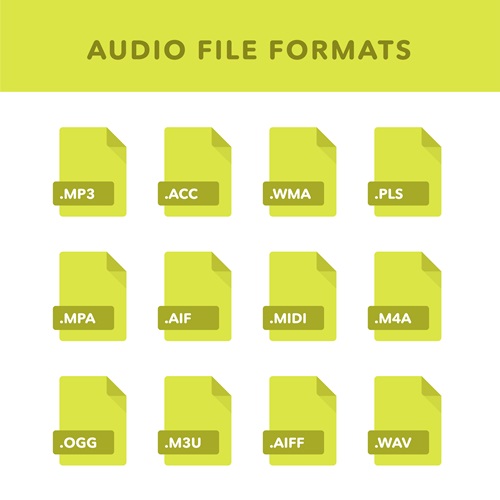
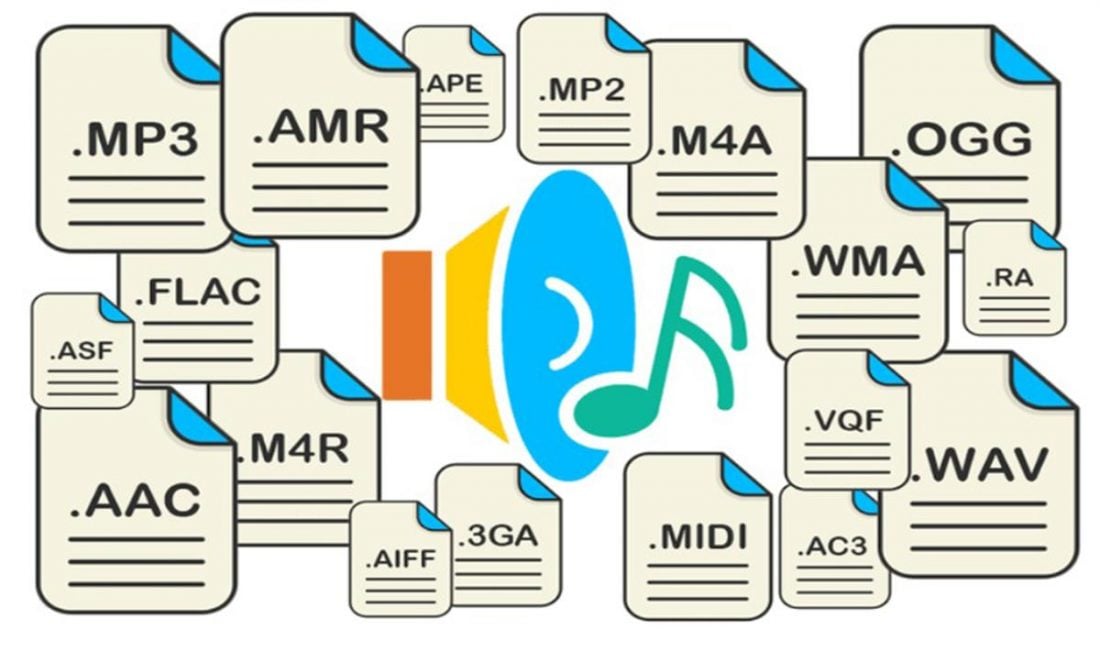
When it comes to digital audio, there are a plethora of different file formats to choose from. Each format has its own set of advantages and disadvantages, making it important to understand the differences between them in order to choose the best option for your needs. In this article, we will take a closer look at five popular audio formats: FLAC, MP3, M4A, OGG, and WAV.
Understanding the Differences between FLAC, MP3, M4A, OGG, and WAV Audio Formats

FLAC

FLAC, or Free Lossless Audio Codec, is a popular open-source format that is known for its lossless compression. This means that, unlike some other formats, FLAC does not lose any audio quality during the compression process. This makes FLAC a great option for audiophiles who want the highest quality audio possible. However, FLAC files are typically larger than other formats, which can be an issue for those with limited storage space.

MP3

MP3, or MPEG Audio Layer III, is one of the most widely used audio formats. It uses a lossy compression method, which means that some audio quality is lost during the compression process. However, MP3 files are significantly smaller than FLAC files, making them a great option for those who want to store a large amount of music on their device. Additionally, the MP3 format is supported by a wide range of devices and software, making it a very convenient option.

M4A

M4A, or MPEG-4 Audio, is a file format that is commonly used for music and other audio files. It is similar to MP3 in that it uses a lossy compression method, but M4A files are typically smaller than MP3 files. Additionally, M4A files can contain advanced features such as chapters and artwork, making them a great option for audiobooks and other spoken-word content. However, it is important to note that not all devices and software support M4A files.

OGG

OGG, or Ogg Vorbis, is a free and open-source format that is similar to MP3 and M4A. It uses a lossy compression method and is known for providing a good balance of audio quality and file size. OGG files are typically smaller than FLAC files but larger than MP3 and M4A files. Additionally, OGG files can contain advanced features such as tags and chapters, making them a great option for audiobooks and other spoken-word content. However, it is important to note that not all devices and software support OGG files.

WAV

WAV, or Waveform Audio File Format, is a popular format that is known for its high audio quality. It is a lossless format, which means that no audio quality is lost during the compression process. However, WAV files are typically larger than other formats, making them an option for those who want the highest quality audio possible but have limited storage space. Additionally, WAV files are supported by a wide range of devices and software, making them a convenient option.


Free Download Mp4Gain
picture


Mp4Gain Main Window
picture


Mp4Gain Features
picture


Free Download Mp4Gain
picture

Why are there so many video and audio formats, and is there a difference?

Why are there so many video and audio formats, and is there a difference?

Audio File Formats
Audio File Formats

I found that there are many video and audio formats, what is the difference between them? Is there a player that supports most audio and video playback formats?

Audio File Formats
Audio File Formats

The difference lies in the encoding method. Original video and audio require a lot of storage space. In the era when the storage device was still in MB as a large drive, various lossy compression encoding formats began to appear. The difference between various encoding formats is the compression ratio. The pros and cons of height and reduction ratio.

Basically, there are more advanced encodings that can provide high-quality audio and video effects with higher compression ratio.

1. Format
MP3 MP3 uses MPEG Audio Layer 3 technology to compress music into a file with a smaller capacity at a compression ratio of 1:10 or even 1:12. Files are compressed to a smaller size. But also very good at keeping the original sound quality. It is precisely because of the small size and high sound quality of MP3 that the MP3 format has become almost synonymous with online music. The music per minute MP3 format is only 1 MB in size, so the size of each song is only 3-4 megabytes.

Supplement: the highest bit rate is 320K, and there is no high frequency part is its default. The sound quality is not high!

2. Format
WMA WMA achieves a higher compression ratio by reducing data traffic while maintaining sound quality. The compression rate can generally reach 1:18, and the generated file size is only half of the corresponding MP3 file. This is very important for models that only assemble 32M. It supports both WMA and RA formats, which means that the 32M space is virtually expanded by 2 times. In addition, WMA can also add copy prevention through the DRM scheme, or add restrictions on playback time and number of playbacks, or even restrictions on playback machines, which can effectively prevent piracy.
Supplement: 128 kbps is the optimal compression ratio of wma, 128 kbps wma = 192 kbps mp3

Sound file formats

Sound file formats

sound file formats

Sound is a natural phenomenon and propagates through air vibrations, so we can say that it is only wave characteristics.

Sound File Formats

The task of converting sound into electronic form is to repeat all of these same wave characteristics. But the electronic signal converted into an ADC (analog-digital converter) is not analog and is recorded by short discrete values. Let them have a small interval between each other and be practically imperceptible, but we must always remember that it is only the emulation of a natural phenomenon called sound.

This recording is called pulse code modulation and is a sequential recording of discrete values. The length of the device, calculated in bits, indicates how many values ​​are taken simultaneously in a recorded sample. The higher the bit depth, the closer the sound will be to the original.

Any sound file can be presented (for your understanding) as a database. It has its own structure, the parameters of which are usually indicated in the file header. Next comes a structured list of values ​​for specific fields. Sometimes, instead of values, there are formulas to reduce file size.

RSM

PCM stands for Pulse Code Modulation, which stands for Pulse Code Modulation. Files with this extension are quite rare (I’ve only seen them in 3D Audio). But PCM is essential for all sound files. I wouldn’t say that this is a very inexpensive method of storing data on a disk, but I think you will never escape this, and modern hard drive volumes already allow you to ignore a couple of tens of megabytes.

DPCM

Research on economical storage of audio data on disk. If you come across this abbreviation, know that it is Differential PCM. This method is based on the quite justified idea that the calculations are much more cumbersome, compared to the fact that you can simply enter the difference values.

ADDPCM

Adaptive DPCM. Agree that by specifying only the difference values, there may be a problem with the fact that there are very small and very large values. As a result, no matter how super accurate the measurements are, there is still a distortion of reality. Therefore, a scalability factor has been added to the adaptive method.

Wav

The simplest discrete data storage. I would say direct. One of the file types in the RIFF family. In addition to the usual discrete values, bitness, number of channels, and volume level values, wav can contain many more parameters that you probably didn’t even know about. These are placemarks for timing, the total number of discrete values, the order of playing various parts of the sound file, and there is also a place for you to put text information there.

RIFF

Resource interchange file format. A single storage system for any structured data.

IFF

This storage technology is derived from the Amiga systems. Interchange file format. Almost the same as RIFF, only there are some nuances. Let’s start with the fact that the Amiga system is one of the first who started thinking about software-sampler emulation of musical instruments. As a result, the sound in this file is divided into two parts: what should sound at the beginning and the element of what follows at the beginning. That is, the beginning sounds once, then the second piece is repeated as many times as necessary, and the note can be played indefinitely.

MODIFICATION

The file contains a small sample of the sound that you can then use as a template for the instrument. Simply put, a sample stitched onto the synthesizer.

AIF or AIFF

Audio interchange file format. This format is common on Apple Macintosh and Silicon Graphics systems. Contains a combination of MOD and WAV.

AIFС or AIFF-С

The same AIFF, only with the specified compression parameters (compression).

AU

Again, the race to save space. The structure of the file is much simpler than in wav, but there is a method to encode the data. The files are very light, so they are quite widespread on the Internet. Most of the time you can find parameters * -Law 8 kHz – mono. But there are also 16-bit stereo files with frequencies of 22050 and 44100 Hz. This audio format is designed to work with audio on SUN, Linux, and FreeBCD production systems.