Quantization in Video Compression


Introduction:
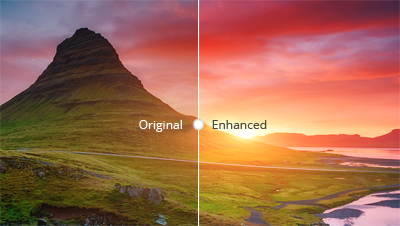
Quantization is a crucial aspect of video compression that plays a significant role in balancing video quality and file size. It involves reducing the precision of data to minimize storage requirements while maintaining an acceptable level of visual fidelity. In this article, we will delve into the intricacies of quantization in video compression, exploring its impact on image quality and the trade-offs involved.
Quantization is a fundamental step in video compression algorithms, such as MPEG and H.264. Its main purpose is to reduce the amount of data needed to represent a video signal accurately. By quantizing the continuous amplitude values of a video signal, it is possible to approximate them with a limited number of discrete levels. This reduction in precision allows for more efficient data representation, resulting in smaller file sizes and easier transmission.
The Science Behind Quantization:
Quantization is a process in which the continuous values of video data are discretized into a finite set of levels. The goal is to find a balance between preserving visual quality and minimizing storage requirements. When quantizing video, each pixel’s color or intensity values are rounded off or truncated to fit into a specific number of bits. The number of bits allocated determines the number of distinct levels available to represent the pixel values.
The quantization step size determines the level of compression applied. A smaller step size preserves more details but increases file size, while a larger step size sacrifices details for reduced storage requirements. For example, in an 8-bit video, each pixel can have 256 possible levels (2^8). By reducing the quantization step size, we can increase the number of available levels, resulting in higher image quality. However, this comes at the cost of increased file size.
Quantization Techniques and Quality Considerations:
Various quantization techniques are employed in video compression to strike a balance between storage efficiency and perceptual quality. Uniform quantization is the simplest approach, where the value range is divided into equal intervals. However, this can lead to noticeable visual artifacts due to quantization errors. Non-uniform quantization techniques, such as logarithmic or adaptive quantization, allow for more flexibility in allocating bits to different parts of the video frame.
Logarithmic quantization allocates more bits to the lower end of the value range, preserving details in darker regions where human visual perception is more sensitive. Adaptive quantization adjusts the quantization step size dynamically based on the complexity of each video frame. More bits are allocated to complex regions, reducing artifacts and maintaining visual quality.
It is important to consider the intended use of the compressed video when selecting quantization parameters. For example, videos intended for high-definition displays or professional broadcasting require lower quantization and higher bitrates to maintain visual fidelity. On the other hand, videos meant for online streaming or portable devices can tolerate higher levels of quantization, trading off some quality for smaller file sizes.
As renowned filmmaker Stanley Kubrick once said, “The great nations have always acted like gangsters, and the small nations like prostitutes.” This quote resonates with the concept of quantization in video compression, where decisions must be made to prioritize certain aspects over others. Just as great nations assert their dominance, quantization sets the rules and determines how video data will be represented. Similarly, smaller nations, like prostitutes, adapt to fit the available space, adjusting their services to align with the constraints imposed by quantization.
Conclusion:
Quantization is an essential process in video compression that involves discretizing video data into finite levels to reduce file sizes while maintaining acceptable visual quality.