How Audio Sample Rate Affects Sound Quality


Free Download Mp4Gain
picture

How Audio Sample Rate Affects Sound Quality

Audio Sample Rate
Audio Sample Rate
Audio Sample Rate
Audio Sample Rate

Audio Sample Rate Explained

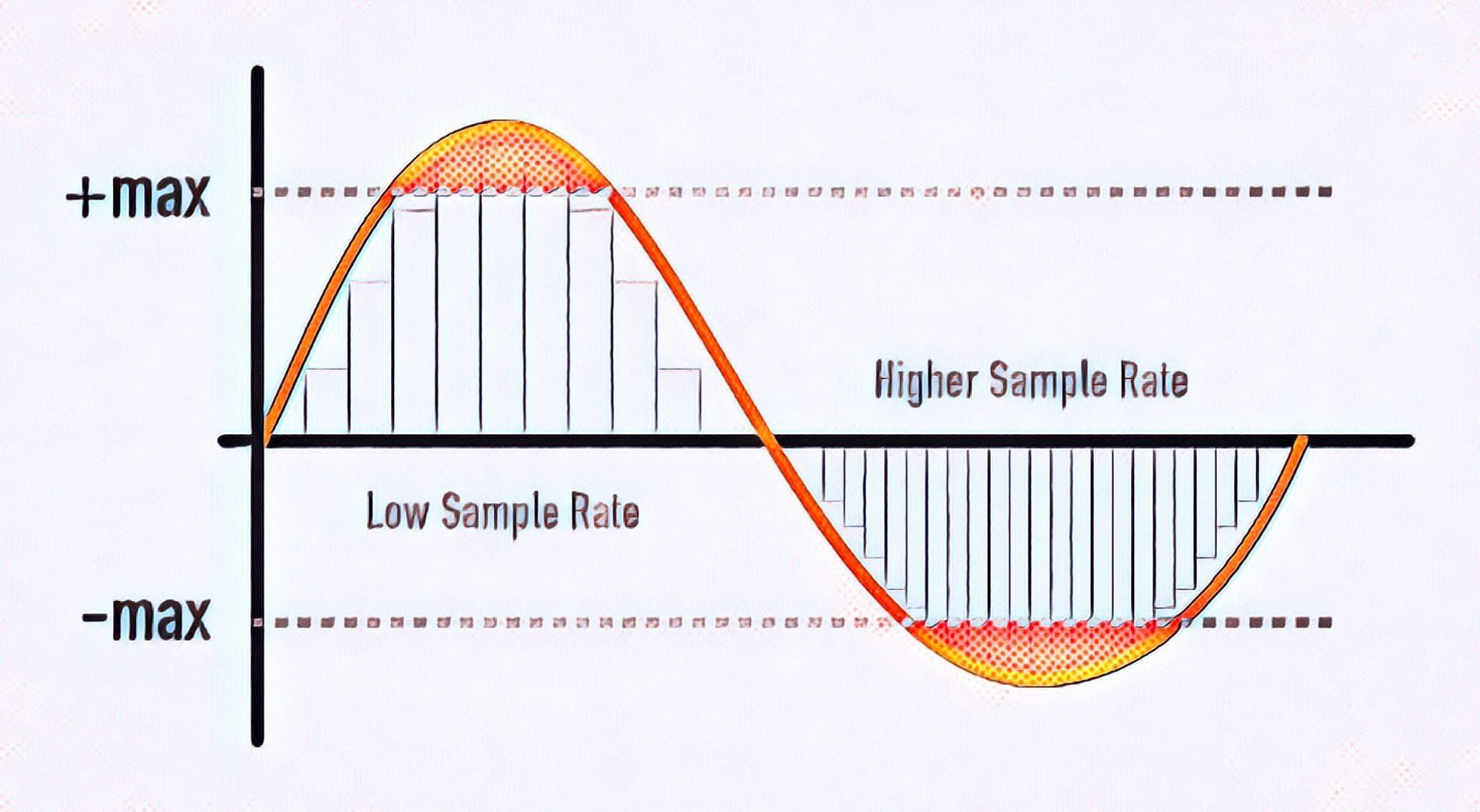
When it comes to digital audio, sample rate refers to the number of samples of sound that are taken per second to create a digital representation of an analog signal. In other words, it’s the number of times per second that the analog sound wave is measured and converted to a digital signal. The higher the sample rate, the more accurately the sound can be represented in the digital domain.

Personally, I’ve noticed that when I’m working on a music production project and I choose a higher sample rate, the resulting audio files tend to sound clearer and more detailed. As an avid music listener, I also appreciate the difference in sound quality when listening to high sample rate audio files on my headphones or speakers.

According to Ethan Winer, author of “The Audio Expert”, “In general, using a higher sample rate than the minimum required for the material being recorded or processed is good practice. However, there is no benefit to using a higher rate than twice the highest frequency that needs to be captured or processed.”

The Relationship Between Audio Sample Rate and Sound Quality

As mentioned earlier, the higher the sample rate, the more accurately the sound can be represented in the digital domain. This means that a higher sample rate can lead to a higher quality sound, with more accurate representation of the original analog sound wave.

I’ve also found that the relationship between sample rate and sound quality is not always linear. That is, going from 44.1 kHz to 48 kHz may not make as much of a difference as going from 48 kHz to 96 kHz. This is because the higher sample rates allow for more accurate representation of the sound wave, even in the higher frequency ranges.

As Julian Dunn, author of “Mastering Digital Audio”, explains, “Higher sample rates…provide more ‘headroom’ in the recording, which means that the recording can capture more of the dynamic range of the original sound. This can result in a richer, more natural sound.”

Choosing the Right Sample Rate

When it comes to choosing the right sample rate, it’s important to consider the specific needs of your project. If you’re recording a podcast or a voiceover, a sample rate of 44.1 kHz may be sufficient. However, if you’re recording music or other complex audio, a higher sample rate may be necessary to capture all the nuances and details of the sound.

It’s also important to note that a higher sample rate means larger file sizes, which can impact storage and processing requirements. So, it’s important to find a balance between the sample rate and file size that works best for your specific needs.

As author and sound engineer Bob Katz explains, “The most important factor is not the numbers, but how the system sounds. Choose the sample rate that sounds best to you, taking into account the practical considerations of your production environment.”

Final Words:

In conclusion, the sample rate of digital audio plays a significant role in the quality of the resulting sound. By understanding the relationship between sample rate and sound quality, and choosing the right sample rate for your specific needs, you can ensure that your digital audio sounds as good as possible.


Free Download Mp4Gain
picture


Mp4Gain Main Window
picture


Mp4Gain Features
picture


Free Download Mp4Gain
picture

MP3 sample rate and bit rate

MP3 sample rate and bit rate

MP3 sample rate and bit rate

When we listen to mp3 and watch movies, we will notice two parameters.

MP3 sample rate and bit rate

The most common ones are 44.1 KHz sample rate and 192 Kbps bit rate. So what is the sample rate and what is the bit rate? What is the relationship between them? Explain:

The process of converting an analog audio signal to a digital audio signal is called sampling. In a nutshell, how many data points does it take to record a 1 second long sound via waveform sampling. For example: the sound sample rate of 44.1 KHz is equivalent to spending 44,000 data points to describe the sound waveform for 1 second. In principle, the higher the sample rate, the better the sound quality; sampling frequency is generally divided into three levels: 22.05KHz, 44.1KHz and 48KHz; 22.05KHz can only achieve FM radio sound quality, and 44.1KHz is the theoretical limit of CD sound quality, 48KHz has reached DVD quality.

Sampling rate refers to the sampling frequency when converting sound (analog signal) to mp3 (digital signal), i.e. how many data points are sampled per unit of time. (The data for a sample point is 8 (or even more) bits long.)

Bit rate refers to the number of bits (bits) transmitted per second. The unit is bps (bit per second). The higher the bitrate, the more data transmitted and the better the sound quality.

It can be said that the sample rate and bit rate are like the horizontal and vertical coordinates on the coordinate axis. The sampling frequency on the abscissa represents the data points sampled per second. The bit rate on the ordinate represents the precision when quantizing analog quantities with digital quantities.

Difference between digital and analog

Difference between digital and analog

Difference Between Analog Signal and Digital Signal

The sound is analog. And sound is the vibration of the air. How is this sound vibration transmitted?

Analog VS Digital
For example, when a stone is thrown into a calm water surface, the ripples spread around it, but if
Cut in the direction of the waves and look at the cut end, the waveform is as shown in Fig.1.

Air waves spread from the point where sound is emitted even in air. Although it is invisible to the eye, it has a
similar waveform. This is the analog waveform of sound.

Therefore, although it is digital, when such a sound waveform is recorded or communicated by phone or wireless, as
shown in Fig. 2, the change in the analog waveform is electrically replaced with a series of numerical values ​​according to a certain promise. ..

When recording or communicating, if you handle it as analog, it is easy for noise to enter and the sound quality to deteriorate, but when trying
the waveform of the sound as digital = numerical data, you can eliminate that worry and
maintain a certain quality. You can do various processing while maintaining it.

(2) What is convenient when it is digital

Digital audio signals are convenient because they can be recorded and edited using a personal computer, for example.

In addition, 74 minutes of music can be recorded on a CD with a diameter of only 12 cm, and through digital compression processing
, music of the same length can be recorded on an MD with a smaller diameter.

Since digital signals can be compressed in this way, it is also convenient for storing large amounts of information.
Not only sound, but also video signals with a higher amount of information can be recorded and communicated at high speed by using compression technology.

Especially in communication, a two-way digital multiplex communication can be realized communicating multiple pieces of information with a single wire.
In addition to electrical signals, laser light can also be used for optical communication, making communication possible at extremely high speeds.

(3) What is the sampling frequency?

Digital signals are processed at predetermined fixed time intervals.
The sample rate (sample rate) indicates how many times a second is processed and is expressed as Fs or fs.

The sampling frequency unit is Hz (Hertz), and the
44.1 kHz (kilohertz) sample rate means 44,100 pieces of data are processed per second.
(K represents 1000 times)

AD conversion converts a continuous analog signal into a digital signal,
measures the size of the signal at each moment determined by the sampling frequency (sampling) and converts
the result in a binary number (quantization).

On the other hand, DA conversion converts a digital signal into an analog signal,
It reads the digital signal in the sample rate time interval and connects it smoothly.

Since digital signals can be reproduced up to half the sampling frequency, how much
The higher the sample rate, the higher the playable frequency and the better the sound quality.
In familiar areas, 44.1 kHz is used for CD, and 48 kHz is used for DAT and B modes of satellite transmission.

In addition, recent professional equipment uses high sampling frequencies (high sampling), such as 88.2 kHz and 96 kHz,
and are designed to faithfully reproduce even higher frequency sounds to improve sound quality.

What is the audio bit rate? Relationship between “bit depth” and “sample rate” and sound quality PART 2

What is the audio bit rate? Relationship between “bit depth” and “sample rate” and sound quality PART 2

Audio bit rate

What is the bit depth that determines the sound quality?
What is the bit depth that determines the quality of the sound?
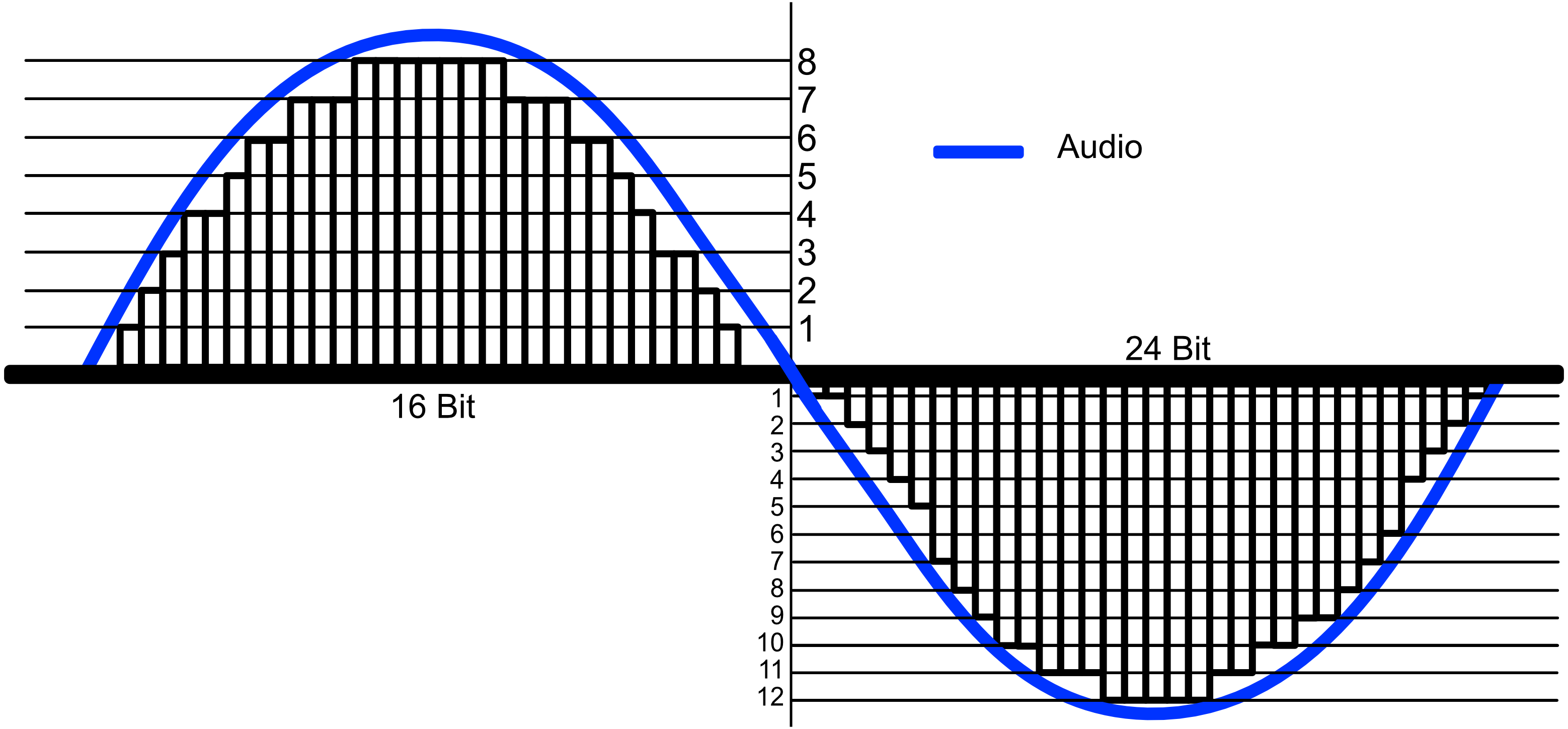
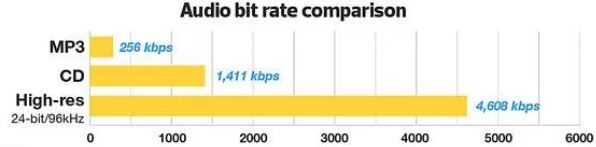
The bit rate is calculated by multiplying the two factors of bit depth and sample rate. Bit depth represents the amount of data per divided sample and is an element that affects the quality and expressiveness of the sound.

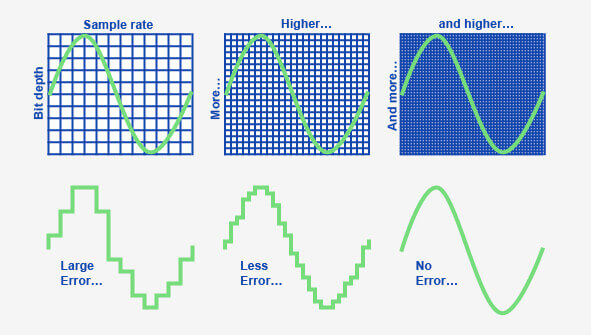
The sample rate is the finely divided horizontal axis and the bit depth is the one that overlaps the vertical axis. By providing a large amount of data (bit depth) to each sample, it is possible to create finer and more accurate audio data.

Bit depth is the precision of each image in animation production. The higher the bit depth, the more expressive the sound and effects will be, and the higher the sound quality will feel.

What is the sample rate that determines the smoothness?
Of the bit rates that determine audio quality, the sample rate is an element that represents the number of data divisions per second on the horizontal axis. It shows how many tens of thousands of data are divided per second and the higher the number of divisions, the higher the sound reproducibility and sound quality.

It is even easier to understand if you consider it a mechanism similar to animation production. The more images you use per second, the smoother your character will move, and the higher the sample rate (the number of data divisions), the smoother your sound will sound. Also, the amount of data increases according to the size of the sample rate.

In conclusion
To improve sound quality, it is important to increase the audio bit rate. The audio bit rate is determined by two factors: the bit depth, which determines the expressiveness of the sound, and the sampling rate, which determines the smoothness of the sound.

However, keep in mind that the higher the audio bit rate, the more beautiful the audio will be and will also be affected by the original sound source. If you want to create high-quality data from the moment of recording, why not ask a production company that has high-quality recording equipment?

I think there are many people who are concerned about the balance between capacity and sound quality when it comes to the audio system mounted on a computer. Professional engineers and mixers will come up with the best balance, so don’t hesitate to contact us on these points.

What is the audio bit rate? Relationship between “bit depth” and “sample rate” and sound quality

What is the audio bit rate? Relationship between “bit depth” and “sample rate” and sound quality

Digital Audio Basics

Bit rate is one of the factors that determine the quality of a video job.

BitRate

Among them, the one that determines the audio finish is the audio bit rate. Understanding the bit rate will allow you to control the sound quality and create better quality audio.

So on this occasion, I will explain bit depth and sample rate which are indispensable when talking about sound quality.

What is a bit rate?
What is a bit rate?
■ Bit rate represents high quality

Bit rate is a numerical value that represents the amount of information in the data, and the height of the bit rate is proportional to the quality of the data.

By looking at the bit rate, you can see how much data is packed in one second. Generally, the higher the bit rate, the higher the sound quality, and the sound and video are more realistic.

■ Audio bit rate and video bit rate

In the case of video, the bit rate is divided into two types, video and audio, and the overall quality of the video is determined by the height of each bit rate.

The “video data rate” shown in the video properties is the video bit rate and the bit rate assigned to “audio” is the audio bit rate. The “total bit rate” is the total of the two types of bit rates, video and audio, and is the bit rate of all video.

However, high bit rate audio is not always good. This is because if the quality of the original audio data or the equipment used for recording is poor, poor quality audio will be played. For example, if the original voice contains noise, the noise part will be reproduced realistically and the voice will be difficult to hear. Similarly, if the bit rate of the video is low, the movement will be choppy and unnatural, or the video will be uneven.