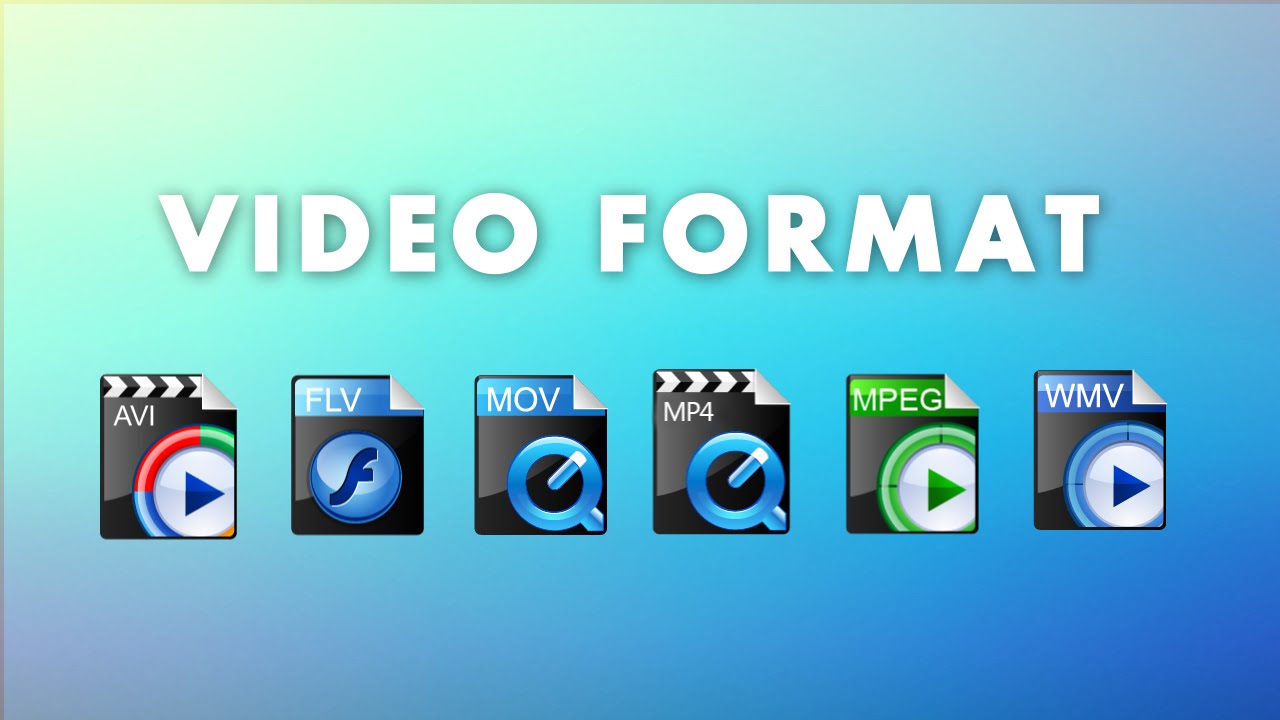
Video compression formats


Free Download Mp4Gain
picture

Video compression formats

video file formats

Before building a video surveillance system, a technician will have to solve a number of critical problems and tasks. Along with the choice of cameras, servers, and software, it is necessary to select the optimal compression format for the system’s video transmission. The main formats for video surveillance systems are MJPEG, MPEG-4 and H.264 (MPEG-4 part 10). Controversy “Which format is better?” Similar to the disputes “what is the future for: analog or ip?”, have been going on for several years, but experts still cannot reach a consensus. In this article we will talk about the characteristics of the formats, the parameters that must be taken into account when choosing, and the technologies used to analyze video streams.

Video File Formats

Compress video

The videos from the IP surveillance cameras reach the server in compressed form. Compression generally involves removing features that are almost invisible to the human eye, although compression is sometimes done without loss of information. Compressed video stream requires less network bandwidth and less free hard disk space. To view or analyze the video, the resulting stream must be unzipped; apply the reverse conversion algorithm to compression. The combination of compression and decompression algorithms is called a video codec. Video codecs of different standards are not compatible with each other; video information compressed with one codec, as a rule, cannot be decompressed with another.

There are several types of compression.

Lossless compression allows you to obtain an image after decoding that does not differ from the original frame.
Lossy compression loses information after decoding.

Several lossy compression implementations are possible:

lossy percentage compression – loss is so insignificant to the human eye that the frame before and after decoding is virtually indistinguishable to the operator;
lossy compression – the differences between the frames before and after decoding are noticeable, but still not very pronounced, all the information necessary to analyze the events is saved;
Lossy Compression: Low-quality streaming video compression, causing artifacts (noticeable video distortion) during decoding. The appearance of artifacts leads to a decrease in image clarity, the appearance of fields of the same color (when different color tones are combined in one), the appearance of image blockages (pixelation, graininess). The presence of artifacts leads to false results of the analysis of the video stream by the system software.
In the compression process, to reduce the size of the video stream, the amount of color tones in the image are reduced, color resolutions are lowered, and small details in the image that are invisible to the human eye are removed; predict changes based on data already received; remove duplicate pixel values.

Video compression formats

There are many compression formats, MJPEG, MPEG-4 and H.264 are the most popular in video surveillance.

MJPEG format

For the MJPEG compression format, a video sequence is a sequence of still images: JPEG images. Compression occurs individually for each frame (intraframe). We get total independence from individual images. When playing a video file, the image quality is still good: from the MJPEG format you can always get frames with a clear image of the events that take place, it does not require high processor performance, but significantly loads the network and requires a large amount of disk space. This format is characterized by image blocking artifacts, fields of the same color. Camera data is lossy, so it’s impossible to say there is no distortion. Another thing is that if the camera is correctly adjusted, the human eye in JPEG hardly notices distortion.

MPEG-4 and H.264 formats

For MPEG-4 and H.264 formats, compression is performed both within a frame and for a series of frames (between frames). H.264 video (MPEG-4 optimized or MPEG-4part 10) is not a sequence of individual images, but a chain of related data – video streaming. The advantages of this format are that not all frames are saved, but only the reference image and its subsequent changes.

When a significant part of the image remains unchanged, the resulting video size is much smaller than for MJPEG. In case the MJPEG format can send a set of images of 200 KB each, the H.264 format will send a reference image of 200 KB and its subsequent changes, which are much smaller.


Free Download Mp4Gain
picture


Mp4Gain Main Window
picture


Mp4Gain Features
picture


Free Download Mp4Gain
picture

Video format comparison: MOV, FLV, MP4 and 3GP

Video format comparison: MOV, FLV, MP4 and 3GP

Video Formats
Each video file format has its own unique characteristics, which make it ideal for specific uses. This fact forces the user to have to choose between them more and more frequently. The most important criteria in making this decision is which characteristics of the file types best suit your specific needs. To help you choose the best type of video file, here is a list of the pros and cons of the most popular video formats.

video formats

The .mov video format

The MOV video file format was developed by Apple with the aim of bringing clear benefits to users. One of these advantages is the high quality of MOV videos. Cinema purists and filmmakers who want to create long digital movies, in particular, are determined by the quality preservation properties of the MOV format. When working with MOV files, optimal video quality will be maintained throughout the project. Although MOV is closely linked to Apple, the files can also be opened with Quicktime Player on Windows.

A major problem with MOV is the lack of support from the various media player applications. Many users have to download new software before they can play MOV video. Also, the files are very large, which requires more hard disk space. This can slow down old hardware.

Ultimately, .mov was designed for a specific group of users, especially those who value high video quality. Even if these files are generally used less frequently, they are of great value to a small target group.

The word ‘video’ is made up of many letter tiles.
With the right video format, projects can be implemented smoothly.

The .flv video format

The FLV video file format stands for Adobe Flash Videos. It is the most widely used type of video file on the Internet. The reason for the enormous popularity of .flv is that the format works optimally in all major browsers. Therefore, leading video portals like YouTube also use Flash videos by default. Another reason for the frequent use of FLV video files is that it is suitable for various video formats, including commercial ones.

There is also a downside to the FLV format: if a lot of Flash videos are hosted on a website, it can get slower overall. This is especially likely to be felt by visitors with slower Internet access. This is still a major problem at this time. As the Internet becomes more accessible, this concern will lessen in the future.

A man is editing a video on a laptop.
The FLV video format sadly affects the loading times of websites.

The video format .mp4

The MP4 video file format offers high-quality video. Unfortunately, the format is not ideal for a single task. But that doesn’t mean that these files don’t have many advantages as well. In fact, MP4 files are so small that they are ideal for storing in a video asset management system. Even at such a small size, the video quality is amazing. They are also great for sharing videos due to their high browser compatibility.

Therefore, it is quite paradoxical that the MP4 format is used as the standard in most photo and video cameras, as it scares filmmakers so much. The reason for this is that .mp4 files do not edit well. Without the proper properties that allow for proper editing and good editing, the MP4 video format does not meet the requirements of one of the potentially most important user groups.

A hand holding a camera lens in the forest.
MP4 videos retain high quality despite their small file size.

The .3gp video format

The 3GP video format corresponds to the Third Generation Partnership Project and is the associated file extension. It can be opened with many programs, is inexpensive in terms of memory requirements, and optimally protects data. It is ideal for mobile devices that cannot cope with high traffic when streaming video to each other.

Also, the .3gp file type has a dominant position in relation to video transmitted via text messaging services. This will continue despite certain weak points.

A key problem with 3GP relates to compression and the difficulties it presents. Users who care about maintaining video quality will be amazed at the end result of compression. Although this deficit is a necessary evil for the sake of functionality, many users still find it negative.

Get familiar with the big differences between video file types. This will allow you to make the right decisions for a successful implementation of future projects. Once you have a solid understanding of video formats, consider using a digital asset management system to manage your video files.

What are video formats?

Video Formats

The term explains how video data is or has been recorded on a data carrier. The type of video data recording is basically defined by four different reference points. These are:

the movie format (image resolution and aspect ratio). Check out Part 1 of this article series titled Film Formats
the refresh rate (also called the refresh rate). The frame rate is specified in hertz (Hz) or as fps (frames per second, German = images per second)
color depth, which describes the ability to differentiate between color values ​​and brightness values
the soundtrack
Regardless of the purpose for which you want to create a video, the video format determines its quality and usability.

video formats

The data formats are NOT the same as the video formats. The data format establishes how video data is presented in a purely technically structured manner and is read (interpreted) by software on a computer system for processing.

Data formats have nothing to do with video format, movie formats, frame rates, color depths, and sound. Normal users rarely come into contact with data formats when communicating with movies and videos. The situation is different with data and video formats.

Video formats (“formatted videos”) can be identified by their file extensions (for example, * .mp4 or * .mov or * .mpg). Video formats can be classified according to different criteria, depending on the subject: for example, according to the size and quality of the file (compression) or according to the content type of a file (container formats).

Movie format / aspect ratio difference

Just as data formats represent different things, the terms movie format and video format are NOT identical. In film format in which the question is understood thereafter for film and video, size and in what aspect ratio a film or video is on a recorded disc. Movie format and rotation formats are synonymous, while recording format, image format, image size, and projection format as subgroups further specify the term movie format.

Why is the video format important?

The video format is not important. But only if you watch your videos directly on your smartphone or upload your own videos directly to the Internet. But anyone who wants to communicate professionally with videos will want to edit their movies and will quickly have to deal with not only the content, but the technical quality as well.

Even those who “only” want their movies to be accessible to the public via YouTube or Vimeo or who want to embed their social video on their website via one of these video platforms will notice at the latest that there is something like a technical framework if the video file is not sent to upload is accepted. YouTube, for example, succinctly reports in this case: Before you can upload these types of files, you need to convert them to YouTube-compatible video formats. (The next chapter on conversion provides information on what this means and means.)

Comparison of all video formats (2020)

MP4, MOV or AVI?

MP4

Every video fan at some point comes across the question: which video format is best for me?

Usually there is no general answer.

Avi

But don’t worry in this updated 2020 definitive guide, we’ve listed all the common formats as well as all the pros and cons of them.

After this post, you will know exactly which video format is right for you, what you can use each format for, and what advantages and disadvantages each is associated with.

To ensure you a pleasant reading flow, we have listed all the points in this article as a link below. If you are particularly interested in a topic, just click on the link and you will find the correct paragraph.

1. WMV

2. MJPEG

3. MPEG I and MPEG II

4. MPEG IV

5. MPEG VII

6. MKV

7. AVI

8. MOV

9. MP4

10. FLV

11. RM

12. OGG

13. MTS

But before going through each video format, a brief introduction to understand the individual formats.

Anyway, why are there so many formats?

The choice of video formats is great because many companies want to implement their own file format. Video formats are actually file containers with different content, initially only image and sound, which can be saved separately. Containers can contain more information such as captions, menu structures, time codes, or comments for further processing.

Sound and picture can be compressed inside the container with a wide variety of codecs. A codec uses algorithms to convert data packets, digital audio or video files in such a way that they save space. Depending on the codec that can be viewed, the quality of a video may differ in image and sound quality.

You have to know that:
1. The video format answers the following question: how digital video data is technically recorded.

2. There are formats that keep the data compressed (= reduced, lossy) or uncompressed.

3. The type of compression is determined by the so-called codecs.

4. By far the most popular types are: MP4, WebM, and OGG.

5. Video formats like MP4 can contain additional information like images, texts.

6. It is possible to copy (= transcode) from one video format to another.

1. WMV

Although WMV files take up very little disk space, they are not really widely used. Despite the fact that Microsoft planned and pushed it with great expectations.
Of course, the fact that they take up very little space makes them sacrifice in quality. The WMV player by essence is Windows Media Player, which although it is available for many platforms, is still a brake that you basically need to have the Microsoft media player to be able to reproduce it.

Advantages: very high compression possible

Disadvantage: very little used

2. MJPEG

Motion JPEG (MJPEG) is a video codec in which each individual image is compressed separately as a JPEG image. Unlike MPEG-compressed videos, MJPEG-compressed videos have a quality that is independent of image movement. This standard is often used in older digital cameras. Due to the individual compression of all individual images, with this format it is possible to cut a frame from a video clip accurately without the need to recode it, which is generally only possible with MPEG keyframes.

Advantages: high compression, high quality, web standard, very flexible

Disadvantage: computationally intensive

3. MPEG 1 and 2 (Moving Image Expert Group) * .mpg

Video format developed by a group of experts with standardized compression methods. The advantages of MPEG movies are comparatively small files with good image quality, but low resolution. In practice, MPEG-II movies are far superior to MPEG-I movies in terms of resolution and image quality.

Advantage: widespread use, can be played on almost any device

Disadvantage: outdated, no HD, correspondingly poorer video quality

4. MPEG 4 (Moving Image Experts Group) * .mp4

Video format developed by a group of experts with standardized compression methods.

Originally, the aim of MPEG-4 was to support systems with low resources or narrow bandwidths (mobile phones, videophones, …) with a relatively small loss of quality. Since H.263, an ITU standard for video compression and decoding, had already met these requirements successfully, it was integrated into MPEG-4 as part 2 without major changes.

MPEG-4 movies are even more compressed and do not have a noticeable loss of quality: very small files with very good resolution. In practice, MPEG-4 places somewhat higher demands on the performance of the computer, since highly compressed data must first be “decompressed” again when played back.

Advantages: high compression, high quality, web standard, very flexible

Disadvantage: computationally intensive

5. MPEG 7

MPEG-7 is an ISO standard (ISO / IEC 15938) that was adopted in 2002 and was defined by the Moving Picture Experts Group, or MPEG for short. MPEG-7 is not a real compression standard, but it is used to describe multimedia data with the help of meta information and is stored in the form of one or more XML documents. It can be added to the time code, for example, to mark certain events or, for example, to synchronize the lyrics with a song.

Advantages: good content organization

Disadvantages: many complex XML schemas

6. MKV

One could suppose that it is based on a concept that we could qualify as similar to other containers such as MP4 and AVI, the Matroska Video (MKV) format is open source, which makes it different to a good extent .. MKV has the ability to be a container of a number, we would say that there are unlimited video and audio channels in addition to multilingual subtitles in a file, which is why it could be said that today it occupies a predominant place on the Internet when it comes to competing with other formats.

Advantages: good video quality, very good compression compression.

Disadvantage: certain playback limitations, depending on the device.

7. AVI

AVI takes its name from “Audio Video Interleave”. AVI is one of the most widely used formats and can be played almost everywhere.
It has been widely known for many years since Microsoft gave it a lot of strength and it has been one of its base formats..

Advantage: wide distribution

Disadvantage: inflexible

8. MOV

This format was developed by Apple and achieved a lot of acceptance. I used QuickTime Player from the beginning. An advantage of MOV is that it is possible to use many different CODECS for either compressing audio files or video files. It is compatible with practically all platforms (Mac and Windows, iOS, iPhone and iPad.)

Advantage: It has earned a place that puts it as a standard format for professionally produced work

Disadvantage: Not all devices are capable of playing it

9. MP4

It can be said that it comes from or is based, in some way, on QuickTime, MP4 has earned the most important place when it comes to being the ideal format to be shared on networks. MP4 has almost no loss and has a great quality surpassing many of its competitors. MP4 is compatible with most computers and phones.

Advantages: video compression without noticeable loss of quality

Web standard

Versatile in use

Cons: not suitable for streaming

10. FLV

FLV or Flash Video format is mainly used for streaming video files online through Adobe Flash Player. FLV video files retain good quality even after being compressed, so users can upload videos online faster. Now its almost dead since Flash does not work in most web browsers.

Advantages: high compression.

Disadvantage: almost dead.

11. RM (Real Average) * .rm

A collective term for the file formats of the software maker RealNetworks, in particular the Real-Audio audio format and the Real-Video video format. It is used primarily in streaming applications. Real files are lossy, but the quality of real video files is still comparatively good, especially with high compression.

Files compressed with RealVideo are lossy. The quality of RealVideo files is generally comparatively good with high compression, older versions are poor with low compression compared to MPEG for example. However, the quality of the newer versions is comparable to MPEG-4 video codecs like Xvid or DivX as well as Windows Media Video 9. RealVideo usually occurs in the RealMedia container and then has its file extension .rv, .ram, .rm, or .rmvb.

Pros: RTP support

Disadvantages: compressed real video movies are lossy

12.Ogg .ogg

Ogg is a container file format for multimedia files, so it can hold audio, video, and text data at the same time. Ogg was designed with the goal of offering a free and unrestricted software patent alternative to proprietary formats for efficient storage and streaming of multimedia content. The ability to transmit is the decisive design feature: everything that is packaged in an Ogg container can be transmitted without additional adjustments. This distinguishes Ogg from formats that are only capable of streaming in certain ways (like Matroska) or not capable of live streaming (like MP4). Ogg streams can be grouped and chained without having to adjust the individual stream.

Ogg Theora is not very common in the video field. However, it is enjoying increasing popularity in the open source scene. For HD videos, the Matroska format, which is also free, is gaining more and more ground outside of the open source scene, so it remains to be seen what role Ogg Theora will play in the future.

Advantage:

– Diversity of platforms

– open source code

– Easy to handle

5.1 surround information: playback without pauses

Disadvantage:

– High bit rate ranges

13. MTS

MTS is a video format for HD video from camcorders from manufacturers such as Panasonic and Sony. This format produces a high-quality video that is larger than the same video in any other format. The format is only compatible with some devices. If you want to play an MTS file on an Android or iOS device, for example, it is almost impossible. Only Blu-ray players, the Sony PlayStation 3, and a handful of other devices support the MTS format. To use MTS videos on other devices, you need to convert MTS to MP4. Of course, MTS files can also be converted to other popular formats like AVI, MKV, and WMV.

Advantages: high quality

Cons: inflexible

Well now that we have reviewed all the formats, the following question arises:

What is the best video format?

The different video formats have very different capabilities, some allow you to have many different tracks, some with subtitles and several audio tracks simultaneously. Obviously each format is only capable of being processed by some specific codecs. So, if we see that some can contain many tracks and that each one uses a different codec, we will understand that the resulting size will be very different, as well as the quality and resolution. That is, each format will offer very different results.

However, there is no clear answer to the question of what is the best video format. However, you could say that a particular format is the best and a good all-rounder.

MP4: a good all-rounder

The MP4 format is always right. All common browsers and operating systems support it. It also combines HD image quality with a small file size. This allows the user to save the video to hard drive or cloud, share it with others, play it on common mobile devices, or upload it to a video platform.

Video formats for mobile and web devices
Videos intended for a mobile device should take up little space. The MP4 format, which is compatible with iOS and Android, is ideal here. MOV format is also possible for Apple devices.

When asked which video format is best for a video on a website, the user needs to consider what formats the browser supports. Again, MP4 is the best option due to its high compatibility. The Google WebM video format works flawlessly, at least on Microsoft and Android devices.


Technical factors in video formats

In each video file format, each factor performs a function: each video has a frame rate and a color depth, a format, and a soundtrack. Depending on these four factors, the video takes on a certain aspect and size. For example, the higher the resolution of the film format and the higher the frame rate, the more information should be included. Therefore, such a file will also take up more space on your hard drive. By compressing the file, its size can be reduced, but this generally comes at the expense of quality.

Video formats

advice

Different video formats not only determine the quality and size of the file, but also determine which devices can play it. That is why video formats are generally chosen based on the media that will be used to play the video file.

Video Formats

Common video formats on different platforms

The most widely used video platform on the net is obviously YouTube. However, the social network Facebook also has wide coverage. On both websites you can upload multiple videos and share them with a large audience. Therefore, common video formats must be actively supported on both platforms. The same is true if you want to upload the different video formats to the platforms. Among other things, both providers accept the following video formats:

  • MOV
  • MP4
  • AVI
  • WMF
  • FLV
  • WebM

However, the time it takes for the platform to make the video and convert it depends on both the file size and the chosen video format, so you should choose the appropriate video format. This also applies to embedding video formats on your website.

The different video formats: advantages and disadvantages
Basically, we need to distinguish containers (container formats) from codecs. When we talk about video formats, we generally mean the container format, which contains video, audio, and metadata. The container ensures that all the information within a file can be retrieved. Instead, the so-called codec is used to encode the video, which mainly refers to the type and strength of compression. The most popular codecs are H.264, H.265, VP8 and VP9. To encode a video, you need a video editing program.

The MP4 file format

The MP4 file format has long been one of the most popular video formats on the web. Thanks to good compression coupled with good video file quality, excellent compromises can be achieved. The codecs used for MP4 are mainly H.264 or H.265.

Advantage

The format offers a good compromise between image quality and compression and is particularly compelling due to the simple ability to bundle multiple audio tracks and additional elements into a single format.

Disadvantages

MP4 files are often heavily compressed using standard codecs, making processing and creation difficult.

The AVI file format

The abbreviation AVI stands for Audio Video Interleave and means that in this format the video and audio tracks are directly linked to each other. The format is widespread, but technically obsolete.

Advantage

This format is mainly characterized by a very high level of acceptance. There is hardly any player and hardly any browser that does not support AVI files.

Disadvantages

The technical limitations of the file format and, above all, the lack of ability to use multiple audio tracks mean that fewer and fewer users are using the AVI file format.

The MKV file format

The MKV format is currently one of the most popular video formats on the net. It is a powerful container format that can integrate not only video files but also audio tracks, menus, and many other functions.

Advantage

The MKV format is particularly compelling due to the high quality of video files and the wide range of functions in which the format can be used. The format can only be used with the appropriate codec, but it is freely available on the net.

Disadvantages

The disadvantages of the format are mainly the low compression properties, so it is not possible to create very compact files.

The MOV file format

This video format was developed by Apple and is designed primarily for use with Quicktime. However, the format is no longer up to date and is therefore rarely used for network applications.

Advantage

The advantages of the format are mainly the ease of use in the Apple environment and the very high compression, which allows to obtain small files.

Disadvantages

Due to the very high compression of video files, a consequent loss of images and information occurs.

What types of formats exist in digital video?

What types of formats exist in digital video?

Who has not ever wondered what H264 means or what is an Mp4, Mkv or Avi file. These are some of the questions that we all ask ourselves when we are talking about digital video in some of the applications that we see online to find out which format or format has more quality or how I can convert a file to another file.

What in my measure can contribute is to shed light on the distinctions that exist when we talk about video formats within the different types that are applied to digital video and that there are three important parts to distinguish between them on the Internet or on a DVD:

The video and its codec (As the video has so much weight, it must always be encoded and subsequently decoded). They are simply mathematical algorithms to compress and decompress the video file.
Audio and its different formats or containers.
The file that contains the audio and the video. The container
Let’s go to see which are the most popular and try to explain them:

Digital Video Formats

MPEG: Moving Pictures Expert Group (Mpeg1, Mpeg2, Mp4 or Mpeg4)
AVI: It is the standard format but the one with the most weight. (Xvid or Divx)
WINDOWS MEDIA: Format developed by Microsoft. (. Mp4 or .asf)
MOV: Format developed by Apple. Quicktime required to read it. Low weight.Ideal for Web (.m4v or .mov)
FLV: Adobe Flash format. Use Sorensen Spark codec. (.flv)
Digital Audio Formats

Mp3 or MPEG-1 Audio Layer 3: Tablet with imperceptible signal loss for humans. (1Mb / Min)
Aiff: Audio Interchange File Format. It has no compression and uses PCM modulation so they are very heavy (10 Mb / Min.)
AAC: Advanced Audio Coding. Mpeg-2 compression. Indicated for surround or surround sounds
Windows Media Audio: The worst quality of all the previous ones, is the Windows format.
Digital Video and Audio Container Formats

.mp4
.mov
.avi
.mkv
.flv
.swf
.m4v

The truth is that it is a whole world and more when the big companies live thinking only about leading their own markets and not from the point of view of the user whom they have had abandoned for years. Obviously these are not all there are but I have wanted to include the best known.

But if we are talking about a file or files that any dvd may have or downloaded from the Internet in any format or container such as Mp4, mkv, avi with greater or lesser quality, it must be remembered that what is important is the amount of information that they contain, is say the Mbs this video is exported to.

It is as if we have a 16 ton truck and we put a box of oranges inside it when it can carry 1000 boxes of oranges. what we are going to see is oranges but with a very low quality.

I hope I have shed some light on this world of digital video and how the next time you face such a file you will be able to understand what each of the things attached to it means. I have to admit that it is not easy, but with that global vision and knowing what each one means, you feel better when facing it.

Video File Formats – Everything you need to know about video formats


Digital videos can be saved in files of different formats. Each one corresponds to a specific extension of the file that contains it. There are many types of video formats. Here are some of the most used. Each type of file also supports a different compression codec at all times.

video formats

-AVI (Audio Video Interleaved = Audio and Video Interleaved)

It is the standard format for storing digital video.
When video is captured from a digital camera to the computer, it is usually stored in this format with the DV (Digital Video) codec.
The AVI file can contain video with excellent quality. However, the weight of the file is always very high.
Supports different compression codecs such as CinePak, Intel Indeo 5, DV, etc. The codecs with more compression capacity and acceptable quality are DivX and XviD.
The AVI format can be displayed with most players: Windows Media, QuickTime, etc. as long as the appropriate codecs for each type of player are installed on the computer.
It is ideal for saving original videos that have been captured from the digital camera (encoded with DV).
It is not advisable to publish them on the Internet in this format due to their enormous weight.
The CinePak, Intel Indeo, DV codecs, etc. They do not offer great compression. The DivX and XviD codecs, on the other hand, achieve optimal compression although they are usually used primarily for the coding of long-term films.

-MPEG (Moving Pictures Expert Group = Movie Expert Group)

It is a standard format for digital video compression.
They are * .MPG or * .MPEG extension files.
Supports different types of compression codecs: MPEG-1 (CD quality), MPEG-2 (DVD quality), MPEG-3 (MP3 audio oriented) and MPEG-4 (more web oriented).
They play with Windows Media Player and QuickTime.

-MOV

It is the video and audio format developed by Apple.
It uses its own codec that evolves in versions quite quickly.
These types of files can also have * .QT extension
It is recommended to use the QuickTime player. There is a free version of it that can be downloaded from the Internet.
It is ideal for posting videos on the Internet for its reasonable quality / weight.
Support streaming

-WMV

It has been recently developed by Microsoft.
It uses the MPEG-4 codec for video compression.
It can also have * .ASF extension
It can only be viewed with an updated version of Windows Media 7 or higher. This application is integrated into Windows.
It is ideal for posting videos on the Internet for reasonable quality / weight.
Support streaming

-RM

It is the proposal of Real Networks for video files.
Use your own codec to compress the audio.
This type of files has * .RM and * .RAM extension.
It is displayed with a specific player: Real Player. There is a free version of it that can be downloaded from the Internet.
It can be used to publish videos on the Internet for its acceptable quality / weight.
Support streaming

-FLV

It is a format used by the Adobe Flash player to view video on the Internet.
It uses the Sorenson Spark codec and the On2 VP6 codec. Both allow high visual quality with reduced bitrates.
They are * .FLV extension files.
They can be played from different local players: MPlayer, VLC media player, Riva, Xine, etc.
Recommended option for the web for its accessibility. When viewed through the Flash player, it is accessible from most operating systems and web browsers.
The best known video repositories on the Internet use this format for the dissemination of videos: YouTube, Google Video, iFilm, etc.
Allows you to configure different video parameters to achieve acceptable quality / weight.
Support streaming