High-end sample rate conversion


Free Download Mp4Gain
picture

High-end sample rate conversion

Sample Rate Conversion

The sample rate is the number of measured digital signal samples (passes) per second.
Sample Rate Conversion

High-quality conversion (change) of the sample rate is quite a complicated and resource-intensive process. Especially if the frequencies of the input and output signals are not multiples of each other (44.1 and 96 kHz). Next, we will look at the characteristics of the audio sample rate conversion process that affect sound quality.

About the DSD sample rate conversion.

Sample rate converter for Mac OS X, Windows

AuI ConverteR 48×44 Free Download

Download the FREE AuI ConverteR 48×44 HD Audio Converter for Hi-Res Music
WAV, FLAC, AIFF, ALAC, (1 bit audio) ISO, DFF, DSF, WMA, mp3, CD-audio …
WARNING: DSF, DFF supports maximum PROduce-RD and Modula-R
FREE demo muted 2 seconds of silence in the middle of ISO, DSF, DFF tracks output
lasting more than 3 minutes

FREE DOWNLOAD
for WINDOWS FREE DOWNLOAD
for MAC OSX

Where are sample rate converters used?
Sample rate conversion can be: in real time (on the fly, converting the audio stream signal) or by converting files.

Sample rates are changed in real time when playing samples and mixing multiple audio tracks from the sequencer program (imported from external files with different sample rates).

In audio engineering, the 2 series of sample rates are mainly common:
1) CD: 44 100, 88 200, 176 400 Hz;
2) DVD Audio and DVD Video: 48,000, 96,000, 192,000 Hz.

Not only musicians and professional sound engineers need to bring the sample rate to the desired value, but also in the field of home audio and video. For example, when playing audio files, a media player may imperceptibly “adjust” the sample rate of the file to the sample rate set in the sound card settings.

Sample rate conversion algorithm
The algorithm for changing the sample rate (both hardware and software) consists of the following steps:
1) Increase the sampling frequency to a frequency that is a multiple of the sampling frequency of the output signal.
2) Filters out “spurious” signals (called “artifacts”) that are above half the output sample rate.
3) Multiple decimation subsampling (discarding) unnecessary samples.

Sample rate converter circuit

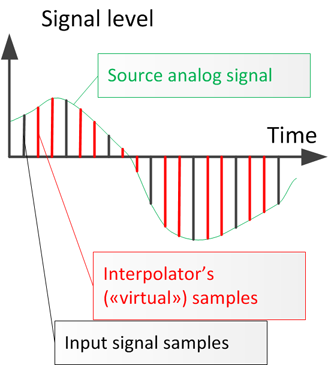
Up sampling is done by inserting additional samples (“virtual” – generated by the interpolator) between the existing samples in the input digital signal.

Sample interpolation: insert virtual samples between real ones

It is sometimes used to insert “virtual” samples with zero values ​​into the digital signal. This method is computationally faster. But this way of increasing the sample rate adds a significant amount of “artifacts” to those present in the interpolated signal.
Why do you need a superior sample? To complete point 3). Since it is easier to dilute the samples in multiples, simply discarding the excess ones.
The “spurious” signals (with frequencies above half the output sample rate) are then filtered. Otherwise, discarding “extra” samples will fall into the spectrum of the useful signal and distort it (add extraneous sounds).

What makes a high-end audio sample rate converter different from a medium-quality converter?
To introduce minimal distortion into the signal during conversion, we must interpolate it as accurately as possible. The interpolation precision is the maximum degree of repetition of the additional interpolator samples of the original analog signal. It should be remembered that the highest quality interpolator can accurately reconstruct the original analog signal. But not with 100% accuracy. Poor me. When the sampling frequency is increased, false signals will appear above half the sampling frequency of the output signal.


Free Download Mp4Gain
picture


Mp4Gain Main Window
picture


Mp4Gain Features
picture


Free Download Mp4Gain
picture

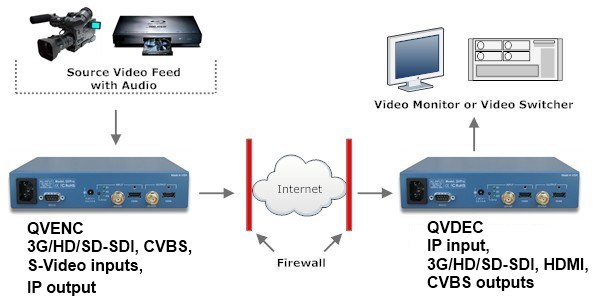
Professional quality audio over IP

Professional quality audio over IP

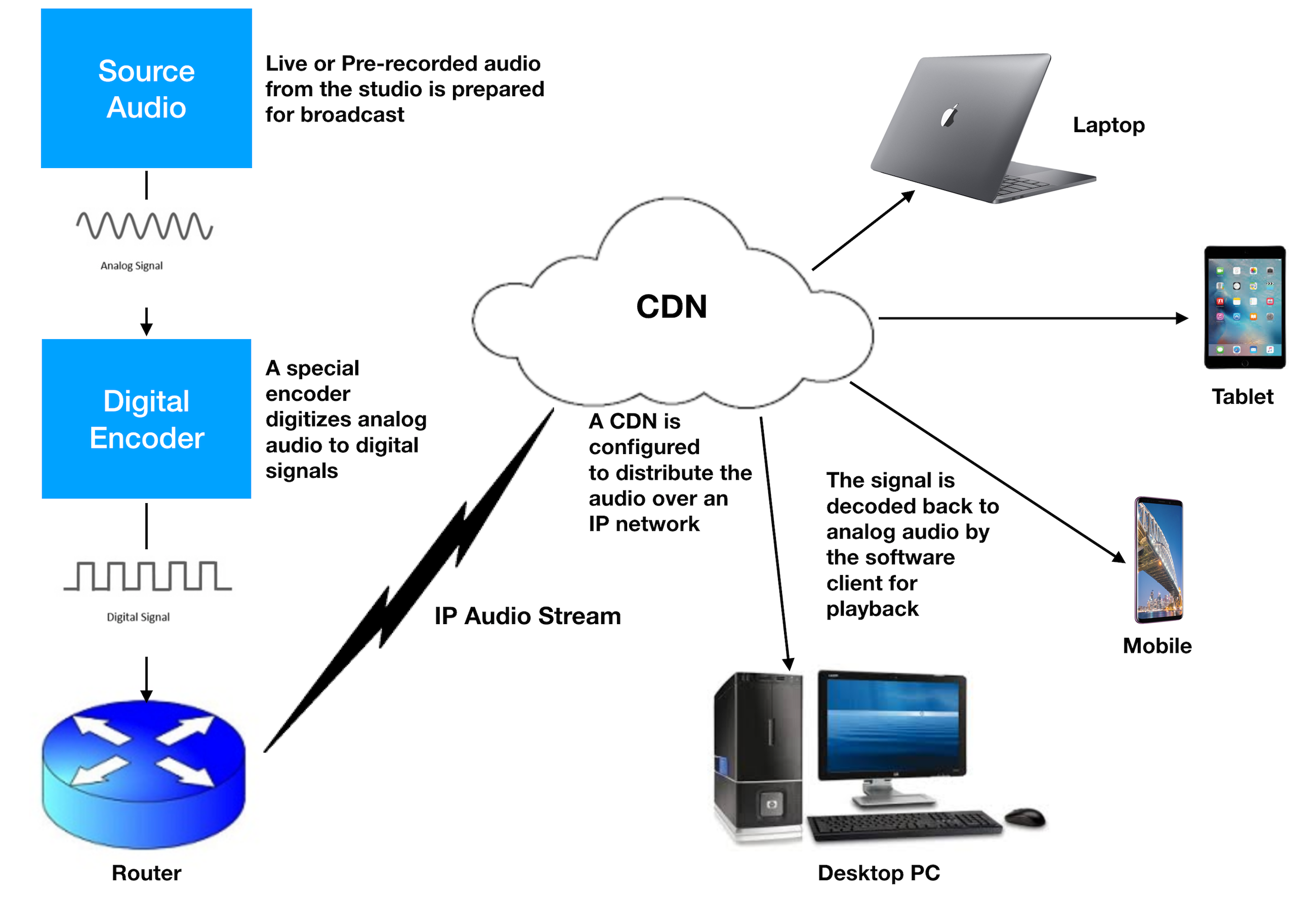
Audio-over-IP (AoIP)

The move from direct connections to networking solutions for professional AV equipment, which began two decades ago, is gaining momentum (especially in audio technology). The opportunities that are opening up, in particular the free movement of devices indoors, are attracting more and more followers.

Video/Audio over the Internet

Despite the certain popularity of solutions using specialized switches, the most widely used protocols for audio transmission based on IP (Audio over IP), as they can be implemented in the existing network infrastructure. Today, more than two dozen of these protocols are in use, both open and proprietary. The most popular of them is Dante, developed by the Australian company Audinate.

In the case of analog systems, audio equipment is usually directly connected by cables: one channel, one cable. Copper audio cables take up a lot of space, are heavy and bulky. Connecting them is an expensive and time-consuming procedure and, among other things, it is fraught with errors in large installations. In the case of AoIP, a twisted pair cable can transmit data simultaneously from tens and hundreds of audio channels.

In addition to reducing the amount of work and reducing the cost of the project as a whole, using AoIP also provides functional benefits, including the ability to route audio signals over long distances without degrading their quality. In this case, the signal transmission path can in fact be adjusted with a click of the mouse without making any changes to the wiring. In turn, the absence of signal degradation eliminates the need for amplifiers, which are necessary to compensate for signal attenuation due to electromagnetic interference, high-frequency attenuation, and voltage drop.

AUDIO VARIETIES ON THE NETWORK
AoIP systems allow the transmission of uncompressed digital audio over Ethernet / IP. Depending on the layer in which they operate, protocols are divided into three main classes: physical, data link and network layers.

Physical layer protocols allow the transmission of signals from one device to another over conventional Category 5e or better twisted pair cables. These include protocols such as Behringer’s AES50 or Roland’s Ethernet Audio Communication (REAC).

Link layer protocols allow you to create a channel between two devices on a network. The first protocol of this class was Cirrus Logic’s Cobra Net, which appeared in 1996. Another well-known representative is Ethersound.

The IEEE adopted the 802.1BA standard for Audio Video Bridging (AVB) (as well as several related standards). AVB has been designed to minimize the necessary changes to the network infrastructure. However, to transmit a professional quality video and audio network, all bridges (switches) in the signal path must support AVB.

Network layer protocols can connect multiple devices and exchange signals between them. In addition to Dante, these are Axia Audio’s proprietary Livewire protocol and ALC NetworX’s open Ravenna protocol. The first is widely used by broadcasters

ANTI-ALIASING FILTER, what is it?

ANTI-ALIASING FILTER, what is it?

Anti-Aliasing Filters

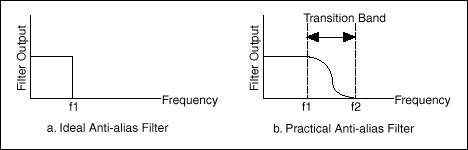
An anti-aliasing filter is a low pass filter (LPF) applied to the ADC input to improve the quality of the signal sampling. If F d is the sampling frequency of the ADC, then the cutoff frequency of the anti-aliased low-pass filter is approximately equal to half 0.5 * F d. Suppressing signal frequencies above half the ADC sample rate eliminates the effect of aliasing on the signal or, as it is commonly called in the classic DSP literature, eliminates the effect of aliasing. Anti-folding filter actually provides the spectral fidelity of the ADC conversion, excluding the side tones of the signal – conversion artifacts (to use sound application terminology).

Antialiasing Filter

Figure 1 shows a typical frequency response (in the frequency range 0 to F d) of a high quality audio ADC. Here, the signal with the maximum possible amplitude for a given ADC input is taken as zero decibels. This frequency response is provided by a multi-stage system of digital filters in the sigma-delta ADC architecture, operating at a high modulator frequency (many times higher than F d). In combination with digital filters (if any), analog filters with a significantly lower slope of the frequency response are used to provide suppression of high frequencies in the input path of the ADC.

The ADC with anti-aliasing filter is used in sound, acoustic, vibrometry applications, in those areas where spectral conversion fidelity and maximum accuracy of AC measurements are important. In the case of the above frequency response of the converter, the highest conversion quality is guaranteed if the effective frequency band of the signal with a small margin corresponds to the frequency band 0 to 0.5 * F d. In this case, the optimum will be achieved in terms of signal-to-noise and signal-to-noise ratios, even because the mirror conversion frequencies will be suppressed (if suppression of frequencies above F d is provided).

In vibrometry, where phase delays are measured, an additional requirement of linearity of the phase frequency response is imposed on the entire ADC conversion path, including the anti-aliasing filter.

In the system of linear terms – non-linear effects of the measurement path, it can be argued that the anti-aliasing filter drastically reduces the influence of the non-linear effects of the ADC sampling operation, making the sampling operation a transformation. almost linear (if we do not take into account possible non-linearity factors of different nature, eg possible non-linearity in the ADC quantization levels).

However, it cannot be argued that the presence of an anti-aliasing filter in the ADC conversion path is acceptable for all physical signal digitization tasks. For example, a special strobe operating mode is only possible for an ADC without an anti-aliasing filter (for example, a SAR ADC), for which the upper passband frequency is significantly higher than half the frequency of sampling. Another example: when digitizing pulsed signals with fast drops with a signal spectrum width that exceeds the bandwidth of an ADC with an anti-aliasing filter, a prolonged oscillatory nature of the filter response to fast signal drops is possible, and such reactions will not be acceptable for all problems that are solved.

For a correct interpretation of the term, consider:

In the technical literature, there is also a physically similar antialiasing term, used in the field of image processing, but in measurement issues (when processing signals) it is more correct to use the term antialiasing filter used in GOST R 8.714-2010 and GOST R ISO 13373-2-2009.
In the technical literature on built-in sigma-delta ADCs, an anti-aliasing filter is often referred to as an external high-frequency analog low-pass filter, while these built-in ADCs often provide a pronounced anti-aliasing frequency response in the zones low frequency.
In the manuals of the ADC 2 modules, if it is said about the presence of an anti-aliasing filter, then it is implied that the module has a corresponding anti-aliasing frequency response, which is provided by the frequency response of the entire measurement path of the module, taking into account the frequency response of its analog path, integral ADCs, digital filters on the ADC module (for example, on FPGAs), and filters at the “higher” software level, if included in the supplied software.
We also mention possible implementations of external anti-aliasing filters in relation to AD modules

SOUND QUALITY: A NEW APPROACH TO HARDWARE TESTING

SOUND QUALITY: A NEW APPROACH TO HARDWARE TESTING

Audio Equipment Quality

We all know well that the choice of audio equipment is not easy, because even within the same price category, different models differ markedly in sound. Now nobody is surprised by the fact that before buying an audio component, a consumer wants to know, in addition to passport data, the opinion of a competent expert on it and even timidly tries to “taste” its sound himself.AUDIO EQUIPMENT QUALITY

Why is there a need for “tasting” equipment, whereas most industrial products, such as irons, light bulbs, refrigerators, do not need to be “tasted”? It would not occur to anyone to ask the seller to provide an expert opinion on the quality of ironing with a new model of iron. It is enough for you to know how much energy it consumes, how much it weighs and what comforts it offers. However, let us remember that the manufacturers of hi-fi equipment in the early 1970s, deliberately trying to draw an analogy between audio equipment and plates, were actively introducing a set of technical requirements for gentlemen into the minds of consumers [ 1] that supposedly guarantee a high quality of sound of the equipment. But manufacturers of audio equipment, which relied only on objective parameters, were already called objectivists – in the late 1970s, disappointment awaited. The sales volume of the equipment they produced began to fall steadily, and this despite the fact that the objective parameters were constantly improving. This trend can be called target parameter inflation. Inflation was expressed in the fact that the number of zeros after the decimal point in the values ​​of harmonic distortion, coefficient of intermodulation distortion, unevenness of frequency response, amplifier output impedance, etc. grew, while the sound quality of audio equipment not only did not improve, but it worsened significantly. This deterioration gave impetus to the mass movement of subjectivists. Their motto was: “If there are contradictions between objective parameters and subjective evaluations, then the results of objective measurements should not be taken into account” [2]. It was the subjectivists who then challenged the audio design engineers: “The physical effects that degrade the sound quality of amplifiers are not detected in objective measurements because they are not known to orthodox engineering science.” * 1 Such statements surprised many “old school” audio engineers. A fierce controversy arose on the pages of the newspapers. This controversy was started by Paul Messenger in September 1976 * Hi-Fi News. He made a fairly weighted statement by today’s standards that in the future the evaluation of the quality of audio equipment will become almost completely subjective and that although auditory perception may fail us, it is nevertheless the most sensitive instrument for evaluating sound. . Such statements surprised many “old school” audio engineers. A fierce controversy arose on the pages of the newspapers. This controversy was started by Paul Messenger in September 1976 * Hi-Fi News. He made a fairly weighted statement by today’s standards that in the future the evaluation of the quality of audio equipment will become almost completely subjective and that although auditory perception may fail us, it is nevertheless the most sensitive instrument for evaluating sound. . Such statements surprised many “old school” audio engineers. A fierce controversy arose on the pages of the newspapers. This controversy was started by Paul Messenger in September 1976 * Hi-Fi News. He made a fairly weighted statement by today’s standards that in the future the evaluation of the quality of audio equipment will become almost completely subjective and that although auditory perception may fail us, it is nevertheless the most sensitive instrument for evaluating sound. .
The victory of the subjectivists over the objectivists became evident. To commemorate this victory, the highest quality and most expensive equipment was called “high end”.
High-end shopping has become a ritual reminiscent of the cult. The appearance of the stores was now markedly different from the stores that sold hi-fi equipment “in bulk”, and the customer service was completely different. The buyer of the audio equipment was left alone with the seller-audio expert and, at the same time, with a hypnotist in a room specially equipped to conduct a suggestion session, the so-called listening room. Tapestries, overstuffed armchairs, ghostly light *: it all led to auditory hypnosis.

How is sound quality measured?

How is sound quality measured?

Sound Quality

For more than two decades, there has been a debate about how to measure quality. There is a sea of ​​opinions, but the one thing that everyone agrees on is that the value of the harmonic distortion of a signal means nothing.

sound quality

About “good” distortions. There is a stable and orthodox class of audiophiles who are fans of tube sound. When comparing the sound of amplifiers without negative feedback (NF), which reduce harmonic distortion, and amplifiers with NF, they give preference to amplifiers without NF. And this is logical, because the tube amplifier has a narrower frequency band due to the use of transformers. The predominance of lower order harmonics in your sound subjectively enhances the sound. Here’s an example: Famous tube guru A. Likhnitsky several years ago praised his amp proofreader for a turntable. In it, he introduced positive feedback, which increases non-linear distortion. The resulting overexposure of the sound seems correct to the author of the development, although, I must say, it is far from a universal solution. For many people whose hearing sensitivity to high frequencies increases, this device is simply unbearable to listen to.

In many books and articles it can be read that a person determines the location of a sound source due to the fact that he feels the phase difference in the signals received by his ears. In fact, nature does not know a parameter such as the phase of the signal; this is a mathematical abstraction that is convenient for calculations. Hearing, on the other hand, operates:

– Intensity, and recognizes signals in the range of no more than 40 dB during a short time interval. If a loud sound is followed by a sound with a level lower than the first by 40 dB, then it is not audible. The transition to other intensities requires more or less adaptation time.

– Frequency. The structure of the ear and the nervous system contains, on average, about 2000 frequency analyzers. There really is an extension. So don’t be offended if you don’t listen to what others are hearing, all statements are about your own heritage.

– Time. Hearing and the brain determine the difference in the arrival time of signals in different ears, not the phase. And time resolution is measured in microseconds!

The whole of this “hardware” is double and has memory. Localization is impossible if the difference in intensities and arrival times is simultaneously small.

Norbert Wiener said that the language of the brain is not mathematical. Modern equipment uses a mathematical apparatus to transform the temporal sequence of signals into the spectral domain, where mathematical processing is possible. The fundamental disadvantage of this technique is that it works in portions: a set of samples is memorized, a conversion is done “there”, it is processed, then a conversion “backwards” or a control action. And hearing works on a spectrum in real time. In addition, memory allows you to “scroll” what you heard multiple times for more detailed recognition of the sound image, be it a verbal message or spatial information. Thanks to these properties of hearing, “deep localization” is possible. Its essence is not at all that the hearing compares the spectra of the signal received and previously “recorded”, supposedly there is a memory of how the sound should be heard at different distances, but in the fact that it analyzes the time series and selects a substring in it that does not belong to the main signal, but to its reverb sound, and by the time difference determines the distance to the sound source. (Reverberation is the decay process of sound that accompanies its reflections, the most prominent example being the echo, as well as the rumbling of an empty room). That is why a person can determine the distance to a sound source that they have never heard. The “auditory brain” system has remarkable capabilities, it is a combined filter of colossal equivalent processing power, which allows it to “extract” the expected set of sounds from much higher noise levels.

The presence of a comb of 2000 separate frequency sensors in the hearing analyzer does not lead to coarseness of auditory sensations. Everyone can check it out. Take a high-quality speaker, connect an audio sine generator across the amplifier, and use the SPL meter (located at the listening position!) To eliminate the frequency response with a smooth frequency slip. You will be surprised how uneven this graph will be than the one obtained by the RTA method in one-third octave bands of pink noise. Then, with the chart in hand, listen to the speaker again.

Sound quality

Sound quality

Sound Quality

When it comes to sound quality, not only do opinions differ, they often lead the discussion to a dead end.

Sound Quality

As a general rule, the reason for this is a different understanding of the concept of quality. In this article, we will try to answer the fundamental questions and give clear definitions, which can undoubtedly help to bring these discussions to a common denominator.

But first, you need to give a clear definition of the concept of quality. The simplest way to do this is to establish a series of requirements for certain characteristics and processes, and subsequently identify the degree of compliance with them in relation to the characteristics of the result obtained. This definition originates from a slightly different area, but all of the above is also true in relation to sound. For example, even in the development phase, set the maximum allowable amount of harmonic distortions introduced into the audio signal as a result of either manipulation. Based on this, we can say that the closer the characteristics of the result are to the predetermined requirements, the higher the quality. However, some manufacturers may misuse this definition to make their products better than they really are. So purely hypothetical, by setting a low bar in principle you can theoretically improve the quality, at least on paper. This trick is often used by manufacturers of hi-fi equipment in the lower price segment, stating:

First of all, before starting a conversation about sound quality, this concept should be divided into two separate categories, which, on the one hand, are closely interconnected, and on the other hand, describe various aspects, both technical and aesthetic, and by therefore, they are often confused.

Audio quality

The concept of audio refers to all objects connected in one way or another and participating in the process of transmitting, processing and storing signals, whether in analog or digital form, that represent the original acoustic signal. An example of this can be both the sound source and the connection cables, mixers, equalizers, amplifiers, processors and speaker systems. Audio quality is determined by the degree of fidelity in the representation of the original audio signal, regardless of the deliberate nature of the manipulation (see below). Used in this case, the terms can be, for example, impedance, dynamic range, level, frequency range, volatility, signal-to-noise ratio and the like.

Sound quality

It describes the subjective judgment of what an individual listener heard, and is therefore often based on individual preferences, biases, and even biases. Furthermore, even visual aspects can influence subjective perception and judgment about sound quality. Looser terms are used when talking about sound quality, such as warmth, transparency, detail, density, brightness, or opacity.

To determine the sound quality of an audio system, you must first consider the sound quality of the source, as if there is no audio system between the listener and the sound source. Thus, for example, the sound quality of an instrument is made up of a combination of factors such as the melody of the composition, the virtuosity of the musician and, of course, the characteristic features of the instrument itself.

What audio format should I choose?

What audio format should I choose?

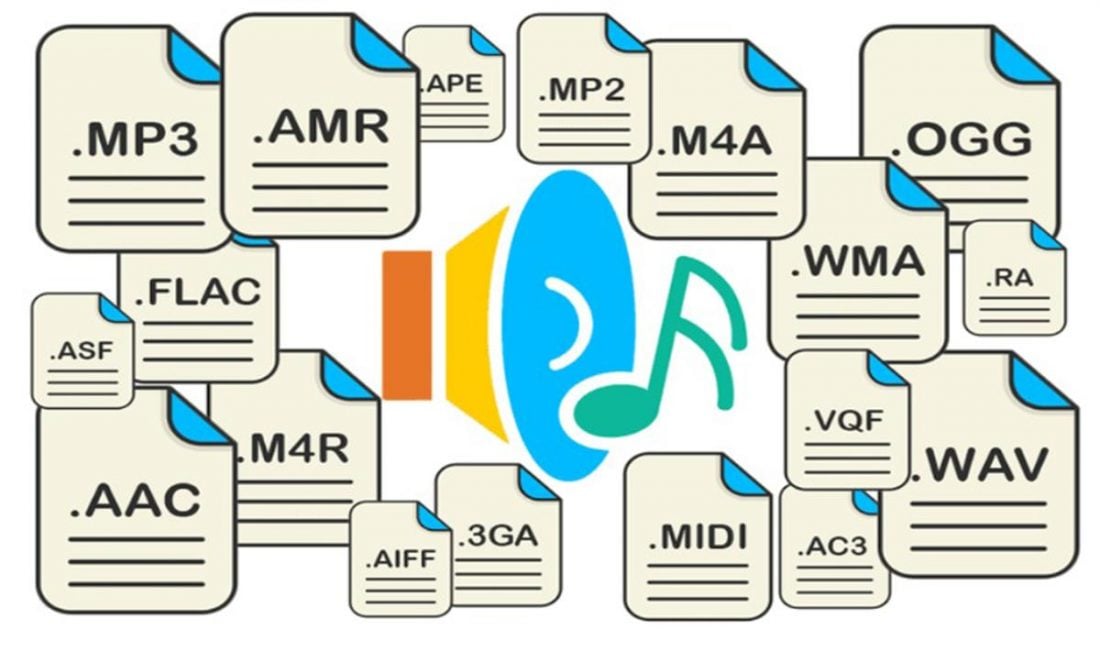
Audio File Format

audio format The audio format is usually a measure of the quality of a track. There is a lot of debate about which is the best music format. So I recently witnessed a similar dispute. Not virtual, but real. In general, I decided to write an article about audio formats and try to explain in human language which is the best audio format. I’ll try to avoid abstruse terms and feature descriptions, so as not to hurt the brains of readers again.

Music File Format

I immediately admit that I am not going to sing praises in honor of any particular audio format, just as I am not going to “disappoint” anyone. Let everyone decide for themselves. I will not go into the “jungle” and review the most famous formats of high quality music.

I believe that these disputes are conducted by people, to put it mildly, not well versed in this matter. Because professionals (that is, people who know what they are doing and why they are doing it) will not do it. With today’s abundance of audio formats, anyone who needs it will find what they need. Agree, a dispute between a tractor driver and a driver about which is better – a tractor or a car will look silly. For some purposes a tractor, for others a machine. Here it is the same.

–WAV is rightly considered the highest quality music format. This audio format is not compressed or lossy. Used for recording and processing sound, this is the highest quality sound, as the WAV recording is not compressed. Encoded to any other audio format. Well, as a result, it “weighs” a lot, so it is mainly used for sound recording.

The following are several “interpretations” that can be divided into:

Lossy audio compression

I’ll start with the well-known and widely used (though not always loved) MP3 format. This audio format is actively used everywhere and everywhere, where it is needed and where it is not needed. But this does not mean that it is not worthy of its place in its niche. Very worthy. Although he has been “sitting” in his niche for about two decades, no one has “kicked” him out of there yet. And there were many who wanted to say it. And the main favorite of them is WMA (Windows Media Audio), which was conceived by Microsoft as an alternative to MP3. As a result, it is an alternative and it is, despite the best efforts of the developers. The next character is OGG. Despite the broader possibilities than MP3, for example, it never received widespread acceptance. Although it is compatible with many operating systems. Perhaps the AAC audio format is worth mentioning, which was supposed to replace MP3 in the relay. Encoding quality has been improved and compression loss reduced. But Ay.

The main advantage of these formats is their small size. The downside is the loss of quality.

Lossless audio compression
–FLAC is perhaps the most popular lossless audio format and encoding codec. Music lovers are gradually switching to this format. WavPack competes with it, but it is not that popular. It’s the same story with Apple Lossless, which reduces the size to 60%.

Here the story is exactly the opposite: the quality is better and the size is greater.

Skeptics say that it is almost impossible to distinguish MP3 (320 kbps) from Losless by ear. “And if there is no difference, why pay more?” In fact, on ordinary equipment, it is quite difficult to feel the difference in audio formats, even for music lovers. But there are those who immediately feel this difference (they personally attended the experiment). But when listening to a good device, the difference is huge. The problem is that not everyone can afford a good device.

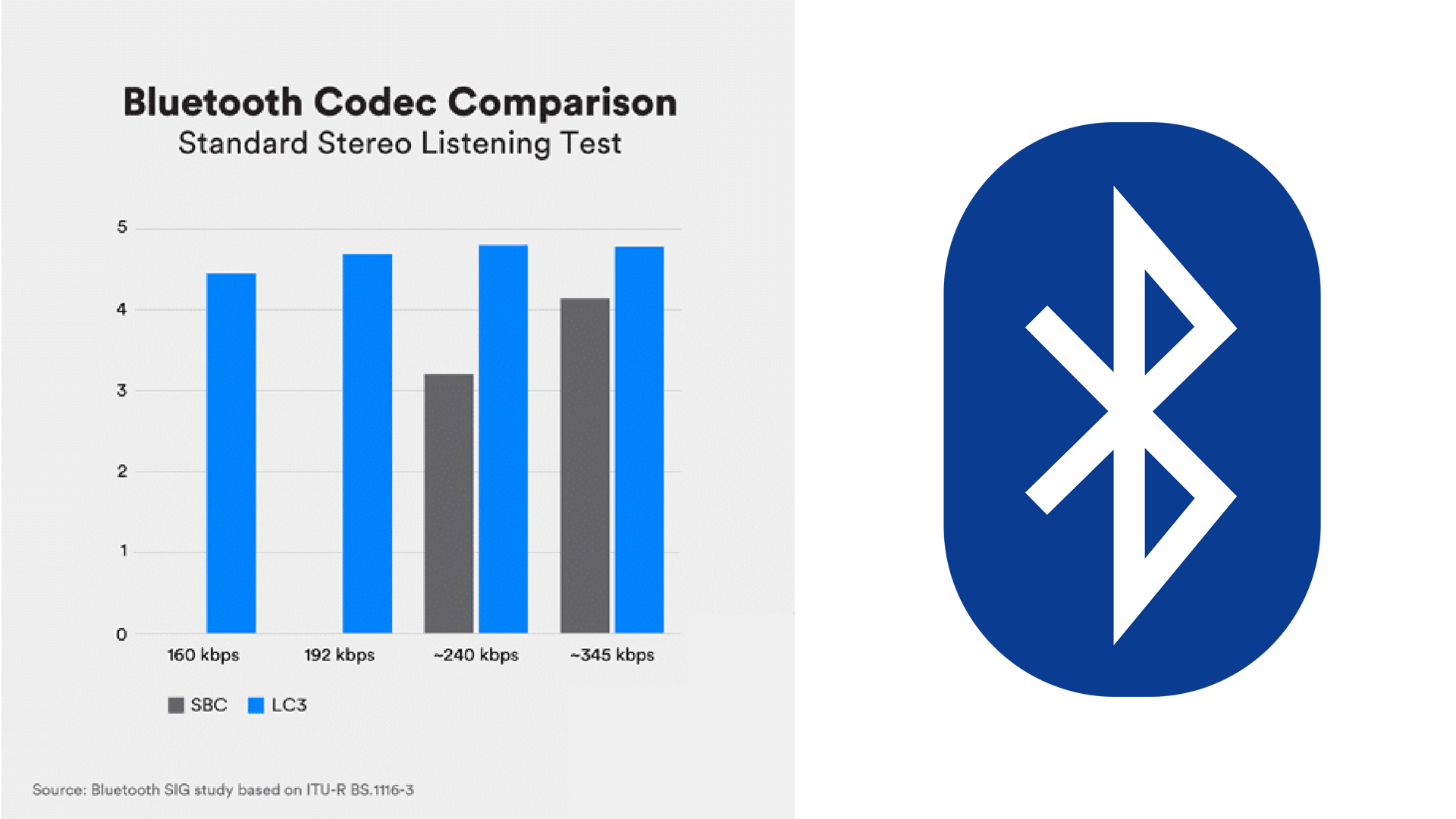
What is the best Bluetooth audio codec: LDAC, aptX, AAC, etc.?

What is the best Bluetooth audio codec: LDAC, aptX, AAC, etc.?

Bluetooth Audio Codec

There is a clear future for wireless devices, in particular for headphones. Smartphone manufacturers are increasingly abandoning the 3.5mm audio jack as they continue to implement wireless solutions, including TWS. In almost every review, the phrase Bluetooth audio codecs appears.

Bluetooth audio codec

What does it actually mean and what are the results of using this specification? Here you select the Bluetooth codec with the best sound quality and maximum connection stability. CONTENTS Best Bluetooth Audio Codecs APTX APTX HD SBC CAA LDAC LHDC

What is the best Bluetooth audio codec? The best Bluetooth audio codecs There are currently dozens of codecs, which can be confusing, but it is very important to understand them. They have a major impact on sound quality, transmission delays, and signal quality. Another part of modern standards allows a more economical use of battery power.

Chances are, the reader has already heard of bit rate and compression, as well as more specific terms like lossy. All this is a real minefield for a person who just wants to buy high-quality headphones with a fast, high-quality and stable connection to the device and a “tasty” sound. Below are the audio codecs that you should definitely be familiar with. APTX The Bluetooth aptX audio codec first appeared in the technological world in the late 1980s. Its essence was the transmission of sound in CD format via Bluetooth. In order to transfer enough data over the wireless network, aptX uses compression. Reduce latency. AptX includes support for 16-bit / 48 kHz LCPM up to 352 kbps, which is why it is classified as a lossy compressed format.

The final file size is really small, but its decryption does not restore the original quality. AptX is now considered the most popular Bluetooth codec among MP3 consumers. Almost all Android smartphones support it. APTX HD It’s not hard to guess that aptX HD is the aptX audio codec with the best audio resolution. The technology was acquired by Qualcomm, so more expensive Android smartphones based on Qualcomm’s chipset support AtpX HD by default. It can handle clear 24-bit / 48 kHz audio with a maximum bit rate of 576 kbps. Now the audio quality is better than that of the CD. The signal-to-noise ratio is much better compared to the previous version, it can be heard even without particularly high-pitched hearing.

It is felt especially in the details of the tools that are merged into aptX. In order to use the technology, both the smartphone and the headphones must support this codec. Today it can be found in OnePlus 8 and 8 Pro, Google Pixel 3a and Huawei P30 and P30 Pro. Among the headphones, the aptX HD codec mainly features world giants and similar models are not cheap. For example Sony WH-1000MX3 and Bowers & Wilkins PX and some TWS like Cambridge Audio Melomania 1. There is also an aptx LL codec which reduces latency. This is Qualcomm technology that increases the audio transmission speed up to 40ms. It is widely used in gaming headsets.

SBC Subband Encoding (SBC) is the default codec used with Bluetooth. It is a low quality Bluetooth audio signal. This is not the audio codec favorably shared by a smartphone or headphones, but almost all devices support it. It is considered mandatory for all A2DP devices. The maximum transmission speed is about 320 kbps.

ACC

Advanced Audio Coding (AAC) is the standard received by Apple iPhone users. It is also used by the free version of YouTube. AAC allows you to fully enjoy MP3 audio quality, but at a limited bit rate of up to 250 kbps. The downside of the codec is high power consumption, which negatively affects the battery life of both devices. To unleash all facets of MP3, you need not only an iPhone, but also premium headphones like the Bose Noise Canceling 700. Подробнее: https://gamesqa.ru/smartfony/kakoj-luchshij-audiokodek-bluetooth-ldac- aptx-aac-18159 /

Introduction to codec comparison

Introduction to codec comparison

Codec Comparison

Codec comparisons are pretty common on the internet … Long and not very, emotional and not very, clearly skewed and not very. But most of the authors of such comparisons simply cite images from two movies side by side, as if by conspiracy to ignore the following things:

 Codec Comparison

Any codec provides a different quality for frames in the same movie.
Different codecs are “sharpened” for different types of movies.
The compression quality of a particular movie can be highly dependent on the encoding parameters.
More details about each of the points:
1. Any codec offers a different quality for the frames of the same movie.
This is due to many factors. First, the codec uses a mechanism like bit rate control, which provides quality fluctuations even for good codecs. Second, the user himself chooses different bit rate strategies, and in the case of choosing CBR (or constant bit rate), the quality will be high in slow scenes and low in fast scenes. Third, the codecs have so-called. keyframes, whose quality usually changes separately and differs from the quality of the rest of the frames. Fourth, quality is affected by pre-filtering (which all modern codecs have) … Fifth … Sixth … Seventh … 🙂
This means that in any movie long enough (and the average movie is 150,000 to 200,000 frames), you can choose good and bad enough frames. Especially if one pass CBR compression was used on a fairly dynamic movie.

Those. having a long movie, codecs A and B (which are roughly equal in quality), and simple means of automating quality comparison (or a lot of religious devotion to your codec :), you can easily demonstrate with examples that A is noticeably better than B (“look at these frames!”), and that B is notably better than A (“look at these (other) frames!”). 🙂 What is being done “successfully” in large quantities. Both in press releases (a holy cause!) And on video processing sites.

The graph shows the quality in terms of PSNR (the higher the quality).
If comparing “spiky” frames, VP will be better than DivX, otherwise vice versa.

2. Different codecs are “sharpened” for different types of movies.
Many people know that DivX 4.1 LowMotion and DivX 4.1 FastMotion existed at some point. Although they played movies in the same way, their internal parameters were “fine-tuned” by one for weak movements and the second for strong ones. As a result, they harvested films of markedly different quality. Notice again: the FORMAT, in which they harvested, was one! And the compression was carried out in different ways! As a result, for the same file size, their quality is different. A similar “customization” for “your” data type is characteristic of absolutely all codecs. Someone better push high bit rates. Some are on the contrary low. Someone sharpens with a strong movement, someone underneath a weak one. And yet someone is getting better for cartoons and someone for real video. Someone under “noisy” movies, someone under “clean” movies, and so on. Having the source texts of the codec, it is possible without changing its format, that is, without changing the decompressor, sharpen it for almost any type of film. And this is used successfully in practice. This means that by having codecs A and B (of roughly the same quality), you can easily find movies where A will be noticeably better than B and where B will be noticeably better than A. At the same time, it’s funny that, formally, there may be a movie, just a DVD copy and a pirated “rag” copy taken from a theater screen can give noticeably different results in the two codecs. Those. the movie will be “one”, but the “best” (world) codecs will vary. 🙂 Having the source texts of the codec, it is possible without changing its format, ie without changing the decompressor, sharpen it for almost any type of film. And this is used successfully in practice. This means that by having codecs A and B (of roughly the same quality), you can easily find movies where A will be noticeably better than B and where B will be noticeably better than A. At the same time, it’s funny that, formally, there may be a movie, just a DVD copy and a pirated “rag” copy taken from a theater screen can give noticeably different results in the two codecs. Those. the movie will be “one”, but the “best” (world) codecs will vary. 🙂 Having the source texts of the codec, it is possible without changing its format.

Steps to fix poor video quality in Google Chrome

Steps to fix poor video quality in Google Chrome

Chrome video quality
1. Update Google Chrome

chrome video quality
First, make sure you are watching the video in the latest version of Chrome. Please update Chrome browsers that support web technology for multimedia content. To do this, click the Customize Google Chrome button and select Help> About Google Chrome.

This will open the About Chrome tab, which will check for and install the updates. Click Restart after updating your browser.

2. Check the resolution setting for YouTube video
In most cases, poor playback quality on video websites is usually related to the video resolution settings. YouTube videos generally contain at least a few resolution alternatives that users can use to adjust the playback quality.

However, some YouTube videos will automatically play at a lower resolution such as 480p.

To increase the resolution, users can click the Settings button at the bottom of the YouTube video. Then select Quality to open the menu shown below. Select the highest video resolution from this menu.

To always play YouTube videos at their maximum resolution, add the Magic Actions extension to Chrome. Then, click on the Magic Options button below the video to open the tab in the screenshot directly below. Select the Enable Auto HD setting on this tab. Then select a resolution to play all videos and close the tab.