Why upsampling?
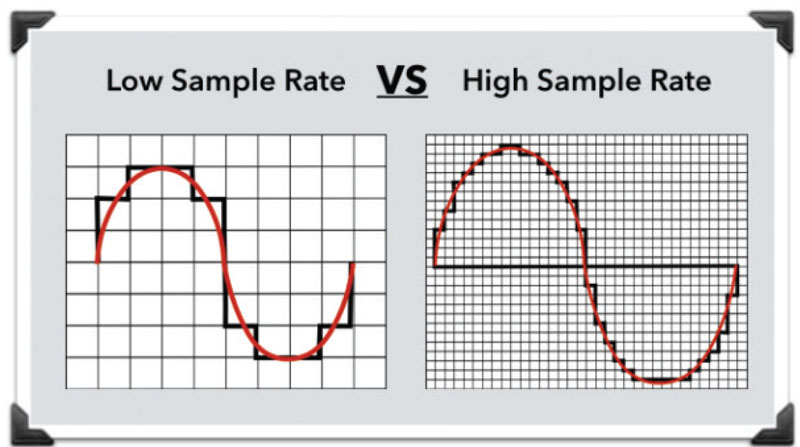
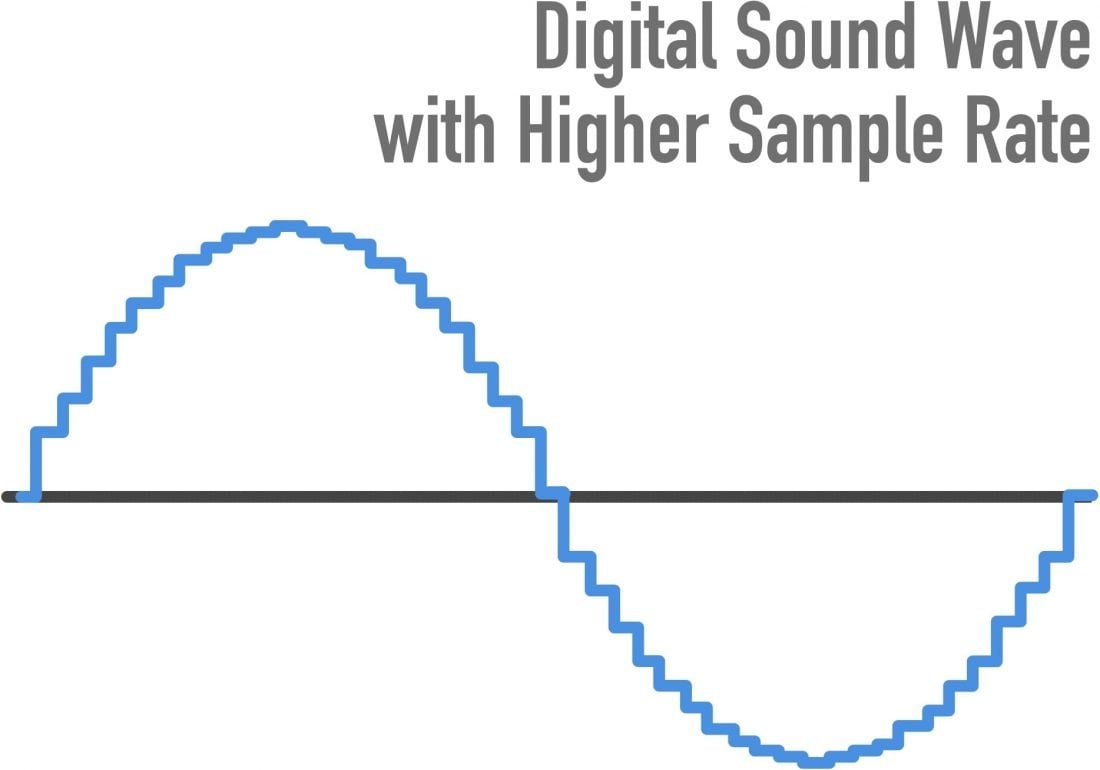
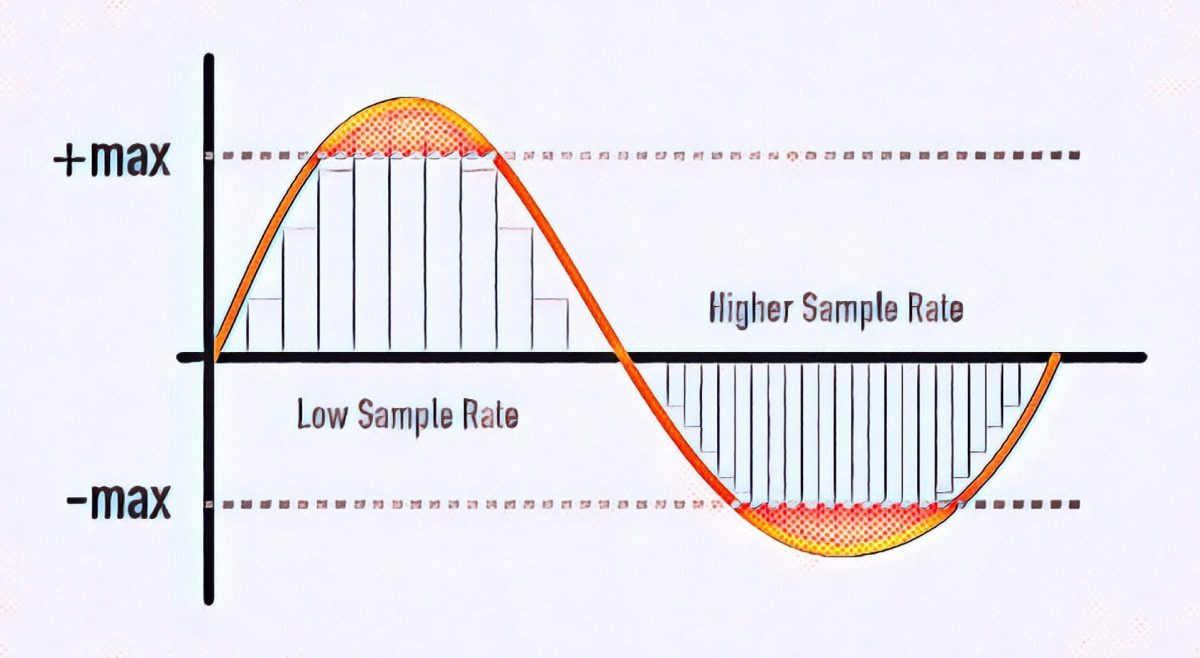
When it comes to improving digital sound quality, experts in this field agree on only one thing: with an increase in sample rate, sound quality improves dramatically.
Why upsampling?
When it comes to improving digital sound quality, experts in this field agree on only one thing: As the sample rate increases, the sound quality improves dramatically. Also, under the word “improvement”, everyone already understands something for himself. All the variety of opinions on this topic boils down to the following: the sound becomes clearer, softer, more natural, the low frequencies are perceived more clearly.
However, these nuances are only noticed by listeners trained with a good ear for music on specially selected sound material and using technically advanced equipment.
There are many hypotheses that explain why sound quality is improved by higher sampling. Many technicians are inclined to believe that this relationship is due to distortions that arise from filtering and interpolation during audio signal reconstruction.
On a modern technical level, high-quality interpolators may be practically impossible to implement, therefore, instead of improving them, manufacturers simply increase the sample rate. Maybe it’s not about them at all.
Another version, which many music lovers adhere to, is that at a low sampling frequency, for example 44100 Hz, digital sound is completely devoid of nuances of high sounds, the main frequencies of which are above 7 kHz. , and at lower frequencies there are very few harmonics for a high quality perception of music.
In fact, many musical instruments generate vibrations of up to 100 kHz. It is true that the fraction of energy that falls in the frequency band above 20 kHz is 0.01 to 2% for sounds of a harmonic nature and 0.02 to 68% for sounds created by a cymbal, triangle or striking the metal edge of a drum (hoop shot – editor’s note).
Even the frequency range of speech in hissing-hissing sounds extends up to 40 kHz. Supporters of this version are not ashamed that a person cannot perceive sounds with a frequency higher than 20 kHz. Ultrasound is assumed to be perceived bypassing the auditory system, for example through bone conduction.
Discussions that harmonics above 20 kHz make a significant contribution to sounding have culminated in the creation and widespread introduction of analog-to-digital converters using 96 kHz and 192 kHz sample rates; The sample rate is expected to increase to 384 kHz.
Based on modern knowledge of human perception of sound, it must be assumed that the relationship between digital sound quality and sampling frequency is due to the transformation of the quantization error spectrum in the audio frequency range.
In technical literature, this topic is considered only for a particular mathematical model, when music is represented by a signal with a uniform distribution in level and frequency. In this case, the quantization errors are converted to noise with a uniform spectral density from 0 Hz to the Nyquist frequency.