What is the sample rate / sample rate?

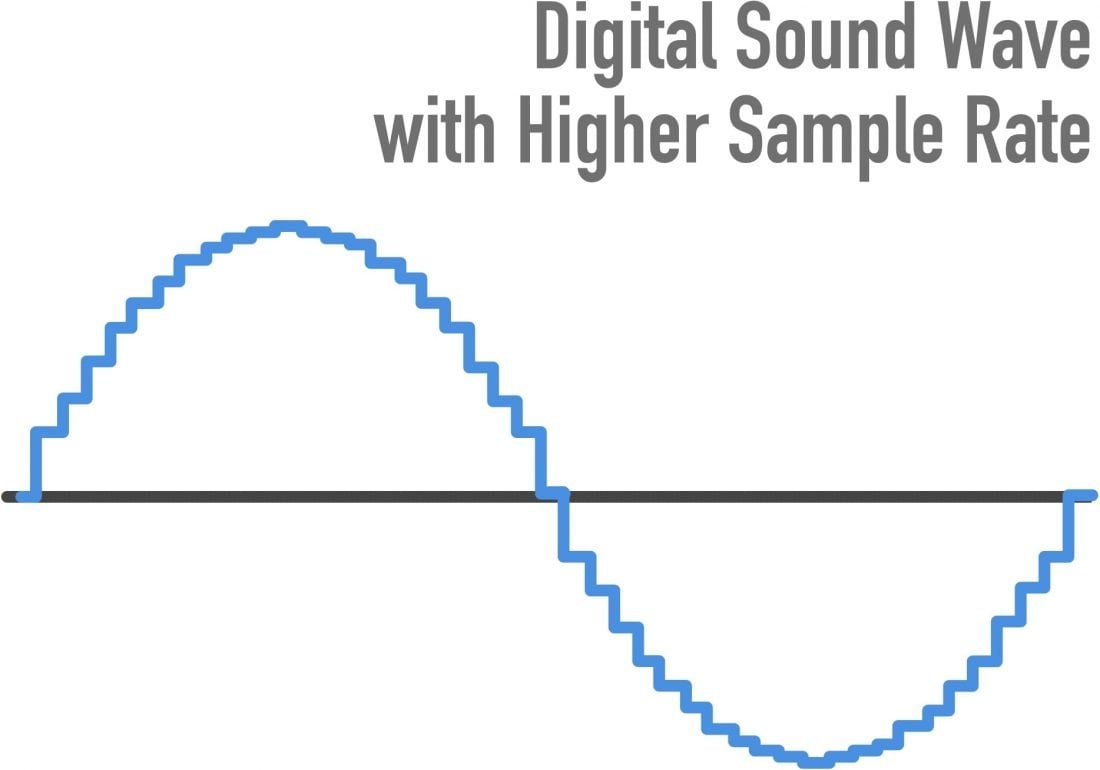
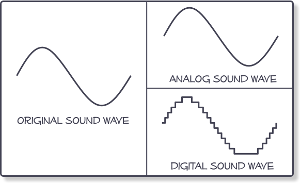
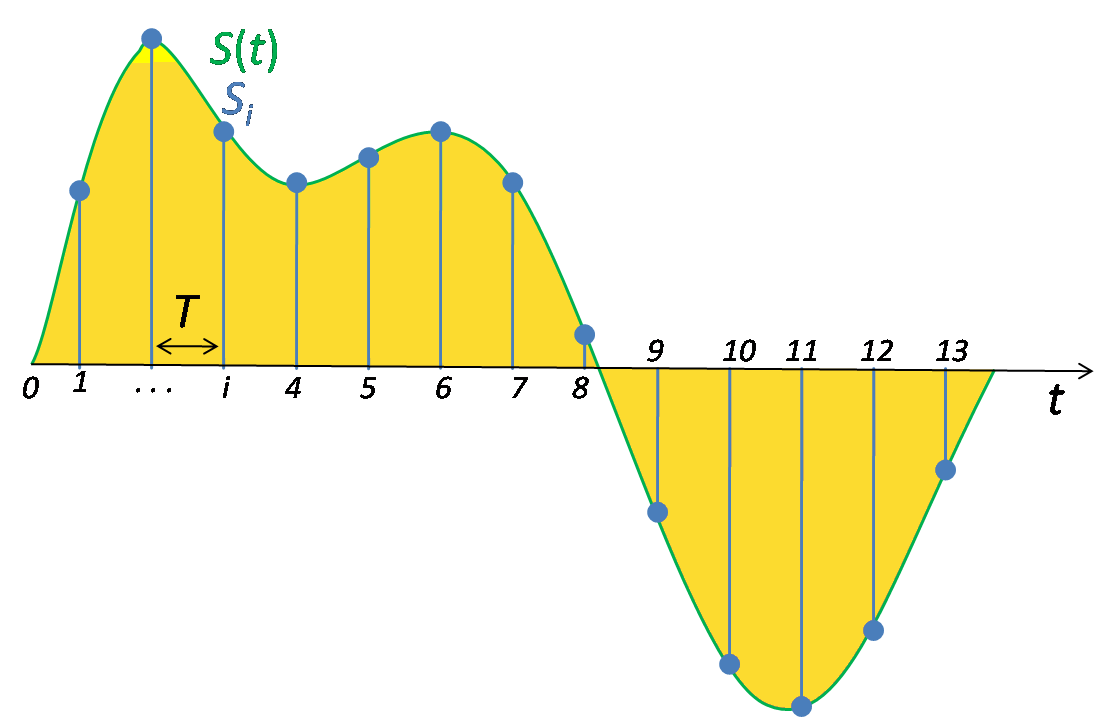
Sampling rate Sampling frequency is the number of sampling processes performed per second in an AD converter that converts an analog signal into a digital signal.

The unit is “Hz”, and the higher the value, the faster the analog input signal can be converted to a digital value, resulting in higher sound quality. However, the amount of data grows proportionally, so you must choose the appropriate frequency for media and devices with limited storage capacity.
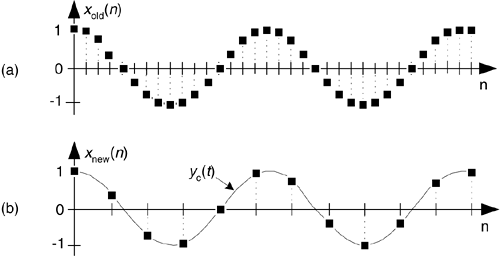
It is said that to accurately record and reproduce a certain sound, it is necessary to sample at a frequency that is approximately twice the frequency of that sound. The sampling frequency used for music CDs is 44.1 kHz. In this case, the voice waveform is shredded 44,100 times per second and the voice information at each moment is converted into digital information.
Humans generally have 20 Hz for individual differences, but they can perceive sounds around 15 kHz to 20 kHz as sound, and this frequency band is called the audible range.
Difference between sample rate and bit rate
Sample rate and bit rate are used to describe the sound quality before and after compression of the audio data.
The sampling rate is a value that represents “the number of sampling processes performed per second”.
For example, at the standard sample rate of 44.1 kHz, it means to sample 44100 times per second.
The higher this number, the softer the sound and the better the sound quality. In other words, the numerical value of the sample rate represents the quality of the sound.
On the other hand, the bit rate is a value that indicates “at how many levels the volume is represented”.
For example, in the case of 16 bits, which is the standard bit rate, the amount of information is divided by 2 to the 16th power (= 65536 steps). If the number of bits is low, the sound quality will be granular and, as with the sample rate, the higher the value of the bit rate, the more information that can be reproduced and the sound quality will be better.
Sampling rate bit rate
Sampling rate bit rate
Divide the time axis A
44.1 kHz, divide 44100 per second Divide the amount of information vertically Into
In the 16-bit case, divide the amount of information by 2 to the 16th power.
LiveOn compatible sample rate
In LiveOn, when creating a conference room, you can select from 5 patterns of “8kHz, 11kHz, 16kHz, 22kHz, 32kHz”. LiveOn supports up to 32 kHz, so you can have a meeting with clear sound quality.
It is very easy to listen to because you can communicate with a voice close to the voice on the floor and you can use it comfortably without stress even in long meetings.
The sample rate set when creating the conference room can be changed from the change screen.
Main sampling frequencies
Live: 8kHz to 32kHz
Telephone (ISDN, etc.): 8kHz
YouTube video (standard): 22.05 kHz
FM stereo transmission relay: 32kHz
CD-DA: 44.1 kHz
DAT / miniDV video: 32kHz to 48kHz